14. Co-echoing

Human all too human

Reading Friedrich Nietzsche’s Human all too human

Read the introduction here

You can read the aphorism I discuss here below the main article.

Note:

The German word Miterklingen, the title of this aphorism, is not a real German word as far as I can find out. In the English translation by Alexander Harvey he had a note:  “Miterklingen: to sound simultaneously with”  I agree with that, in one word it would be something like: withsounds. I don’t know why the translators didn’t took the freedom to invent a word like Nietzsche did.

For this aphorism I also included the other 3 translation that I use from Harvey (1909), Hollingdale (1986) and Handwerk (1997). For convenience, and the interested, I put every sentence side by side, so you can compare the different translations easier. There are no big surprises that influences the message  of this aphorism, besides the last word “thing” but it is interesting to see the differences and the freedom the translators took.

Synopsis and my take on it:

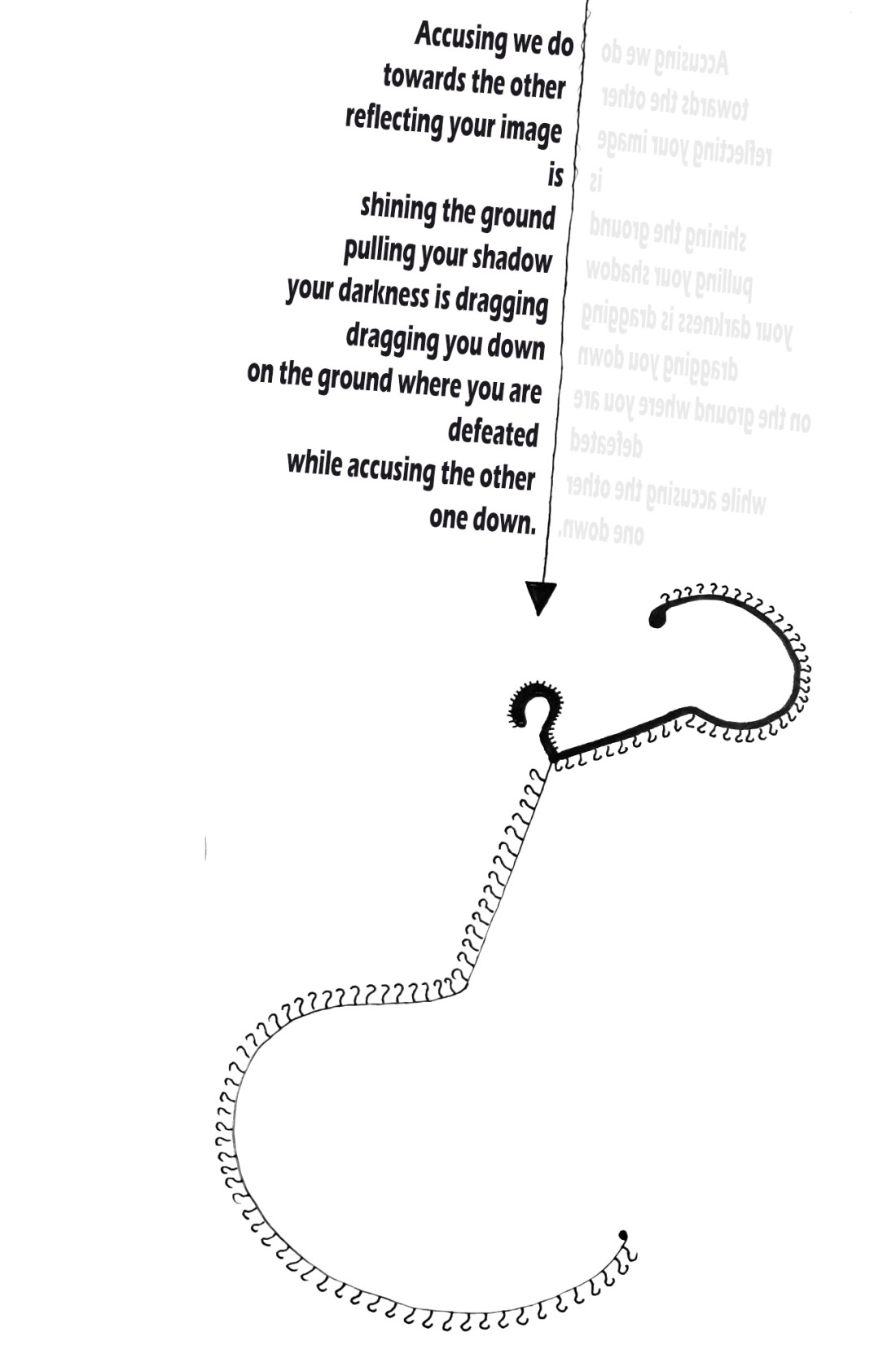
Al strong moods bring ripples of similar moods with them, they mix up your memory. In the mix you recognize “similar conditions and their origin”, there are quick connections made of “feelings and thoughts” and are felt as one and not separate. “In this sense one speaks of the moral feeling, of the religious feeling, as if they were absolute unities: in reality they are streams with a hundred sources and tributaries.”. “Here also, as so often happens, the unity of the word is no security for the unity of the thing1.”  With this last sentence Nietzsche puts the aphorism a little bit on its head but I think he meant: The “word” is like the mood, also accompanied by other similar words and meanings, when describing an “thing” with words that also are blurred by their meaning the “thing”  itself gets blurred.

In one sentence:

Complex moods feel like one, but are not, like words.

1The German word “sache” is translated by all four as “thing” but I think it’s more a word between a “thing” and a “case”, maybe entity.  In the Dutch translation it is translated as “zaak” and that can mean  a thing, but also a case but also a cross between the two.


13

Download the word document here: CO-ECHOING


Human, all too human a book for free spirits Part I translated by Helen Zimmern 1909

  1. CO-ECHOING.—All stronger moods bring with them a co-echoing of kindred sensations and moods, they grub up the memory, so to speak. Along with them something within us remembers and becomes conscious of similar conditions and their origin. Thus there are formed quick habitual connections of feelings and thoughts, which eventually, when they follow each other with lightning speed, are no longer felt as complexes but as unities. In this sense one speaks of the moral feeling, of the religious feeling, as if they were absolute unities : in reality they are streams with a hundred sources and tributaries. Here also, as so often happens, the unity of the word is no security for the unity of the thing.

Human, all too human a book for free spirits, translated by Alexander Harvey, 1908

Association.—All strong feelings are associated with a variety of allied sentiments and emotions. They stir up the memory at the same time. When we are under their influence we are reminded of similar states and we feel a renewal of them within us. Thus are formed habitual successions of feelings and notions, which, at last, when they follow one another with lightning rapidity are no longer felt as complexities but as unities. In this sense we hear of moral feelings, of religious feelings, as if they were absolute unities. In reality they are streams with a hundred sources and tributaries. Here again, the unity of the word speaks nothing for the unity of the thing.

Human, all too human a book for free spirits, translated by R.J.Hollingdale, 1986

14 Sympathetic resonance. – All stronger moods bring with them a sympathetic resonance on the part of related sensations and moods: they as it were root up the memory. Something in us is provoked to recollection and becomes aware of similar states and their origins. Thus there come to be constructed habitual rapid connections between feelings and thoughts which, if they succeed one another with lightning speed, are in the end no longer experienced as complexes but as unities. It is in this sense that one speaks of the moral feelings, of the religious feelings, as though these were simple unities: in truth, however, they are rivers with a hundred tributaries and sources. Here too, as so often, the unity of the word is no guarantee of the unity of the thing.

Human, all too human a book for free spirits I V3, translated by Gary Handwerk 1997

Resonances, – All stronger moods bring along with them a resonance of related sensations and moods; they churn up our memory, as it were. They bring something to mind, making us conscious of similar states and their origins. In this way habitual, rapid associations of feelings and thoughts are formed, which finally, when they follow after one another with lightning speed, are no longer even sensed as complex, but rather as unities. In this sense, we speak of moral feelings, of religious feelings, as if these were nothing but unities: in truth, they are streams with a hundred sources and tributaries. Here, too, as so often, the unity of the word guarantees nothing about the unity of the thing.


Menschliches allzu menschlich 1878/80

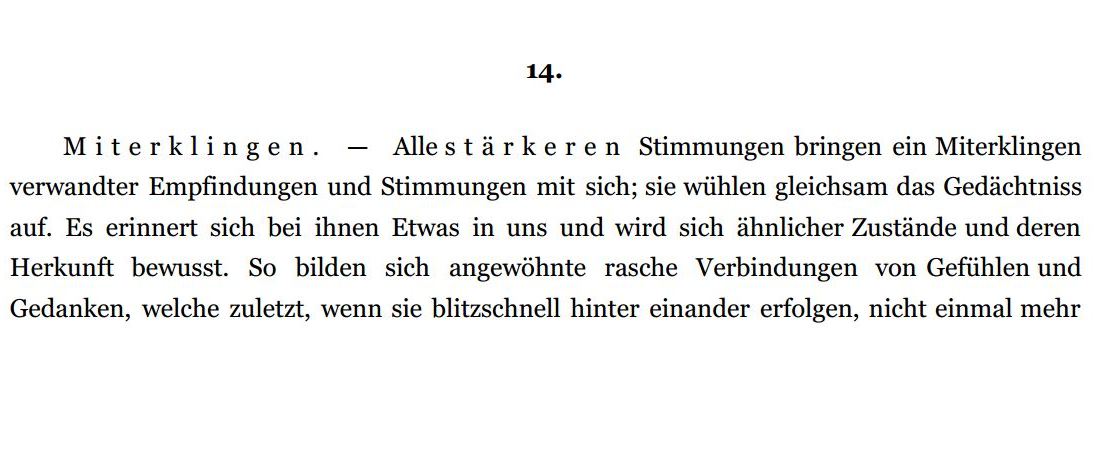
  1. Miterklingen. – Alle stärkeren Stimmungen bringen ein Miterklingen verwandter Empfindungen und Stimmungen mit sich; sie wühlen gleichsam das Gedächtniss auf. Es erinnert sich bei ihnen Etwas in uns und wird sich ähnlicher Zustände und deren Herkunft bewusst. So bilden sich angewöhnte rasche Verbindungen von Gefühlen und Gedanken, welche zuletzt, wenn sie blitzschnell hinter einander erfolgen, nicht einmal mehr als Complexe, sondern als Einheiten empfunden werden. In diesem Sinne redet man vom moralischen Gefühle, vom religiösen Gefühle, wie als ob diess lauter Einheiten seien: in Wahrheit sind sie Ströme mit hundert Quellen und Zuflüssen. Auch hier, wie so oft, verbürgt die Einheit des Wortes Nichts für die Einheit der Sache.

Sources:

I will read a Dutch translation that is based on the work of researchers Colli and Montinari. I also use a translation from R.J.Hollingdale and the Gary Handwerk translation from the Colli-Montinari edition. Both are more modern than the copyright free translation I use here. This is a translation from 1909 by Helen Zimmern, who knew Nietzsche personally, but there was no critical study of Nietzsche’s work done back then and this translation suffers from that. The same goes for the translation from Alexander Harvey. My German is not good enough to pretend that I can translate it better than the professionals do but I will use the original as a referee.

  1. Menselijk al te menselijk een boek voor vrije geesten, translated by Thomas Graftdijk, 2000. Buy it here
  2. Human, all too human a book for free spirits, translated by R.J.Hollingdale, 1986
  3. Human, all too human a book for free spirits I V3, translated by Gary handwerk 1997
  4. Human, all too human a book for free spirits Part I, translated by Helen Zimmern 1909. Read it  here
  5. Human, all too human a book for free spirits, translated by Alexander Harvey, 1908. Read it here
  6. Menschliches allzu menschlich 1878/80. Read it here
 

13. The logic of dreams

Human all too human

Reading Friedrich Nietzsche’s Human all too human

Read the introduction here

You can read the aphorism I discuss here below the main article.

Synopsis and my take on it:

Nietzsche writes that many different “inner occurrences” brings to the dreamer “hundred occasions for the spirit to be surprised and to seek for the reasons of this excitation”. The dreamer will interpret the influences on his body in his dream. “A person who, for instance, binds his feet with two straps will perhaps dream that two serpents are coiling round his feet”. The sleeper thinks and imagines that “These serpents must be the causa of those sensations which I, the sleeper, experience,”—so decides the mind of the sleeper. The dreamer weaves external influences into his dreams. “But how does it happen that the mind of the dreamer is always so mistaken, while the same mind when awake is accustomed to be so temperate, careful, and skeptical with regard to its hypotheses?” “I hold, that as man now still reasons in dreams, so men reasoned also when awake through thousands of years” Humans treated unseen influences in the past as we still do in our dreams. “the first causa which occurred to the mind to explain anything that required an explanation, was sufficient and stood for truth.” We still develop on that dream thinking our higher reasoning. During our development this explaining thru what comes first into your mind like in the dream state  ”dreaming is a recreation for the brain, which by day has to satisfy the stern demands of thought, as they are laid down by the higher culture”

Now Nietzsche explains what in his view the dreams are made of, from light and colors you collected during the day. “The actual accompanying process thereby is again a kind of conclusion from the effect to the cause: since the mind asks, ” Whence come these impressions of light and colour? ” it supposes those figures and forms as causes; it takes them for the origin of those colours and lights, because in the daytime, with open eyes, it is accustomed to find a producing cause for every colour, every effect of light. Here, therefore, the imagination constantly places pictures before the mind, since it supports itself on the visual impressions of the day in their production, and the dream-imagination does just the same thing, —that is, the supposed cause is deduced from the effect and represented after the effect” Because this al goes fast and “a sequence may look like something simultaneous, or even like a reversed sequence” you can understand why I took so long for “the strict discrimination of cause and effect” to develop “when our reasoning and understanding faculties still involuntarily hark back to those primitive forms of deduction, and when we pass about half our life in this condition. The poet, too, and the artist assign causes for their moods and conditions which are by no means the true ones; in this they recall an older humanity and can assist us to the understanding of it.

In one sentence:

The way we make a dream is the basis of our thinking


Human, all too human a book for free spirits Part I translated by Helen Zimmern 1909

  1. THE LOGIC OF DREAMS.—In sleep our nervous system is perpetually excited by numerous inner occurrences ; nearly all the organs are disjointed and in a state of activity, the blood runs its turbulent course, the position of the sleeper causes pressure on certain limbs, his coverings influence his sensations in various ways, the stomach digests and by its movements it disturbs other organs, the intestines writhe, the position of the head occasions unaccustomed play of muscles, the feet, unshod, not pressing upon the floor with the soles, occasion the feeling of the unaccustomed just as does the different clothing of the whole body: all this, according to its daily change and extent, excites by its extraordinariness the entire system to the very functions of the brain, and thus there are a hundred occasions for the spirit to be surprised and to seek for the reasons of this excitation ;—the dream, however, is the seeking and representing of the causes of those excited sensations,—that is, of the supposed causes. A person who, for instance, binds his feet with two straps will perhaps dream that two serpents are coiling round his feet; this is first hypothesis, then a belief, with an accompanying mental picture and interpretation—” These serpents must be the causa of those sensations which I, the sleeper, experience,”—so decides the mind of the sleeper. The immediate past, so disclosed, becomes to him the present through his excited imagination. Thus every one knows from experience how quickly the dreamer weaves into his dream a loud sound that he hears, such as the ringing of bells or the firing of cannon, that is to say, explains it from afterwards so that he first thinks he experiences the producing circumstances and then that sound. But how does it happen that the mind of the dreamer is always so mistaken, while the same mind when awake is accustomed to be so temperate, careful, and sceptical with regard to its hypotheses? so that the first random hypothesis for the explanation of a feeling suffices for him to believe immediately in its truth ? (For in dreaming we believe in the dream as if it were a reality, i.e. we think our hypothesis completely proved.) I hold, that as man now still reasons in dreams, so men reasoned also when awake through thousands of years ; the first causa which occurred to the mind to explain anything that required an explanation, was sufficient and stood for truth. (Thus, according to travellers’ tales, savages still do to this very day.) This ancient element in human nature still manifests itself in our dreams, for it is the foundation upon which the higher reason has developed and still develops in every individual ; the dream carries us back into remote conditions of human culture, and provides a ready means of understanding them better. Dream-thinking is now so easy to us because during immense periods of human development we have been so well drilled in this form of fantastic and cheap explanation, by means of the first agreeable notions. In so far, dreaming is a recreation for the brain, which by day has to satisfy the stern demands of thought, as they are laid down by the higher culture. We can at once discern an allied process even in our awakened state, as the door and ante-room of the dream. If we shut our eyes, the brain produces a number of impressions of light and colour, probably as a kind of after-play and echo of all those effects of light which crowd in upon it by day. Now, however, the understanding, together with the imagination, instantly works up this play of colour, shapeless in itself, into definite figures, forms, landscapes, and animated groups. The actual accompanying process thereby is again a kind of conclusion from the effect to the cause : since the mind asks, ” Whence come these impressions of light and colour ? ” it supposes those figures and forms as causes ; it takes them for the origin of those colours and lights, because in the daytime, with open eyes, it is accustomed to find a producing cause for every colour, every effect of light. Here, therefore, the imagination constantly places pictures before the mind, since it supports itself on the visual impressions of the day in their production, and the dream-imagination does just the same thing,—that is, the supposed cause is deduced from the effect and represented after the effect ; all this happens with extraordinary rapidity, so that here, as with the conjuror, a confusion of judgment may arise and a sequence may look like something simultaneous, or even like a reversed sequence. From these circumstances we may gather how lately the more acute logical thinking, the strict discrimination of cause and effect has been developed, when our reasoning and understanding faculties still involuntarily hark back to those primitive forms of deduction, and when we pass about half our life in this condition. The poet, too, and the artist assign causes for their moods and conditions which are by no means the true ones ; in this they recall an older humanity and can assist us to the understanding of it.

Menschliches allzu menschlich 1878/80

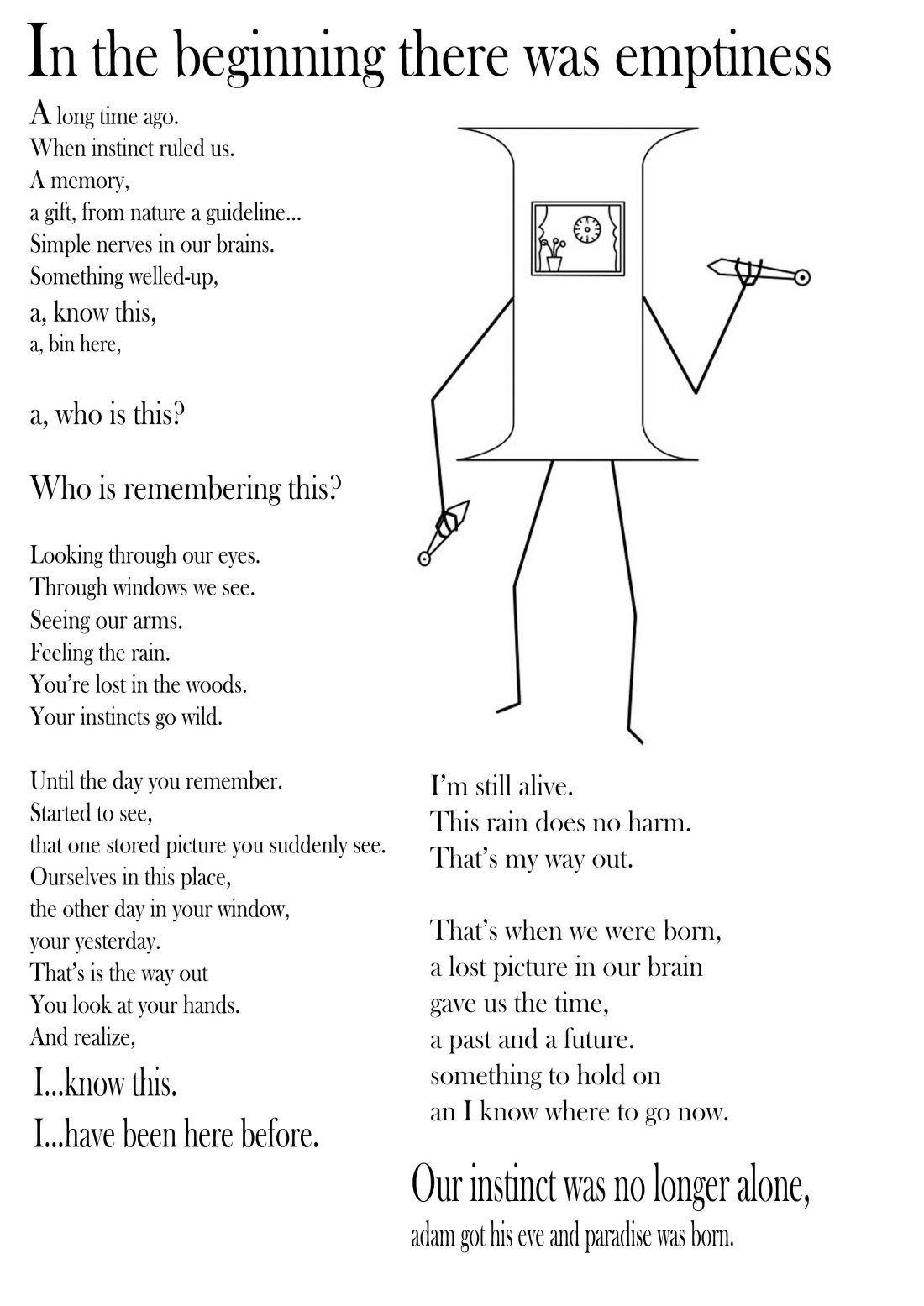
  1. Logik des Traumes. – Im Schlafe ist fortwährend unser Nervensystem durch mannichfache innere Anlässe in Erregung, fast alle Organe secerniren und sind in Thätigkeit, das Blut macht seinen ungestümen Kreislauf, die Lage des Schlafenden drückt einzelne Glieder, seine Decken beeinflussen die Empfindung verschiedenartig, der Magen verdaut und beunruhigt mit seinen Bewegungen andere Organe, die Gedärme winden sich, die Stellung des Kopfes bringt ungewöhnliche Muskellagen mit sich, die Füsse, unbeschuht, nicht mit den Sohlen den Boden drückend, verursachen das Gefühl des Ungewöhnlichen ebenso wie die andersartige Bekleidung des ganzen Körpers, – alles diess nach seinem täglichen Wechsel und Grade erregt durch seine Aussergewöhnlichkeit das gesammte System bis in die Gehirnfunction hinein: und so giebt es hundert Anlässe für den Geist, um sich zu verwundern und nach Gründen dieser Erregung zu suchen: der Traum aber ist das Suchen und Vorstellen der Ursachen für jene erregten Empfindungen, das heisst der vermeintlichen Ursachen. Wer zum Beispiel seine Füsse mit zwei Riemen umgürtet, träumt wohl, dass zwei Schlangen seine Füsse umringeln: diess ist zuerst eine Hypothese, sodann ein Glaube, mit einer begleitenden bildlichen Vorstellung und Ausdichtung: “diese Schlangen müssen die causa jener Empfindung sein, welche ich, der Schlafende, habe”, – so urtheilt der Geist des Schlafenden. Die so erschlossene nächste Vergangenheit wird durch die erregte Phantasie ihm zur Gegenwart. So weiss jeder aus Erfahrung, wie schnell der Träumende einen starken an ihn dringenden Ton, zum Beispiel Glockenläuten, Kanonenschüsse in seinen Traum verflicht, das heisst aus ihm hinterdrein erklärt, so dass er zuerst die veranlassenden Umstände, dann jenen Ton zu erleben meint. – Wie kommt es aber, dass der Geist des Träumenden immer so fehl greift, während der selbe Geist im Wachen so nüchtern, behutsam und in Bezug auf Hypothesen so skeptisch zu sein pflegt? so dass ihm die erste beste Hypothese zur Erklärung eines Gefühls genügt, um sofort an ihre Wahrheit zu glauben? (denn wir glauben im Traume an den Traum, als sei er Realität, das heisst wir halten unsre Hypothese für völlig erwiesen). – Ich meine: wie jetzt noch der Mensch im Traume schliesst, so schloss die Menschheit auch im Wachen viele Jahrtausende hindurch: die erste causa, die dem Geiste einfiel, um irgend Etwas, das der Erklärung bedurfte, zu erklären, genügte ihm und galt als Wahrheit. (So verfahren nach den Erzählungen der Reisenden die Wilden heute noch.) Im Traum übt sich dieses uralte Stück Menschenthum in uns fort, denn es ist die Grundlage, auf der die höhere Vernunft sich entwickelte und in jedem Menschen sich noch entwickelt: der Traum bringt uns in ferne Zustände der menschlichen Cultur wieder zurück und giebt ein Mittel an die Hand, sie besser zu verstehen. Das Traumdenken wird uns jetzt so leicht, weil wir in ungeheuren Entwickelungsstrecken der Menschheit gerade auf diese Form des phantastischen und wohlfeilen Erklärens aus dem ersten beliebigen Einfalle heraus so gut eingedrillt worden sind. Insofern ist der Traum eine Erholung für das Gehirn, welches am Tage den strengeren Anforderungen an das Denken zu genügen hat, wie sie von der höheren Cultur gestellt werden. – Einen verwandten Vorgang können wir geradezu als Pforte und Vorhalle des Traumes noch bei wachem Verstande in Augenschein nehmen. Schliessen wir die Augen, so producirt das Gehirn eine Menge von Lichteindrücken und Farben, wahrscheinlich als eine Art Nachspiel und Echo aller jener Lichtwirkungen, welche am Tage auf dasselbe eindringen. Nun verarbeitet aber der Verstand (mit der Phantasie im Bunde) diese an sich formlosen Farbenspiele sofort zu bestimmten Figuren, Gestalten, Landschaften, belebten Gruppen. Der eigentliche Vorgang dabei ist wiederum eine Art Schluss von der Wirkung auf die Ursache; indem der Geist fragt: woher diese Lichteindrücke und Farben, supponirt er als Ursachen jene Figuren, Gestalten: sie gelten ihm als die Veranlassungen jener Farben und Lichter, weil er, am Tage, bei offenen Augen, gewohnt ist, zu jeder Farbe, jedem Lichteindrucke eine veranlassende Ursache zu finden. Hier also schiebt ihm die Phantasie fortwährend Bilder vor, indem sie an die Gesichtseindrücke des Tages sich in ihrer Production anlehnt, und gerade so macht es die Traumphantasie: – das heisst die vermeintliche Ursache wird aus der Wirkung erschlossen und nach der Wirkung vorgestellt: alles diess mit ausserordentlicher Schnelligkeit, so dass hier wie beim Taschenspieler eine Verwirrung des Urtheils entstehen und ein Nacheinander sich wie etwas Gleichzeitiges, selbst wie ein umgedrehtes Nacheinander ausnehmen kann. – Wir können aus diesen Vorgängen entnehmen, wie spät das schärfere logische Denken, das Strengnehmen von Ursache und Wirkung, entwickelt worden ist, wenn unsere Vernunft- und Verstandesfunctionen jetzt noch unwillkürlich nach jenen primitiven Formen des Schliessens zurückgreifen und wir ziemlich die Hälfte unseres Lebens in diesem Zustande leben. – Auch der Dichter, der Künstler schiebt seinen Stimmungen und Zuständen Ursachen unter, welche durchaus nicht die wahren sind; er erinnert insofern an älteres Menschenthum und kann uns zum Verständnisse desselben verhelfen.

Sources:

I will read a Dutch translation that is based on the work of researchers Colli and Montinari. I also use a translation from R.J.Hollingdale and the Gary Handwerk translation from the Colli-Montinari edition. Both are more modern than the copyright free translation I use here. This is a translation from 1909 by Helen Zimmern, who knew Nietzsche personally, but there was no critical study of Nietzsche’s work done back then and this translation suffers from that. The same goes for the translation from Alexander Harvey. My German is not good enough to pretend that I can translate it better than the professionals do but I will use the original as a referee.

  1. Menselijk al te menselijk een boek voor vrije geesten, translated by Thomas Graftdijk, 2000. Buy it here
  2. Human, all too human a book for free spirits, translated by R.J.Hollingdale, 1986
  3. Human, all too human a book for free spirits I V3, translated by Gary handwerk 1997
  4. Human, all too human a book for free spirits Part I, translated by Helen Zimmern 1909. Read it  here
  5. Human, all too human a book for free spirits, translated by Alexander Harvey, 1908. Read it here
  6. Menschliches allzu menschlich 1878/80. Read it here


Day 605

Day's pictures
Day 605-1

Day 605 – Living close to the polar-circle in Norway  means early and long sunsets this time of the year. I took this picture around 13:00 on a hill close to my house. The view is great, you can see some of the 6000 islands  surrounding the island I live on.

The other 604 day’s you can find here.

Two years ago i decided to start taking pictures every day to put some new life in my lingering hobby. I just past day number 600 and posting a picture everyday is almost second nature for me now. There were moments that i had no motivation but after a couple of hundred photo’s it becomes harder and harder to quit. For most of the pictures i have tried to put some effort in it and I have never uploaded a photo straight from my phone.

I like macro photography the most, looking and showing the hidden details, small creatures and details of plants. I try to give myself a different challenge everyday like using this lens or that flash, going to the shoreline or only take pictures of that old tractor. Limiting myself forces me to be creative and think of solutions I have never thought of.

The cameras I use the most for now is a Nikon D7100 with a Nikon 105mm macro lens. I also use 2 Nikon R1 macro flashes or a normal flash with a big diffuser. To get even closer I use extension tubes with the 105mm or 50mm f1.8. lenses In my camera bag I also have an older Nikon 300mm lens. The other camera’s I use are a Fuji e1 with 18, 35 and 55-200mm lenses, a Sony RX100III and my phone.

I hardly ever use a tripod when I take macro pictures and most of the time I take the pictures where I find the bug or flower. I sometimes move grass or leaves from the background but for the rest I leave it as it is. Because I take pictures every day I don’t go for perfection. If I catch my self tinkering endlessly , I will put a stop to it…I have more to do and…the best pictures are not perfect. For this tinkering I use mainly Lightroom but also Photoshop and filters from Topazlaps.

12. Dream and culture

Human all too human

Reading Friedrich Nietzsche’s Human all too human

Read the introduction here

You can read the aphorism I discuss, below the main article.

Synopsis and my take on it:

While dreaming our memory is “brought back to a condition of imperfection such as everyone may have experienced in pre-historic times, whether asleep or awake.” The dreams are “arbitrary and confused” like the mythologies they invented. People that visited “savage” people tell of their “short tension of memory, his mind begins to sway here and there from sheer weariness and gives forth lies and nonsense.”  But in dreams we are all like the savage, we misinterpreted our dreams and are alarmed if we recollect the dream clearly. The clarity of the pictures in a dream make us believe that they are real and “recall the conditions that appertain relate to primitive man, in whom hallucination was extraordinarily frequent, and sometimes simultaneously seized entire communities, entire nations. Therefore, in sleep and in dreams we once more carry out the task1 homework of early humanity.2

In one sentence:

Our dreams and myths are from the savages

1Zimmern translated the German word pensum with task and Hollingdale with curriculum. I personally like the definition from Collinsdictionary.com the best: “1. a piece of work or a task to be completed, esp a school exercise2. a piece of extra school work set as a form of punishment” I like the added punishment in these definitions. In the Dutch version its translated as “huiswerk” or homework.

2Hollingdale has a note for this aphorism:  In The Interpretation of Dreams, ch. VII (6), Freud writes: ‘We can guess how much to the point is Nietzsche’s assertion that in dreams “some primeval relic of humanity is at work which we can now scarcely reach any longer by a direct path”; and we may expect that the analysis of dreams will lead us to a knowledge of man’s archaic heritage, of what is psychologically innate in him.


Human, all too human a book for free spirits Part I translated by Helen Zimmern 1909

  1. DREAM AND CULTURE.—The function of the brain which is most influenced by sleep is the memory ; not that it entirely ceases ; but it is brought back to a condition of imperfection, such as everyone may have experienced in pre-historic times, whether asleep or awake. Arbitrary and confused as it is, it constantly confounds things on the ground of the most fleeting resemblances; but with the same arbitrariness and confusion the ancients invented their mythologies, and even at the present day travellers are accustomed to remark how prone the savage is to forgetfulness, how, after a short tension of memory, his mind begins to sway here and there from sheer weariness and gives forth lies and nonsense. But in dreams we all resemble the savage ; bad recognition and erroneous comparisons are the reasons of the bad conclusions, of which we are guilty in dreams : so that, when we clearly recollect what we have dreamt, we are alarmed at ourselves at harbouring so much foolishness within us. The perfect distinctness of all dream-representations, which pre-suppose absolute faith in their reality, recall the conditions that appertain to primitive man, in whom hallucination was extraordinarily frequent, and sometimes simultaneously seized entire communities, entire nations. Therefore, in sleep and in dreams we once more carry out the task of early humanity.

Menschliches allzu menschlich 1878/80

  1. Traum und Cultur.- Die Gehirnfunction, welche durch den Schlaf am meisten beeinträchtigt wird, ist das Gedächtniss: nicht dass es ganz pausirte, – aber es ist auf einen Zustand der Unvollkommenheit zurückgebracht, wie es in Urzeiten der Menschheit bei jedermann am Tage und im Wachen gewesen sein mag. Willkürlich und verworren, wie es ist, verwechselt es fortwährend die Dinge auf Grund der flüchtigsten Aehnlichkeiten: aber mit der selben Willkür und Verworrenheit dichteten die Völker ihre Mythologien, und noch jetzt pflegen Reisende zu beobachten, wie sehr der Wilde zur Vergesslichkeit neigt, wie sein Geist nach kurzer Anspannung des Gedächtnisses hin und her zu taumeln beginnt und er, aus blosser Erschlaffung, Lügen und Unsinn hervorbringt. Aber wir Alle gleichen im Traume diesem Wilden; das schlechte Wiedererkennen und irrthümliche Gleichsetzen ist der Grund des schlechten Schliessens, dessen wir uns im Traume schuldig machen: so dass wir, bei deutlicher Vergegenwärtigung eines Traumes, vor uns erschrecken, weil wir so viel Narrheit in uns bergen. – Die vollkommene Deutlichkeit aller Traum-Vorstellungen, welche den unbedingten Glauben an ihre Realität zur Voraussetzung hat, erinnert uns wieder an Zustände früherer Menschheit, in der die Hallucination ausserordentlich häufig war und mitunter ganze Gemeinden, ganze Völker gleichzeitig ergriff. Also: im Schlaf und Traum machen wir das Pensum früheren Menschenthums noch einmal durch.

Sources:

I will read a Dutch translation that is based on the work of researchers Colli and Montinari. I also use a translation from R.J.Hollingdale and the Gary Handwerk translation from the Colli-Montinari edition. Both are more modern than the copyright free translation I use here. This is a translation from 1909 by Helen Zimmern, who knew Nietzsche personally, but there was no critical study of Nietzsche’s work done back then and this translation suffers from that. The same goes for the translation from Alexander Harvey. My German is not good enough to pretend that I can translate it better than the professionals do but I will use the original as a referee.

  1. Menselijk al te menselijk een boek voor vrije geesten, translated by Thomas Graftdijk, 2000. Buy it here
  2. Human, all too human a book for free spirits, translated by R.J.Hollingdale, 1986
  3. Human, all too human a book for free spirits I V3, translated by Gary handwerk 1997
  4. Human, all too human a book for free spirits Part I, translated by Helen Zimmern 1909. Read it  here
  5. Human, all too human a book for free spirits, translated by Alexander Harvey, 1908. Read it here
  6. Menschliches allzu menschlich 1878/80. Read it here


11. Language as a presumptive science

Human all too human

You can read the aphorism I discuss here below the main article.

Synopsis and my take on it:

The importance of language for the development of culture lies in the fact that in language man has placed a world of his own beside the other, Languages describes the world, becomes its own world, but is not the real world  a position which he deemed so fixed that he might therefrom lift the rest of the world off its hinges, and make himself master of it.” Man thought that the construction he made out of language was so stable that he could rule the world with it As far as people believed as “æternæ veritateseternal truthfor a great length of time, he has acquired that pride by which he has raised himself above the animal; he really thought that in language he possessed the knowledge of the world. The maker of language was not modest enough to think that he only gave designations names to things, he believed rather that with his words he expressed the widest knowledge of the things;” Language is the first step towards science. From “which the mightiest sources of strength have flowed” From the belief that science came out of language a strong force came into the worldMuch later—only now—it is dawning upon men that they have propagated a tremendous error1 in their belief in language. Fortunately, it is now too late to reverse the development of reason, which is founded upon that belief. Reason is based on the falls belief that language can be used to name or rule the world  Logic, also, is founded upon suppositions2 to which nothing in the actual world corresponds,” As an example the “supposition2 of the equality of things, and the identity of the same thing at different points of time” But science came out of the world where they thought such things existed In the world of languages things like circles and straight lines exist. “It is the same with mathematics, which would certainly not have arisen if it had been known from the beginning that in Nature there are no exactly straight lines, no real circle, no absolute standard of size.”

In one sentence:

Reason would not exist without our first wrong words.

1In the translation by Hollingdale there is a note at this place that points to the following assay from Nietzsche: On Truth and Lies in a Nonmoral Sense (1973) This is a quote from that book: “Every word immediately becomes a concept, inasmuch as it is not intended to serve as a reminder of the unique and wholly individualized original experience to which it owes its birth, but must at the same time fit innumerable, more or less similar cases—which means, strictly speaking, never equal—in other words, a lot of unequal cases. Every concept originates through our equating what is unequal.” Read more here

2Zimern translates “Voraussetzung“ with supposition (a hypothesis beforehand) and Hollingdale translates it with presupposition (an assumption beforehand). In German the word Voraussetzung is defined as: eine feste Vorstellung, die das weitere Tun oder Denken leitet (a fixed idea that guides further action or thinking). Which correspond better with the English word Presupposition.


Human, all too human a book for free spirits Part I translated by Helen Zimmern 1909

  1. LANGUAGE AS A PRESUMPTIVE SCIENCE.—The importance of language for the development of culture lies in the fact that in language man has placed a world of his own beside the other, a position which he deemed so fixed that he might therefrom lift the rest of the world off its hinges, and make himself master of it. Inasmuch as man has believed in the ideas and names of things as æternæ veritates for a great length of time, he has acquired that pride by which he has raised himself above the animal; he really thought that in language he possessed the knowledge of the world. The maker of language was not modest enough to think that he only gave designations to things, he believed rather that with his words he expressed the widest knowledge of the things ; in reality language is the first step in the endeavour after science. Here also it is belief in ascertained truth, from which the mightiest sources of strength have flowed. Much later—only now—it is dawning upon men that they have propagated a tremendous error in their belief in language. Fortunately it is now too late to reverse the development of reason, which is founded upon that belief. Logic, also, is founded upon suppositions to which nothing in the actual world corresponds,—for instance, on the supposition of the equality of things, and the identity of the same thing at different points of time,—but that particular science arose out of the contrary belief (that such things really existed in the actual world). It is the same with mathematics, which would certainly not have arisen if it had been known from the beginning that in Nature there are no exactly straight lines, no real circle, no absolute standard of size.

Menschliches allzu menschlich 1878/80

11. Die Sprache als vermeintliche Wissenschaft. – Die Bedeutung der Sprache für die Entwickelung der Cultur liegt darin, dass in ihr der Mensch eine eigene Welt neben die andere stellte, einen Ort, welchen er für so fest hielt, um von ihm aus die übrige Welt aus den Angeln zu heben und sich zum Herrn derselben zu machen. Insofern der Mensch an die Begriffe und Namen der Dinge als an aeternae veritates durch lange Zeitstrecken hindurch geglaubt hat, hat er sich jenen Stolz angeeignet, mit dem er sich über das Thier erhob: er meinte wirklich in der Sprache die Erkenntniss der Welt zu haben. Der Sprachbildner war nicht so bescheiden, zu glauben, dass er den Dingen eben nur Bezeichnungen gebe, er drückte vielmehr, wie er wähnte, das höchste Wissen über die Dinge mit den Worten aus; in der That ist die Sprache die erste Stufe der Bemühung um die Wissenschaft. Der Glaube an die gefundene Wahrheit ist es auch hier, aus dem die mächtigsten Kraftquellen geflossen sind. Sehr nachträglich -jetzt erst – dämmert es den Menschen auf, dass sie einen ungeheuren Irrthum in ihrem Glauben an die Sprache propagirt haben. Glücklicherweise ist es zu spät, als dass es die Entwickelung der Vernunft, die auf jenem Glauben beruht, wieder rückgängig machen könnte. – Auch die Logik beruht auf Voraussetzungen, denen Nichts in der wirklichen Welt entspricht, z.B. auf der Voraussetzung der Gleichheit von Dingen, der Identität des selben Dinges in verschiedenen Puncten der Zeit: aber jene Wissenschaft entstand durch den entgegengesetzten Glauben (dass es dergleichen in der wirklichen Welt allerdings gebe). Ebenso steht es mit der Mathematik, welche gewiss nicht entstanden wäre, wenn man von Anfang an gewusst hätte, dass es in der Natur keine exact gerade Linie, keinen wirklichen Kreis, kein absolutes Grössenmaass gebe.


Sources:

I will read a Dutch translation that is based on the work of researchers Colli and Montinari. I also use a translation from R.J.Hollingdale and the Gary Handwerk translation from the Colli-Montinari edition. Both are more modern than the copyright free translation I use here. This is a translation from 1909 by Helen Zimmern, who knew Nietzsche personally, but there was no critical study of Nietzsche’s work done back then and this translation suffers from that. The same goes for the translation from Alexander Harvey. My German is not good enough to pretend that I can translate it better than the professionals do but I will use the original as a referee.

  1. Menselijk al te menselijk een boek voor vrije geesten, translated by Thomas Graftdijk, 2000. Buy it here
  2. Human, all too human a book for free spirits, translated by R.J.Hollingdale, 1986
  3. Human, all too human a book for free spirits I V3, translated by Gary handwerk 1997
  4. Human, all too human a book for free spirits Part I, translated by Helen Zimmern 1909. Read it  here
  5. Human, all too human a book for free spirits, translated by Alexander Harvey, 1908. Read it here
  6. Menschliches allzu menschlich 1878/80. Read it here


War of the dummies

History

Day 240-1I grow up with a mother that brought us to large demonstrations against American and Russian aggression. There were posters with peace signs on the wall and I remember that she told us, when we were young and in the early eighties, that if “the bomb” would fall we would go to the big city, so we would die quickly. There was a real scare that time for an atomic war and all because of that dumb actor and his war loving buddies in America that thought it was smart to taunt a dying bear. So, it’s clear that I didn’t grew up in a militaristic family, but me and my brother still choose to join the military. I was drafted, and I could have refused but I wasn’t sure why I was against war.

Veterans

Society
Day 603-1

After a long week in the field.

I joined the Dutch Marines in September 1992. I was one of the last that got drafted in military service. Rather than serving the mandatory 12 moths with the army I applied for the Dutch marines or “het Korps Mariniers”. After a rigorous selection of 2 days, only 2 were left of the more than 100 that started the selection.  You can understand that I felt some pride to be found physically and mentally fit for the Marines. The Dutch Marines is the oldest branch of the armed forces in the Netherlands and among the oldest in the world. It was founded in 1665 and has a long history with soldiers on board ships and across the different Dutch colonies. When I joined in 1992 the Soviet Union was just dissolved but a big part of our training was still focused on a potential war with that country. After the basic training of six months you normally train in the mountains and the snow of Norway because that is the part of the NATO territory we supposed to defend from the Russians. Besides the silliness of that the training was really good for me and I can recommend it to everyone.

20171116_195732

Our camp in a small village.

There is a lot of physical training, but you quickly find out that strong and bulky muscles are not what gets you through the day. After days with almost no sleep, constant movement, and harassments and specially the hunger you are so tired that no physical strength is strong enough to let you put your feet before the other till you are home. You have to find a way around all the pain in your own head and convince yourself to go on and ignore the pain. Experiences like that stay valuable for the rest of your life. Every time I encounter some setback I can use these skills I learned during that half year. It was extra valuable because the punishment was voluntary. I was drafted but joining the Marines was voluntary. Our sergeant was constantly reminding us that we could quit at any moment and hop in the warm car. Because of this voluntary suffering you need to motivate yourself to go on, it’s not a random circumstance that threw you in a situation where you had no choice to go on.


img031

Discipline

It wasn’t easy going back to civilian life after 3 years. People often say that they could never last in a hierarchical, militaristic system, but it has its advantages if everybody knows what their roll is at the workplace. I’ve worked in enough places, since I left, where everybody is a so called equal and you have to untangle the whole messed up social structure to find out who is really in charge and is pulling the strings behind the curtain. If my sergeant told me to do something I did it, maybe I didn’t like it but that’s not important, it was clear from who it came from and who ordered him. In civilian life you have to gift-wrap every order to a subordinate because you could offend someone.  Don’t get me wrong, there were enough problems within this military system, communication between 2 or more people is difficult no matter what system you have.

The biggest difference I noticed was that within the marines you could tell someone that you didn’t like him, you can have disagreements, but if it was necessary, everybody did their job and you would do yours even for the person you didn’t like. One reason why you do that is because you all have been through the same experiences and that binds you. Colleagues in civilian life have not necessarily experienced that kind of bond besides the that you have the same job. Because of the lack of a common ground it’s easier to…how shall I say it…get lied to in your face. If you want to draw a chart of all the relations between coworkers in a normal workplace, with all the likes, dislike, lies, and so on, you end up with an incomprehensible mess. That’s the world where we live in and that’s why I sometimes miss the military system.

Another reason is that in the military there is normally a clear and common goal. For example, guard duties, you have to rely on each other. In civilian life you also have to rely on each other but the cost are most of the time not as high if one slacks, and one slacks often.

20171116_195753

We collected weapons used in the many wars Cambodia endured.

I never been in situation like so many soldiers in Iraq and Afghanistan. I was in Cambodia for 5 months and besides the threat of driving over a mine and the occasional whistle of a bullet, probably from a hunter, there was not much danger. There were a couple of moment when our colleagues from mine demolition forgot to tell us that they would blow up some mines and we thus thought that hell broke loose or when the Cambodians started shooting at each other outside our camp and it would take us a while to assess the situation. we also encountered some hardened soldiers, probably Khmer rouge or of one of the many private armies, that could stare at you with eyes that looked like they had killed. At the end it was our job, we did our routines and duties, endured the heat, meager accommodations and third-world sanitation. There were some casualties in our battalion and that’s never easy but statistically they would also have occurred when we would stayed at home.   But the people that lost their buddies in a firefight or are under direct fire go to a whole different experience and a group like that will bond even stronger than my colleagues and I did over our shared experiences in Cambodia. That’s why so many veterans have problems adjusting to society, as if a part of their communication is in another language, one that the people back home will never understand. Their experiences are not only unimaginable for others but their way of communicating has also changed.

The experiences that my colleagues and I went thru will have a permanent place in our mind. Most of us have dealt with our individual experiences during that time and have adjusted to normal life. But there are many soldiers like us that have gone thru so much more that I can understand the hardship they have to go thru while returning to civil society. Not all of these soldiers have problems but for the ones that have we need to support them with everything we have. In western Europe and America there are problems enough with handling these people, it’s easier to send someone to war than to take care of them when they return. But there are also millions of soldiers around the world that never had a choice, that are thrown into wars for reasons that they have no knowledge of.  Whole generations will grow up with the scars of these wars, because the pain is often past on.

10. The harmlessness of metaphysics in the future

Human all too human

You can read the aphorism I discuss here below the main article.


Synopsis and my take on it:

As soon as the origins of “religion, art, and morals” are understood without the use of metaphysical interference or without interference that goes beyond physical nature “at the beginning and in” their progress, the interest in “the ” thing-in-itself ” and the ” phenomenon ” ceases.”  Because with the for mentioned religion, art, and morals we do not touch the “essence of the world in itself we are in the domain of representation or vorstellung1 in German and is translated by Hollingdale as Ideas and I think that’s better …”no ” intuition ” can carry us further.” Than Nietzsche states that the question “as to how our own conception of the world can differ so widely from the revealed essence of the world, to physiology2 and the history of the evolution of organisms and ideas

In one sentence:

With knowledge the “thing in itself” will disappear.

1 Vorstellung, a mental image or idea produced by prior perception of an object, as in memory or imagination, rather than by actual perception. (google)

2 the branch of biology dealing with the functions and activities of living organisms and their parts, including all physical and chemical processes. (dictionary.com)


Human, all too human a book for free spirits Part I translated by Helen Zimmern 1909

  1. THE HARMLESSNESS OF METAPHYSICS IN THE FUTURE.—Directly the origins of religion, art, and morals have been so described that one can perfectly explain them without having recourse to metaphysical concepts at the beginning and in the course of the path, the strongest interest in the purely theoretical problem of the ” thing-in-itself ” and the ” phenomenon ” ceases. For however it may be here, with religion, art, and morals we do not touch the “essence of the world in itself” ; we are in the domain of representation, no ” intuition ” can carry us further. With the greatest calmness we shall leave the question as to how our own conception of the world can differ so widely from the revealed essence of the world, to physiology and the history of the evolution of organisms and ideas.

Menschliches allzu menschlich 1878/80

  1. Harmlosigkeit der Metaphysik in der Zukunft. – Sobald die Religion, Kunst und Moral in ihrer Entstehung so beschrieben sind, dass man sie vollständig sich erklären kann, ohne zur Annahme metaphysischer Eingriffe am Beginn und im Verlaufe der Bahn seine Zuflucht zu nehmen, hört das stärkste Interesse an dem rein theoretischen Problem vom “Ding an sich” und der “Erscheinung” auf. Denn wie es hier auch stehe: mit Religion, Kunst und Moral rühren wir nicht an das “Wesen der Welt an sich”; wir sind im Bereiche der Vorstellung, keine “Ahnung” kann uns weitertragen. Mit voller Ruhe wird man die Frage, wie unser Weltbild so stark sich von dem erschlossenen Wesen der Welt unterscheiden könne, der Physiologie und der Entwickelungsgeschichte der Organismen und Begriffe überlassen.

Sources:

I will read a Dutch translation that is based on the work of researchers Colli and Montinari. I also use a translation from R.J.Hollingdale and the Gary Handwerk translation from the Colli-Montinari edition. Both are more modern than the copyright free translation I use here. This is a translation from 1909 by Helen Zimmern, who knew Nietzsche personally, but there was no critical study of Nietzsche’s work done back then and this translation suffers from that. The same goes for the translation from Alexander Harvey. My German is not good enough to pretend that I can translate it better than the professionals do but I will use the original as a referee.

  1. Menselijk al te menselijk een boek voor vrije geesten, translated by Thomas Graftdijk, 2000. Buy it here
  2. Human, all too human a book for free spirits, translated by R.J.Hollingdale, 1986
  3. Human, all too human a book for free spirits I V3, translated by Gary handwerk 1997
  4. Human, all too human a book for free spirits Part I, translated by Helen Zimmern 1909. Read it  here
  5. Human, all too human a book for free spirits, translated by Alexander Harvey, 1908. Read it here
  6. Menschliches allzu menschlich 1878/80. Read it here