Torgunn Katrine

My work

For the last 3 years I have worked for a coastal museum in Rørvik (Kystmuseet Norveg). I restore old wooden buildings that are part of the collection and I also restore Torgunn Katrine, a 40ft wooden fishing boat from 1936. The pictures you see here are from that project. It is a small museum with only two craftsmen. My colleague restores mainly buildings and I do most of the work on the boats we have. Torgunn is a big project of at least 4000-man hours. I have a student and some temporary help and if everything goes well we will be ready next summer. I will tell more in an upcoming post.

Here is a link to the website of the museum where I work: kystmuseetnorveg

Video from 2016 about Torgunn Katrine

Some more recent pictures.

Some fancy pictures.

Day 625, refuge.

Day's pictures

Abstract rust

This is a picture of a rusty pipe. With some adjustments it looks cool, if I may say so. Like colorful lava floating around, breaking away…Yesterday I wrote about America and the innocent lives that got destroyed because of an unnecessary war. I wondered, in that story, how people could live in a country like that. Someone asked me what I would do…Well, I live In Norway, I moved here from the Netherlands about 10 years ago. There are several reasons why I chose for Norway and to move away from Holland, but the reason that I left is complicated. It all started (well most of it) when I came back from Cambodia, where I worked as a Dutch* Marine. Working in a country where the people had nothing besides a bamboo hut and a hole in the ground to cook on, and then coming back to a country where even the poorest have all the basics checked, and hear everybody complain, and complain… And it was not a money thing, poor vs rich or injustice. It was the lack of perspective. The problems we have in a rich country like Holland are not real problems. If everybody in the world has a meal, a school education and something to live for, then we “can sweat the small stuff”. It is difficult to describe what I felt but its like that naked king story and no one says something about it. I didn’t understand how we could live our lives knowing that the world was broken. I didn’t understand why not everybody was talking about that. And I studied it, and started to learn why it is, but knowing reasons for it didn’t take away the unrest I had.  I didn’t belong there any more, there was a black hole in front of me where there should be a future. I sometimes jokingly say that I am a political refugee, and if you extend the fear of bodily harm to mental harm that society inflicts on you because of your ideas, then there is some truth in that joke. I moved to Norway because that was something I talked about for years. I restore wooden boats, my nearest neighbor lives 2 kilometers away and the best thing is that I am a guest here, and if you are someone’s guest you don’t complain about their way’s, well not too much, I’m still Dutch.

*I am Dutch, and I live in the Netherlands or Holland, but historically Holland is the name of the two provinces in the western part: Noord-Holland and Zuid-Holland. As a Dutch-man we mix those two but officially it is: I live in the Netherlands. As a Dutch-man we can also say: Ik spreek Nederlands (I speak Netherlands), or ik spreek Hollands (I speak Hollands), but a foreigner can only say: I speak Dutch. To make it more complicated: if you speak Dutch you can also say that you speak Belgium, or Flemish, that’s what the people in Belgium do when they get asked what languish they speak, some might even say that they speak Dutch.   I don’t know why it is so complicated, if you know an other country that is similar I would like to know.

Day 624

Day's pictures

Day 624-1

Warning by

PURE at heart we wander now:
Comrade on the quest divine,
Turn not from the stars your brow
That your eyes may rest on mine.

Pure at heart we wander now:
We have hopes beyond to-day;
And our quest does not allow
Rest or dreams along the way.

We are, in our distant hope,
One with all the great and wise:
Comrade, do not turn or grope
For some lesser light that dies.

We must rise or we must fall:
Love can know no middle way:
If the great life do not call,
Then is sadness and decay.

George William Russell

Fat naked people

Society

Day 259-1I wanted to no more about civilian casualties of war, or Collateral damage. While doing research on the internet I came upon this site from the Watson Institute. The article goes about civilian casualties in wars that America started. They did research that shows that “The wars in Iraq, Afghanistan, and Pakistan have taken a tremendous human toll on those countries. As of March 2015, approximately 210,000 civilians have died violent deaths as a result of the wars.” There are other numbers to, if you search for Casualties of the Iraq War you will find among others this wiki page that reads: “Official estimates of Iraq War casualties range from 110,000 to 460,000. Other estimates, such as the 2006 Lancet study, and the 2007 Opinion Research Business survey, put the numbers as high as 650,000 and 1.2 million respectively”. If even big institutes and universities can’t make up their mind with all their available resources than I, sitting behind my computer, will of course never find out the truth. But if you assume it is the lowest number, and only for the war that America started in Iraq in 2003, than 110,000-civilian’s casualties are still a lot.

Maybe I am crazy, but I immediately see in front of me a dull meeting room. In this room there is some bad lightning, lukewarm coffee and numbers scribbled on a board. There are a couple of people sitting at a big table, It looks like all middle-aged white man. They discuss the tolerated number of casualties of the war they are about to start. They sit there all smug. Probably thinking in themselves: “look at me, sitting here at the big table, making big decision, I am so serious, I am so important…wonder what’s for dinner tonight”. But it’s true, there was a table like that, in a room like that, with just a few old, probably fat and white, guys deciding over the willful killing of thousands of civilians, and every war kills civilians. They might claim it’s the state that goes to war, and they are just the tools that do it, but…
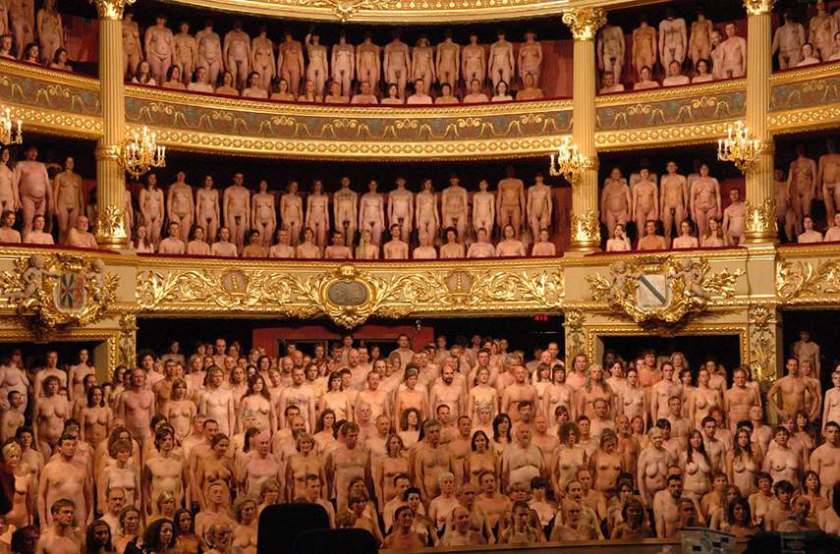
Specner-Tunick-Stadschouwburg-theatre-2014

Spencer Tunick – Widewalls

Picture this: try to see everybody naked in a big field. Naked we are all the same, without all the bells and whistles you will never know if that person is a hairdresser, a plumber or a congressman. We are all the same in that imaginary naked world but for some reason these fat white men started pointing at some people by a tree with a comfortable couch. The fat men give the order to kill them, they want the couch. These followers do that and… some bystanders get also killed. If you take away all the bells and whistles you end up with this picture. Collateral damage is what they call it, but at the end that is not what it is, It’s just a bunch of people that wanted something no matter the cost they, don’t care that some bystanders might die. Observing a group of naked people doing this ritual would surely make you wonder, put them some cloth on and call them president and general and it suddenly makes more sense…sadly, now it fits in a whole familiar narrative.

Every person that died in such an unjust war is murdered.

I’m not against war, if in the imaginary field full of naked people someone start beating his neighbor to death and you send your strongest friend there to stop him, first with words off course, and he accidentally hit the murderers younger brother that was standing to close. You might cal it collateral damage where an innocent bystander got hit, but there was a good cause. (I know, where do you draw the line, but morals without a line are no morals, passivism is no solution) It is generally agreed on that the Iraq war was not necessary and if there was a stronger power than America we would have seen some self-righteous American statesmen on the stand in Den Haag. Every person that died in such an unjust war is murdered. Nietzsche has this idea that morals get their value from the powerful, and he is right in that, America is not punished for the murder of more than 100,000 innocent bystanders because they are the most powerful country and can make the rules. Most Americans still go to bed without thinking about that, they just don’t seem to care. Would you stay in a country that murdered 100,000 man, woman and children?

If the Nuremberg laws were applied, then every post-war American president would have been hanged. Noam Chomsky
I struggle with these things, I like America, my fiancé is from America, I’ve been there several times, I wouldn’t mind living there for a while, I like going to the zoo. Its a beautiful country. Hollywood has softened my critical mind. The “idea of America” is almost always influenced by the media at large. Movies, comedy shows, news and so on. They all paint a picture, positive or negative, but they paint it. America is a big country, friendly people, racism, hamburgers, religious, funny presidents, ridiculous wealthy people, red

 

genghis-khan-

Mongolian warrior and ruler Genghis Khan created the largest empire in the world, the Mongol Empire, by destroying individual tribes in Northeast Asia. biography.com

necks, new Yorker’s, guns, American dream, poverty, and off course their wars. And If you slightly lift the Hollywood vail in front of your critical mind, you also see that Americans are not really interested in the rest of the world, I see this fake “Hollywood America” that is as narcissistic, nihilistic and schizophrenic as can be, but also has an air of innocence and naivete over itself. That’s how I see America, and that is a different picture than I have of a Hitler-Germany, a Stalin-USSR or a Mao-China, but they have something in common. They all rationalize their murderers rule over there subjects. And yes, I think we are all, the whole world, subjects of America. They have by far the most powerful military and culture in the world. They can pollute what they want, bully other countries, and start wars when they see fit. That kind of power corrupts and they are masters in rationalizing it.  In 500 years, when their power and culture is no longer dominant, they will write about America in the 21st century in a similar way as we now write about Genghis Khan or the Conquistadors. We write about these murderer’s figures and groups, there adventures and complement it with some hard facts about them, including a list of there wars and casualties. That’s it, in 500 years America will be reduced to some anecdotes in a corner of a history book, and a list next to it of all the peoples it murdered.

I know (of) a lot of good Americans but I don’t think it matters when the current is so strong against them, they will also be judged by time an get lost…maybe we all are.


“What I relate is the history of the next two centuries. I describe what is coming, what can no longer come differently: the advent of nihilism. . . . For some time now our whole European culture has been moving as toward a catastrophe, with a tortured tension that is growing from decade to decade: restlessly, violently, headlong, like a river that wants to reach the end. . . .” Friedrich Nietzsche

Nihilism is a natural consequence of a culture (or civilization) ruled and regulated by categories that mask manipulation, mastery and domination of peoples and nature.” Cornel West


Human all too human: 27. A substitute for religion.

Human all too human

Reading Friedrich Nietzsche’s Human all too human

Read the introduction here

You can read the aphorism I discuss here in English and German below the main article.

My take on it.

It is praised to substitute religion with philosophy as a religion for the people. When you balance your mind its sometimes good to step aside on a temperate mindset like philosophy. The transition can be dangerous. A philosophy can either satisfy or eradicate irrational Christian believes. These irrational believes are limited and contradict science. It is better to use art for the final transition because the irrational believes of the Cristian mind reacts better to art than to science. because art keeps the emotion less alive than metaphysical philosophy does. From art you can move on to a really liberating science.

 In one sentence:

To overcome irrational believes, use art to get to science.

 Synopsis, quote from the translation by Helen Zimmern and my take on it

It is believed that something good is said of philosophy when it is put forward as a substitute for religion for the people. It is praised to substitute religion with philosophy as a religion for the people. In fact, transitional zones of thought are occasionally necessary in the spiritual economy”. (Handwerk translation) 1 When you balance your mind its sometimes good to step aside on a temperate mindset like philosophy. The transition from religion to science can be dangerous. The transition can be dangerous. To this extent the recommendation is justifiable. But eventually we have to learn that the needs that religion satisfied, and that are now satisfied by philosophy can be weakened and eradicated. Think, for instance, of the Christian’s distress of soul, his sighing over inward corruption, his anxiety for salvation,—all notions which originate only in errors of reason and deserve not satisfaction but destruction. A philosophy can serve either to satisfy those needs or to set them aside A philosophy can either satisfy or eradicate irrational Christian believes. for they are acquired, temporally limited needs, and contradict science. These irrational believes are limited and contradict science. For the task of switching over to science from religion it is much better to use art to relieve the mind of emotions, It is better to use art for the final transition because the irrational believes of the Cristian mind reacts better to art than to science. for those notions receive much less support from it than from a metaphysical philosophy. because art keeps the emotion less alive that metaphysical philosophy does. From art you can move on to a really liberating science.

1The translators made a real mess out of this sentence. I think that Handwerk comes closest to the spirit of the text, judge for your self.
In der Tat bedarf es in der geistigen Ökonomie gelegentlich überleitender Gedankenkreise

In fact, in spiritual economy occasionally there is a need for a series of thought-processes (Google 2017)

In fact, transitional zones of thought are occasionally necessary in the spiritual economy. (Handwerk 2000)

The economy of the spirit does indeed occasionally require transitional orders of ideas (Hollingdale 1986)

in the spiritual economy there is need, at times, of an intermediary order of thought (Zimmern 1909)

And in fact, the training of the intellect does necessitate the convenient laying out of the track of thought. (Harvey 1908)


Human, all too human a book for free spirits Part I translated by Helen Zimmern 1909

  1. A SUBSTITUTE FOR RELIGION.—It is believed that something good is said of philosophy when it is put forward as a substitute for religion for the people. As a matter of fact, in the spiritual economy there is need, at times, of an intermediary order of thought : the transition from religion to scientific contemplation is a violent, dangerous leap, which is not to be recommended. To this extent the recommendation is justifiable. But one should eventually learn that the needs which have been satisfied by religion and are now to be satisfied by philosophy are not unchangeable ; these themselves can be weakened and eradicated. Think, for instance, of the Christian’s distress of soul, his sighing over inward corruption, his anxiety for salvation,—all notions which originate only in errors of reason and deserve not satisfaction but destruction. A philosophy can serve either to satisfy those needs or to set them aside ; for they are acquired, temporally limited needs, which are based upon suppositions contradictory to those of science. Here, in order to make a transition, art is far rather to be employed to relieve the mind over-burdened with emotions; for those notions receive much less support from it than from a metaphysical philosophy. It is easier, then, to pass over from art to a really liberating philosophical science.

Menschliches allzu menschlich 1878/80

  1. Ersatz der Religion. – Man glaubt einer Philosophie etwas Gutes nachzusagen, wenn man sie als Ersatz der Religion für das Volk hinstellt. In der That bedarf es in der geistigen Oekonomie gelegentlich überleitender Gedankenkreise; so ist der Uebergang aus Religion in wissenschaftliche Betrachtung ein gewaltsamer, gefährlicher Sprung, Etwas, das zu widerrathen ist. Insofern hat man mit jener Anempfehlung Recht. Aber endlich sollte man doch auch lernen, dass die Bedürfnisse, welche die Religion befriedigt hat und nun die Philosophie befriedigen soll, nicht unwandelbar sind; diese selbst kann man schwächen und ausrotten. Man denke zum Beispiel an die christliche Seelennoth, das Seufzen über die innere Verderbtheit, die Sorge um das Heil, – alles Vorstellungen, welche nur aus Irrthümern der Vernunft herrühren und gar keine Befriedigung, sondern Vernichtung verdienen. Eine Philosophie kann entweder so nützen, dass sie jene Bedürfnisse auch befriedigt oder dass sie dieselben beseitigt; denn es sind angelernte, zeitlich begränzte Bedürfnisse, welche auf Voraussetzungen beruhen, die denen der Wissenschaft widersprechen. Hier ist, um einen Uebergang zu machen, die Kunst viel eher zu benutzen, um das mit Empfindungen überladene Gemüth zu erleichtern; denn durch sie werden jene Vorstellungen viel weniger unterhalten, als durch eine metaphysische Philosophie. Von der Kunst aus kann man dann leichter in eine wirklich befreiende philosophische Wissenschaft übergehen.
Sources:

I will read a Dutch translation that is based on the work of researchers Colli and Montinari. I also use a translation from R.J.Hollingdale and the Gary Handwerk translation from the Colli-Montinari edition. Both are more modern than the copyright free translation I use here. This is a translation from 1909 by Helen Zimmern, who knew Nietzsche personally, but there was no critical study of Nietzsche’s work done back then and this translation suffers from that. The same goes for the translation from Alexander Harvey. My German is not good enough to pretend that I can translate it better than the professionals do but I will use the original as a referee.

  1. Menselijk al te menselijk een boek voor vrije geesten, translated by Thomas Graftdijk, 2000. Buy it here
  2. Human, all too human a book for free spirits, translated by R.J.Hollingdale, 1986
  3. Human, all too human a book for free spirits I V3, translated by Gary handwerk 1997
  4. Human, all too human a book for free spirits Part I, translated by Helen Zimmern 1909. Read it  here
  5. Human, all too human a book for free spirits, translated by Alexander Harvey, 1908. Read it here
  6. Menschliches allzu menschlich 1878/80. Read it here


Day 623

Day's pictures

Day 623-1

Colours in lamplight

Colours in lamplight are previews,
scarcely eschewed as wave-length turbulence
tuned to closeness and friendship.
Colours in firelight are skin-warmed
glowings, harbouring contentment,
revealing intuitive insight.
Colours in moonlight are barely shown
shy smiles recalled with eidetic
intensity from reservoirs of sight.
Colours in candlelight are filigree
reflections, decorative shimmers
of sympathetic enchantment.
But in the hard light of day
they become flagrant solidities
that get in the way of our true feelings.

Ivan Donn Carswell

Human all too human: 26. Reaction as progress.

Human all too human

Reading Friedrich Nietzsche’s Human all too human

Read the introduction here

You can read the aphorism I discuss here in English and German below the main article.

Synopsis, quote from the translation by Helen Zimmern and my take on it.

Sometimes strong people appear that bring alive the old days, they remind us that the new ways are not strong enough. Sometimes, strong wills revive old times. Luther is one of those people that’s showed up when science was not strong enough to resist him, the whole Renaissance seems like an early spring which is almost snowed under again. Luther halted science during the renaissance. But in this century Schopenhauer’s Metaphysics played the role of Luther and science is still not strong enough, Schopenhauer did it in Nietzsche’s time. in spite of the long-achieved destruction of all Christian dogmas. There is science in his teachings, but it is not strong, the old well – known “metaphysical requirement”1 are ruling. Schopenhauer has science ruled by metaphysic’s. It is one of Schopenhauer’s advantages that he gives us back older, mightier modes of contemplating the world and man, to which no other path would so easily lead us. His mode of thinking let you look at the world like in the old days. No one can do justice towards Christianity and its Asiatic cousins without the help of Schopenhauer, it is impossible to do it from the basis of still existing Christianity. You need Schopenhauer to do justice to religion, you cannot do it from existing Christianity. Only after this great success of justice The success is the use of Schopenhauer to look back at religion as it really was and is.   only after we resurrect the historical mindset of the enlightenment we can wear the banner of enlightenment We need the historical mindset of enlightenment including the three names, Petrarch2, Erasmus, Voltaire. We have turned reaction into progress. We no longer react if a strong will arrives, we go on, with progress

In one sentence:

Schopenhauer’s metaphysics can lead us to real enlightenment.

1In the Dutch translation there is a note that leads to Schopenhauer’s book: Die welt als wille und Vorstellung, book 2, chaper 17. (You can read the English version here)

2 Francesco Petrarca; July 20, 1304 – July 19, 1374), was an Italian scholar and poet in Renaissance Italy, who was one of the earliest humanists. His rediscovery of Cicero’s letters is often credited with initiating the 14th-century Renaissance. Petrarch is often considered the founder of Humanism. In the 16th century, Pietro Bembo created the model for the modern Italian language based on Petrarch’s works, as well as those of Giovanni Boccaccio, and, to a lesser extent, Dante Alighieri. Petrarch would be later endorsed as a model for Italian style by the Accademia della Crusca. Petrarch’s sonnets were admired and imitated throughout Europe during the Renaissance and became a model for lyrical poetry. He is also known for being the first to develop the concept of the “Dark Ages.” This standing back from his time was possible because he straddled two worlds—the classical and his own modern day. (Read more here)


Human, all too human a book for free spirits Part I translated by Helen Zimmern 1909

  1. REACTION AS PROGRESS.—Now and again there appear rugged, powerful, impetuous, but nevertheless backward-lagging minds which conjure up once more a past phase of mankind ; they serve to prove that the new tendencies against which they are working are not yet sufficiently strong, that they still lack something, otherwise they would show better opposition to those exorcisers. Thus, for example, Luther’s Reformation bears witness to the fact that in his century all the movements of the freedom of the spirit were still uncertain, tender, and youthful ; science could not yet lift up its head. Indeed the whole Renaissance seems like an early spring which is almost snowed under again. But in this century also, Schopenhauer’s Metaphysics showed that even now the scientific spirit is not yet strong enough ; thus the whole mediæval Christian view of the world and human feeling could celebrate its resurrection in Schopenhauer’s doctrine, in spite of the long achieved destruction of all Christian dogmas. There is much science in his doctrine, but it does not dominate it : it is rather the old well – known “metaphysical requirement” that does so. It is certainly one of the greatest and quite invaluable advantages which we gain from Schopenhauer, that he occasionally forces our sensations back into older, mightier modes of contemplating the world and man, to which no other path would so easily lead us. The gain to history and justice is very great,—I do not think that any one would so easily succeed now in doing justice to Christianity and its Asiatic relations without Schopenhauer’s assistance, which is specially impossible from the basis of still existing Christianity. Only after this great success of justice, only after we have corrected so essential a point as the historical mode of contemplation which the age of enlightenment brought with it, may we again bear onward the banner of enlightenment, the banner with the three names, Petrarch, Erasmus, Voltaire. We have turned reaction into progress.


Menschliches allzu menschlich 1878/80

  1. Die Reaction als Fortschritt. – Mitunter erscheinen schroffe, gewaltsame und fortreissende, aber trotzdem zurückgebliebene Geister, welche eine vergangene Phase der Menschheit noch einmal heraufbeschwören: sie dienen zum Beweis, dass die neuen Richtungen, welchen sie entgegenwirken, noch nicht kräftig genug sind, dass Etwas an ihnen fehlt: sonst würden sie jenen Beschwörern besseren Widerpart halten. So zeugt zum Beispiel Luther’s Reformation dafür, dass in seinem Jahrhundert alle Regungen der Freiheit des Geistes noch unsicher, zart, jugendlich waren; die Wissenschaft konnte noch nicht ihr Haupt erheben. Ja, die gesammte Renaissance erscheint wie ein erster Frühling, der fast wieder weggeschneit wird. Aber auch in unserem Jahrhundert bewies Schopenhauer’s Metaphysik, dass auch jetzt der wissenschaftliche Geist noch nicht kräftig genug ist: so konnte die ganze mittelalterliche christliche Weltbetrachtung und Mensch-Empfindung noch einmal in Schopenhauer’s Lehre, trotz der längst errungenen Vernichtung aller christlichen Dogmen, eine Auferstehung feiern. Viel Wissenschaft klingt in seine Lehre hinein, aber sie beherrscht dieselbe nicht, sondern das alte, wohlbekannte “metaphysische Bedürfniss”. Es ist gewiss einer der grössten und ganz unschätzbaren Vortheile, welche wir aus Schopenhauer gewinnen, dass er unsere Empfindung zeitweilig in ältere, mächtige Betrachtungsarten der Welt und Menschen zurückzwingt, zu welchen sonst uns so leicht kein Pfad führen würde. Der Gewinn für die Historie und die Gerechtigkeit ist sehr gross: ich glaube, dass es jetzt Niemandem so leicht gelingen möchte, ohne Schopenhauer’s Beihülfe dem Christenthum und seinen asiatischen Verwandten Gerechtigkeit widerfahren zu lassen: was namentlich vom Boden des noch vorhandenen Christenthums aus unmöglich ist. Erst nach diesem grossen Erfolge der Gerechtigkeit, erst nachdem wir die historische Betrachtungsart, welche die Zeit der Aufklärung mit sich brachte, in einem so wesentlichen Puncte corrigirt haben, dürfen wir die Fahne der Aufklärung – die Fahne mit den drei Namen: Petrarca, Erasmus, Voltaire – von Neuem weiter tragen. Wir haben aus der Reaction einen Fortschritt gemacht.

Sources:

I will read a Dutch translation that is based on the work of researchers Colli and Montinari. I also use a translation from R.J.Hollingdale and the Gary Handwerk translation from the Colli-Montinari edition. Both are more modern than the copyright free translation I use here. This is a translation from 1909 by Helen Zimmern, who knew Nietzsche personally, but there was no critical study of Nietzsche’s work done back then and this translation suffers from that. The same goes for the translation from Alexander Harvey. My German is not good enough to pretend that I can translate it better than the professionals do but I will use the original as a referee.

  1. Menselijk al te menselijk een boek voor vrije geesten, translated by Thomas Graftdijk, 2000. Buy it here
  2. Human, all too human a book for free spirits, translated by R.J.Hollingdale, 1986
  3. Human, all too human a book for free spirits I V3, translated by Gary handwerk 1997
  4. Human, all too human a book for free spirits Part I, translated by Helen Zimmern 1909. Read it  here
  5. Human, all too human a book for free spirits, translated by Alexander Harvey, 1908. Read it here
  6. Menschliches allzu menschlich 1878/80. Read it here


Day 622

Day's pictures

Day 622-1

A Thunderstorm In Town

She wore a ‘terra-cotta’ dress,
And we stayed, because of the pelting storm,
Within the hansom’s dry recess,
Though the horse had stopped; yea, motionless
We sat on, snug and warm.

Then the downpour ceased, to my sharp sad pain,
And the glass that had screened our forms before
Flew up, and out she sprang to her door:
I should have kissed her if the rain
Had lasted a minute more.

Thomas Hardy

Human all too human: 25. Private and ecumenical morality.

Human all too human

Reading Friedrich Nietzsche’s Human all too human

Read the introduction here

You can read the aphorism I discuss here in English and German below the main article.

Synopsis, quote from the translation by Helen Zimmern and my take on it.

Since people no longer believe in a God that guides them in great style, the people have to find a worldwide morality themselves. No god, no guidance. The older morality, especially that of Kant, required from the individual actions which were desired from all men, Kant’s categorical imperative. as if anybody knows what is good for all. If that is possible. It is a theory like that of free trade, that takes for granted that general harmony will come because of essential laws of progress. In the future they may find out that it’s not desirable to act alike. In the future maybe not desirable. In the interest of ecumenical aims it might rather be that for whole sections of mankind, special, and perhaps under certain circumstances even evil, tasks would have to be set2. Maybe some must suffer for the greater good. No matter what, if mankind is not too destroy itself by such a conscious universal rule3, it must learn a knowledge of the conditions of culture What does a culture need to exist? as scientific standard. Herein lies the enormous task of the great minds of the next century.

In one sentence:

No God, no Kant, is it now kill or be killed for the greater good?

1In this case it means worldwide, general, or universal but maybe with a hint of its more common meaning of promoting or fostering Christian unity throughout the world. (read more here)

2This is the first quote of Nietzsche, in this book, where he gives permission (or warns for) to regimes that act “for the good of the many” or what there doctrines say that is right like the former USSR, communist China, Nazi Germany or Modern USA.

3 “a conscious universal rule” is the translation for “solche bewusste Gesammtregierung” The Handwerk translation is: “conscious, total regulation”. The Dutch version it is:” bewuste integrale regering” or translated in English conscious integral government. The German dictionary says this about it: “gesammtregierung, f. oder sammtregierung, die von mehreren fürsten oder mächten für ein land gemeinschaftlich aufgestellte regierung. ebenda. (Link) I think the word Gesammtregierung is better translated as integral government because it emphasizes more the consciousness or “made by man” of the “rule”. And I think that Nietzsche talks about Kant’s categorical imperative here as a typical rule that might be turned into law by a “world” government. Think about the sentence that came before this one: “In the interest of ecumenical aims it might rather be that for whole sections of mankind, special, and perhaps under certain circumstances even evil, tasks would have to be set”. That is something that is not easily accepted as a moral rule but something a state could fabricate. if you don’t like this more direct translation from the Dutch version than Zimmern’s (and hollingdale’s) translations are better than the newest one from Handwerk in my opinion,


Human, all too human a book for free spirits Part I translated by Helen Zimmern 1909

  1. PRIVATE AND ŒCUMENICAL MORALITY.—Since the belief has ceased that a God directs in general the fate of the world and, in spite of all apparent crookedness in the path of humanity, leads it on gloriously, men themselves must set themselves œcumenical aims embracing the whole earth. The older morality, especially that of Kant, required from the individual actions which were desired from all men,—that was a delightfully naïve thing, as if each one knew off-hand what course of action was beneficial to the whole of humanity, and consequently which actions in general were desirable ; it is a theory like that of free trade, taking for granted that the general harmony must result of itself according to innate laws of amelioration. Perhaps a future contemplation of the needs of humanity will show that it is by no means desirable that all men should act alike ; in the interest of œcumenical aims it might rather be that for whole sections of mankind, special, and perhaps under certain circumstances even evil, tasks would have to be set. In any case, if mankind is not to destroy itself by such a conscious universal rule, there must previously be found, as a scientific standard for œcumenical aims, a knowledge of the conditions of culture superior to what has hitherto been attained. Herein lies the enormous task of the great minds of the next century.

Menschliches allzu menschlich 1878/80

  1. Privat- und Welt-Moral. – Seitdem der Glaube aufgehört hat, dass ein Gott die Schicksale der Welt im Grossen leite und, trotz aller anscheinenden Krümmungen im Pfade der Menschheit, sie doch herrlich hinausführe, müssen die Menschen selber sich ökumenische, die ganze Erde umspannende Ziele stellen. Die ältere Moral, namentlich die Kant’s, verlangt vom Einzelnen Handlungen, welche man von allen Menschen wünscht: das war eine schöne naive Sache; als ob ein jeder ohne Weiteres wüsste, bei welcher Handlungsweise das Ganze der Menschheit wohlfahre, also welche Handlungen überhaupt wünschenswerth seien; es ist eine Theorie wie die vom Freihandel, voraussetzend, dass die allgemeine Harmonie sich nach eingeborenen Gesetzen des Besserwerdens von selbst ergeben müsse. Vielleicht lässt es ein zukünftiger Ueberblick über die Bedürfnisse der Menschheit durchaus nicht wünschenswerth erscheinen, dass alle Menschen gleich handeln, vielmehr dürften im Interesse ökumenischer Ziele für ganze Strecken der Menschheit specielle, vielleicht unter Umständen sogar böse Aufgaben zu stellen sein. – Jedenfalls muss, wenn die Menschheit sich nicht durch eine solche bewusste Gesammtregierung zu Grunde richten soll, vorher eine alle bisherigen Grade übersteigende Kenntniss der Bedingungen der Cultur, als wissenschaftlicher Maassstab für ökumenische Ziele, gefunden sein. Hierin liegt die ungeheure Aufgabe der grossen Geister des nächsten Jahrhunderts.

Sources:

I will read a Dutch translation that is based on the work of researchers Colli and Montinari. I also use a translation from R.J.Hollingdale and the Gary Handwerk translation from the Colli-Montinari edition. Both are more modern than the copyright free translation I use here. This is a translation from 1909 by Helen Zimmern, who knew Nietzsche personally, but there was no critical study of Nietzsche’s work done back then and this translation suffers from that. The same goes for the translation from Alexander Harvey. My German is not good enough to pretend that I can translate it better than the professionals do but I will use the original as a referee.

  1. Menselijk al te menselijk een boek voor vrije geesten, translated by Thomas Graftdijk, 2000. Buy it here
  2. Human, all too human a book for free spirits, translated by R.J.Hollingdale, 1986
  3. Human, all too human a book for free spirits I V3, translated by Gary handwerk 1997
  4. Human, all too human a book for free spirits Part I, translated by Helen Zimmern 1909. Read it  here
  5. Human, all too human a book for free spirits, translated by Alexander Harvey, 1908. Read it here
  6. Menschliches allzu menschlich 1878/80. Read it here


Old friends as memories

Poetry

Old friends as memories

I close my eyes and see descriptions.
Partially finished disappeared in time.
Gone, but alive.
Left behind ways.
Worn down paradise from many days
with each other, of what went before.If I could look
through the door back
join in again.
Perfume and imprint
the hours will
halt, and stand silent still.I open my eyes, time travels on.
Now, today, I will refine
the memories for later
my friends, the smell, what I inhale
of now I shall take
forwards in time something to long.
To the paradise before that I have nowI close my eyes, for one more time
For you, my friends
From now and before.

The original Dutch version I made before.

Oude vrienden als herinneringen.

Day 621

Day's pictures

Day 621-1

A Winter Eden

A winter garden in an alder swamp,
Where conies now come out to sun and romp,
As near a paradise as it can be
And not melt snow or start a dormant tree.

It lifts existence on a plane of snow
One level higher than the earth below,
One level nearer heaven overhead,
And last year’s berries shining scarlet red.

It lifts a gaunt luxuriating beast
Where he can stretch and hold his highest feat
On some wild apple tree’s young tender bark,
What well may prove the year’s high girdle mark.

So near to paradise all pairing ends:
Here loveless birds now flock as winter friends,
Content with bud-inspecting. They presume
To say which buds are leaf and which are bloom.

A feather-hammer gives a double knock.
This Eden day is done at two o’clock.
An hour of winter day might seem too short
To make it worth life’s while to wake and sport.

Robert Frost

Human all too human: 24. The possibility of progress.

Human all too human

Reading Friedrich Nietzsche’s Human all too human

Read the introduction here

You can read the aphorism I discuss here in English and German below the main article.

Synopsis, quote from the translation by Helen Zimmern and my take on it.

When a wise man from an old culture swears no longer to deal with people that believe in progress, he is right. Because his great culture lies behind him and its history teaches that it will never be young again; some sort of stupidity is needed to deny this. Old cultures will not turn young again. But man can consciously decide to move on to another culture, instead of unconsciously move on like before. But you can decide to move on This way they can create better conditions for the propagation of man for their nourishment, education and instruction. They can manage the earth better economically and control the power of man. When you shoose to move on you can better manage the world This new, conscious culture kills the old, which, regarded as a whole, has led an unconscious animal and plant life; it also kills distrust in progress, —progress is possible. This new conscious culture outshines the old unconscious culture. It is off course important to know that progress not necessarily follows, but you can not deny it either. But with the old culture progress is unthinkable. Progress is not guaranteed, but also not denied like with the old culture. Even if romantic fantasy has also constantly used the word ” progress ” to denote its aims (for instance, circumscribed primitive national cultures), it borrows the picture of it in any case from the past; its thoughts and ideas on this subject are entirely without originality. The romantic ideal of old cultures is borrowed from old cultures and not original.

In one sentence:

You can choose progress but some copy the old cultures to make-up new.


Human, all too human a book for free spirits Part I translated by Helen Zimmern 1909

  1. THE POSSIBILITY OF PROGRESS.—When a scholar of the ancient culture forswears the company of men who believe in progress, he does quite right. For the greatness and goodness of ancient culture lie behind it, and historical education compels one to admit that they can never be fresh again ; an unbearable stupidity or an equally insufferable fanaticism would be necessary to deny this. But men can consciously resolve to develop themselves towards a new culture ; whilst formerly they only developed unconsciously and by chance, they can now create better conditions for the rise of human beings, for their nourishment, education and instruction ; they can administer the earth economically as a whole, and can generally weigh and restrain the powers of man. This new, conscious culture kills the old, which, regarded as a whole, has led an unconscious animal and plant life; it also kills distrust in progress,—progress is possible. I must say that it is over-hasty and almost nonsensical to believe that progress must necessarily follow ; but how could one deny that it is possible? On the other hand, progress in the sense and on the path of the old culture is not even thinkable. Even if romantic fantasy has also constantly used the word ” progress ” to denote its aims (for instance, circumscribed primitive national cultures), it borrows the picture of it in any case from the past ; its thoughts and ideas on this subject are entirely without originality.

Menschliches allzu menschlich 1878/80

  1. Möglichkeit des Fortschritts. – Wenn ein Gelehrter der alten Cultur es verschwört, nicht mehr mit Menschen umzugehen, welche an den Fortschritt glauben, so hat er Recht. Denn die alte Cultur hat ihre Grösse und Güte hinter sich und die historische Bildung zwingt Einen, zuzugestehen, dass sie nie wieder frisch werden kann; es ist ein unausstehlicher Stumpfsinn oder ebenso unleidliche Schwärmerei nöthig, um diess zu leugnen. Aber die Menschen können mit Bewusstsein beschliessen, sich zu einer neuen Cultur fortzuentwickeln, während sie sich früher unbewusst und zufällig entwickelten: sie können jetzt bessere Bedingungen für die Entstehung der Menschen, ihre Ernährung, Erziehung, Unterrichtung schaffen, die Erde als Ganzes ökonomisch verwalten, die Kräfte der Menschen überhaupt gegen einander abwägen und einsetzen. Diese neue bewusste Cultur tödtet die alte, welche, als Ganzes angeschaut, ein unbewusstes Thier- und Pflanzenleben geführt hat; sie tödtet auch das Misstrauen gegen den Fortschritt, -er ist möglich. Ich will sagen: es ist voreilig und fast unsinnig, zu glauben, dass der Fortschritt nothwendig erfolgen müsse; aber wie könnte man leugnen, dass er möglich sei? Dagegen ist ein Fortschritt im Sinne und auf dem Wege der alten Cultur nicht einmal denkbar. Wenn romantische Phantastik immerhin auch das Wort “Fortschritt” von ihren Zielen (z.B. abgeschlossenen originalen Volks-Culturen) gebraucht: jedenfalls entlehnt sie das Bild davon aus der Vergangenheit; ihr Denken und Vorstellen ist auf diesem Gebiete ohne jede Originalität.

Sources:

I will read a Dutch translation that is based on the work of researchers Colli and Montinari. I also use a translation from R.J.Hollingdale and the Gary Handwerk translation from the Colli-Montinari edition. Both are more modern than the copyright free translation I use here. This is a translation from 1909 by Helen Zimmern, who knew Nietzsche personally, but there was no critical study of Nietzsche’s work done back then and this translation suffers from that. The same goes for the translation from Alexander Harvey. My German is not good enough to pretend that I can translate it better than the professionals do but I will use the original as a referee.

  1. Menselijk al te menselijk een boek voor vrije geesten, translated by Thomas Graftdijk, 2000. Buy it here
  2. Human, all too human a book for free spirits, translated by R.J.Hollingdale, 1986
  3. Human, all too human a book for free spirits I V3, translated by Gary handwerk 1997
  4. Human, all too human a book for free spirits Part I, translated by Helen Zimmern 1909. Read it  here
  5. Human, all too human a book for free spirits, translated by Alexander Harvey, 1908. Read it here
  6. Menschliches allzu menschlich 1878/80. Read it here


Reading Philosophy

Philosophy

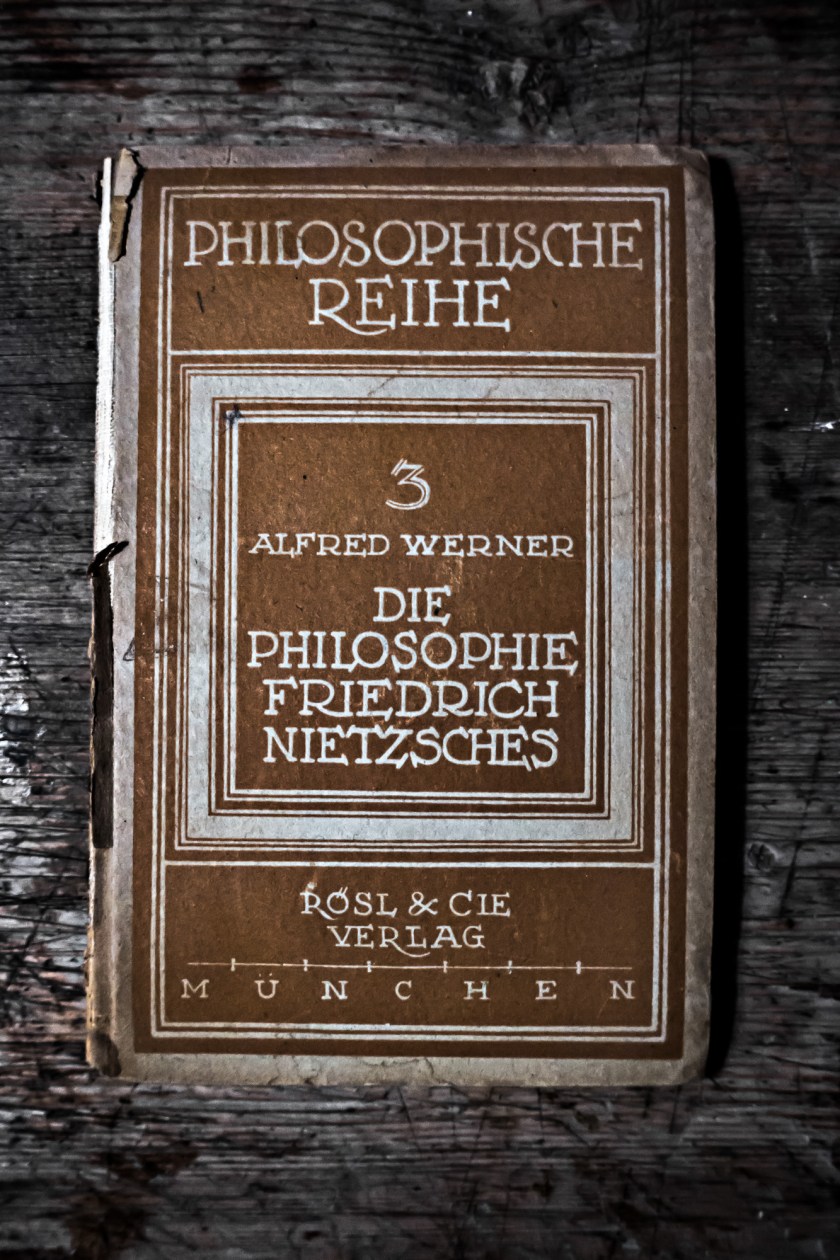
Nietzsche by j m kennedyAt this page you will find some introductions to Nietzsche from different books about Nietzsche and his work. Sometimes people ask me what to read first from Nietzsche, or any other philosopher, and I always tell them to start with a book about Nietzsche. Starting with a book from Nietzsche himself is like putting someone into a forest where he sees a few trees, and ask him to describe the whole forest. Reading Nietzsche is hard enough, if you read some opinions from other professionals you will get a bird’s eye view of his work. If you than start reading his own work, it is easier to put it in its proper context. I myself like reading books about Nietzsche from different periods of time, you will find different looks at him and they are sprinkled with thoughts and ideas of the time they are written. Reading these old books give me also the feeling that I’m not the only one reading his work, some of the books I show here were written by other Nietzsche enthusiasts when there were hardly any cars around, America was at war with Spain and Nietzsche himself just died. So, for anybody that wants to learn Nietzsche’s work, study books about Nietzsche himself and his work and then start with his own work…in proper order…and a spoiler: Nietzsche himself is also more interested in the person behind the philosophy, where you’re from, your character and upbringing will tell you more about the meaning of his or her philosophy.

Got to the books here