Day 2040, uncertainty.
Day's pictures, Poetry


My little bird is looking in the mirror right now. I don’t know what she is talking about, but it is a whole conversation with herself. It looks and sounds quite ridiculous from where I am sitting.
If I started talking to every person I see in the mirror, as the bird did (it stopped), I would probably be taken away slowly to a nice padded room. But then again, millions of people pep themselves up in the morning by talking to themselves, speaking loud, in front of the mirror.
But we also think. Sometimes we think, and forget from moment to moment that we are thinking; maybe that’s meandering through wordles words.
Other times we feel emotions, often strong ones intermixed with words, words that immediately get swallowed up by a new wave of feelings, feelings from forgotten corners of our mind.
You can also think in pictures like people do that never heard a spoken word. Pictures can represent words or just replace them, and I often see pictures in my memories or when I think about where it is.
And sometimes we just talk to ourselves, making plans on what to do or how to express our feelings to another in words. Sometimes it is really clear what we say, and we regret we can’t write it down standing in the shower, when water is running all over you.
The bird might think it is talking to a stranger, but we know that we talk to ourselves, and the pictures I see are mine and my emotions, well, those too.
So this is what I think, and therefore I am…really?
You jump up and swiftly swipe your hands where you felt it crawl; a tiny, harmless spider moves away, you wonder why this made you scared. This reaction to spiders and snakes is a classic example of a fear we inherited from our ancient forefathers. It can still be helpful if you find yourself wondering in a tropical jungle, but for most humans living today, in cities and urban areas, this fear of harmless spiders and other small insects is not rational.

Evolution theory plays a significant role in why we religiously look for meaning. One of the main principles of evolution theory is the survival of the fittest. Fittest, or sometimes also called strongest, is somewhat of a mistake made by Darwin. For predators, it can be advantageous to be fit and strong, and the same goes for the gazelle, but most gazelles will probably survive because they are skittish. You could say that most animals’ best survival strategy is to run away at the first sign of danger; even the Lyon will be wise to run away once it knows of the threat a man with a gun can be. Darwin should have called his theory: survival of the scariest.

First, something about science: there is often confusion when people read about the “theory” of evolution or the “theory” of gravity; some think it is just an idea of what these scientists have and that it is no problem to disagree with them. This is a common misconception between scientific theories and the theories we all have in our life about mundane subjects. You can have a theory of why milk was spilled on the floor or who was to blame for that car accident, but that is more an opinion you have. A scientist can have opinions, but their theories are tested by others, and till another scientist, using the scientific method1, can prove them wrong, they are treated as the truth.

First, something about anarchy. When most people think of anarchy, they think of lawlessness and political disorder. In the Standford Encyclopedia of philosophy1, you can read in the introduction: Anarchism is a political theory, which is skeptical of the justification of authority and power, especially political power. Anarchism is usually grounded in moral claims about the importance of individual liberty. Anarchists also offer a positive theory of human flourishing, based upon an ideal of non-coercive consensus building. Anarchism has inspired practical efforts at establishing utopian communities, radical and revolutionary political agendas, and various forms of direct action… At this moment, I am not so interested in the political side of anarchism. There are countless forms of anarchism, sometimes also called libertarianism2, and like with all political tastes, they all claim some unique knowledge on how the world should be organized based on their conception of what the world is.

I am still looking for a subject I can put my teeth in and write about. Today I had another idea; it cam while I was making a fancy molding. I do this on a milling machine, for these complicated moldings, you have to use several differently shaped cutters and figure out when and how to use them. It can be challenging which one to use first, and we have almost 100 different cutters, but it is not always clear if we have the one we need. Knowing this, you can do this job in different ways; you can try to figure out precisely which ones to use and in what order and make sure you have all the cutters. This takes a lot of preparation, and the end result is not guaranteed; there are almost always surprises down the road. I usually work by finding one cutter that cuts out one part of the shape I need and then look for the next cutter when I am done with the first. This is committing to a road without knowing where it leads.


I like to listen to podcasts, some tech news, scientific news and interviews, gaming, and formula 1. Most of the podcasts I listen to come from America; this is interesting because it gives you an insight into parts of the American psyche. You get this also through movies and series, but that is more filtered and edited; podcasters, and some YouTubers, don’t play a role; it feels more real.

Democracy and Education (Read it her: https://www.gutenberg.org/files/852/852-h/852-h.htm)
by John Dewey
Chapter One: Education as a Necessity of Life
Education and Communication. So obvious, indeed, is the necessity of teaching and learning for the continued existence of a society that we may seem to be dwelling unduly on a truism. But justification is found in the fact that such emphasis is a means of getting us away from an unduly scholastic and formal notion of education. Schools are, indeed, one important method of the transmission which forms the dispositions of the immature; but it is only one means, and, compared with other agencies, a relatively superficial means. Only as we have grasped the necessity of more fundamental and persistent modes of tuition can we make sure of placing the scholastic methods in their true context. Society not only continues to exist by transmission, by communication, but it may fairly be said to exist in transmission, in communication. There is more than a verbal tie between the words common, community, and communication. Men live in a community in virtue of the things which they have in common; and
Yesterday I watched an excellent documentary about the animals you can find in Africa. I love these documentaries; it takes you away for a while. I noticed one thing, and it is not the first time; almost all the animals look approachable like you can touch them. I know the rhino is dangerous, but they don’t look all that dangerous. But if I look at the lions, and then to our cat, I know that the lion is dangerous, unapproachable, you might say. It’s something in his eyes; you know he will eat you alive if he gets the chance. It reminds me of something.

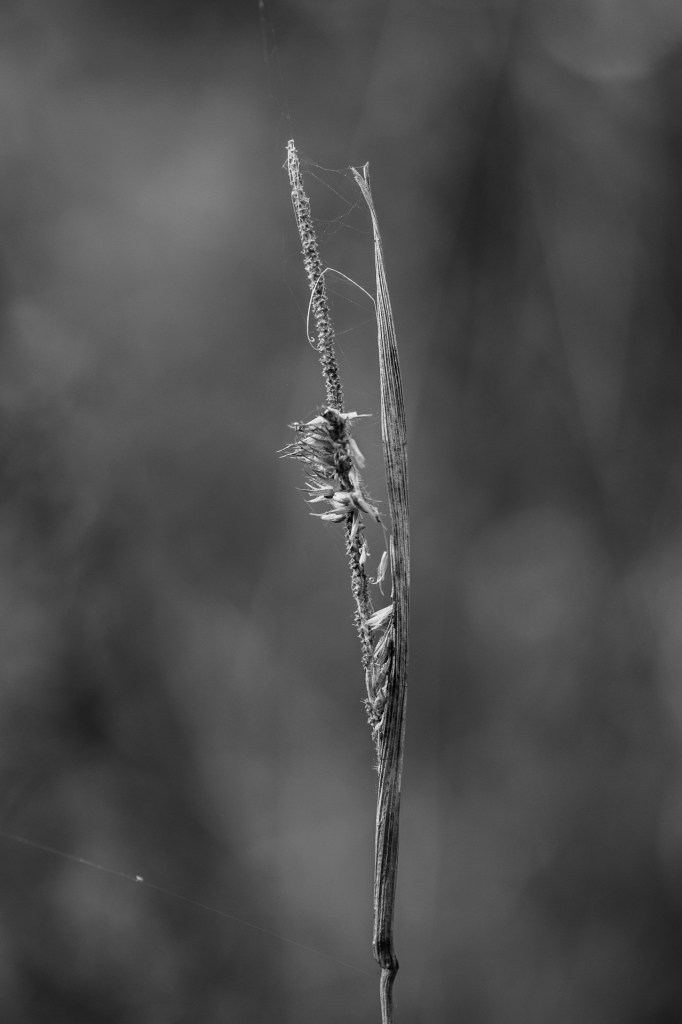
I’ve been raised in the Netherlands, and you might know that it is a flat country. I can’t speak for all Dutch people, but I think that most of us get excited when we see hills and mountains. I still do after living between them for 15 years now here in Norway. Don’t get me wrong; we have a beautiful landscape in Holland too, but for me, hills and mountains are always associated with vacation. So, I still like this flowing landscape end I did it to this morning. At one point, somewhere halfway, I noticed a tiny snail slowly going somewhere. I took out my phone to take some pictures, the one you see at the top is one of them. After I saw this first one, I started to notice more that tried to crawl somewhere; I also saw many that were flattened by the wheels of an occasional car that drives by.
Later I took a picture with two signs telling the speed limit is 60. I wondered how fast you could drive if you didn’t want to hit these tiny snails.
Vorausgesetzt, daß die Wahrheit ein Weib ist — , wie? (Friedrich Nietzsche, 1885)
This is the first sentence of the book Beyond good and evil by Friedrich Nietzsche. I want to use this short text to illustrate how difficult it is to interpret what a philosopher wants to say. Like always, I looked up the different translations to English, and you can see for yourself that even the translators can’t agree what these few words suppose to say when translated to English.

Charlotte Brontë
Underneath, you can read a quote from Nietzsche about morals. He was an atheist and as such. Nietzsche didn’t believe that the moral rules we should follow came from a God-like figure. Nietzsche almost always approaches his subject from different directions, making it difficult for the casual reader to understand where he is going. Whenever I read Nietzsche in English, I will read one of the more modern translations, but if I quote him a lot, I will fall back on the earlier translations because they are copyright-free. It is always fun to see what the different translater make of the original text. I cannot be the arbiter because my German is not that good, especially compared to scholars that have studied German and philosophy.
 Nochrisis