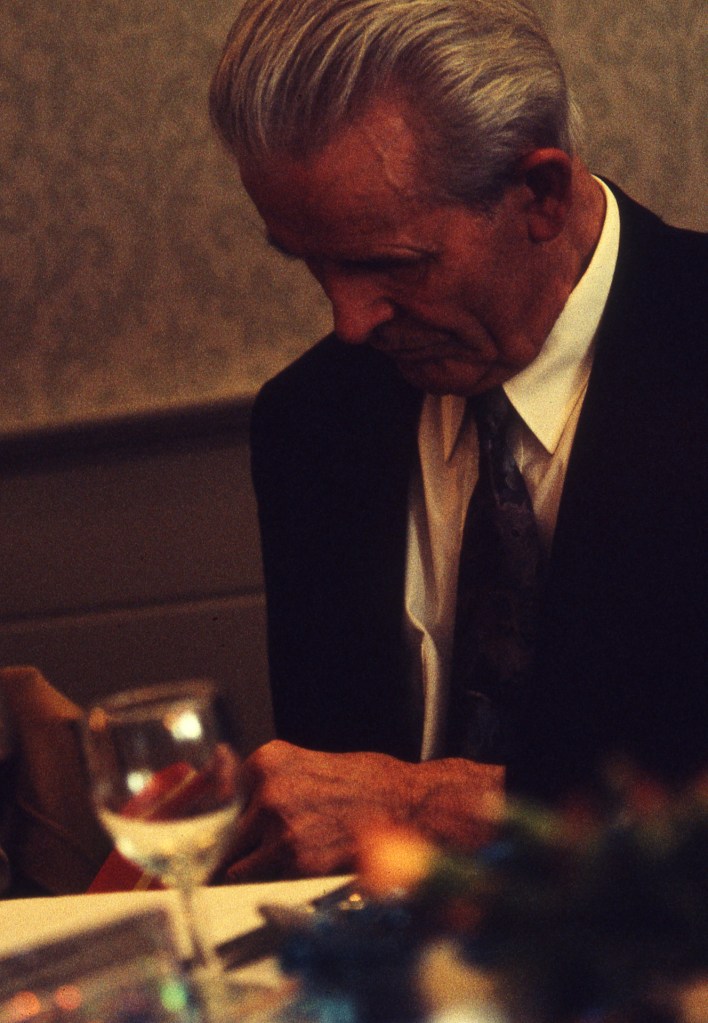
Day 2050, grandfather.
Day's pictures, Poetry
What has happened to me, my animals? said Zarathustra. Have I not changed? Has not bliss come to me as a storm? My happiness is foolish and will say foolish things: it is still young, so be patient with it. I am wounded by my happiness: let all who suffer be my physicians. I may go down again to my friends, and to my enemies too. Zarathustra may speak again and give and do what is dearest to those dear to him. My impatient love overflows in rivers, downward, toward sunrise and sunset. From silent mountains and thunderstorms of suffering my soul rushes into the valleys. Too long have I longed and looked into the distance. Too long have I belonged to loneliness; thus I have forgotten how to be silent. Mouth have I become through and through, and the roaring of a stream from towering cliffs: I want to plunge my speech down into the valleys. Let the river of my love plunge where there is no wayl How could a river fail to find its way to the sea? Indeed, a lake is within me, solitary and self-sufficient; but the river of my love carries it along, down to the sea.
Friedrich Nietzsche, Thus Spoke Zarathustra:The child with the mirror
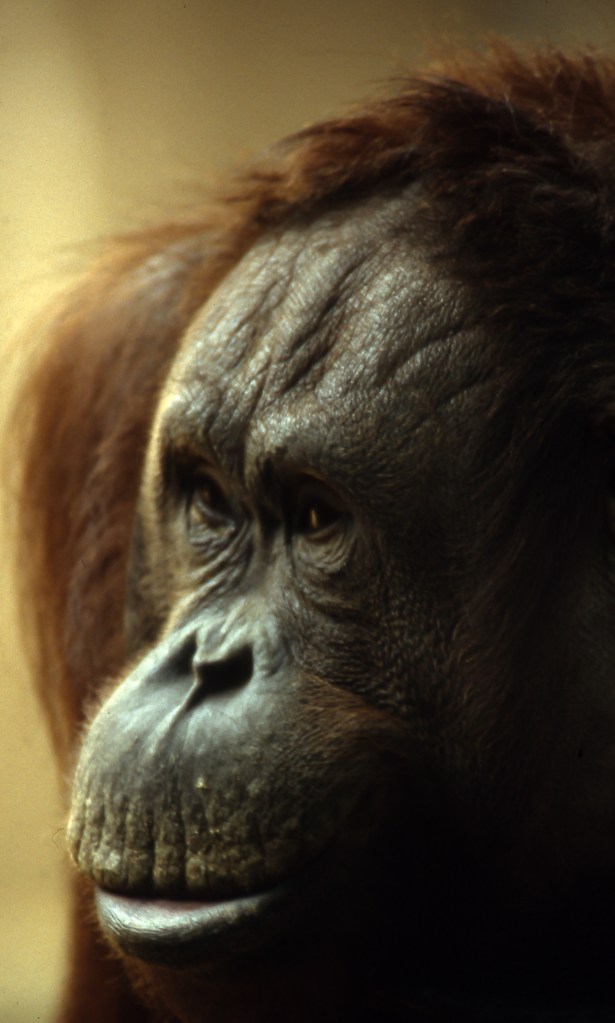
I had a girlfriend in 1996 who studied biology, and she often had to go to Burgers zoo to study the different apes there. I tried to tag along as often as possible. I am not sure if I ever met Frans de Waal, but he has written several well-known books, and I have read some of them. I met his mentor Jan Van Hoof who was a professor in Utrecht, where my girlfriend studied, and we also lived. It was fun to follow some of the lectures, but I am glad it was just for fun; she had to learn a lot.


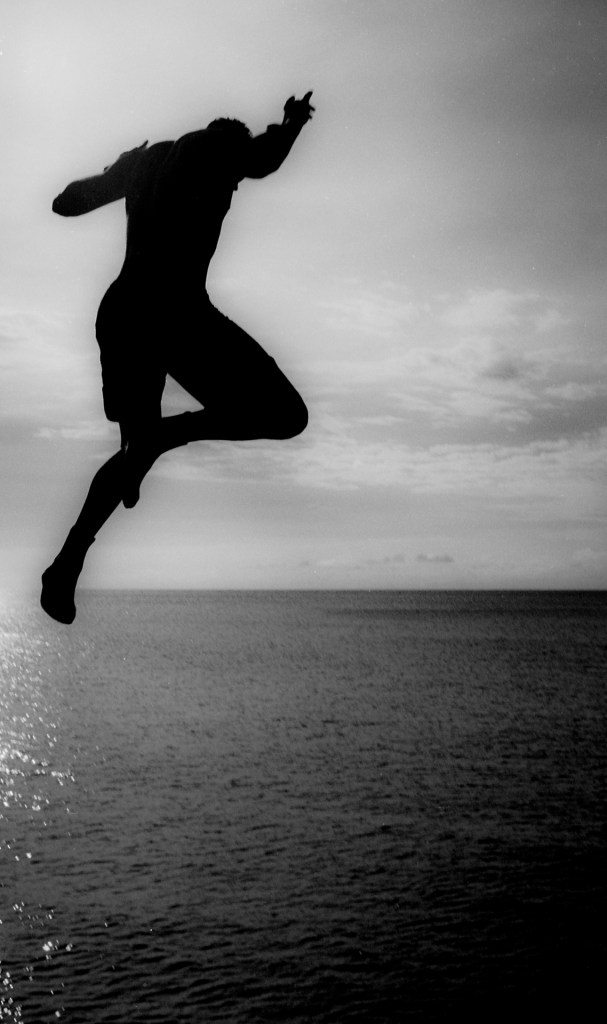
Slide film, 1996, Olst

I joined the Marines in 1992; the draft ended that year, so I was one of the last that had to go into military service. If I had stayed at school, I would have gotten an exemption, but I wanted to leave, but I also didn’t want to join the regular army. I had never really thought about joining the military, not because of some special reasons; it just didn’t seem so excited. Until then, most men in Holland had been drafted into the army for 12 months, and I had only heard stories about boredom and that it was a waste of time. Only if you got lucky could you get some kind of education out of it that is useful later in life, like medical training or getting your truck driver’s license. I don’t know how I got the idea to join the Marines, but probably because I still went to school in Rotterdam, and Rotterdam is the Marines’ spiritual home, so I guess that’s how I came in contact with it.

I moved to Rotterdam in 1991 when I was 19. My younger sister had just moved there the year before, and because we always were close together, I decided to also go to school in Rotterdam, this seemed a good idea, and it was. I grew up in a small place with 5000 people where not much happened besides all the things we could do in the forests everywhere. I remember little about that time, even when I look at the few pictures of the places we lived. I just remember that I was a good time living there; remembering a feeling is maybe easier than remembering facts. I do remember the little supermarket just outside the door that was open 24 hours a day; back then, most stores still closed at six, so this was special. I also remember the bike ride I took every day to the other side of the city, timing myself to go faster and faster.


My little bird is looking in the mirror right now. I don’t know what she is talking about, but it is a whole conversation with herself. It looks and sounds quite ridiculous from where I am sitting.
If I started talking to every person I see in the mirror, as the bird did (it stopped), I would probably be taken away slowly to a nice padded room. But then again, millions of people pep themselves up in the morning by talking to themselves, speaking loud, in front of the mirror.
But we also think. Sometimes we think, and forget from moment to moment that we are thinking; maybe that’s meandering through wordles words.
Other times we feel emotions, often strong ones intermixed with words, words that immediately get swallowed up by a new wave of feelings, feelings from forgotten corners of our mind.
You can also think in pictures like people do that never heard a spoken word. Pictures can represent words or just replace them, and I often see pictures in my memories or when I think about where it is.
And sometimes we just talk to ourselves, making plans on what to do or how to express our feelings to another in words. Sometimes it is really clear what we say, and we regret we can’t write it down standing in the shower, when water is running all over you.
The bird might think it is talking to a stranger, but we know that we talk to ourselves, and the pictures I see are mine and my emotions, well, those too.
So this is what I think, and therefore I am…really?
You jump up and swiftly swipe your hands where you felt it crawl; a tiny, harmless spider moves away, you wonder why this made you scared. This reaction to spiders and snakes is a classic example of a fear we inherited from our ancient forefathers. It can still be helpful if you find yourself wondering in a tropical jungle, but for most humans living today, in cities and urban areas, this fear of harmless spiders and other small insects is not rational.

Evolution theory plays a significant role in why we religiously look for meaning. One of the main principles of evolution theory is the survival of the fittest. Fittest, or sometimes also called strongest, is somewhat of a mistake made by Darwin. For predators, it can be advantageous to be fit and strong, and the same goes for the gazelle, but most gazelles will probably survive because they are skittish. You could say that most animals’ best survival strategy is to run away at the first sign of danger; even the Lyon will be wise to run away once it knows of the threat a man with a gun can be. Darwin should have called his theory: survival of the scariest.
 Nochrisis