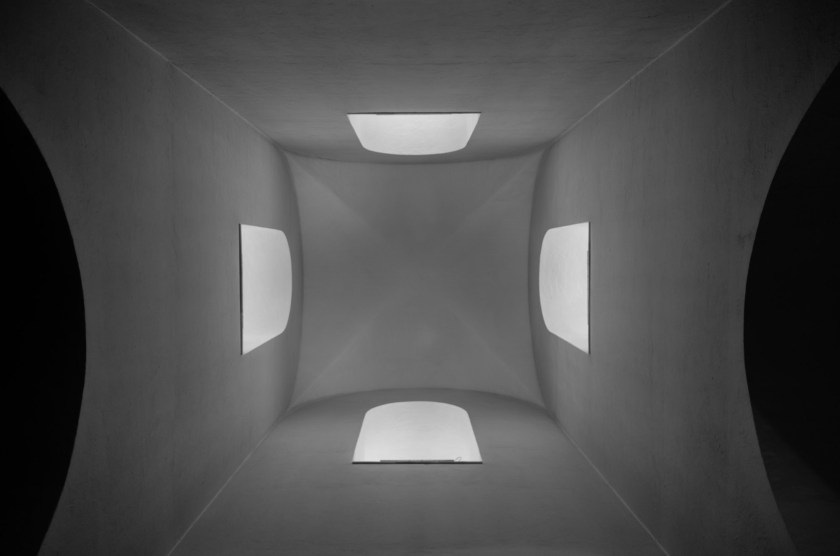
Day 886, communication.

Day's pictures, Haiku, Philosophy, Poetry

Day 886-1


Delicate armor

layered to embrace a flower

to spring in autumn.


Definition of communication: The imparting or exchanging of information by speaking, writing, or using some other medium. (Oxford dictionary)

If I ask for a sandwich with cheese to a person who speaks English and knows what bread and cheese is, they can probably make me that sandwich. In this case we had good communication and in these kinds of cases it’s no problem of talking about communication.  If one of them doesn’t speak English we might still have communication in a formal way but it’s far from successful if the sandwich with cheese never appears.

Wikipedia defines communication better than the Oxford dictionary I think: Communication is the act of conveying meanings from one entity or group to another through the use of mutually understood signs and semiotic rules.

The part “mutually understood signs and semiotic rules.” Is important in my opinion. Can you communicate about the taste of red wine with someone who only tasted water before? How do you convey the different taste sensation in wine to someone that cannot recollect does tastes and experiences? If you never tasted bitter, how can someone explain that to you. If I start talking about lice there is a chance you start scratching your head even if you never had them, it’s just that you know that they are itchy from hearsay. If you never heard of lice you would not have that same itchy sensation.

A lack of experience can hamper in clear communication. A daughter explains how a computer works to her Grandfather is like seeing two people talking different languages, can you talk of communication in such a case? A Syrian refugee talking about war to a westerner in a safe place, is that communication?  Black people feeling unsafe, woman on the work floor a veteran after the war. Maybe we al fit in our own unique little box of circumstances that prevents us from real communication with each other.

Communication doesn’t stop when the words leave your mouth, or the letter is sent.

The single biggest problem in communication is the illusion that it has taken place. George Bernard Shaw


Day 884, free will.

Day's pictures, Haiku, Philosophy, Poetry

Day 884-1

Wondering alone

starlight brightens the shadows

stirred in my mind.


Free will.

Why do we feel free, unbounded when we make choices? What is it that moves our arm if we want to pick something up? Is it a soul or matter that gives us our identity? This is what we call the mind–body problem and it is still not satisfactory resolved.

Most people in this world believe that we have a soul and that the soul is you and makes the decisions separated from the physical body. The problem with a nonphysical soul is the way it interacts with our physical body, so it(you) can control what you do like making you walk and let you pick up things.  Many philosophers have sought for solutions and others tried to find for a physical place in our body where the soul makes contact with our body, without success.

I am not in a position to disqualify the idea that we have a soul but the chance that we have one is minute if you look at all the knowledge we have now. The consensus between a wide variety of scientist is that our identity originates in the brain and disappears when we die.  What chemicals, hormones and fluids are involved is now topic for debate between scientist but the rest of the world ignores this problem or dismisses it.

But imagine what it means for the world if we all believe that its over when we die, and religion is something you study in the history books.

Men are mistaken in thinking themselves free; their opinion is made up of consciousness of their own actions, and ignorance of the causes by which they are conditioned. Their idea of freedom, therefore, is simply their ignorance of any cause for their actions. As for their saying that human actions depend on the will, this is a mere phrase without any idea to correspond thereto.

Men believe themselves to be free, simply because they are conscious of their actions, and unconscious of the causes whereby those actions are determined.

Baruch Spinoza

Day 883, words.

Day's pictures, Haiku, Philosophy, Poetry

Day 883-1

I spread my fingers

trying to touch entirety

its hidden rhythm.


What do you think if you never heard words? If you have a languish can you than imagine what it is to think without the words that form your thoughts? If I think of a boat does my mind than take a picture of a boat from the folder labeled boats? How do you ask someone without language to think about a boat?

These questions bother me sometimes because it’s difficult to imagine it let alone answer them. But you can ask yourself also the (almost) opposite, do we use languish in our day to day thinking? Maybe the words we use, and think are only the top of the iceberg, a sugary coating to make it pretty. I can never recall why I got up to make some coffee. Did something in me say the words “make coffee” to…me…to who? Maybe our thoughts are formed by habits (the coffee), chemicals in our brain, hormones and functions like our hard and intestines do, independent from us.

Words are the afterthought.

Thoughts are the shadows of our feelings – always darker, emptier and simpler. Friedrich Nietzsche

Day 882, pointless.

., Day's pictures, Haiku, Philosophy, Poetry

Day 882-1

Attract and reject

Echoing eternal needs

detested and blessed.


I am not a philosopher in the sense that I can quote famous philosophers or understand all the different chapters from the history of philosophy. I might have some insights, but I have no story to tell or a system to unfold. I have my preferences and I can get aroused by a good book but that’s about it.

I have many thick books on my bookshelf, I bought these books because I’m interested in them but also as an investment. I knew that I was not ready for these books with condensed thoughts in them. The people that wrote these books where good at their job and I can admire them for that. These books helped change the world but…how much? Did they?

Dignity does not consist in possessing honors, but in deserving them. Aristotle

This quote is more than 2000 years old and for me it says something about how you should treat other people and go through life opposed to living for material wealth and appearances.

I think that a lot of people could agree with this, but the reality is that the clear majority can’t or won’t live according to this suggestion of Aristotle. We westerners see goods, likes and freedom as ”honor” badges we wear, in religious minded people wearing a book, following the rules and prey is there badge as a sign of there piety. With these badges some people think they deserve praise, but they are often pined on an empty shell.

Aristotle told these words thousands of years ago, and around that time you could find, in countless different cultures, similar sentiments. He told these words and since then countless learned people have read these old works and refined them, and refined them but with what result?

We might not kill our neighbor, or raid the village next door as in the olden day’s but at the same time we praise our global economy and borderless internet, is our willingness to let thousands of children starve in poor countries not the same as letting your neighbor starve 2000 years ago? Did Aristotle let his neighbor die?

We wear our badges of material goods and pious behavior and think where good, but should we not throw these symbols away and act like the world is one small neighborhood? This is what (some/in general) philosophers are trying to tell but the massage is not understood. You might say that this has made all of philosophy pointless, but I hope that it is a fundament for future generations to finally find a way to tell the story that the ancient thinkers started in a languish that is understood by all.

What do you think?

Day 881, Imagine.

., Day's pictures, Haiku, Philosophy, Poetry

Day 881-1


Morning light true haze

the cold soil warms up again

harsh lights take over.


I am reading a book by Laura Secor, Children of paradise. I haven’t finished it yet but it’s about Iran and tells the story of different scholars, writers and poets and their connection with the Iranian revolution.

I knew already that Iran was a country with a long and rich history but if you had asked me last year how to describe Iran and its people than an image of Khomeini as an imposing person pops up in my mind that I saw every now an than growing up in the eighties. Modern Iran is for me a county where a lot of people want to live free and a modern life but can’t because of overbearing religious rulers.

After reading a book from Ray Takeyh, Guardians of the revolution I read the book mentioned above and Slowly the vail of ignorance begins to withdraw, but its still there. I will keep on reading because its an interesting story.

The thing that struck me earlier today while reading the book of Laura Secor was how active the people she described where in developing there understanding of the world they live in. I would die (they did sometimes) for some good conversation about philosophy, Popper, Heidegger, Marxism or determinism like they had. I live in a world where revolution is just a word, and no one feels the need to dive into these subjects beside some scholars.

Off coarse I wouldn’t like to live in a country in turmoil like Iran in the eighties. But from my perspective I sometimes feel like I live in a world where all life is drained out, where the dumbest person can become president and most people care more about likes and memes than honest reflection.

Philosophy and religion have never worked Serious and self-proclaimed important people might pretend it is important and it works but without our technology we would not be distinguishable from a person living in Rome 2000 years ago. Without our cushy lives we would still be barbarians, our own grandparents where that literally when the slaughtered each other in two world wars and if you look to close at what we do now in the west your stomach will turn to.

That’s why I like the idea of a society in discourse over the course of there future. And I know that even in Iran it was just a relatively small group of people that actually participated in these discussion, and it let to nothing but just the idea of people sensibly talking about the fundamentals of our society… imagine.


Day 880, climate chance.

., Day's pictures, Haiku, Philosophy, Poetry

Day 880-1

A barer of life

broke at the end of summer

gathering some rain.


Taking away the mystery of understanding.

David Hume wrote in his famous book “an enquiry concerning human understanding” that the things we think about are made of the things we have seen earlier. Like the golden mountain we can imagine, it’s made of the gold and a mountain we have seen before. The book goes mush deeper than this and is recognized as an important book in the world of philosophy. I don’t do it justice by highlighting this particular idea and taking it out of its context, but still I do.

Have you ever thought about where your thoughts come from? Do they just appear? Does something in you make those thoughts out of nothing? Where were your thought that you have now when you were 5 years old? Do we collect the parts of our thoughts over time? Are we just combining bits and pieces, things we gathered, into our thoughts?

I think it is difficult to be an original thinker. No matter what we do we have to use the things we learned to form our own thoughts and only the exceptional person can combine the things he or she has learned into something truly original. It is not for nothing that thinkers like Plato or Aristoteles are still studied. They had drawn such profound conclusions from their experiences that hardly anybody since has come close to them.

If I look around in the bookstore or at social media, it seems that everybody has an opinion and often put it on the same level as …someone that has made it its life work. Climate chance springs to mind as an obvious example where so many people seem to now the answer where even the experts struggle and work hard to understand it and find an answer. As if they, the opinionated modern man, know the answer without the experience necessary.

We can not imagine a golden mountain without seeing a mountain and gold beforehand, the opinionated modern man can dismiss climate change without ever study biogeochemical cycles, ecological and agroecological systems, human-environment interactions. Do does people question there dentist or car mechanic with the same certainty?

Its humility we need, I don’t know anything about climate change so I trust the people that do just like I listen to my doctor or trust Hume more than myself if he talks about our mind.

What a peculiar privilege has this little agitation of the brain which we call ‘thought’.
David Hume

Day 879, Dasein.

Day's pictures, Haiku, Philosophy, Poetry

Day 879-1

Wall of thoughts in front

echoing sentences fall

frightened I look up.


Martin Heidegger, a German philosopher (1889-1976), introduced the concept of “geworfenheit” or often translated as thrownness. It’s the idea that we as human beings are thrown into this life in certain circumstances out of our control like family ties and social conventions.

This idea is related with another concept of Heidegger, “dasein”, most common translated as existence. Dasein is the human experience of being (there) and the specific human experience of understanding our mortality and our personality.

Dasein or existence has been used by other philosophers, but Heidegger had a particular meaning which is hard to understand and demands some study of his work.  Reading philosophy and learning about our human experience is not a priority for most people but I can recommend it because an unexamined life is not worth living (Socrates).

Warum ist überhaupt Seiendes und nicht vielmehr Nichts? Das ist die Frage.

(Why are there beings at all, and why not rather nothing? That is the question.)

Twilight of the Idols

., Philosophy

By Friedrich Nietzsche.

The four big mistakes.

8. What alone can be our doctrine? – Because no one gives man his qualities, neither God, nor society, nor his parents and ancestors, nor he himself (- the absurdity of this last idea has been rejected as “intelligible freedom” by Kant, perhaps even taught by Plato). No one is responsible for ensuring that he’s there, so and so constituted that he is that he is under these circumstances in this  environment. The fatality of his nature is not disentangled from the fatality of all that was and what will be. It is not the result of an intention, a will, a purpose, not with him, an attempt is made to achieve an “ideal of man” or an “ideal of happiness” or an “ideal of morality,” – it is absurd his Being (Sein) in any way trying to pass a purpose. We have used the term “purpose” invented in the real world… lack of purpose it is necessary, it is a piece of calamity, one belongs to the whole, it is on the whole, – there is nothing that addressed our being, measure, compare, could condemn, because that would mean the whole set, measure, condemn, compare… But there is nothing out of the whole! – That will make no one more responsible, that the nature of existence can not be attributed primarily to a cause, that the world is neither as sensorium nor as ‘spirit’ is a unity, this is only the great liberation – thus only the innocence of becoming (Unschuld des Werdens) restored… The term “God” has been the greatest objection to existence (Dasein)… We deny God, we deny the responsibility in God: we only deliver to the world. – (Wir leugnen Gott, wir leugnen die Verantwortlichkeit in Gott: damit erst erlösen wir die Welt).

Twilight of the idols, Translation by Daniel Fidel Ferrer, 2013


Day 700, Treatise of human nature.

Day's pictures, Philosophy, Poetry

Day 700-1

We suppose to learn, our synapses do fire.

They shoot to make, to pave the way.

Information contained or lost in time.

A spark, an insight that turns away.

Overcrowded, congested, worn down your choked.

Start training does neurons, cleanup your mind

Fire away at does old rusted anchors.

Cut that chain, make room for your life.

Because to be is to think, like a motion in time.

Not to get stuck in one place, forgotten to learn.


Here is something to rattle does rusted synapses in your brain. One of the classic books in philosophy that still is useful today and abstract enough to make you think and thus train your brain. You can download the book for free on many places or buy a used one for a couple of dollars online r at your local used bookstore.

TREATISE OF HUMAN NATURE
By David Hume
Book I: The understanding

Section 1: The origin of our ideas
All the perceptions of the human mind fall into two distinct kinds, which I shall call
‘impressions’ and ‘ideas’. These differ in the degrees of force and liveliness with which
they strike upon the mind and make their way into our thought or consciousness. The
perceptions that enter with most force and violence we may name ‘impressions’; and
under this name I bring all our sensations, passions, and emotions, as they make their first appearance in the soul [= ‘mind’; no religious implications]. By ‘ideas’ I mean the faint images of the others in thinking and reasoning: for example, all the perceptions aroused by your reading this book – apart from perceptions arising from sight and touch, and apart from the immediate pleasure or uneasiness your reading may cause in you. I don’t think I need to say much to explain this distinction: everyone will readily perceive for himself the difference between feeling (·impressions·) and thinking (·ideas·). The usual degrees of intensity· of these are easily distinguished, though there may be particular instances where they come close to one another. Thus, in sleep, in a fever, in madness, or in any very violent emotions of soul, our ideas may approach to our impressions: as on the other hand it sometimes happens that our impressions are so faint and low that we can’t distinguish them from our ideas. But although they are fairly similar in a few cases, they are in general so very different that no-one can hesitate to classify them as different and to give to each a special name to mark the difference. [Throughout this work, ‘name’ is often used to cover not only proper names but also general terms such as ‘idea’.]

Read more here

A Treatise of Human Nature (1738–40) is a book by Scottish philosopher David Hume, considered by many to be Hume’s most important work and one of the most influential works in the history of philosophy.The Treatise is a classic statement of philosophical empiricism, skepticism, and naturalism. In the introduction Hume presents the idea of placing all science and philosophy on a novel foundation: namely, an empirical investigation into human nature. Impressed by Isaac Newton’s achievements in the physical sciences, Hume sought to introduce the same experimental method of reasoning into the study of human psychology, with the aim of discovering the “extent and force of human understanding”. Against the philosophical rationalists, Hume argues that passion rather than reason governs human behaviour. He introduces the famous problem of induction, arguing that inductive reasoning and our beliefs regarding cause and effect cannot be justified by reason; instead, our faith in induction and causation is the result of mental habit and custom. Hume defends a sentimentalist account of morality, arguing that ethics is based on sentiment and passion rather than reason, and famously declaring that “reason is, and ought only to be the slave to the passions”. Hume also offers a skeptical theory of personal identity and a compatibilist account of free will.

Read more at wikipedia.

Day 683, Free Will

Day's pictures, Philosophy

Day 683-1

Free Will
Voltaire


Ever since men have reasoned, the philosophers have obscured this matter: but
the theologians have rendered it unintelligible by absurd subtleties about grace.
Locke is perhaps the first man to find a thread in this labyrinth; for he is the first
who, without having the arrogance of trusting in setting out from a general
principle, examined human nature by analysis. For three thousand years people
have disputed whether or no the will is free. In the “Essay on the Human
Understanding,” chapter on “Power,” Locke shows first of all that the question is
absurd, and that liberty can no more belong to the will than can colour and
movement.

What is the meaning of this phrase “to be free”? it means “to be able,” or assuredly
it has no sense. For the will ”to be able ” is as ridiculous at bottom as to say that
the will is yellow or blue, round or square. To will is to wish, and to be free is to
be able. Let us note step by step the chain of what passes in us, without
obfuscating our minds by any terms of the schools or any antecedent principle.
It is proposed to you that you mount a horse, you must absolutely make a choice,
for it is quite clear that you either will go or that you will not go. There is no
middle way. It is therefore of absolute necessity that you wish yes or no. Up to
there it is demonstrated that the will is not free. You wish to mount the horse;
why? The reason, an ignoramus will say, is because I wish it. This answer is
idiotic, nothing happens or can happen without a reason, a cause; there is one
therefore for your wish. What is it? the agreeable idea of going on horseback
which presents itself in your brain, the dominant idea, the determinant idea. But,
you will say, can I not resist an idea which dominates me? No, for what would be
the cause of your resistance? None. By your will you can obey only an idea which
will dominate you more.

Now you receive all your ideas; therefore you receive your wish, you wish
therefore necessarily. The word “liberty” does not therefore belong in any way to
your will.

You ask me how thought and wish are formed in us. I answer you that I have not
the remotest idea. I do not know how ideas are made any more than how the
world was made. All that is given to us is to grope for what passes in our
incomprehensible machine.

The will, therefore, is not a faculty that one can call free. A free will is an
expression absolutely void of sense, and what the scholastics have called will of
indifference, that is to say willing without cause, is a chimera unworthy of being
combated.

Where will be liberty then? in the power to do what one wills. I wish to leave my
study, the door is open, I am free to leave it.
But, say you, if the door is closed, and I wish to stay at home, I stay there freely.

Let us be explicit You exercise then the power that you have of staying; you have
this power, but you have not that of going out.

The liberty about which so many volumes have been written is, therefore, reduced
to its accurate terms, only the power of acting.

In what sense then must one utter the phrase-” Man is free “? in the same sense
that one utters the words, health, strength, happiness. Man is not always strong,
always healthy, always happy.

A great passion, a great obstacle, deprive him of his liberty, his power of action.

The word “liberty,” “free-will,” is therefore an abstract word, a general word, like
beauty, goodness, justice. These terms do not state that all men are always
beautiful, good and just; similarly, they are not always free.

Let us go further: this liberty being only the power of acting, what is this power?
it is the effect of the constitution and present state of our organs. Leibnitz wishes
to resolve a geometrical problem, he has an apoplectic fit, he certainly has not
liberty to resolve his problem. Is a vigorous young man, madly in love, who holds
his willing mistress in his arms, free to tame his passion? undoubtedly not. He has
the power of enjoying, and has not the power of refraining. Locke was therefore
very right to call liberty “power.” When is it that this young man can refrain
despite the violence of his passion? when a stronger idea determines in a contrary
sense the activity of his body and his soul.

But what! the other animals will have the same liberty, then, the same power?

Why not? They have senses, memory, feeling, perceptions, as we have. They act
with spontaneity as we act. They must have also, as we have, the power of acting
by virtue of their perceptions, by virtue of the play of their organs.

Someone cries: “If it be so, everything is only machine, everything in the universe
is subjected to eternal laws.” Well! would you have everything at the pleasure of a
million blind caprices? Either everything is the sequence of the necessity of the
nature of things, or everything is the effect of the eternal order of an absolute
master; in both cases we are only wheels in the machine of the world.
It is a vain witticism, a commonplace to say that without the pretended liberty of
the will, all pains and rewards are useless. Reason, and you will come to a quite
contrary conclusion. If a brigand is executed, his accomplice who sees him expire
has the liberty of not being frightened at the punishment; if his will is determined
by itself, he will go from the foot of the scaffold to assassinate on the broad
highway; if his organs, stricken with horror, make him experience an
unconquerable terror, he will stop robbing. His companion’s punishment becomes
useful to him and an insurance for society only so long as his will is not free.

Liberty then is only and can be only the power to do what one will. That is what
philosophy teaches us. But if one considers liberty in the theological sense, it is a
matter so sublime that profane eyes dare not raise themselves to it.

Day 676, Hume – An enquiry concerning human understanding

Day's pictures, Philosophy

Day 676-1

Section 1: The different species of philosophy


Moral philosophy, or the science of human nature, can be treated in two different ways,
each of which has its own special merit and may contribute to the entertainment,
instruction, and reformation of mankind [‘moral philosophy’ here covers every study
involving human nature, including history, politics, etc.].
One of the two treatments
considers man chiefly as born for action, and as guided in his conduct by taste and
sentiment [= ‘feeling or opinion’], pursuing one object and avoiding another according to
the value they seem to have and according to the light in which they are presented. As
virtue is agreed to be the most valuable thing one could pursue, philosophers of this kind
paint virtue in the most charming colours, getting help from poetry and eloquence and
treating their subject in a popular and undemanding manner that is best fitted to please the reader’s imagination and arouse his affections. They select the most striking observations and examples from common life; they set up proper contrasts between opposite characteristics ·such as virtue and vice, generosity and meanness·; and, attracting us into the paths of virtue by visions of glory and happiness, they direct our steps in these paths by the soundest rules and the most illustrious examples. They make us
feel the difference between vice and virtue; they excite and regulate our beliefs and feelings; and they think they have fully reached their goal if they manage to bend our hearts to the love of honesty and true honour. Philosophers who do moral philosophy in the second way focus on man as a reasonable rather than as an active being, and try to shape his thinking more than to improve his behaviour. They regard human nature as a subject of theoretical enquiry, and they examine it intently, trying to find the principles that regulate our understanding, stir up our sentiments, and make us approve or blame any particular object, event, or behaviour. They think it somewhat disgraceful that philosophy has not yet established an agreed account of the foundation of morals, reasoning, and artistic criticism; and that it goes on talking about truth and falsehood, vice and virtue, beauty and ugliness, without being able to fix the source of these distinctions. While they attempt this hard task, no difficulties deter them; moving from particular instances to general principles, they then push their enquiries still further, to get to principles that are even more general, and they don’t stop, satisfied, until they arrive at the basic principles that set the limits to human curiosity in every branch of knowledge. Though their speculations seem abstract, and even unintelligible to ordinary readers, they aim at getting the approval of the learned and the wise; and think themselves well enough compensated for their lifetime’s work if they can bring out into the open some hidden truths that may be good for later generations to know.
The general run of people will certainly always prefer the relaxed and obvious kind of philosophy to the accurate and abstruse kind; and many will recommend the former as being not only the more agreeable of the two kinds but also the more useful. It enters more into common life; moulds the heart and affections; and because it involves principles on which people
act, it reforms their conduct and brings them nearer to the model of perfection that it describes. The abstruse philosophy, on the other hand, is based on a mental attitude that cannot enter into ·every-day· business and action; so it vanishes when the philosopher comes out of the shadows into daylight, and its principles cannot easily influence our behaviour. The feelings of our heart, the agitation of our passions, the intensity of our affections, scatter all its conclusions and reduce the profound philosopher to a mere peasant. The easy philosophy – let us face the fact – has achieved more lasting fame than the other, and rightly so. Abstract reasoners have sometimes enjoyed a momentary reputation, because they caught the fancy of their contemporaries or because the latter were ignorant of what they were doing; but they haven’t been able to support their renown with more equitable posterity [the last seven words are Hume’s]. It is easy for a profound ·abstract· philosopher to make a mistake in his intricate reasonings; and one mistake is bound to lead to another, while the philosopher drives his argument forward and is not deterred from accepting any conclusion by its unusual appearance or its inconsistency with popular opinion. Not so with a philosopher who aims only to represent the common sense of mankind in more beautiful and more attractive colours: if by accident he falls into error, he goes no further. Rather than pushing on, he renews his appeal to common sense and to the
natural sentiments of the mind, gets back onto the right path, and secures himself from any dangerous illusions. The fame of Cicero flourishes at present; but that of Aristotle is
utterly decayed. La Bruyère is read in many lands and still maintains his reputation: but the glory of Malebranche is confined to his own nation, and to his own time. And Addison, perhaps, will be read with pleasure when Locke has been entirely forgotten.
To be a
mere philosopher is usually not thought well of in the world, because such a
person is thought
to contribute nothing either to the advantage or to the pleasure of
society,
to live remote from communication with mankind, and to be wrapped up in
principles and notions that they can’t possibly understand. On the other hand, the
mere
ignoramus
is still more despised; and at a time and place where learning flourishes,
nothing is regarded as a surer sign of an ill-bred cast of mind than having no taste at all for learning. The best kind of character is supposed to lie between those extremes: retaining an equal ability and taste for books, company, and business; preserving in conversation that discernment and delicacy that arise from literary pursuits, and in business preserving the honesty and accuracy that are the natural result of a sound philosophy. In order to spread and develop such an accomplished kind of character, nothing can be more useful than writings in the easy style and manner, which stay close to life, require no deep thought or solitary pondering to be understood, and send the reader back among mankind full of noble sentiments and wise precepts, applicable to every demand of human life. By means of such writings, virtue becomes amiable, the pursuit of knowledge agreeable, company instructive, and solitude entertaining.
Man is
reasonable being, and as such he gets appropriate food and nourishment
from the pursuit of knowledge; but so narrow are the limits of human understanding that we can’t hope for any great amount of knowledge or for much security in respect of what we do know. As well as being reasonable, man is
a sociable being; but he can’t always enjoy – indeed can’t always want – agreeable and amusing company. Man is also  an active being; and from that disposition of his as well as from the various necessities of human life, he must submit to being busy at something; but the mind requires some relaxation, and can’t always devote itself to careful work. It seems, then, that nature has pointed out a mixed kind of life as most suitable for the human race, and has secretly warned us not to tilt too far in any of these directions so as to incapacitate ourselves for other occupations and entertainments. Indulge your passion for knowledge, says nature, but seek knowledge of things that are human and directly relevant to action and society. As for abstruse thought and profound researches, ·nature also says·, I prohibit them, and if you engage in them I will severely punish you by the brooding melancholy they bring, by the endless uncertainty in which they involve you, and by the cold reception your announced discoveries will meet with when you publish them. Be a philosopher, ·nature continues·, but amidst all your philosophy be still a man. If people in general were contented to prefer the easy philosophy to the abstract and profound one, without throwing blame or contempt on the latter, it might be appropriate to go along with this general opinion, and to allow every man to enjoy without opposition his own taste and sentiment. But the friends of the easy philosophy often carry the matter further, even to point of absolutely rejecting all profound reasonings, or what is commonly called metaphysics; ·and this rejection should not be allowed to pass unchallenged·. So I
shall now proceed to consider what can reasonably be pleaded on behalf of the abstract
kind of philosophy. Let us first observe that the accurate and abstract kind of philosophy has one considerable advantage that comes from its being of service to the other kind. Without help from abstract philosophy, the easy and human kind can never be exact enough in its sentiments, rules, or reasonings. All literature is nothing but pictures of human life in various attitudes and situations, and these inspire us with different sentiments of praise or blame, admiration or ridicule, according to the qualities of the object they set before us. An artist must be better qualified to succeed in presenting such pictures if, in addition to delicate taste and sensitive uptake, he has an accurate knowledge of the internal structure and operations of the understanding, the workings of the passions, and the various kinds of sentiment that discriminate vice and virtue. However difficult this search into men’s interiors may appear to be, it is to some extent
needed by anyone wanting to describe successfully the obvious and outward aspects of life and manners. The anatomist presents to the eye the most hideous and disagreeable objects; but his science is useful to the painter in presenting even a Venus or a Helen. While the painter employs all the richest colours of his art, and gives his figures the most graceful and engaging airs, he still has to attend to the inward structure of the human body, the position of the muscles, the structure of the bones, and the function and shape of every bodily part or organ. Accuracy always helps beauty, and solid reasoning always helps delicate sentiment. It would be pointless to praise one by depreciating the other.
Besides, it is notable that in every art or profession, even those of the most practical
sort, a spirit of accuracy (however acquired) makes for greater perfection and renders the activity more serviceable to the interests of society. And even if philosophers keep
themselves far from the world of business and affairs, the spirit of philosophy, if carefully cultivated by a number of people, must gradually permeate the whole society and bring philosophical standards of correctness to every art and calling. The politician will acquire greater foresight and subtlety in apportioning and balancing power; the lawyer more method and finer principles in his reasonings; and the general more regularity in his discipline, and more caution in his plans and operations. The stability of modern governments above the ancient has improved along with improvements in the accuracy of modern philosophy, and will probably continue to do so.
Even if these studies brought no advantage beyond gratifying innocent curiosity, even that ought not to be despised, for it is one way of getting safe and harmless pleasures – few of which have been bestowed on human race. The sweetest and most inoffensive path of life leads through the avenues of knowledge and learning; and anyone who can either remove any obstacles along the path or open up new views ought to that extent to be regarded as a benefactor to mankind. And though these ·accurate and abstract· researches may appear difficult and fatiguing, some minds are like some bodies in this: being endowed with vigorous and flourishing health, they need severe exercise, and get pleasure from activities that most people would find burdensome and laborious. Obscurity, indeed,
is painful to the mind as well as to the eye; but to bring light from obscurity is bound to be delightful and rejoicing, however hard the labour. But this obscurity in the profound and abstract kind of philosophy is objected to, not only as painful and tiring, but also as the inevitable source of uncertainty and error. Here in deed lies the fairest and most plausible objection to a large part of metaphysics, that it isn’t properly a science [= not a theoretically disciplined pursuit of knowledge], but arises either from
the fruitless efforts of human vanity, trying to penetrate into subjects that are utterly inaccessible to the understanding, or from the craft of popular superstitions which, being unable to defend themselves by fair arguments, raise these entangling ·metaphysical· brambles to cover and protect their weakness. ·Each of these is sometimes true; and the misuse of metaphysics by the friends of popular superstition is vexatious·. Chased from the
open country, these robbers run into the forest and lie in wait to break in upon every
unguarded avenue of the mind and overwhelm it with religious fears and prejudices. They can oppress the strongest and most determined opponent if he lets up his guard for a moment. And many of their opponents, through cowardice and folly, open the gates to the enemies – ·the purveyors of superstition· – and willingly and reverently submit to them as their legal sovereigns. But is this a good enough reason for philosophers to hold back from such researches, to retreat and leave superstition in possession of the field? Isn’t it proper to draw the opposite conclusion, and see the necessity of carrying the war into the most secret recesses of the enemy? It is no use hoping that frequent disappointment will eventually lead men to abandon such airy pursuits ·as the superstitious ones·, and discover the proper province of human reason. For one thing, many people find it too obviously to their advantage to be perpetually recalling such topics; and furthermore the motive of blind despair should never operate in the pursuit of knowledge, for however unsuccessful former attempts may have proved there is always room to hope that the hard work, good luck, or improved intelligence of succeeding generations will reach discoveries that were unknown in former ages. Each adventurous thinker will still leap at the elusive prize, and find himself stimulated rather than discouraged by the failures of his predecessors; while he hopes that the glory of succeeding in such a hard adventure is reserved for him alone. ·So the friends of superstition and bad philosophy will never just
give up·. The only way to free learning from ·entanglement in· these abstruse questions is to enquire seriously into the nature of human understanding, and through an exact analysis of its powers and capacity show that it is utterly unfitted for such remote and abstruse subjects. We must submit to this hard work in order to live at ease ever after; and we must cultivate true metaphysics carefully, in order to destroy metaphysics of the false and adulterated kind. Laziness protects some people from this deceitful philosophy, but others are carried into it
by curiosity; and despair, which at some moments prevails, may give place later to
optimistic hopes and expectations. Accurate and valid reasoning is the only universal
remedy, fitted for all people of all kinds – ·lazy and curious, despairing and hopeful· – and
it alone can undercut that abstruse philosophy and metaphysical jargon that gets mixed up with popular superstition, presenting the latter in a manner that casual reasoners can’t understand, and giving it the air of real knowledge and wisdom. So an accurate scrutiny of the powers and faculties of human nature helps us to reject, after careful enquiry, the most uncertain and disagreeable part of learning; and it also
brings many positive advantages. It is a remarkable fact about the operations of the mind that, although they are most intimately present to us, whenever we try to reflect
on them they seem to be wrapped in darkness, and the eye ·of the mind· cannot easily detect the lines and boundaries that distinguish them from one another. The objects ·of this scrutiny – that is, the operations of the mind· – are so rarefied that they keep changing; so they have to be grasped in an instant, which requires great sharpness of mind, derived from nature and improved by habitual use. So it comes about that in the pursuit of knowledge a considerable part of the task is simply to know the different operations of the mind, to separate them from each other, to classify them properly, and to correct all the seeming disorder in which they lie when we reflect on them. This task of ordering and distinguishing has no merit when it is performed on external bodies, the objects of our senses; but when it is directed towards the operations of the mind it is valuable in
proportion to how hard it is to do. Even if we get no further than this mental geography,
this marking out of the distinct parts and powers of the mind, it is at least a satisfaction to go that far; and the more obvious these results may appear (and they are by no means
obvious), the more disgraceful it must be for those who lay claim to learning and
philosophy to be ignorant of them. Nor can there remain any suspicion that this branch of knowledge – ·the pursuit of accurate and abstract philosophy· – is uncertain and illusory; unless we adopt a scepticism that is entirely subversive of
all theoretical enquiry, and even of all action. It can’t be doubted Ÿthat the mind is endowed with various powers and faculties, that these are distinct from each other, Ÿthat what is really distinct to the immediate perception may be distinguished by reflection; and consequently that in all propositions on this subject there are true ones and false ones, and sorting them out lies within the reach of human understanding. There are many obvious distinctions of this kind, such as those between the will and understanding, the imagination and the passions, which every human creature can grasp; and the finer and more philosophical distinctions are no less real and certain, though they are harder to grasp. Some successes in these enquiries, especially some recent ones, can give us a better idea of the certainty and solidity of this branch of learning. Will we think it worth the effort of an astronomer to give us a true system of the planets, and to determine the position and order of those remote bodies, while we turn our noses up at those who with so much success determine the parts of the mind – a topic which for us comes very close to home? But may we not hope that philosophy, if carried out with care and encouraged by the attention of the public, may carry its researches still further? Might it not ·get beyond the task of distinguishing and sorting out the operations of the mind, and· discover, at least in some degree, the secret springs and drivers by which the human mind is actuated in its operations? Astronomers were for a long time contented with proving, from the phenomena, the true motions, order, and size of the heavenly bodies; until at last a scientist, ·Isaac Newton·, came along and also determined the laws and forces by which the revolutions of the planets are governed and directed. Similar things have been done with regard to other parts of nature. And there is no reason to despair of equal success in our enquiries into the powers and organisation of the mind, if we carry them out as ably and alertly ·as those other scientists did their work·. It is probable that one operation and principle of the mind depends on another; which may in turn be brought under a still more general and universal one; and it will be difficult for us to determine exactly how far these researches can be carried – difficult before we have carefully tried, and difficult even after. This much is certain: attempts of this kind are made every day even by those who philosophize the most carelessly; and the greatest need is to embark on the project with thorough care and attention. That is needed so that if the task does lie within reach of human understanding, it can eventually end in success; and if it doesn’t, it can be rejected with some confidence and security. But this last conclusion is not desirable, and shouldn’t be arrived at rashly, for it detracts from the beauty and value of this sort of philosophy. Moralists have always been accustomed, when they considered the vast number and variety of actions that arouse our approval or dislike, to search for some common principle on which this variety of sentiments might depend. And though their passion for a single general principle has sometimes carried them too far, it must be granted that they are excusable in expecting to find some general principles under which all the vices and virtues can rightly be brought. Similar attempts have been made by literary critics, logicians, and even students of politics; and their attempts have met with some success, though perhaps longer time, greater accuracy, and more intensive study may bring these studies still nearer to perfection. To throw up at once all claims to this kind of knowledge can fairly be thought to be more rash, precipitate, and dogmatic than even the boldest and most affirmative philosophy that has ever attempted to impose its crude dictates and principles on mankind. If these reasonings concerning human nature seem abstract and hard to understand, what of it? This isn’t evidence of their falsehood. On the contrary, it seems impossible that what has hitherto escaped so many wise and profound philosophers can be very obvious and easy ·to discover·. And whatever efforts these researches may cost us, we can think
ourselves sufficiently rewarded not only in profit but also in pleasure, if by that means we can add at all to our stock of knowledge in subjects of such enormous importance.
Still, the abstract nature of these speculations is a drawback rather than an advantage;
but perhaps this difficulty can be overcome by care and skill and the avoiding of all
unnecessary detail; so I shall in the following enquiry try to throw some light on subjects
from which
wise people have been deterred by uncertainty, and ignorant people have
been deterred by obscurity. How good it would be to be able to unite the boundaries of
the different kinds of philosophy, by reconciling profound enquiry with clearness, and
truth with novelty! And still better if by reasoning in this easy manner I can undermine the foundations of an abstruse philosophy that seems  always to have served only as a shelter to superstition, and a cover to absurdity and error!

Read the rest here

Day 663, On the Genealogy of Morals 2.

Day's pictures, Philosophy

Day 663-1

Friedrich Nietzsche

On the Genealogy of Morals

Preface

2

My ideas on the origin of our moral prejudices—for this is the subject ofthis polemic—received their first, brief, and provisional expression in the collection of aphorisms that bears the title Human, All-Too-Human. A Book for Free Spirits. This book was begun in Sorrento during a winter when it was given to me to pause as a wanderer pauses and look back across the broad and dangerous country my spirit had traversed up to that time. This was in the winter of 1876–77; the ideas themselves are older. They were already in essentials the same ideas that I take up again in the present treatises—let us hope the long interval has done them good, that they have become riper, clearer, stronger, more perfect! That I still cleave to them today, however, that they have become in the meantime more and more firmly attached to one another, indeed entwined and interlaced with one another, strengthens my joyful assurance that they might have arisen in me from the first not as isolated, capricious, or sporadic things but from a common root, from a fundamental will of knowledge, pointing imperiously into the depths, speaking more and more precisely, demanding greater and greater precision. For this alone is fitting for a philosopher. We have no right to isolated acts of any kind: we may not make isolated errors or hit upon isolated truths. Rather do our ideas, our values, our yeas and nays, our ifs and buts, grow out of us with the necessity with which a tree bears fruit—related and each with an affinity to each, and evidence of one will,one health, one soil, one sun.—Whether you like them, these fruits of ours?—But what is that to the trees! What is that to us, to us philosophers!