22. Unbelief in the “monumentumære perennius”

Human all too human

Reading Friedrich Nietzsche’s Human all too human

Read the introduction here

You can read the aphorism I discuss here in English and German below the main article.

Synopsis, quote from the translation by Helen Zimmern and my take on it.

Unbelief in the “monumentumære perennius” 1When mankind no longer has a metaphysical view of life it will lose interest in doing anything lasting and for later generations. Metaphysic views bring him in contact with something lasting and starting a church, for instance, will bring his soul eternal life. Can science also arouse such faith in its results? Science needs no faith but distrust. But lasting scientific truth may have become so great… that one may determine to found thereupon “eternal” works. For the present the contrast between our excited ephemeral2 existence and the long-winded rest of metaphysical ages is still too strong, because they exist too close together. The individual goes through too many inward and outward developments to settle down. He has a feeling as if he were going to immure himself alive in a mausoleum.

In one sentence:

The scientific age stretches and stresses the metaphysical mind.

1 A monument more lasting than bronze.

2 short-live


Human, all too human a book for free spirits Part I translated by Helen Zimmern 1909

  1. UNBELIEF IN THE “MONUMENTUM ÆRE PERENNIUS”—An actual drawback which accompanies the cessation of metaphysical views lies in the fact that the individual looks upon his short span of life too exclusively and receives no stronger incentives to build durable institutions intended to last for centuries,—he himself wishes to pluck the fruit from the tree which he plants, and therefore he no longer plants those trees which require regular care for centuries, and which are destined to afford shade to a long series of generations. For metaphysical views furnish the belief that in them the last conclusive foundation has been given, upon which henceforth all the future of mankind is compelled to settle down and establish itself; the individual furthers his salvation, when, for instance, he founds a church or convent, he thinks it will be reckoned to him and recompensed to him in the eternal life of the soul, it is work for the soul’s eternal salvation. Can science also arouse such faith in its results ? As a matter of fact, it needs doubt and distrust as its most faithful auxiliaries ; nevertheless in the course of time, the sum of inviolable truths—those, namely, which have weathered all the storms of scepticism, and all destructive analysis—may have become so great (in the regimen of health, for instance), that one may determine to found thereupon “eternal” works. For the present the contrast between our excited ephemeral existence and the long-winded repose of metaphysical ages still operates too strongly, because the two ages still stand too closely together ; the individual man himself now goes through too many inward and outward developments for him to venture to arrange his own lifetime permanently, and once and for all. An entirely modern man, for instance, who is going to build himself a house, has a feeling as if he were going to immure himself alive in a mausoleum.

Menschliches allzu menschlich 1878/80

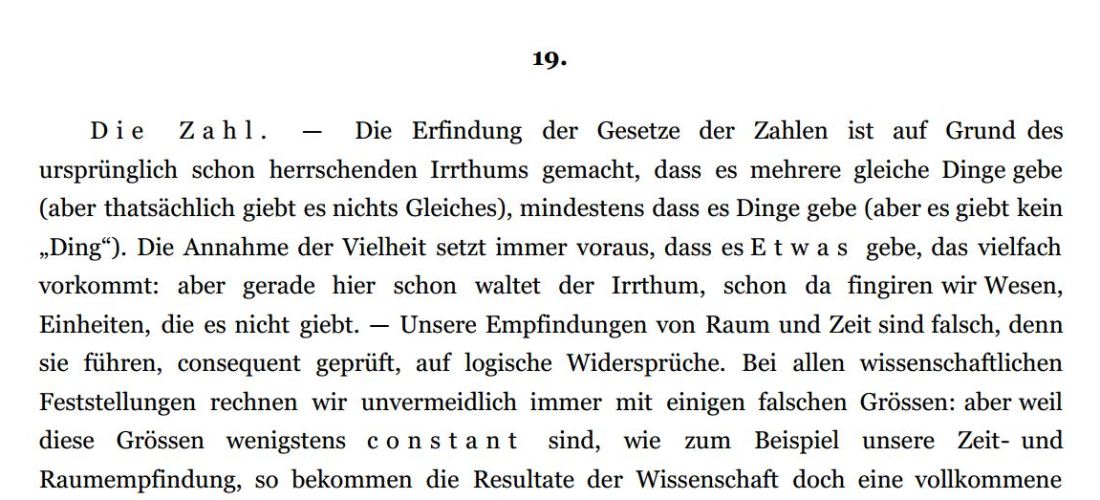
  1. Unglaube an das “monumentum aere perennius”. – Ein wesentlicher Nachtheil, welchen das Aufhören metaphysischer Ansichten mit sich bringt, liegt darin, dass das Individuum zu streng seine kurze Lebenszeit in’s Auge fasst und keine stärkeren Antriebe empfängt, an dauerhaften, für Jahrhunderte angelegten Institutionen zu bauen; es will die Frucht selbst vom Baume pflücken, den es pflanzt, und desshalb mag es jene Bäume nicht mehr pflanzen, welche eine Jahrhundert lange gleichmässige Pflege erfordern und welche lange Reihenfolgen von Geschlechtern zu überschatten bestimmt sind. Denn metaphysische Ansichten geben den Glauben, dass in ihnen das letzte endgültige Fundament gegeben sei, auf welchem sich nunmehr alle Zukunft der Menschheit niederzulassen und anzubauen genöthigt sei; der Einzelne fördert sein Heil, wenn er zum Beispiel eine Kirche, ein Kloster stiftet, es wird ihm, so meint er, im ewigen Fortleben der Seele angerechnet und vergolten, es ist Arbeit am ewigen Heil der Seele. – Kann die Wissenschaft auch solchen Glauben an ihre Resultate erwecken? In der That braucht sie den Zweifel und das Misstrauen als treuesten Bundesgenossen; trotzdem kann mit der Zeit die Summe der unantastbaren, das heisst alle Stürme der Skepsis, alle Zersetzungen überdauernden Wahrheiten so gross werden (zum Beispiel in der Diätetik der Gesundheit), dass man sich daraufhin entschliesst, “ewige” Werke zu gründen. Einstweilen wirkt der Contrast unseres aufgeregten Ephemeren-Daseins gegen die langathmige Ruhe metaphysischer Zeitalter noch zu stark, weil die beiden Zeiten noch zu nahe gestellt sind; der einzelne Mensch selber durchläuft jetzt zu viele innere und äussere Entwickelungen, als dass er auch nur auf seine eigene Lebenszeit sich dauerhaft und ein für alle Mal einzurichten wagt. Ein ganz moderner Mensch, der sich zum Beispiel ein Haus bauen will, hat dabei ein Gefühl, als ob er bei lebendigem Leibe sich in ein Mausoleum vermauern wolle.

Sources:

I will read a Dutch translation that is based on the work of researchers Colli and Montinari. I also use a translation from R.J.Hollingdale and the Gary Handwerk translation from the Colli-Montinari edition. Both are more modern than the copyright free translation I use here. This is a translation from 1909 by Helen Zimmern, who knew Nietzsche personally, but there was no critical study of Nietzsche’s work done back then and this translation suffers from that. The same goes for the translation from Alexander Harvey. My German is not good enough to pretend that I can translate it better than the professionals do but I will use the original as a referee.

  1. Menselijk al te menselijk een boek voor vrije geesten, translated by Thomas Graftdijk, 2000. Buy it here
  2. Human, all too human a book for free spirits, translated by R.J.Hollingdale, 1986
  3. Human, all too human a book for free spirits I V3, translated by Gary handwerk 1997
  4. Human, all too human a book for free spirits Part I, translated by Helen Zimmern 1909. Read it  here
  5. Human, all too human a book for free spirits, translated by Alexander Harvey, 1908. Read it here
  6. Menschliches allzu menschlich 1878/80. Read it here
 

Day 616

Day's pictures

Day 616-1

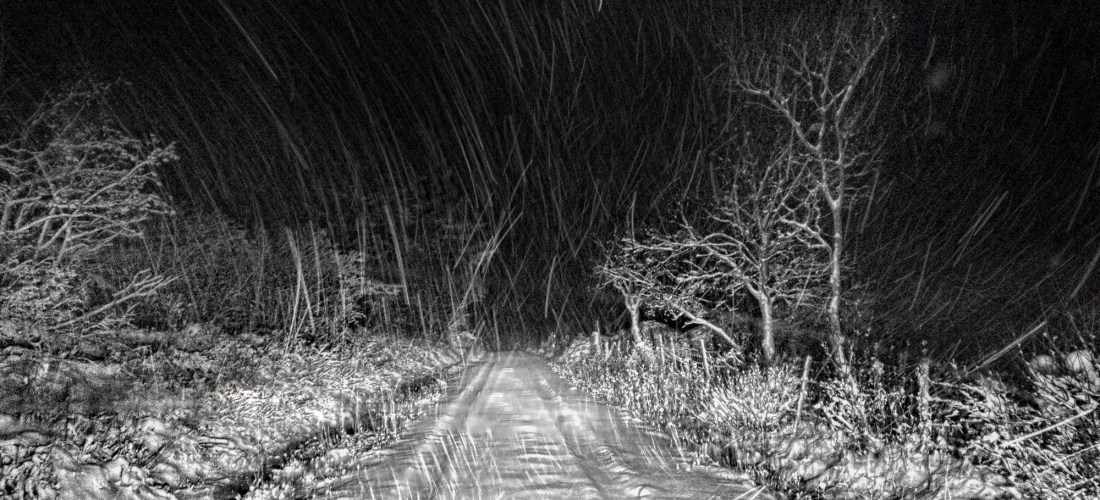
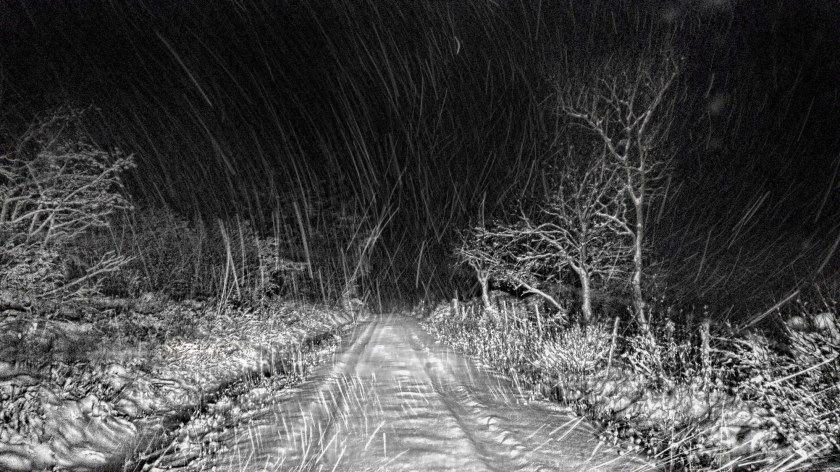
The Snow Man

One must have a mind of winter
To regard the frost and the boughs
Of the pine-trees crusted with snow;And have been cold a long time
To behold the junipers shagged with ice,
The spruces rough in the distant glitter

Of the January sun; and not to think
Of any misery in the sound of the wind,
In the sound of a few leaves,

Which is the sound of the land
Full of the same wind
That is blowing in the same bare place
For the listener, who listens in the snow,
And, nothing himself, beholds
Nothing that is not there and the nothing that is.

Wallace Stevens

The problem of democracy

Society

Day 281-1

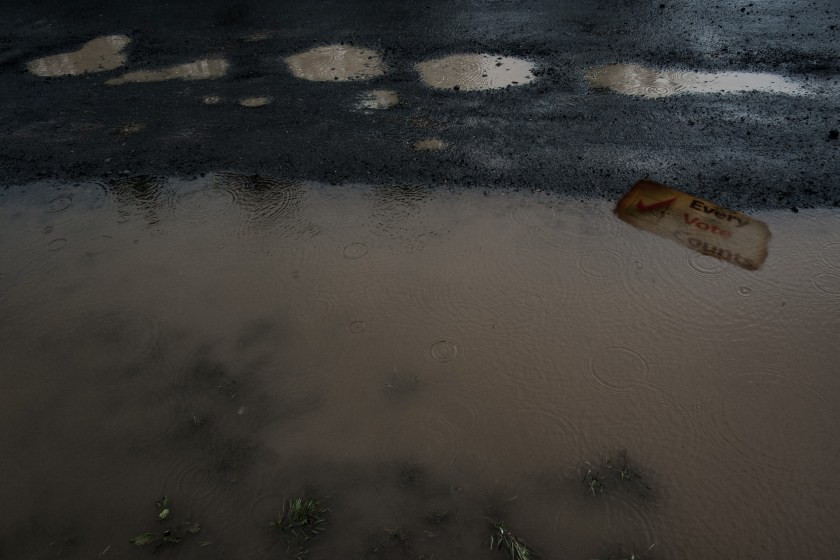
There is only democracy because we have no answer to the question of how we should govern ourselves.  The people that govern us are following the whims of the constituent and hence steer the boat erratically across the sea of time, every now and then catching a wave from the side. The only thing that keeps order in this imaginary boat is the relative order in the steer house, not every sailor gets a swing at the big wheel, and even a drunken skipper can be sent to their quarters.

After 1945, most prosperous nations are democracies. Before the war there were also democracies, but the chosen leaders were often granted more power. Its often said that Hitler came to power by democratic means, but his takeover of the government and consequently becoming a dictator is for the most part due to the system behind their democracy. Their system let him strategically move around his opponents and even let him use a law that gave him basically dictatorial powers. In Germany the inconsistent behavior of the voters where not the biggest cause for the rise to power of Hitler, the long tentacles of their peculiar history provided a system of government that allowed the rise of authoritarian rulers. England has a better history in this regard and it’s not surprising that the voters over there kicked their war winning prime minister (Churchill) on the curbs without causing a problem when the power had to be handed over.

A definition of democracy is that the power lies with the people. Most of the times this power is given to a representative, of the people, and from there a whole system is built made out of ministers, prime ministers, senators, parliaments and more. This system works, more or less, as a mood stabilizer, dampening the worst decision of the constituency. The different representatives can decide not to work with a racist party, even if they get a sizable part of the votes. But the people that vote still contribute to the main direction the country is going despite of the stabilizing power of the legislative and executive power.

Even more important than the stabilizing effect of the legislative and executive power for our fortune is the separation of powers or simply said: the agreement amongst citizens that prevent their ruler from ignoring or making laws that are made by the citizens. This system is developed in the 18th century where a king could still make laws, and order the police and judges what to do with these laws. They slowly moved to a separate entity for law making (legislative Power), and even the king had to obey these laws.  The judges became also independent (judicative Power), so they were free to interpret the laws and were no longer ordered on how to interpret them. Later these potentates became a symbolic head of state or were replaced by something less ancient and their power was more formally divided between the Legislative Power (parliament, normally in two chambers), executive Power (government and administration) and judicative Power (courts of justice)

This separation of power takes more direct influence away from the people in so far the main direction of the country is concerned.  There are some fundamental laws in each country that cannot be change by a simple majority vote like for example the constitution in America. So, together with our governmental system they ensure a certain stability for the long term. But for the short term we still have these ridiculous elections where the direction of a country is often determent by a minority that cannot make up their mind, a majority of the voters stay with their side for a long time.

It is not easy to come up with a better system. I have never studied politics, the things I say about democracy and the separation of power should be common knowledge, and I don’t pretend to know all the nuances. My problem is not this system we’ve built but the question of how you resolve differences of opinion. Giving everybody a vote is one way to solve a dispute but there are some questions where this can be dangerous. In a debate there are a lot of questions that you can answer with your opinion, for example birth control. There are no hard facts for or against it, your subjective feeling should decide your answer and in a democratic society each individual can decide if they want to use birth control and no law should be made enforcing or withholding it. But debating about the health risks of smoking is another story, there are too many hard facts about the negative effects of it. Forbidding people from smoking in certain places is no problem because it affects other people and its accepted that it is harmful towards others. But a law that forbids people from smoking is not good because the negative effects of smoking only effects the smoker, and in a democracy, we should be allowed to be boss over your own body. We can agree on these two I hope but with the next example, climate change, it gets more difficult. With climate change we also have an overwhelming amount of evidence, like with smoking, but not allowing cigarettes in a bar takes away some freedom, most people understand the reasons why. It took more than 60 years before the risks of smoking were finally accepted to a point that lawmakers could make some laws prohibiting smoking in certain places and labeling cigarettes with warnings. Imagine if these laws were enacted, 60 years ago, because scientist recommended it and the voters believed them. Countless people would have been saved from unnecessary painful deaths. The same problem we have now with climate change where political motivated opinions prevent us from taking strong and necessary actions. People are easy persuaded by warnings that their gasoline will be more expensive, and their freedom taken away, things that touch people directly, so they think. You have a problem when you debate a climate change denier, they more or less deny the science that they also rely on when they go to the hospital or drive a car. It is not rational, and as long as their grandfather hasn’t died of climate change related illnesses they will probably not change their mind. Like with the birth control example, you cannot say that it is just a matter of opinion because there are facts.

With climate change you touch a sore point in our democracy. The people that know, the scientist, say: go there. But the people that are in power, the voters, don’t necessarily understand why, and are easily persuaded to choose a goal not so far away. Why would I pay for something I will not benefit from…I don’t care about the world my children have to live in.  The voter and their representatives can debate a lot about  birth control, and as long as no one forbids either birth control or the beliefs against it there is no problem but for the things that matter, like climate change, democracy is a bad system.

In my fantasy democratic system, in a galaxy far, far away, there are no elections. The people have to write an essay, starting when they are 15, and repeat it every 5 years. In that essay they have to tell about their dreams, likes, dislikes, point of view and whatever makes their stance in life clear. Everybody does that every 5 years of their life, this way you have a constant stream of opinions that the government can use to steer their decision making with. In an ideal world some kind of artificial intelligence would read all of these letters and come up with some kind of guideline. In this system everybody has an equal vote, there are good reasons for this, you’ll get in shady waters if you give a philosopher, who writes a 50 pages essay more say than someone who just manages to fill 1 page. The effort is important, even if your level of motivation might be determined by your genes, you have to draw the line somewhere. These essays follow some rules of course, like a minimum length, and it has to show an understanding of the arguments and not a summary of someone else’s ideas, something a A.I. can simply find out.

This society offers, of course, free lessons on every level and in every field of science necessary to make a good essay, filled with well thought out arguments, to ensure a good functioning democracy…maybe we should start with this last part.

Stars

Poetry

the stars

Stars

The stars are glowing their distance into my imagination.

O could I… O could I go there, please fall.

Fall down to me o distance, you star.

Your incentive of unlimited fantasy, you star.

Please fall down to me, I cannot fall to you.

Please come to me and let me wish.

Let me wish to be there, be you.

Let me glow and be distance.

Let my falling down give hope.

Let me shine amongst billions and shine my lite to millions.

Let me reach out to other worlds.

Where they look up and wonder why.

Why is that star, that star over there, glowing so bright.

So fulfilled in this night here down under the stars.

Day 615

Day's pictures

Day 615-1

Still I Rise

You may write me down in history
With your bitter, twisted lies,
You may trod me in the very dirt
But still, like dust, I’ll rise.

Does my sassiness upset you?
Why are you beset with gloom?
‘Cause I walk like I’ve got oil wells
Pumping in my living room.

Just like moons and like suns,
With the certainty of tides,
Just like hopes springing high,
Still I’ll rise.

Did you want to see me broken?
Bowed head and lowered eyes?
Shoulders falling down like teardrops.
Weakened by my soulful cries.

Does my haughtiness offend you?
Don’t you take it awful hard
‘Cause I laugh like I’ve got gold mines
Diggin’ in my own back yard.

You may shoot me with your words,
You may cut me with your eyes,
You may kill me with your hatefulness,
But still, like air, I’ll rise.

Does my sexiness upset you?
Does it come as a surprise
That I dance like I’ve got diamonds
At the meeting of my thighs?

Out of the huts of history’s shame
I rise
Up from a past that’s rooted in pain
I rise
I’m a black ocean, leaping and wide,
Welling and swelling I bear in the tide.
Leaving behind nights of terror and fear
I rise
Into a daybreak that’s wondrously clear
I rise
Bringing the gifts that my ancestors gave,
I am the dream and the hope of the slave.
I rise
I rise
I rise.

By Maya Angelou

Maya Angelou born Marguerite Annie Johnson; April 4, 1928 – May 28, 2014) was an American poet, memoirist, and civil rights activist. She published seven autobiographies, three books of essays, several books of poetry, and was credited with a list of plays, movies, and television shows spanning over 50 years. She received dozens of awards and more than 50 honorary degrees. Angelou is best known for her series of seven autobiographies, which focus on her childhood and early adult experiences. The first, I Know Why the Caged Bird Sings (1969), tells of her life up to the age of 17 and brought her international recognition and acclaim. (Read more)

21. Conjectural victory of scepticism

Human all too human

Reading Friedrich Nietzsche’s Human all too human

Read the introduction here

You can read the aphorism I discuss here in English and German below the main article.

Synopsis, quote from the translation by Helen Zimmern and my take on it.

Let’s use the skeptical mindset and accept that there is no metaphysical world, and that metaphysical explanations of our world are useless, how would we look at man and world. You can imagine this even if you dismiss the question if Kant and Schopenhauer have any scientific proof. For it is quite possible, according to historical probability, that some time or other man, as a general rule, may grow skeptical; the question will then be this: What form will human society take under the influence of such a mode of thought? Maybe mankind distrust scientific proof of a metaphysical world, and when there is this distrust it will have the same result as if it was outright refuted and could no longer be believed in. The historical question with regard to an unmetaphysical frame of mind in mankind remains the same in both cases.

In one sentence:

It is historically possible that metaphysics will be refuted no matter what.

.


Human, all too human a book for free spirits Part I translated by Helen Zimmern 1909

  1. CONJECTURAL VICTORY OF SCEPTICISM.—For once let the sceptical starting-point be accepted, —granted that there were no other metaphysical world, and all explanations drawn from meta- physics about the only world we know were useless to us, in what light should we then look upon men and things? We can think this out for ourselves, it is useful, even though the question whether anything metaphysical has been scientifically proved by Kant and Schopenhauer were altogether set aside. For it is quite possible, according to historical probability, that some time or other man, as a general rule, may grow sceptical ; the question will then be this : What form will human society take under the influence of such a mode of thought ? Perhaps the scientific proof of some metaphysical world or other is already so difficult that mankind will never get rid of a certain distrust of it. And when there is distrust of metaphysics, there are on the whole the same results as if it had been directly refuted and could no longer be believed in. The historical question with regard to an unmetaphysical frame of mind in mankind remains the same in both cases.

Menschliches allzu menschlich 1878/80

  1. Muthmaasslicher Sieg der Skepsis. – Man lasse einmal den skeptischen Ausgangspunct gelten: gesetzt, es gäbe keine andere, metaphysische Welt und alle aus der Metaphysik genommenen Erklärungen der uns einzig bekannten Welt wären unbrauchbar für uns, mit welchem Blick würden wir dann auf Menschen und Dinge sehen? Diess kann man sich ausdenken, es ist nützlich, selbst wenn die Frage, ob etwas Metaphysisches wissenschaftlich durch Kant und Schopenhauer bewiesen sei, einmal abgelehnt würde. Denn es ist, nach historischer Wahrscheinlichkeit, sehr gut möglich, dass die Menschen einmal in dieser Beziehung im Ganzen und Allgemeinen skeptisch werden; da lautet also die Frage: wie wird sich dann die menschliche Gesellschaft, unter dem Einfluss einer solchen Gesinnung, gestalten? Vielleicht ist der wissenschaftliche Beweis irgend einer metaphysischen Welt schon so schwierig, dass die Menschheit ein Misstrauen gegen ihn nicht mehr los wird. Und wenn man gegen die Metaphysik Misstrauen hat, so giebt es im Ganzen und Grossen die selben Folgen, wie wenn sie direct widerlegt wäre und man nicht mehr an sie glauben dürfte. Die historische Frage in Betreff einer unmetaphysischen Gesinnung der Menschheit bleibt in beiden Fällen die selbe.

Sources:

I will read a Dutch translation that is based on the work of researchers Colli and Montinari. I also use a translation from R.J.Hollingdale and the Gary Handwerk translation from the Colli-Montinari edition. Both are more modern than the copyright free translation I use here. This is a translation from 1909 by Helen Zimmern, who knew Nietzsche personally, but there was no critical study of Nietzsche’s work done back then and this translation suffers from that. The same goes for the translation from Alexander Harvey. My German is not good enough to pretend that I can translate it better than the professionals do but I will use the original as a referee.

  1. Menselijk al te menselijk een boek voor vrije geesten, translated by Thomas Graftdijk, 2000. Buy it here
  2. Human, all too human a book for free spirits, translated by R.J.Hollingdale, 1986
  3. Human, all too human a book for free spirits I V3, translated by Gary handwerk 1997
  4. Human, all too human a book for free spirits Part I, translated by Helen Zimmern 1909. Read it  here
  5. Human, all too human a book for free spirits, translated by Alexander Harvey, 1908. Read it here
  6. Menschliches allzu menschlich 1878/80. Read it here
 

20. A few steps back

Human all too human

Reading Friedrich Nietzsche’s Human all too human

Read the introduction here

You can read the aphorism I discuss here in English and German below the main article.

Synopsis, quote from the translation by Helen Zimmern and my take on it.

A few steps back1 back A high culture is attained when man rises above superstitious and religious notions and fears. If he has attained to this degree of freedom, he has still also to overcome metaphysics with the greatest exertion of his intelligence. Man has to overcome explanations that they got with the help of metaphysics, the unseen or not material world, after he rises above superstitious believes After this he has to look back and understand the historical and psychological basis of these mindsets. He must recognize how the greatest advancement of humanity has come therefrom, and how man would rob itself from the greatest achievements if it doesn’t look back. After this, man has to look back and realize that the greatest advancements of man came from this period,  With regard to philosophical metaphysics, I see more people that attained the negative goal of thinking that even positive metaphysics is an error, but more people think that positive2 metaphysics is bad. but few that take a few steps back on the ladder. one ought to look out, perhaps, over the last steps of the ladder, but not try to stand upon them. It is advised to remind yourself of the positive achievement of metaphysics, The most enlightened only succeed so far as to free themselves from metaphysics and look back upon it with superiority, while it is necessary here, too, as in the hippodrome, to turn around the end of the course. even the most enlightened, must turn around and acknowledge this fact.

In one sentence:

Don’t dismiss positive metaphysics to fast.

1The German word “Einige sprossen zurück” is normally translated in English as “some/a few rungs back. Zimmern, Harvey and Hollindale translated it as “A few steps back, Handwerk and Graftdijk as “A few rungs back/Een paar sporten terug”. It is probably not wrong, but I associate “steps back” more with a step backwards and not downwards on a ladder, and that is what Nietzsche uses in this aphorism, he probably meant seeing more or les depending on where you are on the ladder, “but as yet few who climb a few rungs backwards; one ought to look out, perhaps, over the last steps of the ladder”.

2Don’t know what Nietzsche meant with “positive metaphysics” other than metaphysics that has a positive effect. Don’t know what he counted as such.

Human, all too human a book for free spirits Part I translated by Helen Zimmern 1909

  1. A FEW STEPS BACK.—A degree of culture, and assuredly a very high one, is attained when man rises above superstitious and religious notions and fears, and, for instance, no longer believes in guardian angels or in original sin, and has also ceased to talk of the salvation of his soul,—if he has attained to this degree of freedom, he has still also to overcome metaphysics with the greatest exertion of his intelligence. Then, however, a retrogressive movement is necessary ; he must understand the historical justification as well as the psychological in such representations, he must recognise how the greatest advancement of humanity has come therefrom, and how, without such a retrocursive movement, we should have been robbed of the best products of hitherto existing mankind. With regard to philosophical metaphysics, I always see increasing numbers who have attained to the negative goal (that all positive metaphysics is error), but as yet few who climb a few rungs backwards ; one ought to look out, perhaps, over the last steps of the ladder, but not try to stand upon them. The most enlightened only succeed so far as to free themselves from metaphysics and look back upon it with superiority, while it is necessary here, too, as in the hippodrome, to turn round the end of the course.

Menschliches allzu menschlich 1878/80

  1. Einige Sprossen zurück. – Die eine, gewiss sehr hohe Stufe der Bildung ist erreicht, wenn der Mensch über abergläubische und religiöse Begriffe und Aengste hinauskommt und zum Beispiel nicht mehr an die lieben Englein oder die Erbsünde glaubt, auch vom Heil der Seelen zu reden verlernt hat: ist er auf dieser Stufe der Befreiung, so hat er auch noch mit höchster Anspannung seiner Besonnenheit die Metaphysik zu überwinden. Dann aber ist eine rückläufige Bewegung nöthig: er muss die historische Berechtigung, ebenso die psychologische in solchen Vorstellungen begreifen, er muss erkennen, wie die grösste Förderung der Menschheit von dorther gekommen sei und wie man sich, ohne eine solche rückläufige Bewegung, der besten Ergebnisse der bisherigen Menschheit berauben würde. – In Betreff der philosophischen Metaphysik sehe ich jetzt immer Mehrere, welche an das negative Ziel (dass jede positive Metaphysik Irrthum ist) gelangt sind, aber noch Wenige, welche einige Sprossen rückwärts steigen; man soll nämlich über die letzte Sprosse der Leiter wohl hinausschauen, aber nicht auf ihr stehen wollen. Die Aufgeklärtesten bringen es nur so weit, sich von der Metaphysik zu befreien und mit Ueberlegenheit auf sie zurückzusehen: während es doch auch hier, wie im Hippodrom, noth thut, um das Ende der Bahn herumzubiegen.

Sources:

I will read a Dutch translation that is based on the work of researchers Colli and Montinari. I also use a translation from R.J.Hollingdale and the Gary Handwerk translation from the Colli-Montinari edition. Both are more modern than the copyright free translation I use here. This is a translation from 1909 by Helen Zimmern, who knew Nietzsche personally, but there was no critical study of Nietzsche’s work done back then and this translation suffers from that. The same goes for the translation from Alexander Harvey. My German is not good enough to pretend that I can translate it better than the professionals do but I will use the original as a referee.

  1. Menselijk al te menselijk een boek voor vrije geesten, translated by Thomas Graftdijk, 2000. Buy it here
  2. Human, all too human a book for free spirits, translated by R.J.Hollingdale, 1986
  3. Human, all too human a book for free spirits I V3, translated by Gary handwerk 1997
  4. Human, all too human a book for free spirits Part I, translated by Helen Zimmern 1909. Read it  here
  5. Human, all too human a book for free spirits, translated by Alexander Harvey, 1908. Read it here
  6. Menschliches allzu menschlich 1878/80. Read it here
 

19. Number

Human all too human

Reading Friedrich Nietzsche’s Human all too human

Read the introduction here

You can read the aphorism I discuss here in English, German and Dutch below the main article.

Synopsis, quote from the translation by Helen Zimmern and my take on it.

The discovery of the laws of numbers is made upon the ground of the original, already prevailing error, that there are many similar things (but in reality there is nothing similar), at least, that there are things (but there is no “thing”). The law of numbers is based on the (mistaken) belief in similarity and that there are things When you assume there is variety, you assume there are more things of one, but here we are mistaken and invent things that are not there. We see lots of different things and assume there are more of each Our sensations of space and time are false, for they lead consistently1 to logical contradictions. In science we know there are false quantities but as these quantities are at least constant, as, for instance, our sensation of time and space, the conclusions of science have still perfect accuracy and certainty in their connection with one another; Science works with false premises, but they work for specific questions like Newtonian and quantum physics one may continue to build upon them. Up to the point where our assumptions, the constant errors, no longer work with our conclusions like in the theory of atoms. You can work with these theories up to the point that they don’t work anymore There still we always feel ourselves compelled to the acceptance of a ” thing ” or material ” substratum”2 that is moved, Like with a theory of atoms, were our believe in numbers no longer works, we still belief in things whilst the whole scientific procedure has pursued the very task of resolving everything substantial (material) into motion ; here, too, we still separate with our sensation the mover and the moved and cannot get out of this circle, because the belief in things has from immemorial times been bound up with our being. We still separate the mover from the moved, there is no specific movement without our observation When Kant3 says, ” The understanding does not derive its laws from Nature, but dictates them to her, Nature has no order besides the order we give it to her” it is perfectly true with regard to the idea of Nature which we are compelled to associate with her (Nature = World as representation, that is to say as error), but which is the summing up of a number of errors of the understanding. The laws of numbers are entirely inapplicable to a world which is not our representation—these laws obtain only in the human world. Number work only for a world seen thru our eyes, a world created by our way of looking to the world, made of things, similarity, numbers.

In one sentence:

We exist but live in a man made world

1Zimmern translate the German “consequent” (konsequent) as “examined in sequence” is better translated as consequent or consistently.

2substratum” A foundation or basis of something.

3 In the Dutch translation is a note pointing to this quote of Kant from his book: Prolegomena zu einer jeden künftigen Metaphysik die als Wissenschaft wird auftreten können. Page 320 (82) 36 here you can read it.


Human, all too human a book for free spirits Part I translated by Helen Zimmern 1909

  1. NUMBER.—The discovery of the laws of numbers is made upon the ground of the original, already prevailing error, that there are many similar things (but in reality there is nothing similar), at least, that there are things (but there is no “thing”). The supposition of plurality always presumes that there is something which appears frequently,—but here already error reigns, already we imagine beings, unities, which do not exist. Our sensations of space and time are false, for they lead—examined in sequence—to logical contradictions. In all scientific determinations we always reckon inevitably with certain false quantities, but as these quantities are at least constant, as, for instance, our sensation of time and space, the conclusions of science have still perfect accuracy and certainty in their connection with one another; one may continue to build upon them—until that final limit where the erroneous original suppositions, those constant faults, come into conflict with the conclusions, for instance in the doctrine of atoms. There still we always feel ourselves compelled to the acceptance of a ” thing ” or material ” substratum ” that is moved, whilst the whole scientific procedure has pursued the very task of resolving everything substantial (material) into motion ; here, too, we still separate with our sensation the mover and the moved and cannot get out of this circle, because the belief in things has from immemorial times been bound up with our being. When Kant says, ” The understanding does not derive its laws from Nature, but dictates them to her,” it is perfectly true with regard to the idea of Nature which we are compelled to associate with her (Nature = World as representation, that is to say as error), but which is the summing up of a number of errors of the understanding. The laws of numbers are entirely inapplicable to a world which is not our representation—these laws obtain only in the human world.

Menschliches allzu menschlich 1878/80

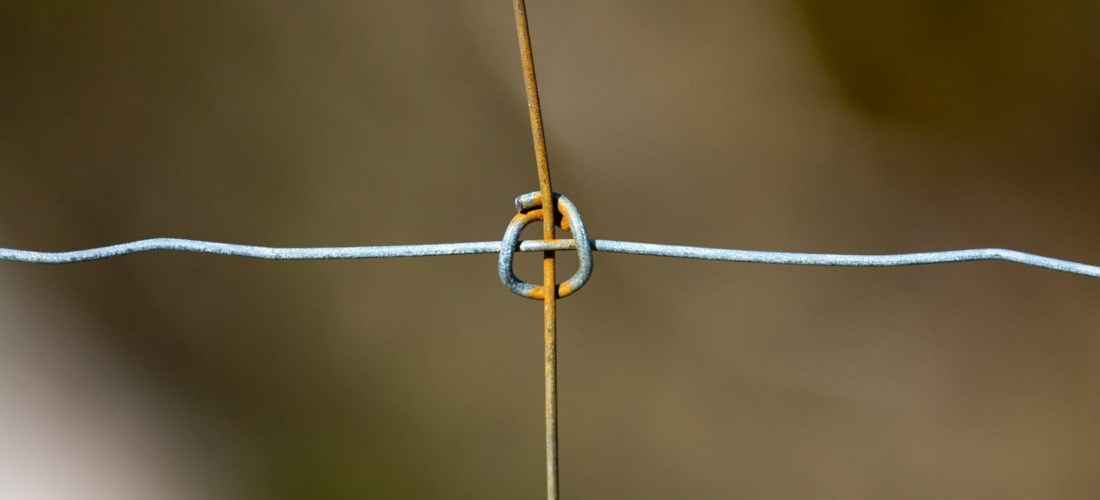
  1. Die Zahl. – Die Erfindung der Gesetze der Zahlen ist auf Grund des ursprünglich schon herrschenden Irrthums gemacht, dass es mehrere gleiche Dinge gebe (aber thatsächlich giebt es nichts Gleiches), mindestens dass es Dinge gebe (aber es giebt kein “Ding”). Die Annahme der Vielheit setzt immer voraus, dass es Etwas gebe, das vielfach vorkommt: aber gerade hier schon waltet der Irrthum, schon da fingiren wir Wesen, Einheiten, die es nicht giebt. – Unsere Empfindungen von Raum und Zeit sind falsch, denn sie führen, consequent geprüft, auf logische Widersprüche. Bei allen wissenschaftlichen Feststellungen rechnen wir unvermeidlich immer mit einigen falschen Grössen: aber weil diese Grössen wenigstens constant sind, wie zum Beispiel unsere Zeit- und Raumempfindung, so bekommen die Resultate der Wissenschaft doch eine vollkommene Strenge und Sicherheit in ihrem Zusammenhange mit einander; man kann auf ihnen fortbauen – bis an jenes letzte Ende, wo die irrthümliche Grundannahme, jene constanten Fehler, in Widerspruch mit den Resultaten treten, zum Beispiel in der Atomenlehre. Da fühlen wir uns immer noch zur Annahme eines “Dinges” oder stofflichen “Substrats”, das bewegt wird, gezwungen, während die ganze wissenschaftliche Procedur eben die Aufgabe verfolgt hat, alles Dingartige (Stoffliche) in Bewegungen aufzulösen: wir scheiden auch hier noch mit unserer Empfindung Bewegendes und Bewegtes und kommen aus diesem Zirkel nicht heraus, weil der Glaube an Dinge mit unserem Wesen von Alters her verknotet ist. – Wenn Kant sagt “der Verstand schöpft seine Gesetze nicht aus der Natur, sondern schreibt sie dieser vor”, so ist diess in Hinsicht auf den Begriff der Natur völlig wahr, welchen wir genöthigt sind, mit ihr zu verbinden (Natur = Welt als Vorstellung, das heisst als Irrthum), welcher aber die Aufsummirung einer Menge von Irrthümern des Verstandes ist. – Auf eine Welt, welche nicht unsere Vorstellung ist, sind die Gesetze der Zahlen gänzlich unanwendbar: diese gelten allein in der Menschen-Welt.

19. Het getal. – De uitvinding van de getallenwetten is gedaan op grond van de oorspronkelijk al heersende dwaling dat er verschillende identieke dingen zijn (maar in feite is er niets identieks), of althans dat er dingen zijn (maar er is geen ‘ding’). De veronderstelling van de veelheid gaat er altijd al van uit dat eriets is wat veelvuldig voorkomt: maar juist hier regeert de dwaling al, reeds hier fingeren wij wezenheden, eenheden die niet bestaan. – Onze gewaarwordingen van ruimte en tijd zijn vals, want bij consequent onderzoek blijken zij tot logische tegenstrijdigheden te leiden. Bij al onze wetenschappelijke bevindingen rekenen we onvermijdelijk altijd met enkele valse grootheden: maar omdat deze grootheden ten minste constant zijn, zoals bijvoorbeeld onze gewaarwording van tijd en ruimte, krijgen de resultaten van de wetenschap toch een volmaakte strengheid en zekerheid in hun onderlinge samenhang: men kan erop voortbouwen – tot aan dat uiterste punt, waarop de verkeerde basisveronderstellingen, de genoemde constante fouten, in conflict komen met de resultaten, bijvoorbeeld in de atomenleer. We voelen ons hier nog steeds gedwongen uit te gaan van een ‘ding’ of stoffelijk ‘substraat’ dat bewogen wordt, terwijl de hele wetenschappelijke procedure juist heeft gepoogd al het dingachtige (stoffelijke) tot bewegingen te ontleden: ook hier blijven we ten slotte zitten met onze gewaarwording van iets wat beweegt en iets wat bewogen wordt en we komen deze tovercirkel niet uit omdat het geloof aan dingen van oudsher met onze natuur verweven is. – Als Kant zegt ‘het verstand put zijn wetten niet uit de natuur, maar schrijft ze haar voor’ dan is dit volledig waar ten aanzien van het begrip van de natuur dat wij genoodzaakt zijn met haar te verbinden (natuur = wereld als voorstelling, dat wil zeggen als dwaling), maar dat de optelsom is van een grote hoeveelheid dwalingen van het verstand. – Op een wereld die niet onze voorstelling is zijn de getallenwetten in het geheel niet toepasbaar: zij gelden alleen in de mensenwereld.


Sources:

I will read a Dutch translation that is based on the work of researchers Colli and Montinari. I also use a translation from R.J.Hollingdale and the Gary Handwerk translation from the Colli-Montinari edition. Both are more modern than the copyright free translation I use here. This is a translation from 1909 by Helen Zimmern, who knew Nietzsche personally, but there was no critical study of Nietzsche’s work done back then and this translation suffers from that. The same goes for the translation from Alexander Harvey. My German is not good enough to pretend that I can translate it better than the professionals do but I will use the original as a referee.

  1. Menselijk al te menselijk een boek voor vrije geesten, translated by Thomas Graftdijk, 2000. Buy it here
  2. Human, all too human a book for free spirits, translated by R.J.Hollingdale, 1986
  3. Human, all too human a book for free spirits I V3, translated by Gary handwerk 1997
  4. Human, all too human a book for free spirits Part I, translated by Helen Zimmern 1909. Read it  here
  5. Human, all too human a book for free spirits, translated by Alexander Harvey, 1908. Read it here
  6. Menschliches allzu menschlich 1878/80. Read it here