Day 656, Fresku – omgekeerde wereld

Day's pictures, music, Video

Day 656-1

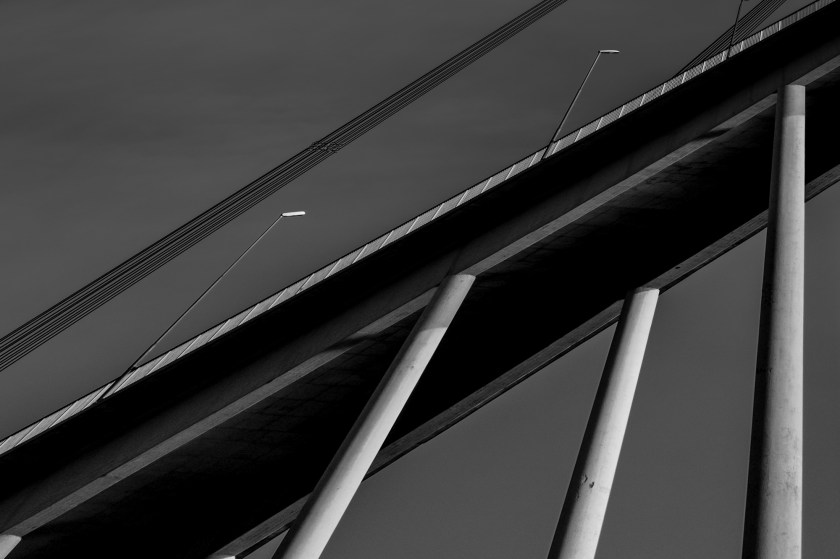
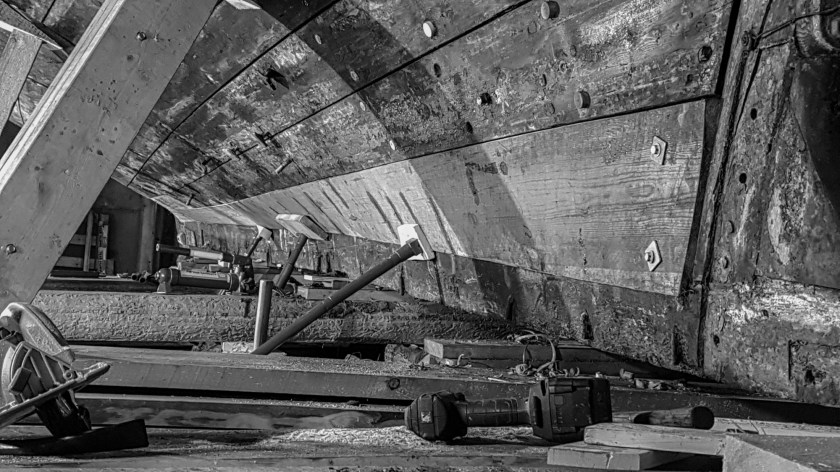
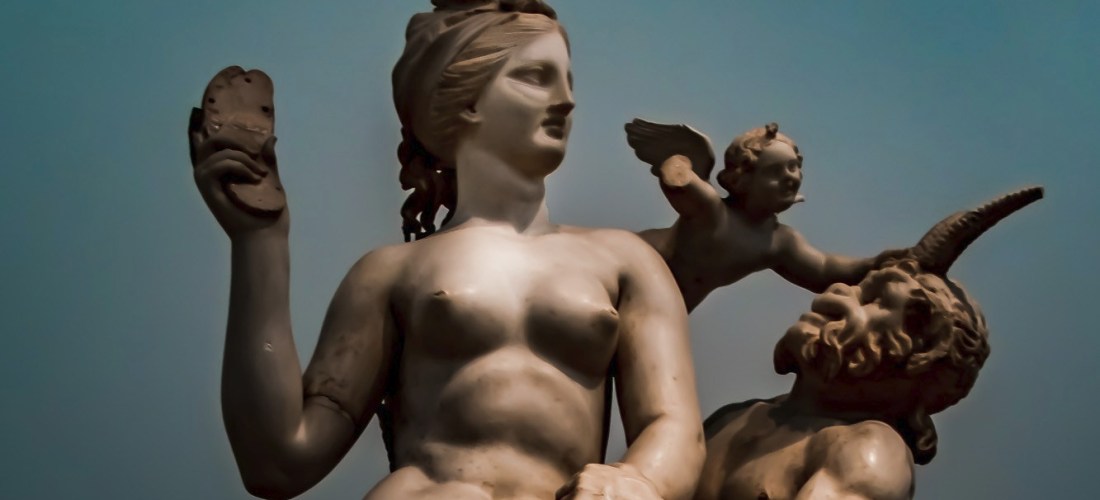
I translated a Dutch song, for some reason I wanted to share it today. Like the stairs in this picture, the conflict described in this song is also seemingly going nowhere.

Fresku – Omgekeerde wereld (upside down world)

I hear you say, you are a citizen of the world
Why are you closing your eyes now?
Just won “Best Artist” Frisse
Better keep your eyes closed now.
What would I be worth as a famous rapper?
Even though I just do not offer any resistance?
How can people call this a war?
Gaza does not even have an army man.

How can a man take the life of a child?
How can I continue to entertain you in the meantime?
Imagine that you live in those regions.
What would you do if you wanted to live?
If we, the West, do not offer the Palestinians an army,
tell me this, how should Hamas choose for peace now?
Politics is dirty, I see how many lie
no principles, is this a war or genocide?
War or genocide, would this be the choices?
Would this be the choices, would this be my choice?

Looking forward? Dear brother, I feel helpless.
Oh dear sister, forgive me that I chickened out.
I am buried in my own fears.
Fears that you dream to ever have.
The oppressor makes your home a cage.
Which he then throws flat with his rockets.

I saw a father crying for his baby.
And his baby was not even a year.
Is that how warfare is going today?
Bombing? innocent people live there.

The British took land and lives from the Indians
Now these people call themselves Americans
Now they support Israel to do this too?
in 2012? Obama should be ashamed of himself.

Now there are deaths from both sides.
Countries watch how bodies fall.
Misled by all the lies, we become more confused.
Most of them barely understand how it is and chose to close their eyes,
because they are going crazy, as Palestinians succumb to the stress.
and are now willing to kill because of lack of hope
and to die for, with the hope to create new hope again
Open the hell and pay them back with a bunch of rockets
in the name of God. Kill people in the name of God
until hatred makes me what I hate and I break your state.

Israel, you took everything away from me.
My food, shelter, my sons just shot down
Sorry that I chose to talk like that
Words that I do not support
but I can not choose, to choose nothing, while people die
Or do you prefer that I make jokes in the meantime?

I do not want to entertain you.
Speak to you as a father
If I close my eyes to this,
consider me as a perpetrator
Of course we are hoping that things will get better
and we want peace there, everyone is against hatred
Easy talking for us, we are not at risk

meanwhile, Palestine is turning into a reservation.
They want peace but do not believe in it
and I understand that, I also value my home and family
To call civilians terrorists so you can pick them up
to then put Israeli in their homes

Believe that you count inspiration is a means
For all my people in the opposite world.

Where many parents have to bury their children
to callout their names and call for mercy for far too long
where small children are the product of hatred and anger
praying that the perpetrators pay and seek revenge with stone
however sacred your land may be, children are more holy
I am a terrorist? you are trying to hurt my child
can it still be more hypocritical? Take a good look at how I live
my population is shrinking by the day, yours is still growing

I do not want to say stupid things
but I can not live longer and bottle this up

My mind must predominate
because if I want to resist, than it is better to do something
for people with fewer rights, rather than resist me
against the perpetrators then conferm your prejudice

So you can say: “Fresku you are an angry Muslim.”
and I distract, no, I avoid that useless collision.
I prefer to turn this pain into compassion
I come into action, lovingly and chose my role tactically
all fighters, keep up hope and love, is my advice
and if that hatred can comes to you, do not go in reaction

But make a step-by-step plan
unite and make a step-by-step plan
I also doubt but hope that it is possible
be a leader for your supporters
But victims have no patience
because they always call for help

And the people who can help them have no idea
they say: “Why should I help, hell will also breaks out here.
Where two fight, two are to blame. ”
But if two dogs fight for one bone
then the third dog goes with it
Assad kills his own people and we focus on Palestine
Is there someone who now sympathizes with Syria?
And I do not want to ask anyone to have a side
but no one can lose their children and land

No one. And that is why I am on the side of love.
Because love is the only thing that destroys hatred and fear.
Destroyed. And love transcends religion.
And you can not transcend anything without love in your vision
Love transcends religion.
You can not transcend anything without love in your vision.

But make a step-by-step plan
unite and make a step-by-step plan

I also doubt but hope that it is possible

being a leader for your supporters is my train of thought

Day 655, Der geheimnisvolle Nachen

Day's pictures, Poetry

Day 655-1

By: Friedrich Nietzsche, songs of prince vogelfrei

The mysterious boat

Last night, as everything slept,
The wind sighed with unknowing,
Running through the lane,
I found no rest upon my pillow
It is the moon, still, that gives me
A deep sleep, – a good conscience.

I brushed sleep away from my
Senses and ran to the beach.
Moonlight shone and I met man and boat
Calmly upon the warm sands,
Sleepy both – shepherd and sheep –
Sleepy the boat slips away from land.

One hour, maybe two,
Or, was it a year? – to me
Suddenly sense and thought
Seem to be an eternal sameness,
Amid this abyss without limits,
I
do myself upon the past.

– Morning came, a boat stands
In the black depth and rests – rests . . .
What happened? She called – hundreds
Called me: what was it? Blood? – –
Nothing happened? We sleep, sleep
All sleeps – ah, so good! So good!

Der geheimnisvolle Nachen

Gestern nachts, als alles schlief,
Kaum der Wind mit ungewissen
Seufzern durch die Gassen lief,
Gab mir Ruhe nicht das Kissen,
Noch der Mohn, noch, was sonst tief
Schlafen macht, – ein gut Gewissen.

Endlich schlug ich mir den Schlaf
Aus dem Sinn und lief zum Strande.
Mondhell war’s und mild, ich traf
Mann und Kahn auf warmem Sande,
Schläfrig beide, Hirt und Schaf: –
Schläfrig stieß der Kahn vom Lande.

Eine Stunde, leicht auch zwei,
Oder war’s ein Jahr? – da sanken
Plötzlich mir Sinn und Gedanken
In ein ewiges Einerlei,
Und ein Abgrund ohne Schranken
Tat sich auf: – da war’s vorbei!

– Morgen kam: auf schwarzen Tiefen
steht ein Kahn und ruht und ruht . . .
Was geschah? so rief’s, so riefen
Hundert bald: was gab es? Blut? – –
Nichts geschah! Wir schliefen, schliefen
Alle – ach, so gut! so gut!

From:

The Peacock and the Buffalo
The Poetry of Nietzsche
Translated by James Luchte

ISBN: HB: 978-1-4411-1860-8

Luchte, James (ed.) - Peacock and the Buffalo (Continuum, 2010).jpg

Day 654, Pictures make it real.

Day's pictures

Day 654-1

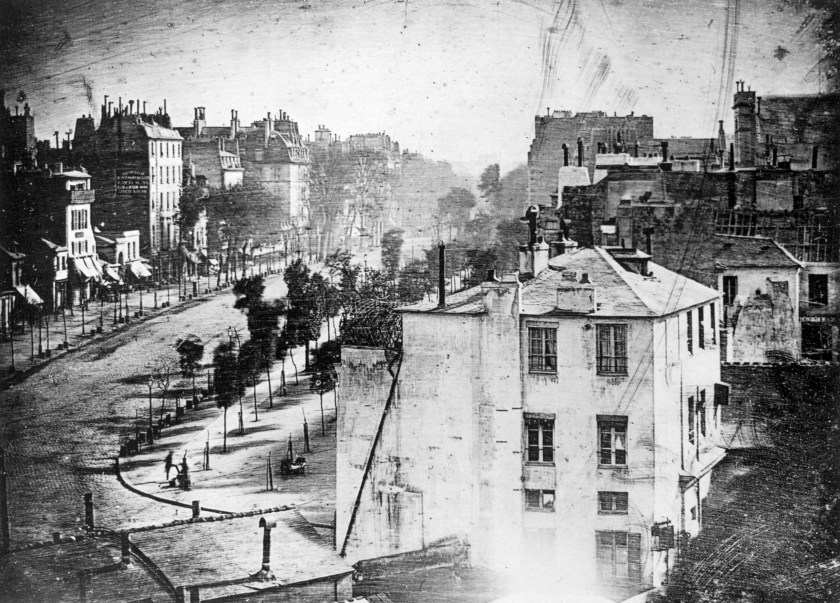
For some reason I find old pictures interesting. You can see people, street views and landscapes on paintings but you never know what the artist changed, with photography you know it’s a replica of the real world. Pictures can be altered also off course but, I at least, don’t assume that when I look at a portrait for instance. With modern pictures it’s different off course, were Photoshop makes it really easy to change a picture to your liking.

Boulevard_du_Temple_by_Daguerre

This is probably one of the first pictures where you can see people, because of the exposure of several minutes most moving vehicles and people are not visible but down, in the left corner, you can see a person like shape. This picture is made by Louis Daguerre in 1838 and is called “Boulevard du Temple”. If you think about the past, especially if you go back more than a 150 years (before there were pictures), I always have trouble imagining how those people lived. You can see paintings from the rich and maybe the poor and you can read description of life in the different classes, but it is always difficult for me to interpret these stories. If I look at this picture I see houses, with windows like we have, I see a street for traffic and a footpath and what looks like a row of shop’s. This all doesn’t seem so different from what we have today, but it is 10 years before the revolutions in 1948, 32 years before the Franco-Prussian war and almost 80 years before the Russian revolution.


la-seine-2-1839

Seine River in Paris by an unknown photographer in 1839

image

London, Parliament Street from Trafalgar Square by M de St Croix in 1839


1280px-RobertCornelius

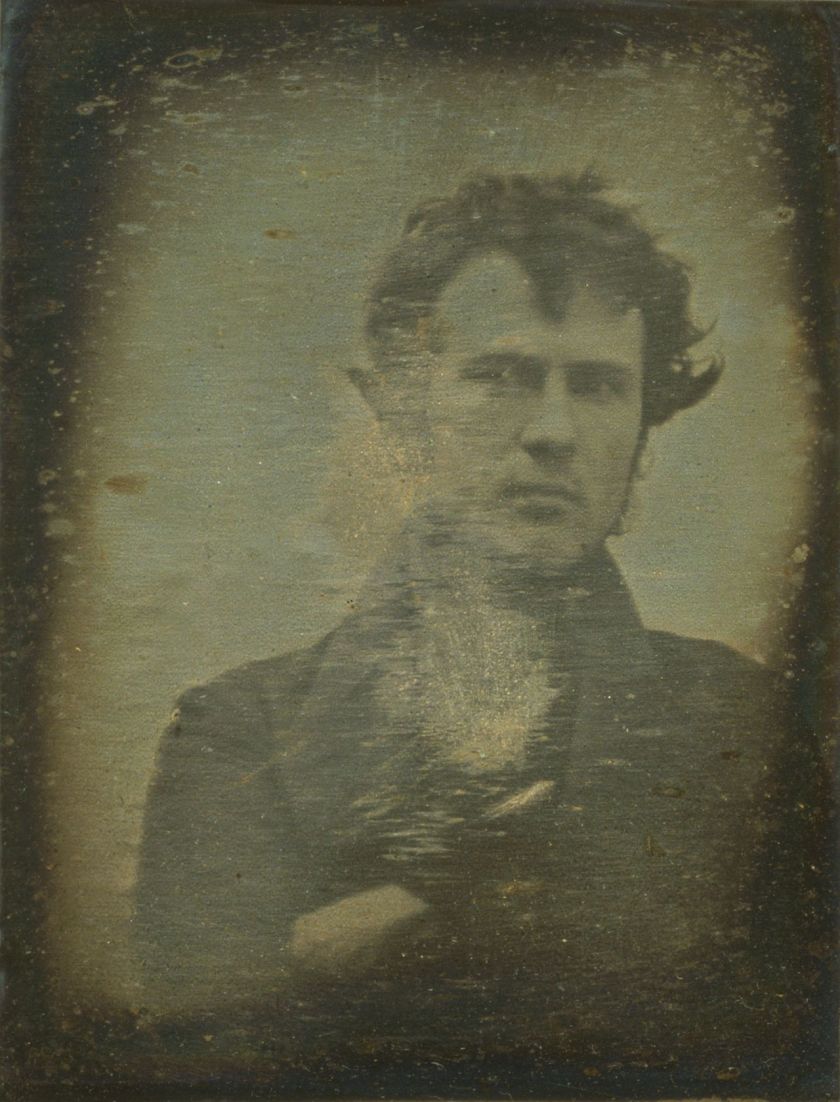
This is a self-portrait that Rober Cornelius took of himself in 1839. They assume it is the first selfie ever made with a camera in the world, it looks just like a modern selfie with a cool filter on top of it. But all the kidding aside, I think he looks like a cool guy I like to meet, he was one of the front-runners in photography and probably a nerd to and he would fit right in our modern society I think, something you don’t expect from a men who died 5 years before America went to war with Spain.

Short history of photography

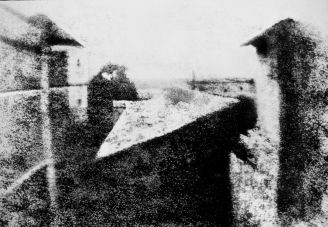
The history of photography has roots in remote antiquity with the discovery of two critical principles, that of the camera obscura image projection and the fact that some substances are visibly altered by exposure to light, as discovered by observation. Apart from a very uncertain process used on the Turin Shroud there are no artifacts or descriptions that indicate that anyone even imagined capturing images with light sensitive materials before the 18th century. Around 1717 Johann Heinrich Schulze captured cut-out letters on a bottle of a light-sensitive slurry, but he apparently never thought of making the results durable. Around 1800 Thomas Wedgwood made the first View_from_the_Window_at_Le_Gras,_Joseph_Nicéphore_Niépce.jpgreliably documented, although unsuccessful attempt at capturing camera images in permanent form. His experiments did produce detailed photograms, but Wedgwood and his associateHumphry Davyfound no way to fix these images. In the mid-1820s, Nicéphore Niépce first managed to fix an image that was captured with a camera, but at least eight hours or even several days of exposure in the camera were required and the earliest results were very crude. Niépce’s associate Louis Daguerrewent on to develop the daguerreotype process, the first publicly announced and commercially viable photographic process. The daguerreotype required only minutes of exposure in the camera, and produced clear, finely detailed results. The details were introduced as a gift to the world in 1839, a date generally accepted as the birth year of practical photography  The metal-based daguerreotype process soon had some competition from the paper based calotype negative and salt print processes invented by William Henry Fox T albot. Subsequent innovations made photography easier and more versatile. New materials reduced the required camera exposure time from minutes to seconds, and eventually to a small fraction of a second; new photographic media were more economical, sensitive or convenient, including roll films for casual use by amateurs. In the mid-20th century, developments made it possible for amateurs to take pictures innatural color as well as inblack-and-white. The commercial introduction of computer-based electronic digital cameras in the 1990s soon revolutionized photography. During the first decade of the 21st century, traditional film-based photochemical methods were increasingly marginalized as the practical advantages of the new technology became widely appreciated and the image quality of moderately priced digital cameras was continually improved. Especially since cameras became a standard feature on smartphones, taking pictures (and instantly publishing them online) has become an ubiquitous everyday practice around the world.

More on Wikipedia


Human all too human: 47. Hypochondria.

Human all too human

Reading Friedrich Nietzsche’s Human all too human

Read the introduction here You can read the aphorism I discuss here in English and German below the main article.

My take on it/synopsis.

  1. Sick for Christ.

DSCF8666

There are people who become hypochondriacal through their sympathy and concern for another person; the kind of sympathy which results therefrom is nothing but a disease. Thus, there is also a Christian hypochondria, which afflicts those solitary, religiously-minded people who keep constantly before their eyes the sufferings and death of Christ.


Text from the translation by Helen Zimmern and my take on it

There are people who become hypochondriacal through their sympathy and concern for another person ; the kind of sympathy which results therefrom is nothing but a disease. Thus there is also a Christian hypochondria, which afflicts those solitary, religiously-minded people who keep constantly before their eyes the sufferings and death of Christ.


Human, all too human a book for free spirits Part I translated by Helen Zimmern 1909

  1. HYPOCHONDRIA.—There are people who become hypochondriacal through their sympathy and concern for another person ; the kind of sympathy which results therefrom is nothing but a disease. Thus there is also a Christian hypochondria, which afflicts those solitary, religiously-minded people who keep constantly before their eyes the sufferings and death of Christ.

Menschliches allzu menschlich 1878/80

  1. Hypochondrie.- Es giebt Menschen, welche aus Mitgefühl und Sorge für eine andere Person hypochondrisch werden; die dabei entstehende Art des Mitleidens ist nichts Anderes, als eine Krankheit. So giebt es auch eine christliche Hypochondrie, welche jene einsamen, religiös bewegten Leute befällt, die sich das Leiden und Sterben Christi fortwährend vor Augen stellen.

Sources:

I will read a Dutch translation that is based on the work of researchers Colli and Montinari. I also use a translation from R.J.Hollingdale and the Gary Handwerk translation from the Colli-Montinari edition. Both are more modern than the copyright free translation I use here. This is a translation from 1909 by Helen Zimmern, who knew Nietzsche personally, but there was no critical study of Nietzsche’s work done back then and this translation suffers from that. The same goes for the translation from Alexander Harvey. My German is not good enough to pretend that I can translate it better than the professionals do but I will use the original as a referee.

  1. Menselijk al te menselijk een boek voor vrije geesten, translated by Thomas Graftdijk, 2000. Buy it here
  2. Human, all too human a book for free spirits, translated by R.J.Hollingdale, 1986
  3. Human, all too human a book for free spirits I V3, translated by Gary handwerk 1997
  4. Human, all too human a book for free spirits Part I, translated by Helen Zimmern 1909. Read it  here
  5. Human, all too human a book for free spirits, translated by Alexander Harvey, 1908. Read it here
  6. Menschliches allzu menschlich 1878/80. Read it here


Day 653, My gut and Trump.

Day's pictures

Day 653-1

I tried today to figure out why I think Donald Trump is such a joke and why others seem to like his childish charm. I can understand that you dislike all the political correctness you see so much of. I don’t like that kind of weaseling around either. But if I look at the way he communicates, something his supporters can’t brush away or dismiss as fake news, you start to wonder. What if my doctor talked to me like that? Would I still take him seriously? Imagine telling what’s wrong with you, and you see the doctor’s eyes slowly roll and lose interest. It is so embarrassing for America. I feel it when I ask Americans about it. It’s like asking a friend how it goes with his child-molesting father. You don’t want to bring it up. On the other hand, there are still close to 100 million Americans who support Trump and recognize some of his qualities. I have never met the guy. I know him from the news, and I read 3 books about him. My gut never allowed me to watch his TV show because of the disgust his persona brought up in me, something my feminist mother taught my gut when I grew up. I guess he could be more charming if he made fun of his own strange habits. Some self-reflection is always a good quality in my book. But I guess that is too much to ask. His base likes him for his discrimination, male chauvinism, and money, not for his intellect. It is strange that many people dislike intellectuals and, at the same time, praise their freedom, rights, and democracy, all of which are products of intellectuals.

Human all too human: 46. Sympathy stronger than suffering.

Human all too human

Reading Friedrich Nietzsche’s Human all too human

Read the introduction here You can read the aphorism I discuss here in English and German below the main article.

My take on it/synopsis.

  1. Your shame, my suffering.

DSCF8619-Edit

Sympathy can be stronger than suffering. You can feel more shame, for instance, when someone else does something shameful than you would feel yourself if you did the same. For one thing, we believe more in him then he does and even when his egoism suffers more than ours because of his mistake the un-egoistic* in us is more deeply wounded by his guilt than is the un-egoistic in him.

* this word is not to be taken too seriously, but only as a modification of the expression


Text from the translation by Helen Zimmern and my take on it

There are cases when sympathy is stronger than actual suffering. For instance, we are more pained when one of our friends is guilty of something shameful than when we do it ourselves. Sympathy can be stronger than suffering. You can feel more shame, for example, when someone else does something shameful than you would feel yourself doing the same. For one thing, we have more faith in the purity of his character than he has himself; then our love for him, probably on account of this very faith, is stronger than his love for himself. For one thing, we believe more in him then he does And even if his egoism suffers more thereby than our egoism, inasmuch as it has to bear more of the bad consequences of his fault, and even when his egoism suffers more than ours because of his mistake the un-egoistic in us—this word is not to be taken too seriously, but only as a modification of the expression—is more deeply wounded by his guilt than is the un-egoistic in him. the un-egoistic in us—this word is not to be taken too seriously, but only as a modification of the expression—is more deeply wounded by his guilt than is the un-egoistic in him.


Human, all too human a book for free spirits Part I translated by Helen Zimmern 1909

  1. SYMPATHY STRONGER THAN SUFFERING.—There are cases when sympathy is stronger than actual suffering. For instance, we are more pained when one of our friends is guilty of something shameful than when we do it ourselves. For one thing, we have more faith in the purity of his character than he has himself; then our love for him, probably on account of this very faith, is stronger than his love for himself. And even if his egoism suffers more thereby than our egoism, inasmuch as it has to bear more of the bad consequences of his fault, the un-egoistic in us—this word is not to be taken too seriously, but only as a modification of the expression—is more deeply wounded by his guilt than is the un-egoistic in him.

Menschliches allzu menschlich 1878/80

  1. Mitleiden stärker als Leiden. – Es giebt Fälle, wo das Mitleiden stärker ist, als das eigentliche Leiden. Wir empfinden es zum Beispiel schmerzlicher, wenn einer unserer Freunde sich etwas Schmähliches zu Schulden kommen lässt, als wenn wir selbst es thun. Einmal nämlich glauben wir mehr an die Reinheit seines Charakters, als er; sodann ist unsere Liebe zu ihm, wahrscheinlich eben dieses Glaubens wegen, stärker, als seine Liebe zu sich selbst. Wenn auch wirklich sein Egoismus mehr dabei leidet, als unser Egoismus, insofern er die übelen Folgen seines Vergehens stärker zu tragen hat, so wird das Unegoistische in uns – dieses Wort ist nie streng zu verstehen, sondern nur eine Erleichterung des Ausdrucks – doch stärker durch seine Schuld betroffen, als das Unegoistische in ihm.

Sources:

I will read a Dutch translation that is based on the work of researchers Colli and Montinari. I also use a translation from R.J.Hollingdale and the Gary Handwerk translation from the Colli-Montinari edition. Both are more modern than the copyright free translation I use here. This is a translation from 1909 by Helen Zimmern, who knew Nietzsche personally, but there was no critical study of Nietzsche’s work done back then and this translation suffers from that. The same goes for the translation from Alexander Harvey. My German is not good enough to pretend that I can translate it better than the professionals do but I will use the original as a referee.

  1. Menselijk al te menselijk een boek voor vrije geesten, translated by Thomas Graftdijk, 2000. Buy it here
  2. Human, all too human a book for free spirits, translated by R.J.Hollingdale, 1986
  3. Human, all too human a book for free spirits I V3, translated by Gary handwerk 1997
  4. Human, all too human a book for free spirits Part I, translated by Helen Zimmern 1909. Read it  here
  5. Human, all too human a book for free spirits, translated by Alexander Harvey, 1908. Read it here
  6. Menschliches allzu menschlich 1878/80. Read it here


Day 652, Perspective in boat building.

Boat building, Day's pictures

Day 652-1

I restore wooden boats for a living. The technics and tools we use have not changed much the last view hundred years and some of the tools and technics go al the way back to the beginning of boatbuilding. One of the most important tools in boatbuilding, one that has been used for thousands of years, are our eyes. We off course use our eyes for most jobs we do but in boatbuilding we used them not only for seeing the quality of our work, we use them also to see the lines and shape of the planks we use for the hull or the masts.  Boatbuilding is not an exact science where you can put measurements on a piece of wood and cut it out. A lot of lines on a boat are not straight end even if you manage to lay out a nice plan and line up everything nice and straight, time and humidity will warp the wood and ruin your careful laid out plan. If I make a plank to wrap around the ribs I can make some measurements but the final line, a line that is often a few meters long with a slid curve, will be made with my eyes. And like in real life I have to walk around the problem/plank, lower my head for another perspective, till I have seen it from all sides and adjust the solution/line till it looks right.

Plank-4

I use a thin lath to “find” the shape and dimensions  of the next plank. This plank bands in all directions and you need to move around to find the right shape.


OLYMPUS DIGITAL CAMERA

On this picture you see 3 tools we use that are as old as mankind. In front you see a T Bevel Square, we use this to measure angels, then you see a hammer and a carpenter’s compass. In front you also see some measurements I made from where the new plank will go. Those are the angles and dimensions of the plank every 50 a 60 cm. 

OLYMPUS DIGITAL CAMERA

The measurements are put on the plank and then we use a thin lath to see if the measurements form a smooth line or that we have to adjust it, we do this with our eyes and look from different sides because the shape changes when you move around.

Plank-3

We use steam to make the wood flexible, so we can bend it without breaking it. Steam has been used for hundreds of years, it is very easy, the only thing you need is a big watertight box and a pan with water. You cook the water and in the lid on the pan you mount a hose and that hoe goes into the box. You can also use direct fire under a plank to bend a plank but steam is easier.

Plank-6

After steaming you have to force the plank in to his place. We use hydraulic presses for this but there are also other methods. In this picture you can clearly see the stresses in the plank when it goes from vertical to almost horizontal.

Plank-5

Some other planks.

Human all too human: 44. The Twofold early history of good and evil.

Human all too human

Reading Friedrich Nietzsche’s Human all too human

Read the introduction here You can read the aphorism I discuss here in English and German below the main article.

My take on it/synopsis.

  1. The good are a class, the bad are a mass.

DSCF8665The history of good and evil is twofold: First in the soul of the ruling class, who can repay good with good and evil with evil is good, whoever cannot do this is bad. As a good person you belong to the “good” community because of the shared value of requital. The bad person belongs to the “bad” community that is filled with powerless people without shared values. The good are a class, the bad are a mass. Good and bad have for a long time meant the same thing as noble and base or master and slave. But remember that an enemy is not necessary bad, it is not the one who injures us, but the one who is despicable, who is called bad. Good is inherited in the good community, no bad man can come from it and if a good person does bad the excuse will be the will of a god for instance. – Secondly, in the community of the bad people all man are looked upon as hostile and cruel no matter what his rank is, evil is the word they use for all living creatures. The signs of goodness, helpfulness and pity, are looked upon with fear, interpreted as meanness, the prelude to a terrible result. With such a disposition in the individual a community could hardly exist, or at most it could exist only in its crudest form, so that in all places where this conception of good and evil reigns, the downfall of the single individuals, of their tribes and races, is at hand. Our present civilization has grown up on the bottom of the ruling tribes and castes. 


Text from the translation by Helen Zimmern and my take on it

The conception of good and evil has a twofold early history, namely, once in the soul of the ruling tribes and castes. Whoever has the power of returning good for good, evil for evil, and really practises requital, and who is, therefore, grateful and revengeful, is called good ; The history of good and evil is twofold: First in the soul of the ruling class, who can requital or repay good with good and evil with evil is good, whoever is powerless, and unable to requite, is reckoned as bad. whoever cannot do this is bad. As a good man one is reckoned among the “good,” a community which has common feelings because the single individuals are bound to one another by the sense of requital. As a good person you belong to the “good” community because of the shared value of requital. As a bad man one belongs to the “bad,” to a party of subordinate, powerless people who have no common feeling. The bad person belongs to the “bad” community filled with powerless people without shared values. The good are a caste, the bad are a mass like dust. The good are a class, the bad are a mass. Good and bad have for a long time meant the same thing as noble and base, master and slave. Good and bad have for a long time meant the same thing as noble and base, master and slave. On the other hand, the enemy is not looked upon as evil, he can requite. In Homer the Trojan and the Greek are both good. It is not the one who injures us, but the one who is despicable, who is called bad. But remember that an enemy is not necessary bad, It is not the one who injures us, but the one who is despicable, who is called bad. Good is inherited in the community of the good ; it is impossible that a bad man could spring from such good soil. If, nevertheless, one of the good ones does something which is unworthy of the good, refuge is sought in excuses; the guilt is thrown upon a god, for instance ; it is said that he has struck the good man with blindness and madness.— Good is inherited in the good community, no bad man can come from it and if a good person does bad the excuse will be the will of a god. Then in the soul of the oppressed and powerless. Here every other man is looked upon as hostile, inconsiderate, rapacious, cruel, cunning, be he noble or base ; evil is the distinguishing word for man, even for every conceivable living creature, e.g. for a god ; human, divine, is the same thing as devilish, evil. In the community of the bad people all man are looked upon as hostile and cruel disregarding his rank, evil is the distinguishing word for all living creatures. The signs of goodness, helpfulness, pity, are looked upon with fear as spite, the prelude to a terrible result, stupefaction and out-witting,—in short, as refined malice. The signs of goodness, helpfulness and pity, are looked upon with fear as meanness, the prelude to a terrible result. With such a disposition in the individual a community could hardly exist, or at most it could exist only in its crudest form, so that in all places where this conception of good and evil obtains, the downfall of the single individuals, of their tribes and races, is at hand.—Our present civilisation has grown up on the soil of the ruling tribes and castes. With such a disposition in the individual a community could hardly exist, or at most it could exist only in its crudest form, so that in all places where this conception of good and evil obtains, the downfall of the single individuals, of their tribes and races, is at hand.—Our present civilisation has grown up on the soil of the ruling tribes and castes.

Human, all too human a book for free spirits Part I translated by Helen Zimmern 1909

  1. THE TWOFOLD EARLY HISTORY OF GOOD AND EVIL.—The conception of good and evil has a twofold early history, namely, once in the soul of the ruling tribes and castes. Whoever has the power of returning good for good, evil for evil, and really practises requital, and who is, therefore, grateful and revengeful, is called good ; whoever is powerless, and unable to requite, is reckoned as bad. As a good man one is reckoned among the “good,” a community which has common feelings because the single individuals are bound to one another by the sense of requital. As a bad man one belongs to the “bad,” to a party of subordinate, powerless people who have no common feeling. The good are a caste, the bad are a mass like dust. Good and bad have for a long time meant the same thing as noble and base, master and slave. On the other hand, the enemy is not looked upon as evil, he can requite. In Homer the Trojan and the Greek are both good. It is not the one who injures us, but the one who is despicable, who is called bad. Good is inherited in the community of the good ; it is impossible that a bad man could spring from such good soil. If, nevertheless, one of the good ones does something which is unworthy of the good, refuge is sought in excuses; the guilt is thrown upon a god, for instance ; it is said that he has struck the good man with blindness and madness.—Then in the soul of the oppressed and powerless. Here every other man is looked upon as hostile, inconsiderate, rapacious, cruel, cunning, be he noble or base ; evil is the distinguishing word for man, even for every conceivable living creature, e.g. for a god ; human, divine, is the same thing as devilish, evil. The signs of goodness, helpfulness, pity, are looked upon with fear as spite, the prelude to a terrible result, stupefaction and out-witting,—in short, as refined malice. With such a disposition in the individual a community could hardly exist, or at most it could exist only in its crudest form, so that in all places where this conception of good and evil obtains, the downfall of the single individuals, of their tribes and races, is at hand.—Our present civilisation has grown up on the soil of the ruling tribes and castes.
Menschliches allzu menschlich 1878/80

  1. Doppelte Vorgeschichte von Gut und Böse. – Der Begriff gut und böse hat eine doppelte Vorgeschichte: nämlich einmal in der Seele der herrschenden Stämme und Kasten. Wer die Macht zu vergelten hat, Gutes mit Gutem, Böses mit Bösem, und auch wirklich Vergeltung übt, also dankbar und rachsüchtig ist, der wird gut genannt; wer unmächtig ist und nicht vergelten kann, gilt als schlecht. Man gehört als Guter zu den “Guten”, einer Gemeinde, welche Gemeingefühl hat, weil alle Einzelnen durch den Sinn der Vergeltung mit einander verflochten sind. Man gehört als Schlechter zu den “Schlechten”, zu einem Haufen unterworfener, ohnmächtiger Menschen, welche kein Gemeingefühl haben. Die Guten sind eine Kaste, die Schlechten eine Masse wie Staub. Gut und schlecht ist eine Zeit lang so viel wie vornehm und niedrig, Herr und Sclave. Dagegen sieht man den Feind nicht als böse an: er kann vergelten. Der Troer und der Grieche sind bei Homer beide gut. Nicht Der, welcher uns Schädliches zufügt, sondern Der, welcher verächtlich ist, gilt als schlecht. In der Gemeinde der Guten vererbt sich das Gute; es ist unmöglich, dass ein Schlechter aus so gutem Erdreiche hervorwachse. Thut trotzdem Einer der Guten Etwas, das der Guten unwürdig ist, so verfällt man auf Ausflüchte; man schiebt zum Beispiel einem Gott die Schuld zu, indem man sagt: er habe den Guten mit Verblendung und Wahnsinn geschlagen. – Sodann in der Seele der Unterdrückten, Machtlosen. Hier gilt jeder andere Mensch als feindlich, rücksichtslos, ausbeutend, grausam, listig, sei er vornehm oder niedrig; böse ist das Charakterwort für Mensch, ja für jedes lebende Wesen, welches man voraussetzt, zum Beispiel für einen Gott; menschlich, göttlich gilt so viel wie teuflisch, böse. Die Zeichen der Güte, Hülfebereitschaft, Mitleid, werden angstvoll als Tücke, Vorspiel eines schrecklichen Ausgangs, Betäubung und Ueberlistung aufgenommen, kurz als verfeinerte Bosheit. Bei einer solchen Gesinnung des Einzelnen kann kaum ein Gemeinwesen entstehen, höchstens die roheste Form desselben: so dass überall, wo diese Auffassung von gut und böse herrscht, der Untergang der Einzelnen, ihrer Stämme und Rassen nahe ist. – Unsere jetzige Sittlichkeit ist auf dem Boden der herrschenden Stämme und Kasten aufgewachsen.

Sources:

I will read a Dutch translation that is based on the work of researchers Colli and Montinari. I also use a translation from R.J.Hollingdale and the Gary Handwerk translation from the Colli-Montinari edition. Both are more modern than the copyright free translation I use here. This is a translation from 1909 by Helen Zimmern, who knew Nietzsche personally, but there was no critical study of Nietzsche’s work done back then and this translation suffers from that. The same goes for the translation from Alexander Harvey. My German is not good enough to pretend that I can translate it better than the professionals do but I will use the original as a referee.

  1. Menselijk al te menselijk een boek voor vrije geesten, translated by Thomas Graftdijk, 2000. Buy it here
  2. Human, all too human a book for free spirits, translated by R.J.Hollingdale, 1986
  3. Human, all too human a book for free spirits I V3, translated by Gary handwerk 1997
  4. Human, all too human a book for free spirits Part I, translated by Helen Zimmern 1909. Read it  here
  5. Human, all too human a book for free spirits, translated by Alexander Harvey, 1908. Read it here
  6. Menschliches allzu menschlich 1878/80. Read it here


Day 651, Thor is a god

Day's pictures, Religion

Day 651-1

Some things are hard to understand for me, growing up in a secular country that has no long history and no entrenched traditions. In this case I was thinking about Israel and Palestine and their quarrel. There are lots of complicated reasons why they are still fighting with each other but at the basis stands the idea that long ago some people pointed ate a piece of dirt and proclaimed it sacred. Remember that those religions have no more significance to me than the stories of Tolkien or Harry Potter. And if you look at it like a that you can imagine that it is hard to understand that they fight, and kill, over different interpretation and gods. As a nerd I like to fantasies about who would win in a fight: Thor or Superman. But in those ridiculous countries they tell young people to kill each other because of there disagreement in who has the right to live close to Asgard or Krypton.

The sad thing is that most Israeli and Palestinians just wane live their lives and probably believe in a god out of tradition and habit.  These people don’t really believe in god or have never taken the time to question it, what in my mind is the same. But like everywhere in the world, the people with the biggest mouths, the strongest opinions and the most to lose determine the faith of all of them. And if you stretch it a little further you could say that the people that are in charge are driven by their power and the fear to lose it and that they use the religion to legitimize their rule. Religion is not what drives them, but power does. Religion is not real, and if it is used as a reason for action you will always find ulterior reasons hidden behind those actions.

If you are a believer tell me than why there are over 4000 religions?  Some of them have no problem with multiple god’s but a lot allow only one. Why do you, as a believer think you are right and all the other people (probably billions) are wrong, if your religion only allows one god?

Next time you read a text where they use the word god or an equivalent, exchange that word with Thor and you will see how stupid these man (as in a person with a penis and power) made books are.

Prov 3:5: Trust in THOR with all your heart and lean not on your own understanding.

Phil 4:6: Do not be anxious about anything, but in everything, by prayer and petition, with Thurseblot, present your requests to Thor.

Acts 18:9: One night Thor spoke to Loki in a vision: “Do not be afraid; keep on speaking, do not be silent.

Day 650, How to make up your mind.

Day's pictures, Our mind

Day 650-1

It is really popular In our modern culture to say that someone should “make up their own mind”. That you should trust your own feelings and don’t listen to what others say. If you understand that advice as just another platitude than there is not so much harm in it but if you take them literally than there is a big problem.  The problem is that you assume that we can make up our own mind but the best we can do is to stick with an internal narrative that is for the most part plagiarized.

Day 649, Algebra.

Day's pictures

Day 649-1

I sometimes wonder why philosophy is so underrated. I write about Nietzsche almost every day on this blog, it takes a couple of minutes to read it and maybe share your opinion. I haven’t got any response yet on those post while other posts have. I have hardly any readers, so I don’t expect mush, but still, it is somewhat disappointing. And it’s not only me and the quality I deliver, other blogs, podcasts, youtubers and books about philosophy are all relatively small. The people that attract larger audiences write often about there own lives or about other people and sprinkle some of their own opinion on it. The people I ask why they don’t read more philosophy tell me that it is to heavy, boring or difficult or they are to tired after work and want to relax and don’t want to struggle with a book and a subject they are not really interested in. And I can understand all these reasons, I too work and want to wind down when I come home, but that’s why I read a little bit in a philosophy book everyday and don’t try to struggle through a chapter if I don’t have the time. Another problem is that philosophy is not easily relatable compared to personal stories and opinions for instance. Philosophy is like algebra, it is not easy to understand, and you get through live by just knowing what 1+1 is. Like algebra, philosophy is one of the cornerstones of our society, and I admit that I don’t know much about algebra and math, but I don’t discuss a mathematician, but than again,  we all have an opinion about society. A society that is as complex as a mathematical formula, a formula that most of us don’t understand but somehow, we think we can comment on it. By reading a couple of introductory books about philosophy you would quickly learn that life is not build upon opinions, that there is such a thing as a search for truth. And if most people in this world would understand that a search for truth means that you don’t have it yet, we would be more in agreement with each other.

The only true wisdom is in knowing you know nothing. Socrates


We are what we think. All that we are arises with our thoughts. With our thoughts, we make the world.  Buddha


Real knowledge is to know the extent of one’s ignorance. Confucius


The misfortune of the wise is better than the prosperity of the fool. Epicurus


Human all too human: 44. Gratitude and revenge

Human all too human

Reading Friedrich Nietzsche’s Human all too human

Read the introduction here You can read the aphorism I discuss here in English and German below the main article.

My take on it/synopsis.

  1. Gratitude as revenge.

DSC_2023

The reason why the powerful man is grateful is: his benefactor intruded his sphere with charity. The powerful man, in his turn, penetrates the sphere of his benefactor with gratitude. It is a milder form of revenge. Without the satisfaction of gratitude, the powerful man would have shown himself powerless, and would have been reckoned as such ever after. Therefore, every group of the good, originally the powerful, places gratitude amongst the first duties. Swift propounded the maxim that men were grateful in the same proportion as they were revengeful.


Text from the translation by Helen Zimmern and my take on it

The reason why the powerful man is grateful is this : his benefactor, through the benefit he confers, has mistaken and intruded into the sphere of the powerful man, —now the latter, in return, penetrates into the sphere of the benefactor by the act of gratitude. It is a milder form of revenge. The reason why the powerful man is grateful is: his benefactor intruded the sphere of the powerful man with his charity. The powerful man, in his turn, penetrates the sphere of his benefactor with gratitude. It is a milder form of revenge. Without the satisfaction of gratitude, the powerful man would have shown himself powerless, and would have been reckoned as such ever after. Without the satisfaction of gratitude, the powerful man would have shown himself powerless, and would have been reckoned as such ever after. Therefore every society of the good, which originally meant the powerful, places gratitude amongst the first duties. Therefore every group of the good, originally the powerful, places gratitude amongst the first duties. Swift propounded the maxim that men were grateful in the same proportion as they were revengeful. Swift propounded the maxim that men were grateful in the same proportion as they were revengeful.


Human, all too human a book for free spirits Part I translated by Helen Zimmern 1909

  1. GRATITUDE AND REVENGE.The reason why the powerful man is grateful is this : his benefactor, through the benefit he confers, has mistaken and intruded into the sphere of the powerful man, —now the latter, in return, penetrates into the sphere of the benefactor by the act of gratitude. It is a milder form of revenge. Without the satisfaction of gratitude, the powerful man would have shown himself powerless, and would have been reckoned as such ever after. Therefore every society of the good, which originally meant the powerful, places gratitude amongst the first duties.—Swift propounded the maxim that men were grateful in the same proportion as they were revengeful.

Menschliches allzu menschlich 1878/80

  1. Dankbarkeit und Rache. – Der Grund, wesshalb der Mächtige dankbar ist, ist dieser. Sein Wohlthäter hat sich durch seine Wohlthat an der Sphäre des Mächtigen gleichsam vergriffen und sich in sie eingedrängt: nun vergreift er sich zur Vergeltung wieder an der Sphäre des Wohlthäters durch den Act der Dankbarkeit. Es ist eine mildere Form der Rache. Ohne die Genugthuung der Dankbarkeit zu haben, würde der Mächtige sich unmächtig gezeigt haben und fürderhin dafür gelten. Desshalb stellt jede Gesellschaft der Guten, das heisst ursprünglich der Mächtigen, die Dankbarkeit unter die ersten Pflichten. – Swift hat den Satz hingeworfen, dass Menschen in dem selben Verhältniss dankbar sind, wie sie Rache hegen.

Sources:

I will read a Dutch translation that is based on the work of researchers Colli and Montinari. I also use a translation from R.J.Hollingdale and the Gary Handwerk translation from the Colli-Montinari edition. Both are more modern than the copyright free translation I use here. This is a translation from 1909 by Helen Zimmern, who knew Nietzsche personally, but there was no critical study of Nietzsche’s work done back then and this translation suffers from that. The same goes for the translation from Alexander Harvey. My German is not good enough to pretend that I can translate it better than the professionals do but I will use the original as a referee.

  1. Menselijk al te menselijk een boek voor vrije geesten, translated by Thomas Graftdijk, 2000. Buy it here
  2. Human, all too human a book for free spirits, translated by R.J.Hollingdale, 1986
  3. Human, all too human a book for free spirits I V3, translated by Gary handwerk 1997
  4. Human, all too human a book for free spirits Part I, translated by Helen Zimmern 1909. Read it  here
  5. Human, all too human a book for free spirits, translated by Alexander Harvey, 1908. Read it here
  6. Menschliches allzu menschlich 1878/80. Read it here


Day 648, Crossing a border.

Day's pictures

Day 648-1

I was watching a documentary about the “white helmets” in Syria, this is a group of people that try to get people out of buildings that just collapsed because of explosions caused by one of the warring parties. It’s hard to imagine what these people go true but one of the people said something that made me think. They were in Turkey for training when one of them said that by crossing a border, everything changed, the war was gone.

Click here fore the trailer 

The_White_Helmets_film_poster

Human all too human: 43. Cruel people as those who have remained.

Human all too human

Reading Friedrich Nietzsche’s Human all too human

Read the introduction here You can read the aphorism I discuss here in English and German below the main article.

My take on it/synopsis.

  1. Don’t blame the cruel people.

DSC_1687

Cruel people are the remains of past times, they are the hidden grooves in the mountain of humanity, they have inherited the rougher parts and are not as refined. They show us how we were ones, but like a block of granite, you cannot blame them for being granite. There are also grooves in our brain, like residual organs that we inherited, but these grooves and twists are no longer the bed through which the stream of our sensation flows.


Text from the translation by Helen Zimmern and my take on it

People who are cruel nowadays must be accounted for by us as the grades of earlier civilisations which have survived ; here are exposed those deeper formations in the mountain of humanity which usually remain concealed. Cruel people are the remains of past times, they are the hidden grooves in the mountain of humanity, They are backward people whose brains, through all manner of accidents in the course of inheritance, have not been developed in so delicate and manifold a way. they have inherited only the rougher parts and are not as refined. They show us what we all were and horrify us, but they themselves are as little responsible as is a block of granite for being granite. They show us how we were ones, but like a block of granite, you cannot blame them for being granite. There must, too, be grooves and twists in our brains which answer to that condition of mind, There are also grooves, like with cruel people, in our brain as in the form of certain human organs there are supposed to be traces of a fish-state. like residual organs we inherited from our past But these grooves and twists are no longer the bed through which the stream of our sensation flows. But these grooves and twists are no longer the bed through which the stream of our sensation flows.


Human, all too human a book for free spirits Part I translated by Helen Zimmern 1909

  1. CRUEL PEOPLE AS THOSE WHO HAVE REMAINED BEHIND.—People who are cruel nowadays must be accounted for by us as the grades of earlier civilisations which have survived ; here are exposed those deeper formations in the mountain of humanity which usually remain concealed. They are backward people whose brains, through all manner of accidents in the course of inheritance, have not been developed in so delicate and manifold a way. They show us what we all were and horrify us, but they themselves are as little responsible as is a block of granite for being granite. There must, too, be grooves and twists in our brains which answer to that condition of mind, as in the form of certain human organs there are supposed to be traces of a fish-state. But these grooves and twists are no longer the bed through which the stream of our sensation flows.

Menschliches allzu menschlich 1878/80

  1. Grausame Menschen als zurückgeblieben. – Die Menschen, welche jetzt grausam sind, müssen uns als Stufen früherer Culturen gelten, welche übrig geblieben sind: das Gebirge der Menschheit zeigt hier einmal die tieferen Formationen, welche sonst versteckt liegen, offen. Es sind zurückgebliebene Menschen, deren Gehirn, durch alle möglichen Zufälle im Verlaufe der Vererbung, nicht so zart und vielseitig fortgebildet worden ist. Sie zeigen uns, was wir Alle waren, und machen uns erschrecken: aber sie selber sind so wenig verantwortlich, wie ein Stück Granit dafür, dass es Granit ist. In unserm Gehirne müssen sich auch Rinnen und Windungen finden, welche jener Gesinnung entsprechen, wie sich in der Form einzelner menschlicher Organe Erinnerungen an Fischzustände finden sollen. Aber diese Rinnen und Windungen sind nicht mehr das Bett, in welchem sich jetzt der Strom unserer Empfindung wälzt.

Sources:

I will read a Dutch translation that is based on the work of researchers Colli and Montinari. I also use a translation from R.J.Hollingdale and the Gary Handwerk translation from the Colli-Montinari edition. Both are more modern than the copyright free translation I use here. This is a translation from 1909 by Helen Zimmern, who knew Nietzsche personally, but there was no critical study of Nietzsche’s work done back then and this translation suffers from that. The same goes for the translation from Alexander Harvey. My German is not good enough to pretend that I can translate it better than the professionals do but I will use the original as a referee.

  1. Menselijk al te menselijk een boek voor vrije geesten, translated by Thomas Graftdijk, 2000. Buy it here
  2. Human, all too human a book for free spirits, translated by R.J.Hollingdale, 1986
  3. Human, all too human a book for free spirits I V3, translated by Gary handwerk 1997
  4. Human, all too human a book for free spirits Part I, translated by Helen Zimmern 1909. Read it  here
  5. Human, all too human a book for free spirits, translated by Alexander Harvey, 1908. Read it here
  6. Menschliches allzu menschlich 1878/80. Read it here