
A beautiful crafted
why
we never see inside
your illusion
reason
Nochrisis

 I you think about anarchism and music you think about punk, if I think about punk I think about Crass.
The lyrics might not always be refined but they come straight from the heard and are in essence not different than a pamphlet from a revolutionary anarchist from the 19th century or more learned books from the twentieth century.
I will show here parts of some lyrics that speak to me with links to youtube if you like to listen to it.

Nochrisis


 Two Cheers for Anarchism is a book written by James C Scott a political scientist and anthropologist.. It’s a collection of examples of “anarchistic” behavior in daily life and other stories related to the movement. While writing this I almost finished the book and so far I can recommend it but don’t take my word for it.
Excerpt:
Preface
The arguments found here have been gestating for a long time, as I wrote about peasants, class conflict, resistance, development projects, and marginal peoples in the hills of Southeast Asia. Again and again over three decades, I found myself having said something in a seminar discussion or having written


Nochrisis


Nochrisis
 I know about Max Sterner for many years now, mainly as a predecessor of Nietzsche philosophy but I never read anything from him, till yesterday when I started on his most famous book The ego and its own. There is lots of information to find on the internet but Wikipedia says the following about this book:
The Ego and Its Own (German: Der Einzige und sein Eigentum; meaningfully translated as The Individual and his Property, literally as The Unique and His Property) is an 1844 work by German philosopher Max Stirner. It presents a radically nominalist and individualist critique of Christianity, nationalism, and traditional morality on one hand; and on the other, humanism, utilitarianism, liberalism, and much of the then-burgeoning socialist movement, advocating instead an amoral (although importantly not inherently immoral or antisocial) egoism. It is considered a major influence on the development of anarchism, existentialism, nihilism, and postmodernism. Read the rest here.
Excerpt:
Translated from the German by Steven T. Byington. 1907
From the moment when he catches sight of the light of the world a man seeks to find out himself and get hold of himself out of its confusion, in which he, with everything else, is tossed about in motley mixture.


Nochrisis


Nochrisis


Nochrisis


I like watching video’s with Slavoj Zizek in it and it fits well with my quest to understand more of the progressive political and philosophical world now and in the past. He is not an anarchist per se but he has little pretensions and is not afraid to be provocative. The truth is mush harsher then we are used to consume it in our world of “bread and circuses”.


Nochrisis
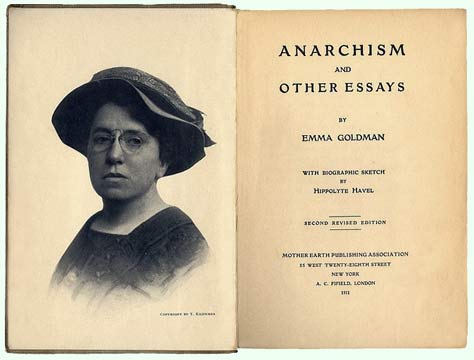
Anarchism and Other Essays is a 1910 essay collection by Emma Goldman, first published by Mother Earth Publishing. The essays outline Goldman’s anarchist views on a number of subjects, most notably the oppression of women and perceived shortcomings of first wave feminism, but also prisons, political violence, sexuality, religion, nationalism and art theory. More on Wikpedia here
Excerpt:
PREFACE – Some twenty-one years ago I heard the first great Anarchist speaker—^the inimitable John Most. It seemed to me then^ and for many years after, that the spoken word hurled forth among the masses with such wonderful eloquence, such enthusiasm and fire, could


Nochrisis

 Nochrisis