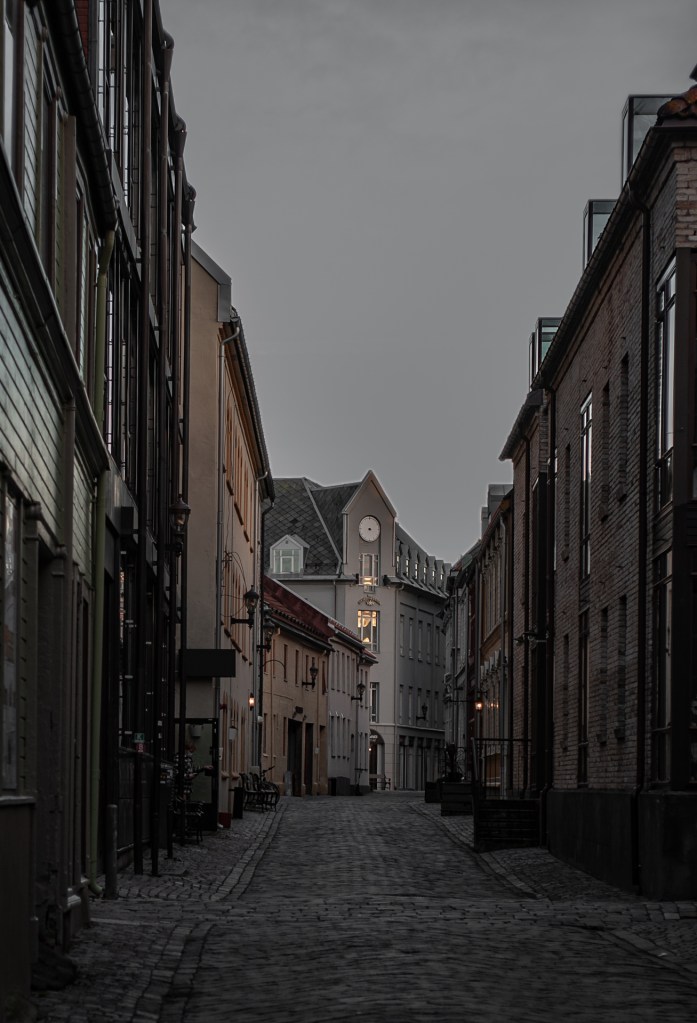
Day 1732, inventions.

Day's pictures, Poetry

Time and destiny, two illusions

to replace the fear, of being slowly

pulled, in to the end.

I wrote this for Day 1108. I always wonder what people mean when they say that they are destined to do this or that. Do they just mean that the circumstances of their life has put them on a road with a certain destiny? Like being born athletic, in a place where they could practice sports, and in a family that supports them. Is that a path, to a destiny?

I suspect that when people talk about destiny, soul mates or say that it is “meant to be” that they think that it is written in the stars, sometimes literally. Before the invention of the big monotheistic gods, the gods where powerful but also flawed like humans and certainly not all powerful, at least if you look at the ancient Greek world. The monotheistic Gods where in principal all powerful, and because of this they knew the destiny of every little human being on earth, then, and all of them in the future. Because religion was not something debatable till just a few decades ago, most people still feel that group pressure, mostly unconsciously I presume, that we have a destiny or that there is A destiny.

If life is not designed and made by some sentient being, but the universe is just there, than you have to conclude that there is no destiny predestined for you. Your circumstances, like in my previous example, can give you a destiny but it is only there because you are born.

Time is also one of those illusions. I don’t want to say to much about it, but if you read some book about, for instance, the middle ages you will soon realize that before the invention of timekeeping people had a whole different idea about time. For us time is the 24 hour clock and the calendar, most people in those day’s had no idea about those concepts. Time was the changing of the seasons and the rise of the sun in the morning.

There are many concepts in our modern life that we take for granted. If you look closer to where these things started you will realize that what seems obvious for us, is indeed just that, obvious for us.

Day 1731, difficult reading.

Day's pictures, Poetry

I assume that the people that read my work are interested in life, as something that you could study and poke at, as to see what it does. I defiantly have that, but I sometimes wonder if the people that I know have similar interest, or do they only have it when life “pokes” at them.

Fifteen years ago I moved to Norway from the Netherlands. I have been back a couple of times to see family, but what I remember of living in and with the people over there is covered in a haze. I only remember the things that stood out, maybe not when I lived there, but they clearly do now. One of those things is that people in Holland (that’s how we call it most of the times) are more of an open book, specially compared to the people here in Norway. If you meet new people or start at a new job, you will have an easier time in Holland to find out what people think, what their hobbies are, what they do in their spare time, those kind of things. In Norway that takes longer, not always off course, I generalize, but I noticed it.

People in Norway are raised to respect each others boundaries, something they have some pride in, they tell me. It is of course easier in a country with so much space per person compared to Holland. If I tell someone in Holland that I am interested in philosophy then there is a bigger chance that they start asking question to hear me out, a conversation is born. Here in Norway that hardly ever happens, they react enthusiastic but most of the time that’s all you get.

I thought about this when I red the poem I write for Day 1100 back in marsh 2019.

The road to freedom

ends

where the horizon

begins.

I would like to talk with someone face to face about the meaning of these few lines. In Holland I would have a hard time finding people that like to talk about more abstract philosophy, here in Norway I am afraid it is impossible.

I realize that there is little meaning in this poem, specially if you just read it. But I have read many philosophy books and sometimes you need a few days to digest one aphorism or a paragraph. Words put in the right order can have a lot of magic in them, and if the philosopher or writer is not known for being a charlatan you better believe that they put some meaning in it for you to find.

I like to know which interpretation you have of this little poem or aphorism, maybe you have another idea.

A. If you reach your goal (or horizon) you are bound by that goal and lose your freedom

B. If you don’t set yourself goals for the future (at the horizon) you are free, from those goals that will steer you towards them.

Day 1730, I wish I knew how…

Day's pictures, music, Poetry

Today, while looking for a new poem among the ones I have written for older posts, I came across Day 1080. I opened the word document and read the poem and started to read the other text. I was impressed and thought I was pretty smart back then. To be sure I opened my blog in the browser on that day and realized that I was reading the lyrics of the song: “I wish I knew how to be free” written by Billy Taylor and Dick Dallas and in this case sung by Nina Simone.

I love the text a lot and the rendition of Nina Simone to. For fun I typed in the name of the song in YouTube and apparently it is a popular song to cover. There are a lot of contemporary artist, who are mostly younger, that sing it but they lack, for the most part, the depth of someone that has “lived a life”. Luck Peterson’s version is also good but he had lived, and you can here it.

The poem goes like this:

The dark flower

all of life’s forces used

towering over

looked down on

alone

The live version that Nina Simone sing in Montreux in 1976 is the best one I could find. The studio version is also good but this version has moor in it…

I wish I knew how
It would feel to be free
I wish I could break
All the chains holdin’ me
I wish I could say
All the things that I should say

Say ’em loud, say ’em clear
For the whole ’round world to hear
I wish I could share
All the love that’s in my heart
Remove all the thoughts
That keep us apart

I wish you could know
What it means to be me
Then you’d see and agree
That every man should be free

I wish I could give
All I’m longin’ to give
I wish I could live
Like I’m longing to live
I wish I could do
All the things that I can do

And though I’m way over due
I’d be startin’ a new
Well I wish I could be
Like a bird in the sky
How sweet it would be
If I found I could fly

I’d soar up to the sun
And look down at the sea
And I’d sing ’cause I know yeah

And I’d sing ’cause I know yeah
And I’d sing ’cause I know
I’d know how it feels
I’d know how it feels to be free, yeah-yeah
I-I’d know how it feels
Yes, I’d know
I’d know how it feels, how it feels
To be free, no no no

And one more:


Day 1729, words flow?

Day's pictures, Poetry

Am I my own imitation?

The last sentence of the poem I wrote for Day 1067.

The mirror points in two directions.

It reflects me, my outside a stranger to me.

It lets me reflect, what I, think I see.

So, what is reflected?

Am I my own imitation?

I am not a poet. I write and talk about them everyday for the last 3 years, but I never took the time to find out what a poem is and how you should or could write one. I like juggling with the words and enjoy the minutes that it takes to make one. Because I have no deliberate structure while I write, it might happen that I sometimes make a sentence that sounds deep when I reread it. One of these sentences was the “am I my own imitation” from the poem above. I can’t recall if a started with a goal of where to go with that sentence or that I first wrote it down and then decided what the meaning could be.

Writing, and speaking to, is a strange thing if you think about it. How and where do the words you say come from, and why in that particular order? If I take speaking as an example, its a little clearer with that compared to writing. If you speak you don’t think about every word you are going to say, a lot of what you say seems to come out of your mouth automatically. You don’t make your sentences like: say hi…HI, say tree..no…how..HOW, say is…are…yes are…ARE…is it you or your?…you…YOU: you just say: Hi, how are you. This simple example hopefully shows that you most of the time speak without thinking, about speaking. This process goes automatically, probably because you use it so much in your life, but more complex sentences form also as if you had spoken them before, and only when you forgot a specific word or try to explain a complex subject you might struggle. The point what I want to make is that you speak with little thought besides the direction you want to go (and even that can be guided by your habits). With writing it is most of the time the same, the difference is that you can easier go back and change the way you want to say things.

With poetry, or art in general, there is some kind of “force” that steers the process. I think it is similar to what I wrote above, your words flow in conversation but also when you write a poem or paint or take a picture. Once the first sentences are written you can of course change words and undo what came out automatically. I think that great poets and artists know how to balance that process of “inspiration” and editing. I have the inspiration, I’ve been born with it, but I lack the editing skills and deeper knowledge of the words that I can choose from a language that is not my own.

But I like that last sentence even though the words written before it don’t really clarify it.

Day 1727, cut-out.

Day's pictures, Poetry

We humans have some body parts that no longer have any function. You can think of the appendix, wisdom teeth and muscles in the ears we no longer can use. I guess nature has not found a reason, or the time to loose these parts or functions, while we slowly evolve. There are no big problems with these leftover parts, their main function seems to be to remind us that we once looked and functioned differently.

I did a quick search on the net and found the usual examples of “human vestigiality”, but they mentioned no part of the brain that was leftover and had no longer a function. Certain reflexes like the hiccup and some grasp reflexes are behavioral, and are partially controlled by the brain, these reflexes serve no longer any useful function. I found in my short search no mention of specific parts of the brain that are useless or can harm you if not removed.

If you look into how our brain works and is made, you will learn quickly that some parts are older, we share them with reptilians that lived millions of years ago. During the evolution new parts where attached to the older parts till we ended up with the brain we have now.

In the poem I chose for today I use the amygdala as a specific part of the brain. The amygdala plays an important role in our life but it is not our so called reptilian/primal brain or basal ganglia. This primal part of our brain is the starting point of our automatic behaviours like eating, fleeing and fighting.

You can read bookshelves filled with books about this topic but I will take some poetic freedom in giving an explanation for the poem I wrote on Day 1022.

The night, when I am gone

a visual, engulfs from amygdala

an ancient fear, felt abandoned

I think that some parts of our brain should be removed, if possible, like we do with an infected appendix. These parts wake us up at night with fears and sweat for no reason. They make you angry and fearful at the same time and why can I not decide myself when it is time to eat, I do it anyway around six in the evening.

A big part of our time we are pestered by these prehistorical drives and emotions. We spend a lot of time combating the negative side effects of these primal behaviors. We do yoga, consult psychiatrists and talk over and over with friends about the same fears we can’t explain. We are now so used to rationalize our fears and angst, our more evolved parts of the brain seem to thrive in that behavior, but it seems a little unnecessary. Fear and angst are good if they have a reason, but if they just arrive and react like a lizard reacts to a footstep by fleeing, we could do without them.

Maybe one day, far into the future, we can go to the doctor and ask for a Vulcan-nization of the brain.


Day 1726, who am i gonna be.

Day's pictures, Poetry

Are you ever surprised by how you behave when you meet new people or enter a room with strangers. I can predict how I will behave when I meet my buddies from the Marine core or the elderly neighbor from across the street, but sometimes I open a door and surprise myself by my behavior.

A lone house, when I turn the corner

the chimney smokes, a sign of life

is it a stranger that I will meet?

or will it be me?

This is the poem that spoke to me today, it is from Day 1010.

I think that most animals that are higher on the evolutionary ladder, and display a more complicated social behavior, feel unconsciously what the structure of a new group is. With structure I mean simply: who “plays” what role. You have the alpha’s, the followers, the thinkers, the silent ones and so forth. Most groups consist of these different kind of characters. The nice thing is that someone who is silent in one group can be the alpha in an other group, your role can change depending on the group you are in.

I once did Kendo, I was a beginner and when I was in a group of more experienced players I new my place and was silent and listened. Then I moved to a tiny place in Norway where no one ever heard of Kendo. So when I taught it there I was the alpha and people listened to me.

This is what I meant in the beginning, and with the poem. We all have our place in the group, it can change within the group and if you go to another group you have to see and find out what you role is.

And when are you ever yourself, you might ask? I think your always yourself, no matter what role you play in the group. There are off course times that you or someone else forces a role upon the group, thinking that you are that “role”. Most people don’t like that kind of disharmony, a group with to many alpha’s or silent ones will dissolve eventually.

Day 1725, innocent.

Day's pictures, Poetry

I try, even if it is impossible, to maintain my naivety. I am afraid to settle in a comfortable place in my mind, and steer my life from there. At the least, I try to feign naivety so that the world treats me like I am naive.

I still remember the times that I learned new things, and that I thought: how can I have lived before, without knowing this. The scary thing is, it doesn’t happen any more, or at least, less frequent. Why is this scary you might wonder, because there must be more things to learn. Not finding these new things to learn can mean that I have settled down in my mind, so to speak, or that I am looking at the wrong places. Like for example: the same places.

I lost, for a while now

the innocents, from just opened eyes

it fell down somewhere, maybe when I turned.

This poem is the inspiration for today, I wrote it on Day986.

I think that settling down with what you know is part of growing up and getting older. Your muscles and back are slowly getting stiffer so why would your mind be any different. And like living an active life might delay your slow decay, so does having an active mind slow down the decay of your thoughts and mind.

And like playing with the kids when your older so is playing naive when you know it, helpful to stay younger.

Day 1724, I stand here.

Day's pictures, Poetry

Sometimes you forget that other people don’t think and see the world as you do. An example: the idea that people in different times and places had a variety of viewpoints on all kind of subjects told me that they could not all be right. This taught me that if I feel that an opinion creeps into my conciseness I should ask myself where it comes from. Is it the culture I live in, that agrees with this opinion? Am I obstinate? Is it the book that I am reading? No matter where your opinion comes from, it is an “answer” on a question that stands around that particular question with all the other answers. It is your perspective on that question that determines your answer.

Perspectivism is an legitimate philosophical topic and should not be confused with relativism. We all have different perspectives towards the world, and where and how you interpret the world depends on that. It is important however to know that not all perspectives or viewpoints are equal. A child of 12 and a pilot have both an idea of how to fly an air plane, but it is obvious that one of them is more “right”.

If people say that everybody has a right to their opinion and that you shouldn’t judge them on that, then you talk about relativism. People that support this kind of relativism often say that there is no truth, or that we cannot get there. The sad thing is that we humans often don’t want to accept that other people found a (scientific) truth, but because we don’t understand it we condemn the person that knows.

I don’t like to talk about current affairs but with the Covid epidemic going on and many people rejecting science we have a real-time example of this problem. Lets take America as an example: last year millions of people have gone to the doctor, they got there medical help and subscriptions, that they took without questioning. Because of all kinds of reason, suddenly a big part of these same people shifted there perspective and started questioning there doctors and science. Often the argument is that no one knows and that’s why they are also right, but it is pretty obvious that last years obedient patient knows less about viruses then the doctors they mistrust now.

The inspiration for today came from Day 969.

Perspective and change

a walk around in your mind

realism portrait.

The first word obviously got me going. The perspective of the doctor in the last example is years of schooling, experience and don’t forget an oath and probably a drive to help people that are in need. Compared to the people that deny science, they have an perspective on the disease that is further away from an scientific and curious angle and closer to the perspective of the snake oil salesman from yesteryear’s.


Day 1723, catching thoughts.

Day's pictures, Poetry

For some reason I often look at the first light, when the sun is still reflecting in the morning. It feels like the silence just after you wake up in an empty house and the moment you hear the first noises.

Day 964.

Early morning light

is framed by a closed window

reflecting my mind

In this poem from 2 years ago I tried to catch that moment, when I stand in front of the window and see the light outside breaking through the leafless trees. Sometimes I see a reflection of myself, looking through the window.

The silence of an empty house can be a fertile place for thoughts. If you learn how to recognize and “frame” these moments. You can benefit later, when the world is turned on again, from what you have caught in your frame and window. When you pick up that moment, you can see the reflection of your mind in it, as well as the thoughts it contains.

If you are honest to yourself and learn how look critically inside, you will notice that it is hard to find out which of your thoughts and idea’s are original, as in a 100% yours, and which are borrowed and/or partially compiled and plagiarised from someone else’s idea’s.

It is probably hard to find a genuine original idea inside yourself. Your thoughts and ideas are made out of many different parts. If you are lucky you might find an idea’s inside you that is made out of known parts but you arranged them in such a way that it becomes something unique. It’s like music, where you have a limited number of notes but an almost unlimited way of arranging them, and some of those arrangement are beautiful, but most of them just noise.

My idea of early morning light is quite cliché I think, as well as a window that frames the world, but maybe the combination that I made is more unique. I don’t know if that is the case. I Wil never read all that is written, so I will never know how original I am. My excuse is that I write this in the evening, after a day’s work and a house that makes all kinds of noises.

The premiss of my poem was that the silence in the morning can produce, or frame as I call it, good ideas. This framing is important because it represents the idea that those thoughts you have with a clear mind in the morning are not yet polluted by the daily noises and distractions. The reflection symbolises this idea to, the light is a reflection of the clarity in your mind and the thoughts caught in the frame are a reflection of your mind…

Day 1722, object in a vat.

Day's pictures, Poetry

This morning on my way to work my thoughts interrupted my listening to an interesting podcast, I tried to ignore it, but finally gave in. The scenario played in my head that one of my colleges, who I told the other day that I am interested in philosophy, would ask me what philosophy is according to me. There are many ways you can answer this question, but the one that popped up in my head, all fresh, was that I would ask him if he has an opinion about something, and he probably would say yes, and then I would tell him that he should ask himself where that opinion comes from. That’s philosophy in a nutshell, asking questions and especially to yourself and I would also add that there is no end to this questioning besides fatigue. I was, and am quite satisfied with that short answer and can’t wait to use it one day. Also yes, I asked myself if it makes sense, and me writing about it now is part of that questioning.

I tell you this because philosophy can go abstract fast but in the example from above it is something that everybody can do. One of the abstract questions has to do with the poem I wrote for Day 959.

You perceive, observe

the other – object – adverse

it was my intent

How do I know if the other person is not just an object that miraculously mimics a human being or what they call in philosophy the “problem of other minds” or more fancy: solipsism. I am not going into this to deep for now, you can look it up on the web but in short it is the idea that we can not know for sure what’s going on outside our mind or if other people have a mind and think like you. Related to this is the thought experiment the “brain in a vat” wherein a scientist puts your brain in a vat, connects it to a computer and you would not know the difference when you experience the world compared to when you where still in your flesh an blood body. The computer tells you that you listen to music and you experience it like that including the living room you sit in.

But besides these more abstract questions you can also ask yourself if you treat someone else as an object when you interact with them. If I want to pay my groceries I don’t treat the cashier badly when they are just part of the whole “experience”. Imagine your busy and thinking about stuff, you walk to the counter, put your groceries on it, look at the numbers, take your credit card, look at the face hovering somewhere above the counter and quickly see if it has an expression of: you can pay. You pay, say hi with a quick move of your face in the direction of that person and you leave. Think of it, or try it out, can you remember the face of the person that helped you? They have done some great experiments with this where they changed the person with another halfway through the conversation and a lot of people don’t notice it.

Is the person in this example not just an object on your way out? For you it is, in that moment, but it is of course a person and would that person suddenly fall ill in front of you, you would be released of your spell and help. Like you would if the cash register breaks down when you want to pay, and you see the problem.


Day 1721, maze with no entrance.

Day's pictures, Poetry

“Thoughts like silhouettes” is the line that caught my eye whilst looking for a poem for tonight. This one I wrote the 31st of October 2018, Day 952.

A dream like walk home

dark roads an almost clear sky

thoughts like silhouettes.

A silhouette is formed when the object you look at is in contrast with something in the background. Normally this object you look at is covered in darkness and appears black because of this. So if you use this definition then thoughts that are silhouettes appear as black but maybe only because they are covered in darkness.

So your thoughts can appear dark but its not necessary that they are, and they only appears as dark because something bright shines behind it. Is this just another way of telling you that there is light at the end of the tunnel? Something we call in Dutch a “dooddoener”. You could translate it as: a lame cliche or a banality. I think it can mean something more. Your thoughts can be covered in darkness and altered this way. It can appear to be covered in darkness because the memory of a bright past or a bright future you hope for shines in the distance towards you contrasting your current state. You see your current state as a silhouette against those expectations and memories, and as a silhouette you are covered in a veil of darkness and cant see yourself and the real word clearly.

Another way of looking at it, is what we do now. I see the three words and see “a silhouette” of its appearance, but I cant see what meaning is hiding under its cloak of darkness. I think we all have had the experience that you ”feel” what you want to say but you can’t find the word for it. As if you see the answer in front of you like a animal does that knows no words. At most you can point and wave without these words or go off on a ramble hoping you find a way to tell what you see and mean.

And what about the “light source” behind the silhouette, that makes it a silhouette. What shines us in the face when we cant get out of our words and only see the silhouette of what we want to say. Is it the glaring fact that we are fallible creatures? A reminder that we still have to learn things and lack our own light to shine in the darkness?

I don’t know if looking to the world with the help of metaphors is useful, maybe it helps us to find a way out of the maze of our mind. With our thoughts we try to interpret our inner world of wordless emotions and sensations and somewhere in our mind these thoughts get converted to the words we have access to. Everybody through the ages that writes about “what’s happening” has tried to translate these inner movements to words that others can understand and relate to. There have been successes, they even came close, seen from certain perspectives, but I think it will be a playground for many years to come.


Day 1720, mirror.

Day's pictures, Poetry

When I look in a mirror I know that I see myself. I know that I see myself, because I looked at myself in the mirror before. But I just realized that I have seen my girlfriend more than myself, time-wise. I couldn’t help it but if I look in the mirror to myself for 5 minutes a day, in a month that will be around 2.5 hours and in my 48 years around 1500 hours or 60 day’s. And five minutes is not much for some but do you really stare at yourself and consciously take in what you see? I maybe do that 5 minutes a month, I definitely see my colleagues more than that in a month, just to see what there faces are telling me, something I never do when I talk to myself.

So we are no stranger to ourselves, face wise. But if I and my girlfriend rob a bank and the police sketch artist ask me to describe the two thieves, I would have a harder time describing myself than my girlfriend I think…something I would like to try out one day, the describing myself, not the robbing a bank… This is all funny, but seriously, I have a hard time looking at myself and get some kind of information out of that, compared to what I get when I look at someone else that I just met. I don’t know if I give away some kind of mental disorder on my part but I think we all see the difference between a serious face, or a face of someone who has seen a lot or a naive face. I can go on but the point is that I don’t see myself like that. One of the reasons is off course that I have only seen myself for the first time when I was to young to realize this fact. I also have a strong opinion about myself, and what my face should portray to first time visitors. My girlfriends face, or that of my mother, have also less secrets than before, and what it tells me now has also changed over the years. But in our daily communication our faces are still a big part of that back and forth, words only tell half the story. It is that part that I miss when I look in the mirror, that active communication with myself. I only have my own thoughts without the help of my face.

I see a stranger

my hairs rise and with my fear

i turn the mirror.

This poem from Day 928 was the inspiration for today’s writing.

It speaks for itself regarding the message I try to tell above. The only thing that I don’t mention is the fear that turns me away from looking to long at myself. For now I can only say that my face in the mirror is motionless and it’s scary to look at, because it comes to close to what I feel deep inside.. Maybe my face is telling me the truth after all.

Day 1719, perpendicular.

Day's pictures, Poetry

If you believe the American/Hollywood culture there are such groups as Italian, Irish, Colombian, Japanese and many more American flavors. They’re portrait as quite distinct from your “normal” Americans. I get this fascination with focusing on the differences, but I hope that people understand that we are for 95% the same in our behavior, in similar situations. I don’t know if it is 95%, that’s a guess.

I am Dutch, and I have some ways of doing things that I have seen more among other people that lived around me in the Netherlands. They say that those are “typical” Dutch behaviors so I pay more attention to them and as a consequence of that attention, I see them more, ignoring the majority that lacks them. I do the same, but in reverse, here in Norway where I live now. They told me, and I read it in books that Norwegians are I some behaviors different than a typical Dutch person. I noticed that they are less organized and more individualistic at work. I worked in different places throughout the country and and I see the similarities. I think we really approach work and organizing differently but focusing on this, and blowing it out of proportion, I might have forgotten that there are many more things we do the same.

I have an anecdote regarding the Dutch and, in this case, the Norwegians. I thought that I came up with this idea but not so long ago I read it also in a book, so I think that “my idea” is somewhat of an exaggeration, but you never know. It goes like this: In the Netherlands we have to build dikes to keep out the water. The one thing that is unique about a dike compared is that everybody that lives behind the dike needs to take care of his or her part of the dike. If one fail’s, everybody is doomed. During the centuries we (the people living in the river delta where later the Netherlands was established) learned to work together and come up with systems to insure the safety of everybody. You can imagine that a thousand farmers in Norway can more or less do what they want at there farm without it effecting there neighbors to much. I think that this anecdote can explain how a behavior slowly grows and gets past on to each following generation. But, for the last 150 years or so you can put the people that take care of the “dike” systems in the Netherlands in a few buses. I have admired the dikes and waterworks in the Netherlands but I never put a shovel in the ground to help, the closest I came was electing the new boss of the departments that maintains it all. So at best I have some lingering “organizing” meme* in me.

The poem that inspired me today was from Day 922

perpendicular

my thoughts and the soil I left

high above I fly.

I read it and thought: my thoughts about my heritage and behavior are not based on a broader understanding of the country and culture I am from. My thoughts comprise at most the place of my footprint, they go “perpendicular” up and that’s my knowledge, and from there I “fly” away

* According to Dawkins, “the meme exemplified another self-replicating unit with potential significance in explaining human behavior and cultural evolution.https://en.wikipedia.org/wiki/Meme#Dawkins

Day 1718, upwards downhill.

Day's pictures, Poetry

From Day 911

I float slowly down

then I unexpectedly

have nowhere to go.

I realize that my Haiku’s from this period are often about getting stuck in life. My inspiration for the poems normally start with the picture, in this case its a hippopotamus seen from the side through glass , the big beast slowly floats down till its hit the ground. The poem describes the situation the only difference is that its written from my point of…feeling.

But I think about life, read books about it, live it. If you do that with some critical thinking then life will appear as a slow road downhill till the end, its just the way it is. You can sugarcoat it what you want but after your eighteenth birthday you physically decay slowly and the spring in your mind gets stiffer and stiffer. What I want to say is that having thought about life going nowhere is not necessary a reflection on what’s going on at the moment in your life.

I don’t like to complain that I am on a downhill trajectory, when we are always going down. Maybe you think you are going upwards at some points in your life, but with enough distance you will see that your still going down. I assure you, I am still a positive guy, just realistic. Why do I think then that this is a healthy way of looking at life, you might ask. I think that a part of being human is feeling, even if it is deep inside, that life is pointless. To combat this realization we humans created all kinds of ideas and stories that assure us that life is not useless. The problem is that people don’t like to be reminded of the origin of these stories and would happily kill the person that tells a different story or none. Life is more clearer without all these illusions stuffed in your head, this is one advantage of excepting you are going downhill and slowly getting there.

The funny thing Is, now that I am approaching my fiftieth birthday (still a kid according to my 75 year old colleagues) is that I still dare to take big steps in life, but no longer out of innocence and lack of respect for the consequences, but because I know that I will always find solid ground…when I land downhill.

Day 1717, to do or not to do.

Day's pictures, Poetry

There are moments in your life that you have to make a decision. Easy ones like: do I eat pizza or pasta? Or a moderate one like: do I buy the red or black car? And the harder ones like a divorce or quitting a job. All these decisions come on our paths and they can be exciting but the are not exciting. They are just the mundane events that are part of everybody’s life, and though they can be thrilling and/or devastating, nonetheless they are not special as in, out of the ordinary.

I like the events that are out of the ordinary, or maybe better said: events that grind against the boundary of what is possible when they pass you by in the far distance. An example: a friend tells you about his uncle that lives in a far away land, that uncle is looking for someone for his company, its a job you can do, but are not qualified for, but because of your connection you might get it. You might get it if you go for it. You have to move to a whole different continent, live in another culture and work in a field you don’t know. The whole idea is so far from you, literally and figuratively, but also a possibility and a decision away. If you don’t take the decision, life will go on, but you will always remember the feeling of what it would be like, living that other life.

I think that everybody can come up with an example for themselves. It can just be a dream that one day comes really close, a decision away “close”…what do you do.

The inspiration for this thought came from the haiku I wrote on Day 907.

An empty blue chair

a distant view passes by

I slowly decide.

Do I sit in the blue chair, or do I make my first step towards a new view that is passing by.

Day 1716, diamond and coal.

Day's pictures, Poetry

Sometimes your past, or more specifically the plans from your past, come speeding towards you faster than you go forwards. This can happen suddenly, when you open a dust covered box from the attic, or power on your old Nokia phone from 2002 and look at the call history. Old plans, memories and wishes cling to us, hidden from sight, ready to appear uninvited.

These unwelcome or forgotten parts of your past horizons are often a byproduct of some sort of transformation. Your relation ended in tears which are dried up and forgotten by now, but the breakup made you move and because of that you found a job that changed your life, and horizon.

The pasts that follow you have many facets. And like a diamond they are hardened by the pressure of time, forgetfulness and bias. The different sides of your past memories are also sharply divided, a tragic loss can be cut next to a new hope.

But no matter what, your past made you who you are know, and should be admired like you admire a diamond. Don’t forget that your past might be ugly like a lump of coal, but without that peace of coal and some pressure you will never shine like a…

My inspiration for today came from the poem that belonged to Day 901.

Rime and horizon

facets of transformation

speeding behind you.

I like the word rime. Your past can be frosty and no matter what, you always look forwards to a horizon, even if you go backwards. But rime is also old English for rhyme. I used the facets and diamond analogy above but you might as well use rhyme or poetry as an analogy for your past. In your head your past can be ugly but for your own sake you make it rhyme so you can remember it more fondly.