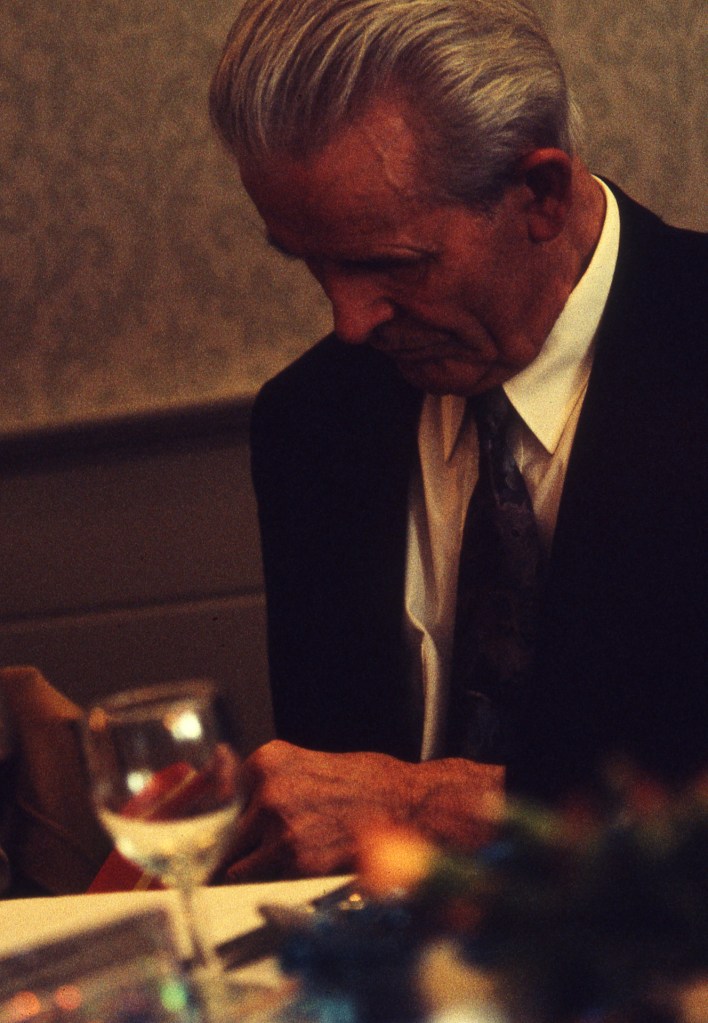
Day 2050, grandfather.
Day's pictures, Poetry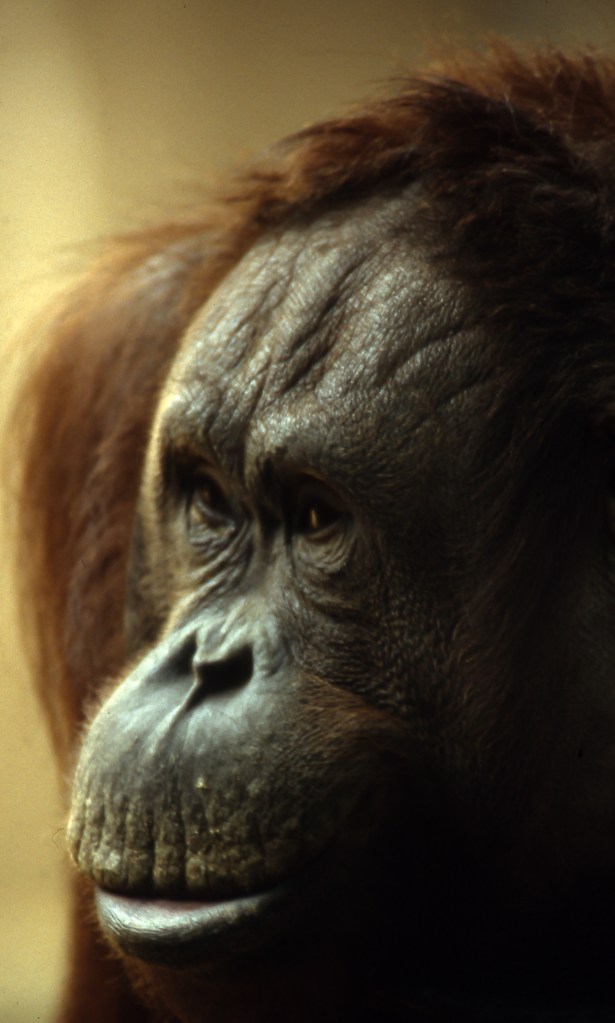
I had a girlfriend in 1996 who studied biology, and she often had to go to Burgers zoo to study the different apes there. I tried to tag along as often as possible. I am not sure if I ever met Frans de Waal, but he has written several well-known books, and I have read some of them. I met his mentor Jan Van Hoof who was a professor in Utrecht, where my girlfriend studied, and we also lived. It was fun to follow some of the lectures, but I am glad it was just for fun; she had to learn a lot.




Slide film, 1996, Olst


You jump up and swiftly swipe your hands where you felt it crawl; a tiny, harmless spider moves away, you wonder why this made you scared. This reaction to spiders and snakes is a classic example of a fear we inherited from our ancient forefathers. It can still be helpful if you find yourself wondering in a tropical jungle, but for most humans living today, in cities and urban areas, this fear of harmless spiders and other small insects is not rational.

I am still looking for a subject I can put my teeth in and write about. Today I had another idea; it cam while I was making a fancy molding. I do this on a milling machine, for these complicated moldings, you have to use several differently shaped cutters and figure out when and how to use them. It can be challenging which one to use first, and we have almost 100 different cutters, but it is not always clear if we have the one we need. Knowing this, you can do this job in different ways; you can try to figure out precisely which ones to use and in what order and make sure you have all the cutters. This takes a lot of preparation, and the end result is not guaranteed; there are almost always surprises down the road. I usually work by finding one cutter that cuts out one part of the shape I need and then look for the next cutter when I am done with the first. This is committing to a road without knowing where it leads.


I like to listen to podcasts, some tech news, scientific news and interviews, gaming, and formula 1. Most of the podcasts I listen to come from America; this is interesting because it gives you an insight into parts of the American psyche. You get this also through movies and series, but that is more filtered and edited; podcasters, and some YouTubers, don’t play a role; it feels more real.

Democracy and Education (Read it her: https://www.gutenberg.org/files/852/852-h/852-h.htm)
by John Dewey
Chapter One: Education as a Necessity of Life
Education and Communication. So obvious, indeed, is the necessity of teaching and learning for the continued existence of a society that we may seem to be dwelling unduly on a truism. But justification is found in the fact that such emphasis is a means of getting us away from an unduly scholastic and formal notion of education. Schools are, indeed, one important method of the transmission which forms the dispositions of the immature; but it is only one means, and, compared with other agencies, a relatively superficial means. Only as we have grasped the necessity of more fundamental and persistent modes of tuition can we make sure of placing the scholastic methods in their true context. Society not only continues to exist by transmission, by communication, but it may fairly be said to exist in transmission, in communication. There is more than a verbal tie between the words common, community, and communication. Men live in a community in virtue of the things which they have in common; and
Yesterday I watched an excellent documentary about the animals you can find in Africa. I love these documentaries; it takes you away for a while. I noticed one thing, and it is not the first time; almost all the animals look approachable like you can touch them. I know the rhino is dangerous, but they don’t look all that dangerous. But if I look at the lions, and then to our cat, I know that the lion is dangerous, unapproachable, you might say. It’s something in his eyes; you know he will eat you alive if he gets the chance. It reminds me of something.
 Nochrisis