Day 2108, from my window 6.
Day's pictures, Poetry
I had this picture of ice on a lake and the bed underneath, and both are not in focus, but it leaves enough to my imagination. I wanted to write something clever about it, but I lost my appetite. I just read a news article about some right-wing nutcases in America with a picture of four guys fully dressed in army fatigues and weapons everywhere. I look at their faces, and I just don’t understand these people; they obviously take themselves really serious. Personally, I believe that you always have to be critical of the answers you give yourself and the ones others give you. Doubt is not easy, but a militiaman or anti-vaxxer will have never take their stance if they question themselves.
There are billions of opinions, and my only conclusion out of that is that they cannot all be true. Claiming that yours is true is not enough; even a majority can be wrong. God and his claims are also not enough; there are thousands of God’s and even more religions.
For the same reason that we all agree that one plus one is two, we should also search for other truths that fit in that same category. Think about all your opinions; could they be universal, or are they just particular to your situation?


When you call yourself an Indian or a Muslim or a Christian or a European, or anything else, you are being violent. Do you see why it is violent? Because you are separating yourself from the rest of mankind. When you separate yourself by belief, by nationality, by tradition, it breeds violence. So a man who is seeking to understand violence does not belong to any country, to any religion, to any political party or partial system; he is concerned with the total understanding of mankind.

First essay: ‘Good and Evil’, ‘Good and Bad’
12 – At this juncture I cannot suppress a sigh and one last hope. What do I find absolutely intolerable? Something which I just cannot cope alone with and which suffocates me and makes me feel faint? Bad air! Bad air! That something failed comes near me, that I have to smell the bowels of a failed soul! … Apart from that, what cannot be borne in the way of need, deprivation, bad weather, disease, toil, solitude? Basically we can cope with everything else, born as we are to an underground and battling existence; again and again we keep coming up to the light, again and again we experience our golden hour of victory, – and then there we stand, the way we were born, unbreakable, tense, ready for new, more difficult and distant things, like a bow that is merely stretched tauter by affliction. – But
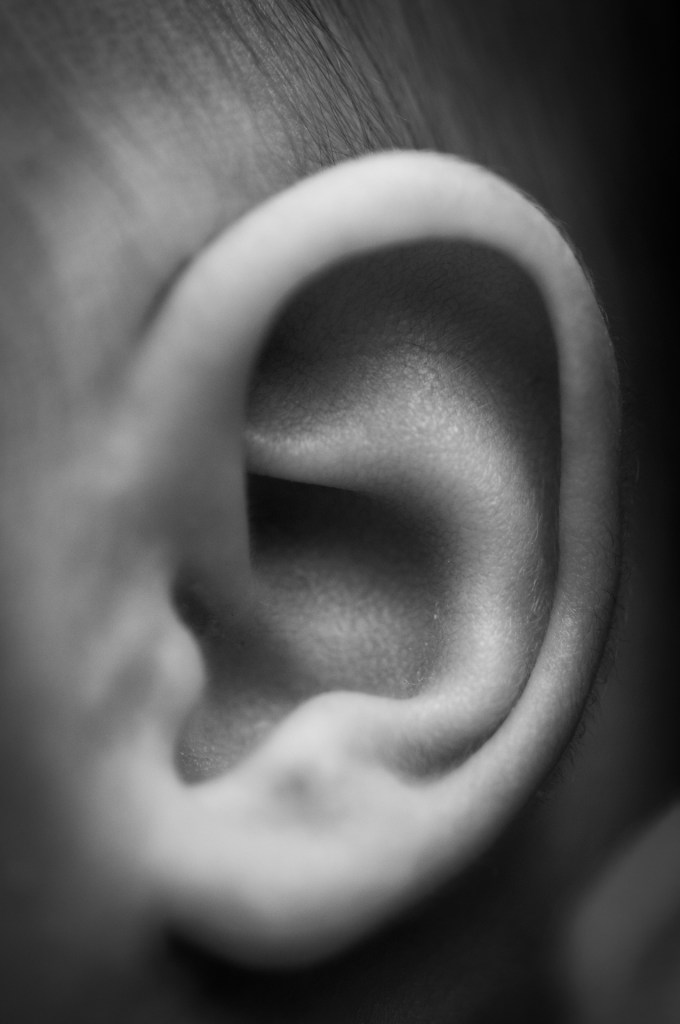
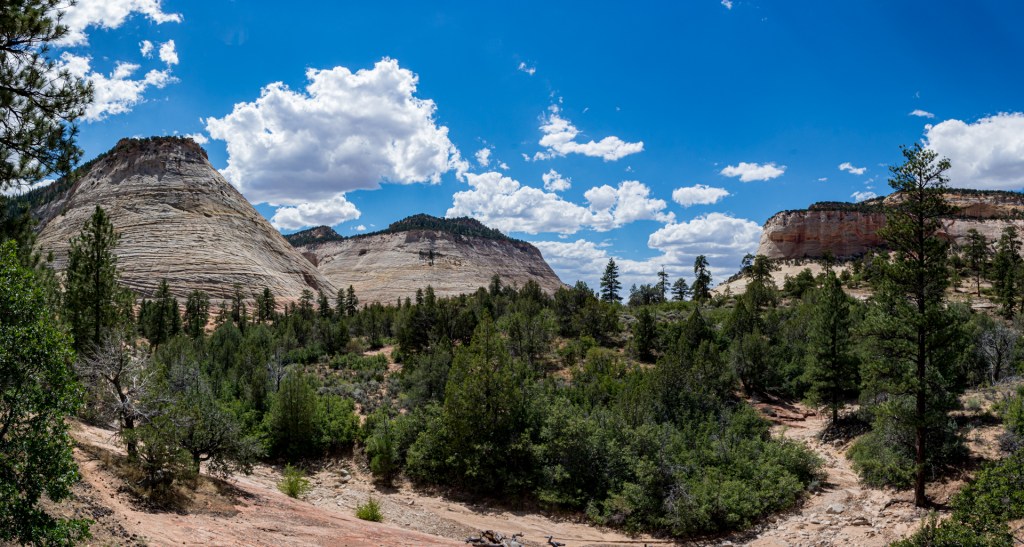
The Pond in Winter
AFTER a still winter night I awoke with the impression that some question had been put to me, which I had been endeavoring in vain to answer in my sleep, as what—how—when—where? But there was dawning Nature, in whom all creatures live, looking in at my broad windows with serene and satisfied face, and no question on her lips. I awoke to an answered question, to Nature and daylight. The snow lying deep on the earth dotted with young pines, and the very slope of the hill on which my house is placed, seemed to say, Forward! Nature puts no question and answers none which we mortals ask. She has long ago taken her resolution. “O Prince, our eyes contemplate with admiration and transmit to the soul the wonderful and varied spectacle of this universe. The night veils without doubt a part of this glorious creation; but day comes to reveal to us this great work, which extends from earth even into the plains of the ether.”
Read the rest on Gutenborg.org
115.
The so-called “Ego.”—Language and the prejudices upon which language is based very often act as obstacles in our paths when we proceed to explore internal phenomena and impulses: as one example, we may instance the fact that there are only words to express the superlative degrees of these phenomena and impulses. Now, it is our habit no longer to observe accurately when words fail us, since it is difficult in such cases to think with precision: in former times, even, people involuntarily came to the conclusion that where the domain of words ceased, the domain of existence ceased also. Wrath, hatred, love, pity, desire, recognition, joy, pain: all these are names indicating extreme conditions; the milder and middle stages, and even more particularly the ever active lower stages, escape our attention, and yet it is they which weave the warp and woof of our character and destiny. It often happens that these extreme outbursts—and even the most moderate pleasure or displeasure of which we are actually conscious, whether in partaking of food or listening to a sound, is possibly, if properly estimated, merely an extreme outburst,—destroy the texture and are then violent exceptions, in most cases the consequences of some congestions,—and how easily as such can they mislead the observer! as indeed they mislead the person acting! We are all of us not what we appear to be according to the conditions for which alone we have consciousness and words, and consequently praise and blame. We fail to recognise ourselves after these coarse outbursts which are known to ourselves alone, we draw conclusions from data where the exceptions prove stronger than the rules; we misinterpret ourselves in reading our own ego’s pronouncements, which appeared to be so clear. But our opinion of ourselves, this so-called ego which we have arrived at by this wrong method, contributes henceforth to form our character and destiny.

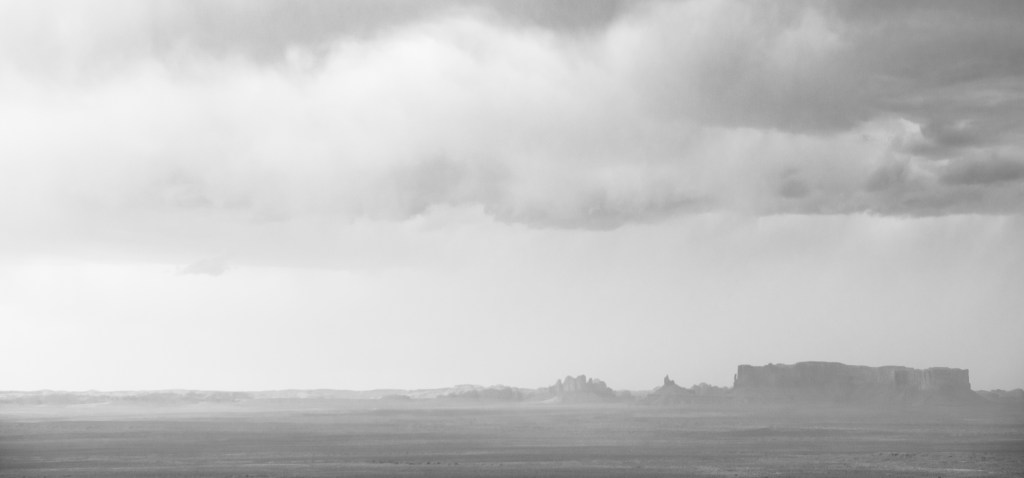
Utah, America, 2016

Most people would agree that, although our age far surpasses all previous ages in knowledge, there has been no correlative increase in wisdom. But agreement ceases as soon as we attempt to define `wisdom’ and consider means of promoting it. I want to ask first what wisdom is, and then what can be done to teach it. There are, I think, several factors that contribute to wisdom. Of these I should put first a sense of proportion: the capacity to take account of all the important factors in a problem and to attach to each its due weight. This has become more difficult than it used to be owing to the extent and complexity fo the specialized knowledge required of various kinds of technicians. Suppose, for example, that you are engaged in research in scientific medicine. The work is difficult and is likely to absorb the whole of your intellectual energy. You have not time to consider the effect which your discoveries or inventions may have outside the field of medicine. You succeed (let us say), as modern medicine has succeeded, in enormously lowering the infant death-rate, not only in Europe and America, but also in Asia and Africa. This has the entirely unintended result of making the food supply inadequate and lowering the standard of life in the most populous parts of the world. To take an even more spectacular example, which is in everybody’s mind at the present time: You study the composistion of the atom from a disinterested desire for knowledge, and incidentally place in the hands of powerful lunatics the means of destroying the human race. In such ways the pursuit of knowledge may becorem harmful unless it is combined with wisdom; and wisdom in the sense of comprehensive vision is not necessarily present in specialists in the pursuit of knowledge.
Read the rest here.

Friedrich Nietzsche
Human all too human
223 Where we must travel. -Immediate self-observation is far from sufficient for getting to know ourselves: we need history, for the past flows on, through us, in a hundred waves; indeed, we are ourselves nothing except what we experience at every moment of this onward flow. And even here, if we want to descend into the river of what seems to be our most individual and personal nature, the saying of Heraclitus holds true: we do not step into the same river twice. This is a truth that has gradually become stale, to be sure, but that has nonetheless remained as powerful and nourishing as it ever was: just like the other one that says, in order to understand history, we must seek out the living remains of historical epochs-that we must travel, as the patriarch Herodotus traveled, to other nations-these are, in fact, only the solidified earlier stages of cultures, on which we can place ourselves-to so-called savage and half-savage peoples, especially, where human beings have removed or not yet put on the garments of Europe.

One of the advantages of living in a foreign country is that I am no longer tempted to buy all kinds of old books. I lived close to a place called Deventer, and Deventer is known for the biggest outdoor book market in Europe. Because of this market that is open for a long weekend at the end of the summer, Deventer has a lot of stores where you can buy used books. I love going to these stores and buying old books like the one you see underneath. Modern books like this often have better translations and interpretations, but I just like that feeling that lasts for a second of me being there in 1911 and buying that book and opening the pages sitting in one of those old-fashioned café’s. Touching an old book is the closest I can get to that fleeting feeling.
This particular book goes about Roman stoicism, but because I want to keep it to Greek Philosophers, I chose a chapter about Heraclitus. Heraclitus is not as well known as the big three (Socrates, Plato, and Aristoteles), but there are enough more modern philosophers that have him in high regard, and through these philosophers, I came in contact with his work. There is not much over from his writings, and he is best known because others talked and wrote about him. I will leave you now with one chapter of this book from 1911 written by Edward Vernon Arnold.
 Nochrisis