Day 2087, Bad air!

Day's pictures

Friedrich Nietzsche

On the Genealogy of Morals

First essay: ‘Good and Evil’, ‘Good and Bad’

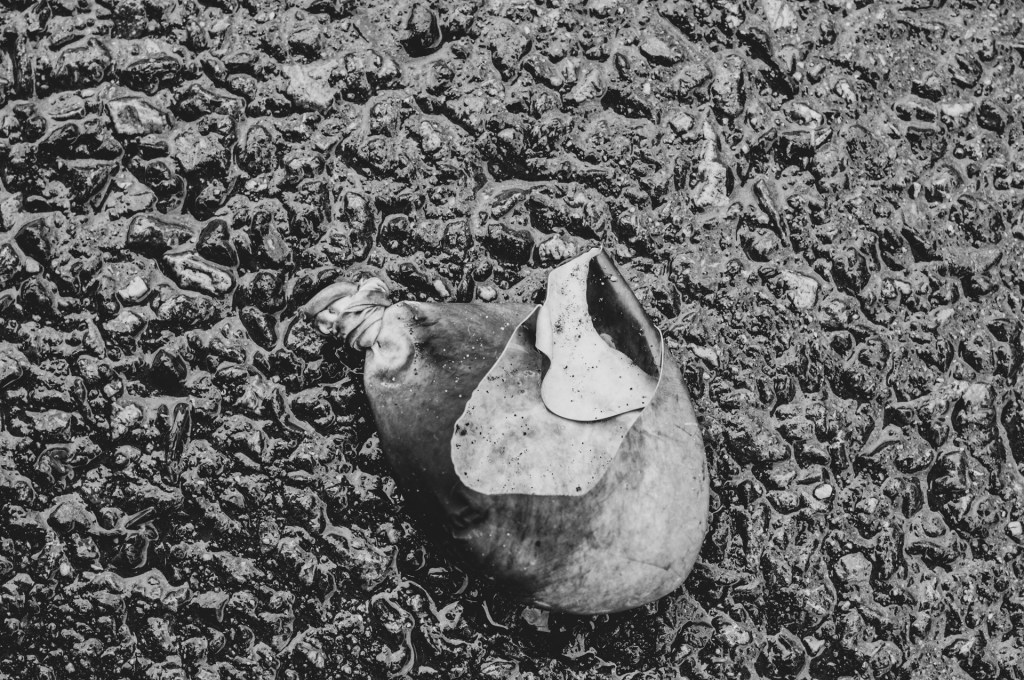
12 – At this juncture I cannot suppress a sigh and one last hope. What do I find absolutely intolerable? Something which I just cannot cope alone with and which suffocates me and makes me feel faint? Bad air! Bad air! That something failed comes near me, that I have to smell the bowels of a failed soul! … Apart from that, what cannot be borne in the way of need, deprivation, bad weather, disease, toil, solitude? Basically we can cope with everything else, born as we are to an underground and battling existence; again and again we keep coming up to the light, again and again we experience our golden hour of victory, – and then there we stand, the way we were born, unbreakable, tense, ready for new, more difficult and distant things, like a bow that is merely stretched tauter by affliction. – But
Day 2082, unclear.

Day's pictures
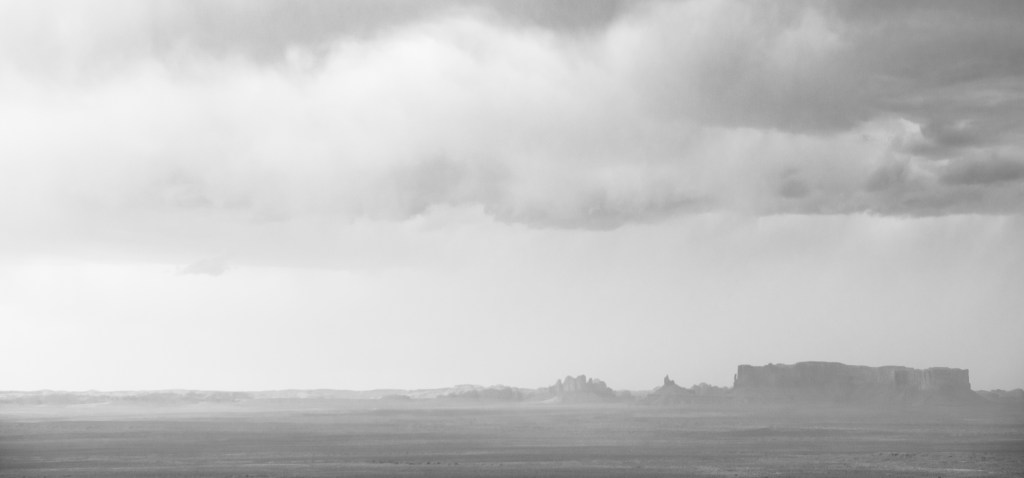
Utah, America, 2016

Friedrich Nietzsche

Daybreak, Book II

115.

The so-called “Ego.”—Language and the prejudices upon which language is based very often act as obstacles in our paths when we proceed to explore internal phenomena and impulses: as one example, we may instance the fact that there are only words to express the superlative degrees of these phenomena and impulses. Now, it is our habit no longer to observe accurately when words fail us, since it is difficult in such cases to think with precision: in former times, even, people involuntarily came to the conclusion that where the domain of words ceased, the domain of existence ceased also. Wrath, hatred, love, pity, desire, recognition, joy, pain: all these are names indicating extreme conditions; the milder and middle stages, and even more particularly the ever active lower stages, escape our attention, and yet it is they which weave the warp and woof of our character and destiny. It often happens that these extreme outbursts—and even the most moderate pleasure or displeasure of which we are actually conscious, whether in partaking of food or listening to a sound, is possibly, if properly estimated, merely an extreme outburst,—destroy the texture and are then violent exceptions, in most cases the consequences of some congestions,—and how easily as such can they mislead the observer! as indeed they mislead the person acting! We are all of us not what we appear to be according to the conditions for which alone we have consciousness and words, and consequently praise and blame. We fail to recognise ourselves after these coarse outbursts which are known to ourselves alone, we draw conclusions from data where the exceptions prove stronger than the rules; we misinterpret ourselves in reading our own ego’s pronouncements, which appeared to be so clear. But our opinion of ourselves, this so-called ego which we have arrived at by this wrong method, contributes henceforth to form our character and destiny.

Day 2072, The Discourses.

Day's pictures
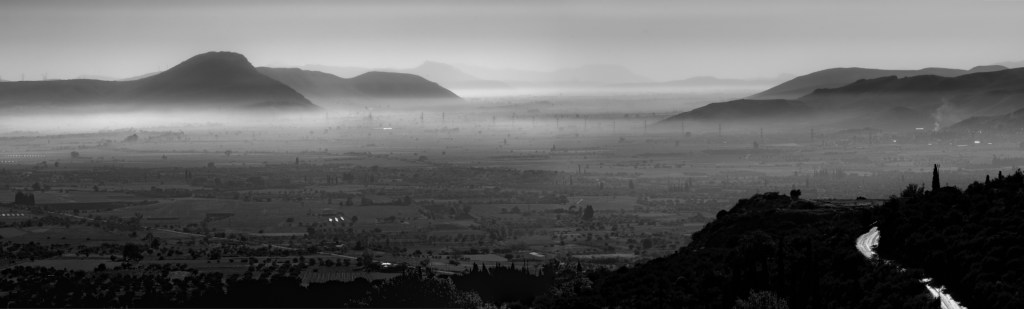
Nafplion – Greece, 2014

Epictetus was a philosopher born in 50 AD, so more than 400 years later than Plato. There are no writings left written by himself, only work written down by pupils. His main work is called the Discourses. He is a stoic, and his work revolves around self-knowledge, discipline, logic, and reason.

This is a quote that summons up his work, in my opinion: “It’s not what happens to you, but how you react to it that matters.”

Underneath, you can read the first chapter of the Discourses. It is not the nicest read; it is structured and dry, but it forces you to think carefully about what he writes and where he goes.

The Discourses

By Epictetus

Book One, Chapter 1

Of the things which are in our Power, and not in our Power

Of all the faculties, you will find not one which is capable of contemplating itself; and, consequently, not capable either of approving or disapproving. How far does the grammatic art possess the contemplating power? As far as forming a judgement about what is written and spoken. And how far music? As far as judging about melody. Does either of them then contemplate itself? By no means. But when you must write something to your friend, grammar will tell you what words you must write; but whether you should write or not, grammar will not tell you. And so it is with music as to musical sounds; but whether you

Day 2071, where we must travel

Day's pictures

Friedrich Nietzsche

Human all too human

223 Where we must travel. -Immediate self-observation is far from sufficient for getting to know ourselves: we need history, for the past flows on, through us, in a hundred waves; indeed, we are ourselves nothing except what we experience at every moment of this onward flow. And even here, if we want to descend into the river of what seems to be our most individual and personal nature, the saying of Heraclitus holds true: we do not step into the same river twice. This is a truth that has gradually become stale, to be sure, but that has nonetheless remained as powerful and nourishing as it ever was: just like the other one that says, in order to understand history, we must seek out the living remains of historical epochs-that we must travel, as the patriarch Herodotus traveled, to other nations-these are, in fact, only the solidified earlier stages of cultures, on which we can place ourselves-to so-called savage and half-savage peoples, especially, where human beings have removed or not yet put on the garments of Europe.

Day 2066, Meno.

Day's pictures

Athens – Greece, 2014

I always find it fascinating that these conversations were going on in Greece more than 2300 years ago. This is one of Socrates’s conversations written by Plato. The name of the person Socratis is talking to is Meno, and it is a discussion about virtue and if you can learn it or if it comes by nature. This is a link to the Wikipedia article: Meno, and this is a link to the book on Gutenberg.org where you can read the rest of the dialog.

[Meno] Can you tell me, Socrates, whether virtue is acquired by teaching or by practice; or if neither by teaching nor practice, then whether it comes to man by nature, or in what other way?

[Socrates] O Meno, there was a time when the Thessalians were famous among the other Hellenes only for their riches and their riding; but now, if I am not mistaken, they are equally famous for their wisdom, especially at Larisa, which is the native city of your friend Aristippus. And this is Gorgias’ doing; for when he came there, the flower of the Aleuadae, among them your admirer Aristippus, and the other chiefs of the Thessalians, fell in love with his wisdom. And he has taught you the habit of answering questions in a grand and bold style, which becomes those who know, and is the style in which he himself answers all comers; and

Day 2059, Despair.

Day's pictures

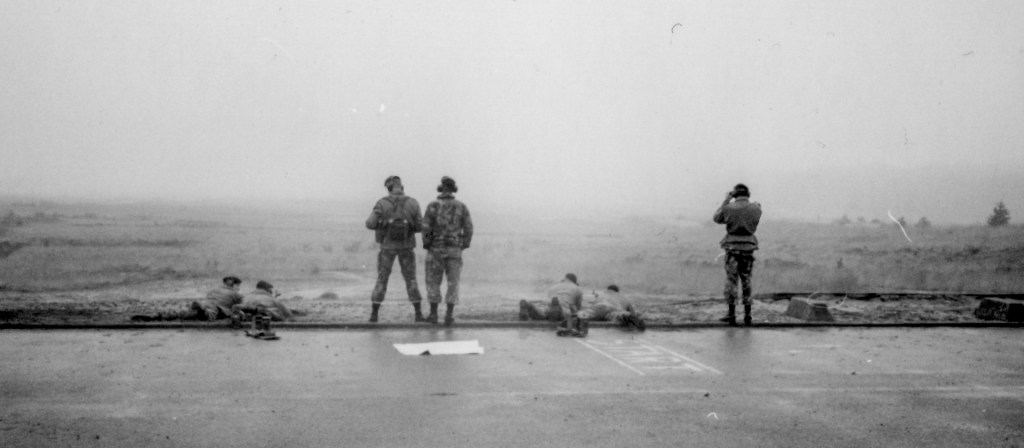
Slide film, 1996, Arnhem – the Netherlands

In many lectures about 20th-century philosophy, you will hear about Albert Camus. I have always been interested in his work, and through these lectures, I know quite a lot about him, but I have never read his books. I started reading Myth of Sisyphus, and today at work, I also started listening to a good audiobook of that book on YouTube.

You might have heard of Sisyphus; he is the Greek God that had to push a giant boulder up the hill over and over. This feeling of an endless drag, of pushing that boulder up the hill over and over again, or in our case: of getting up, eating, working, eating, sleeping, and getting up again, is demoralizing. Many people feel the despair of this and seek relief from that feeling. According to Camus, we have three options: 1 believe in an improbable God not for relief now but a better life after death, 2 suicide and 3, except the futility of life and live with it.

Day 2058, small

Day's pictures
Slide film, 1992, Rotterdam – the Netherlands

7 Learning to feel differently about space. – Is it the real things or the imaginary things which have contributed most to human happiness? What is certain is that the extent of the space between the highest happiness and the deepest unhappiness has been produced only with the aid of the imaginary things. This kind of feeling of space is, consequently, being continually reduced under the influence of science: just as science has taught us, and continues to teach us, to feel that the eanh is small and the solar-system itself no more than a point.

Friedrich Nietzsche, Daybreak – book 1

Day 2057, outside.

Day's pictures, Poetry
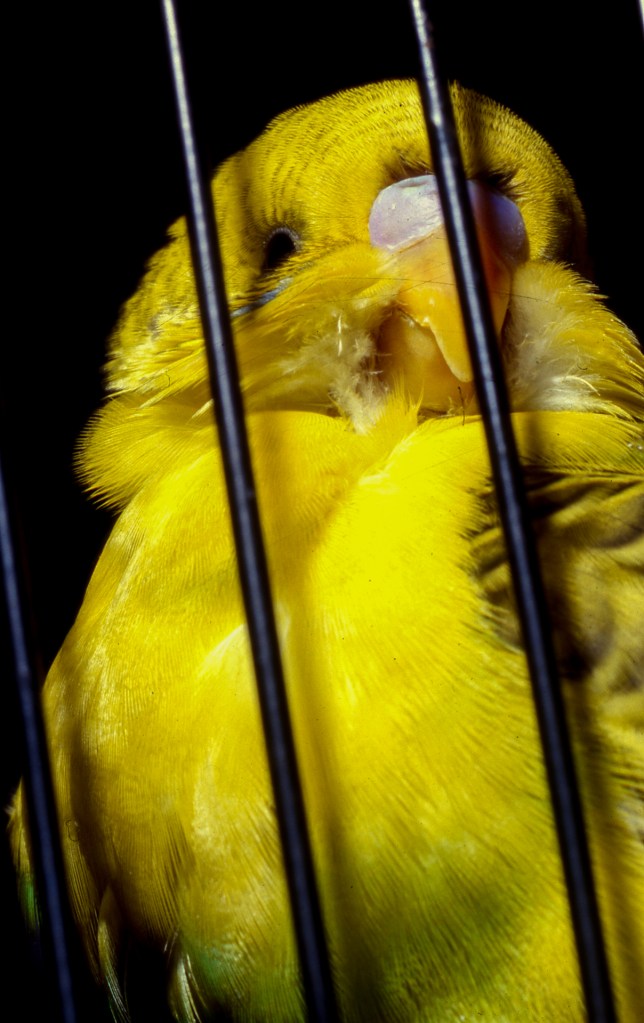
Slide film, 1996, Utrecht – the Netherlands

Are we not all sitting in a cage

a cage made of used to’s and I cant’s

~

I open my bird’s cage every day

most of the time they choose to fly

for a little while

~

I think my cage has been opened

I sure have felt like I could fly forever

maybe it’s been open all the time

but to be honest

I never really dared to look for that little door

to my outside