We start life midstream
on a current unknown

between the ocean and green
seemingly alone

not aware of the who’s
you are and will see

a journey for you
for now and until
the end
We start life midstream on a current unknown between the ocean and green seemingly alone not aware of the who’s you are and will see a journey for you for now and until the end

Yesterday I wrote that I wanted to start reading some of the books I have (read). I decided to start with Sapiens, from Yuval Noah Harari. It is a well known book that I read it a couple of years ago, well, I listened to it. I have listened to the first chapter today. I do this listening in the car and at work. Wile listening I sometimes get distracted and forget to pause, this is the reason why I didn’t mind listening to the book again. I took some notes this time, and after the first chapter I listened to it again in a faster speed. It is a good thing that I did that because I missed some parts again… Normally I don’t mind not getting it all in, but now I want to listen to it all I notice that that is not so easy. I am sure this will also happen when you read a book, but I was quite obvious now. I work as a carpenter, it is often impossible to concentrate on a book, but today the work didn’t need much attention, but I guess my mind wondered off at some point.
This is written on his website of Yuval Noah Harrari, a brief history of humankind.
Homo sapiens rules the world because it is the only animal that can believe in things that exist purely in its own imagination, such as gods, states, money and human rights.
Starting from this provocative idea, Sapiens goes on to retell the history of our species from a completely fresh perspective. It explains that money is the most pluralistic system of mutual trust ever devised; that capitalism is the most successful religion ever invented; that the treatment of animals in modern agriculture is probably the worst crime in history; and that even though we are far more powerful than our ancient ancestors, we aren’t much happier.
If you are interested in human history than I recommend starting with prehistory. How did people live before the periods we have some (written)information from. I find it interesting, and this book tells it without nonsense and it is reasonable up to date with the latest findings as far as I can tell. The way he writes tell me that he is a skeptical person, he tries to show different opinions but he doesn’t shy away from telling his own opinion. It is by no means a book that will tell you everything you need to know, it is a book written for a large audience and the ideas it brings are a good starting point for more research.
A few things that I realize better now are the facts that not only Homo Sapiens and the Homo Neandertalensis lived at the same time, but that there were other Homo … living also at the same time. We also pride ourselves of the big brain we have and that this is the reason why we are ahead of other animals, but we had that brain for 2 million years and didn’t do much with it. He writes that those “brains” were as capable as ours, they could in principle learn what we can learn if one would wake up now.
There is also a discussion about how we became Homo Sapiens. Did we replace the other species or did we breed with them. Most scientist prefer the so called replacement theory because this fits better with the idea that all humans are the same. The other idea is known as interbreeding and suggest that some Home Sapiens have DNA of other species that where living in the area they moved into. They now know that a lot of people in the west have some Neanderthaler DNA and people in other parts of the world carry DNA from other local, and extinct species. This is something I like to know more about.
Tomorrow I will write more about chapter one.

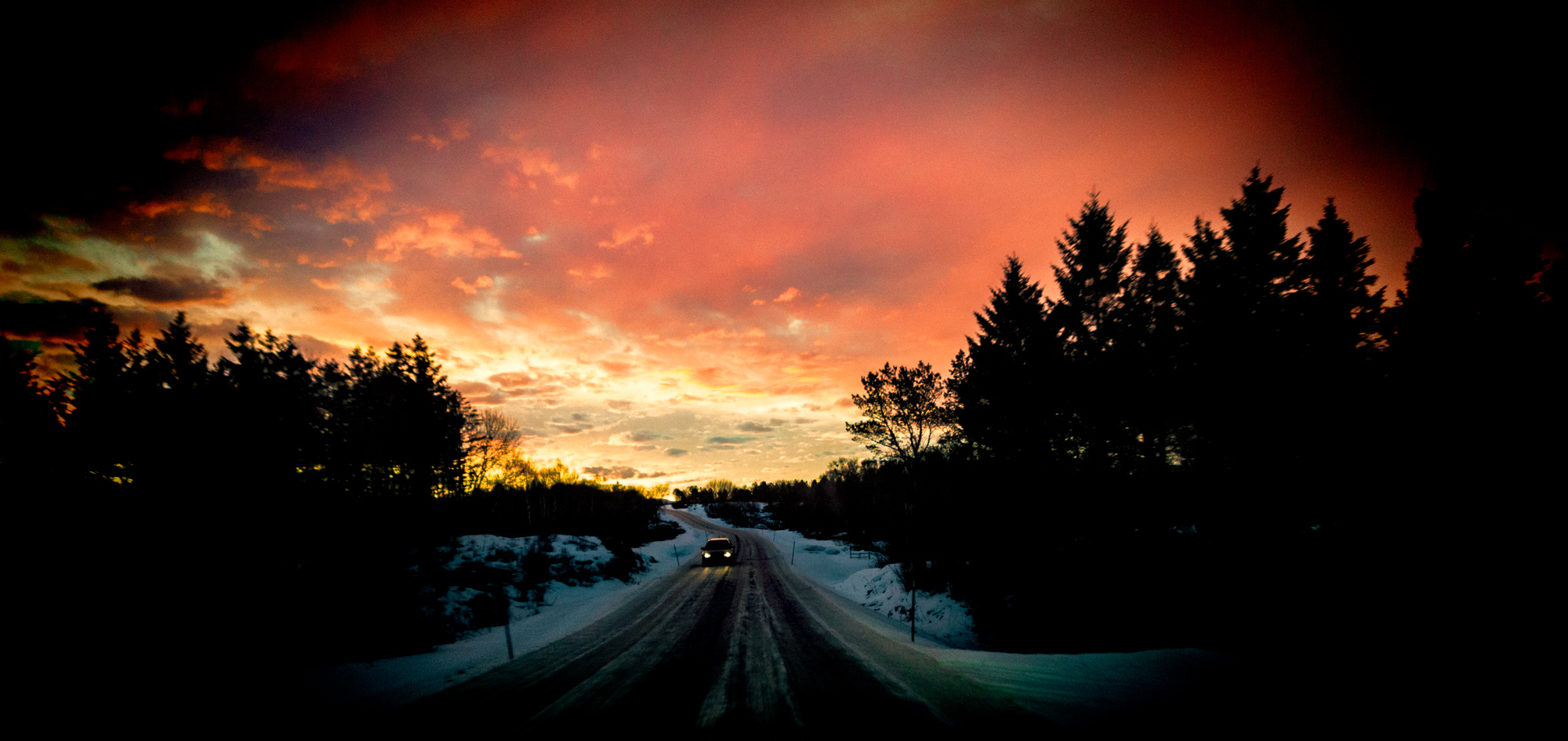
This time of the year we have beautiful sunrises and sunsets round the time we drive to work and back. The pictures from the last few days are made from the car with my phone, with some tinkering you can make something nice out of these phone pictures.
I also finished another book yesterday, how democracies die – what history tells us about our future from Steven Levitsky and Daniel Ziblatt. It is a n interesting book that gives a short overview of different political systems but mainly focuses on democracy and how it can slide into an authoritarian system or even become a dictatorship. The reason for this thorough introduction is the Trump government and where it fits on this gliding scale towards a more repressive regime. The authors claim that Trump shows all the signs of a wane be authoritarian ruler. Some of these signs are disrespecting your opponent and former rulers, something that can be expected during a campaign but not from a president in office. The same goes for harsh critique on the press or calling election result illegitimate.
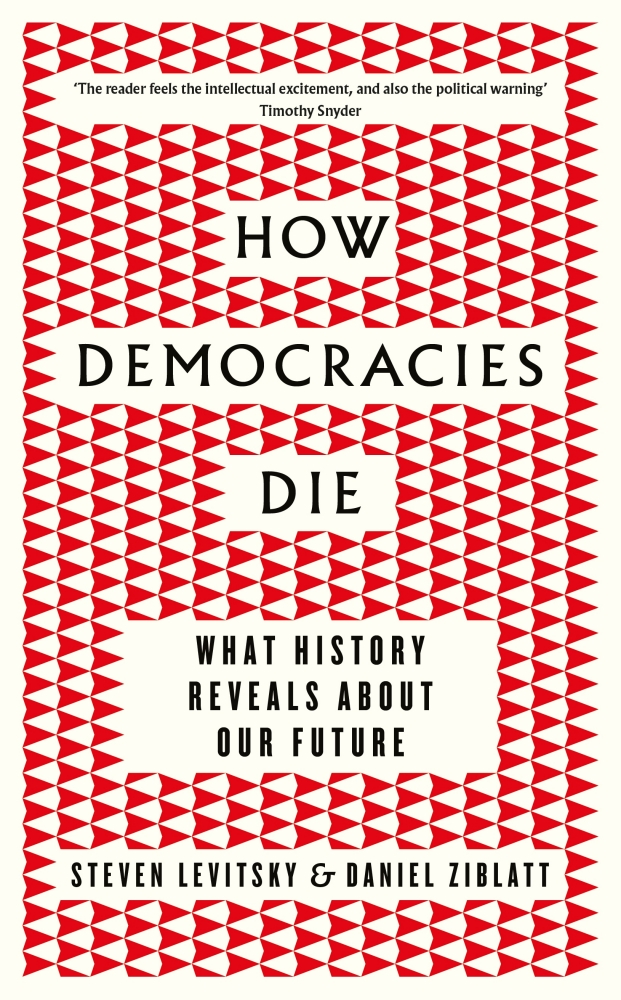 I don’t have to be convinced that Trump is a terrible president and as far as I know also a lousy human being, but this book gives a lot of examples from history where similar people came to power and slowly transformed the government into a more authoritarian regime like what happened in Russia and a lot of South American countries in the 70th and 80th. The conclusions they draw out of their research are for the most part somber because it is not only Trump that worries them but also the two parties that are getting more and more entrenched. Read the book, it’s worth it if you are interested in political history and would like to put the current regime in its rightful place in history.


This week I listened to the book: Antifa: The Anti-Fascist Handbook by Mark Bray. It is a good book, it starts with a more general history of fascism and anti-fascism going over in a more detailed history and description of anti-fascism in America and several European countries up till now. The last part of the book is about the modern day and especially Trump and the alt-right and how to react to those negative forces. It is not a handbook in the sense of a guide on how to start a Antifa group where you live. There are some tips and different activist give their opinions about the things you should and shouldn’t do. If you don’t know much about fascism and Antifa than this is a good book to start with.
 The thing I remembered most is a quote: (and I’m paraphrasing) “white is an ideology”. Meaning that calling yourself white is not an objective thing but related to an ideology, there were times that Jews and Italians were not seen as “whites” by racist. I always knew that, but this quote made it simple for me and might help me when debating (mostly ignorant) racist people. Explaining people why refugees come here, for instance, will often help them to understand it and except it.
The place where I live in Norway is small, around 3000 people live here and last year we got our “quota” of refuge’s. I have to guess but there are probably between 50 and a 100 people from Syria and from some African counties like Eritrea that came here last year. I have not heard any complains but that can be because of the people I hang out with, but I have not seen any signs of hatred let alone neo-Nazi’s. In the book it is mentioned that the Antifa in Norway more or less scared away the neo-Nazi groups but that’s not to say that there is no racism in Norway, it’s just not something people talk about.
So, for me there is not much to do if I wanted to be more active like protesting against neo-Nazi’s and racism. I keep it to writing about it even when only a handful of people read it and probably no one that disagrees with me. I do think it is important to read about it because racism sneaks in. Even in Holland the more progressive parties say thing nowadays that were taboo thirty years ago, they slowly move towards the right, pushing the right more towards the extremes. In this process the people also slowly move their moral compass towards the extreme-right, this is what happened in Germany in the thirties where decent, well educated people slowly closed their eyes and killed millions of people in gas chambers. And you might say that that will never happen here but that is what the people back than also sad. In America it is even scarier right now than I Europe, there government there discredits the news media and their political opponents and those tactics come straight out of a handbook for wannabe dictators, read your history.
 Nochrisis