Almost thirty years ago, I read about Spinoza for the first time, and he became one of my inspirations to dive deeper into the world of philosophy. Every now and then, I will get a reminder of why he inspires me so much, and this video is one of those.
I dare to say that without Spinoza, there would be no Nietzsche, maybe a little exaggerated, but not in my world where Nietzsche followed Spinoza. Here is a quote from Nietzsche from one of his letters.
“I am utterly amazed, utterly enchanted! I have a precursor, and what a precursor! I hardly knew Spinoza: that I should have turned to him just now, was inspired by “instinct.” Not only is his overtendency like mine—namely to make all knowledge the most powerful affect—but in five main points of his doctrine I recognize myself; this most unusual and loneliest thinker is closest to me precisely in these matters: he denies the freedom of the will, teleology, the moral world-order, the unegoistic, and evil. Even though the divergencies are admittedly tremendous, they are due more to the difference in time, culture, and science. In summa: my lonesomeness, which, as on very high mountains, often made it hard for me to breathe and make my blood rush out, is now at least a twosomeness.”
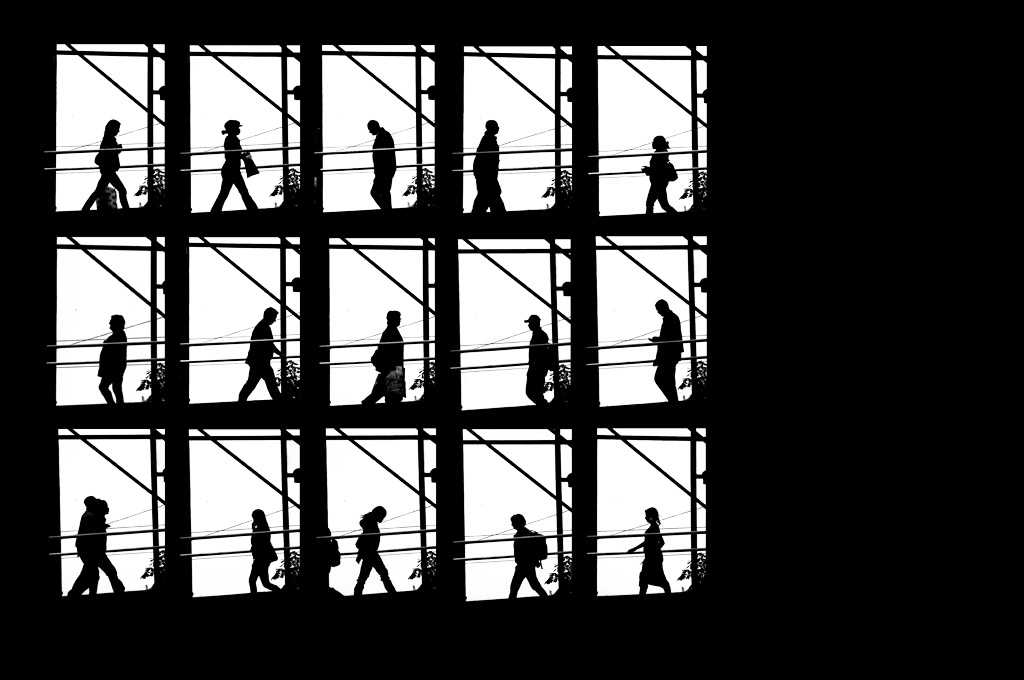
I recognize that shape from the past
it looks like stairs going up
but I am fooled before
and wonder if I ever
should even go there
The former Dutch prime minister is now the boss of NATO. He is warning everyone that we have to prepare for the next war. He is doing that because the warmongers in Washington told him to. Russia is doing the same, and China has joined the party too. I am pretty sure that most people don’t want war, especially not the one these so-called world leaders wish for, because the next war will probably cost half a billion people their lives. We, as outsiders, can do very little because a couple of thousand people, at most, decide our destiny. In the USA, there is a democracy, Russia has a strong leader and a very weak democracy, and China is a dictatorship. It does not really matter what kind of government there is; in the end, a handful of people always decide the destiny of the rest. It is frustrating, and it can make you angry. As an Anarchist, I just hope that in the distant future, we all live in small communities, so small that even if one produces a little dictator, he or she could do little harm to the communities around him let alone the world.
Governments are hiding places for people who wanna play Risk with real people; we are and always will be children, only our toys change. I never took any active part in our so-called democracy and hope no one does in the future.
Can you imagine that you lived a hundred thousand years ago? On a calm morning, you walk to the lake and look down into the dark water just before you put your hands in it to scoop so you can drink. You see a face, reflected, we might say now, a face like all the others you see around you, but this one is unknown.
These days, you see yourself more often. In the morning, in the mirror, and on pictures you have hanging around or on your phone. I am not sure if we really look at ourselves, but we know it is us that we see, though we probably have a hard time describing ourselves if we have to.
I have to be careful when discussing how important your looks are and how much it contributes to your self-image. I have had the same haircut and beard lengths for half my life. It was never a choice out of style but out of laziness and practicality. I can trim my hair and beard once a month and be done with it. It is a style I am used to, and it bothers me when my hair gets too long, partly because of how it looks, I have to admit, but also because I don’t like to trim it. I know enough people who pay more attention to their appearance; maybe because I have little to work with, I never really developed that urge.
Maybe because I was already partly bold and grey when I was twenty-five, I stopped seeing myself in the mirror as any competition in the particular world I was living in; there are standards, no matter where you live, and I didn’t meet them hair wise and didn’t care. Maybe not entirely because of this, but I started paying more attention to how I looked on the inside. To understand what beauty is inside, I started reading books that talk about this, and though beauty in this realm is also in the eyes of the beholder, we can all agree on what is ugly and what is not, even if it is not fashionable and politically correct.
The mirror in this inner world can be your consciousness. And just like in the real world, we often don’t look deep enough into the eyes we see reflected in the mirror. Maybe this is because of the attention you don’t give it or because you see the look you want to see, the one that is in fashion; the world’s approval is enough for you. Perhaps you are like that person who lived a hundred thousand years ago, and you never had a clear, calm morning when you looked down into a deep lake to see your reflection for the first time.
Disclaimer: these words are a work in progress, and I know from experience that I would write them differently tomorrow, but we live now, and this is how I say it now.
Yesterday, I wrote about the possible origins of war. When I write these pieces, I don’t devise a plan; I just count on myself to write what I think right now. What often happens is that my thoughts about the subject evolve while writing, so it can also be a surprise what my point is when I am done. I am not a scientist in the sense that I do extensive research and fieldwork to gather data and, from there, a theory about a problem, one that I stated at the beginning. I am curious and know that what my opinion is; it is probably nonsense or just vaguely hitting some truths. So today, I searched on the internet for some academic papers about wars and whether we homo-sapiens made it up when we had already evolved into what we are now or if we inherited this trade. I may think more like an old-fashioned philosopher who searches for solutions and problems (either order will work) while sitting in an armchair, but these scientists might be strict and rigorous in their methods, they also disagree with each other, even with all their theories and proofs. It is not a practical science where a big bang clarifies that that recipe didn’t work or a pill cures or not. My first thought after reading and browsing through some of these papers was that they should do some interdisciplinary work. A philosopher and psychologist might have some helpful input. But they might have already done that. This kind of research reminds me of the time when we tried to dive as deep as possible without scuba gear; the deeper you get, the more you get overwhelmed by the thought of suffocating; the deeper you dive into this material, the more you realize that there is too much information to consider, you struggle to get deeper out of pride and want to get air out of cowardice.
The following is a quote from a scientist named Luke Glowacki. I read most of his paper, and though I don’t know where he stands in his field, he seems legitimate and a real scientist.
“Abstract: The role of warfare in human evolution is among the most contentious topics in the evolutionary sciences. The debate is especially heated because many assume that whether our evolutionary ancestors were peaceful or warlike has important implications for modern human nature. One side argues that warfare has a deep evolutionary history, possible dating to the last common ancestor of bonobos, chimpanzees, and humans, while the other views war as a recent innovation, primarily developing with the rise of sedentism and agriculture. I show that although both positions have some support warranting consideration, each sometimes ignores uncertainties about human evolution and simplifies the complex reality of hunter-gatherer worlds. Many characterizations about the evolution of war are partial truths. Bonobos and chimpanzees provide important insights relevant for understanding the origins of war, but using either species as a model for human evolution has important limitations. Hunter-gatherers often had war, but like humans everywhere, our ancestors likely had a range of relationships depending on the context, including cooperative intergroup affiliation. Taken together, the evidence strongly suggests that small-scale warfare is part of our evolutionary history predating agriculture and sedentism, but that cooperation across group boundaries is also part our evolutionary legacy.”
I also read a paper by Guy Massie. I don’t know him either, but he is also interesting and more scientific than I ever will be.
“Abstract: Much of the academic literature written about the First World War has tended to revolve around questions of diplomacy, foreign policy, and the International System as it existed in Europe in the decades before the war began. To balance this, I analyze the intellectual history of evolutionary thought as it applied to the question of war, peace, and the alleged “pugnacity” of man before and during the war years. Many people viewed the world of international conflict through the lens of socio-biological progress and a “struggle for existence” among humans, nations, and races. By identifying three broad intellectual trends, I argue that these evolutionary narratives of the war question were diverse. Some used the language of human evolution to argue that war was an inevitable engine of progress whereas others stressed different concepts in evolutionary science, such as cooperation, to make pacifist arguments. A third school of thought, the pessimists, argued that man was inherently warlike but that this instinct could be tamed. As the centennial anniversary of the July Crisis and the beginning of the First World War approaches, it is worth investigating the ideational “mood” of the era and the intellectual climate which allowed for such a devastating war to take place.”
I have no real attachment to celebrating the new year. When I was young, it was exciting to buy fireworks and search for leftovers long into the night. Later, I had work where I had to work on those days, and as an anarchist, I can’t help but see the relativism of all these celebrations. And I don’t know why that one day a year is chosen as some kind of turning point, mainly because most of the time, maybe all of the time, real changes happen on entirely arbitrary days. All these traditions come from your surroundings and are fed and seen mostly uncritically, the same traditions that make us anxious about foreigners and let us see women as something other than men, to name just two of the more nasty ones. Traditions are fascinating when you read about them in a history book.
A part of relativizing your own (made-up) culture is realizing that what is normal for you is not normal for others.
We all know ourselves; no matter how old you are and how much attention you pay to who you are, each day will make you more confident in your beliefs about yourself. We can talk about ourselves, where we come from, and how we grew up. Important experiences that we remember, some might say that they have formed us. If you know this and pay attention, you might understand that our past is essential for who we are today and our future choices. So I ask you, are you in charge of your future choices, or is it your past?
I am watching this video now, just over halfway. It’s just amazing how stupid ideas can captivate billions of people. It gave me an idea for a book about all the stupid ideas and people that have shaped our history. Religion is maybe the biggest mistake, but there are enough other stupid ideas like race and nationality. Imagine if some low-life painter never thought that a group of people were evil and needed to be erased. Or the war before that when a fool who believed in borders and groups killed a leader of another group and thus started the First World War that caused the Bolshevik Revolution and the Second World War that was followed by the Cold War that ended with a frustrated KGB officer who invaded a sovereign country 30 years later. Stupidy is the cause of a lot of suffering, and I have to admit that it is hard to know if you yourself are doing something stupid, but something should be learned from looking back.
I am a skeptic. I started asking questions when I started talking 50 years ago. I think that 99% of all the questions I ever asked were directed to myself in my head. Of all those questions I ever asked myself, I would guess that the top ten questions get asked over and over again as if we are addicted.
I found my reasoning, for my reasoning some years ago. As a good skeptic, I have learned the pitfalls we can step into if you let your mind go unattended. Reading Greek philosophers will get you a long way, and after that, there are endless philosophers and other thinkers who have put our behavior under a microscope. We are good at believing the things we live with, the thoughts that have been with us for a long time, and the stories we hear around us. Questioning yourself, your life, and the people around you who live the same direction is hard; saying goodbye to a world you know and know is not true because it claims to be true is hard.
Being skeptical and act on the consequences is not something you choose. I never wanted to ask all these irritating questions, as my siblings and friends did when they were 6 and 7, but it ebbed away in them. You can train to become more skeptical, but we all know it is primarily a character trade, a gift from nature like red hair or brown eyes. Most people are not skeptical or don’t act if the answers tell them to go another way; they are skeptics but of the cowardly kind.
So, I am skeptical about writing about this, about hoping it might change a few minds. As I said before, you can read and get educated by starting at the beginning of philosophy. These books have been lying around for thousands of years with little effect besides on a few who are already believers. What will my mediocre writing add to what is already said? I do it for the most part for myself. It keeps my mind organized, and it also keeps my faint hope that I will one day know what to write alive. And be honest, would it not be the best for this world if everybody wrote their ideas in a blog that no one reads.
I don’t know why I expect there to be a manual that explains how to live life. It seems that no one has written a convincing one, though it would be helpful to get one when you turn eighteen, for instance—a manual containing a what-to-do list, a FAQ section, and a troubleshooting chapter. And I know that thousands of religions and so-called truth-tellers tell their stories and make their manuals for how to live, but that is like having an endless amount of manuals for how to turn on your TV and switch channels. I guess that only the creator of the TV can make the correct manual, and we obviously don't have a creator. For me, it's amazing that so many people act as if they know, or do they just pretend like I do to get by? I wonder what life would be like if we all had learned from the beginning that finding a way (together) is better than leading the way.
Being honest with yourself is the most frustrating thing. I still remember the first time I learned something new that put what I thought before to shame. Maybe you have had that too; you were so sure about a fact of life, an important life choice, or your self-image that it got turned around to the point that you don’t understand you could have ever thought differently, let alone the way you felt before, the day before. I have had these moments in my life, and though I have gotten new beliefs instead of the old ones, the new ones stand on shakier ground. What if these new beliefs are also wrong? I didn’t doubt myself before, so the absence of doubt now is not a guarantee anymore.
If you are honest with yourself, you know that your opinions are not worth much. This strong opinion that I have about this subject is caught in some kind of contradiction. I have to doubt my opinion, which you have to doubt.
I have always known that life is just a play, and we all play a role. Most people probably don’t know that they play a role and that the script is handed to them when they are born. When I was around 16, my favorite teeshirt was one with Freddy Mercury on it with big letters saying “The Great Pretender.” Back then, I already knew that something fishy was going on, that I was just playing my role, one that people seemed to expect, or at least I thought they did. But it took another 10 years before I knew that what we think is true is just that, we think it is true, and the role I play is just that.
I am in a conundrum. I don’t believe that we have free will. What I mean by this is that we are born into certain circumstances that determine who we are for the rest of our lives. If you are a curious toddler, you will probably be curious for the rest of your life, especially when it is encouraged. If you don’t like learning history at school because it didn’t interest you, you might never pick up a history book in your free time when you are an adult. We are all different but stay the same for most of our lives. Remember your old friend, the one you have not seen in 30 years, there’s not much changed underneath besides the clothes and 30 years of history they wear.
So, I don’t believe in free will and that it is possible to really change another person. We are all a certain way; we have a character and a personality that is recognizable and belongs exclusively to us. We don’t change easily, like our eating habits or how to quit smoking, though that last one borders on an addictive personality that you will never get rid of; you can only replace this bad habit with another in most cases.
There is no free will, so I am doomed to try to figure out through study how we function and find a method to change the other. I am unsure if I want to change the other; many philosophers study life for the sake of studying and acquiring knowledge. I tell myself that I do it just for fun, like an addiction; I know theoretically that I can’t change others because we are determined, and I also live a life. I have a girlfriend, colleagues, and family, and am a boss. None of these people listen to what I want them to do. They just oblige me sometimes till I am around the corner again.
I cannot tell someone to have some discipline because discipline helped me through some rough spots in life if these people I want to help have no discipline. I cannot tell a coworker to be more accurate when they have never been accurate; I can only find another job for them to do.
The funny thing is that these kinds of awareness were already there three or four thousand years ago. People have always tried to find ways to make all of us better by offering wise tips on how to live a good life. They did this through secular means, and some religions even try to improve society here on Earth through helpful tips and tricks. And we live better together now than three thousand years ago, not by much, but we do. But I don’t think it comes because of the so-called lessons we have learned from history through actively studying it, with conclusions that we can use to teach the next generations. I think we learned like we do when we live in a new house, when we go to the toilet at night in the dark and bump our toes and knees at random corners. After a while, we avoid the corners while we sleepwalk to where we can relieve ourselves.
Humanity learns to walk like a baby does, and what can you teach a baby? You can only encourage it with gestures and sounds because the rest has no meaning to them.
They say that hunter-gatherers lived a pretty healthy life. They walked a lot, saw a lot, ate many different kinds of food, and, most of all, they lived in small groups. They moved from one era to the next, leaving enough animals and plants behind so they could return a few seasons later or another tribe could move in. Even among hunter-gatherers, there were centers of worship and meeting places, but no one stayed long enough to claim a throne or dictate a need. You might say that we all should live like that now, in 2024, with no large-scale politics, wars, or large companies where you are not more than a replaceable drone.
I suspected a problem, and that is space. If I remember correctly, a group of roaming gatherers and hunters needs around 400 times more space for their food supply than an agricultural society.
I asked the AI and this was the answer it gave: “Estimating the number of hunter-gatherers that could live on Earth involves various factors, including available resources, land use, and population density. Historically, hunter-gatherer societies typically required large territories to sustain themselves, as they relied on wild plants and animals for food.
Research suggests that a sustainable hunter-gatherer population density might range from 1 to 10 people per square mile, depending on the environment and resources available. Given the Earth’s land area of about 57 million square miles, this could imply a potential population of anywhere from approximately 57 million to over 570 million hunter-gatherers, assuming all land is equally suitable for such a lifestyle. However, it’s important to note that this is a theoretical estimate and does not account for current land use, urbanization, and agricultural practices that dominate today’s world”.
So, even if this answer is not completely accurate, it makes sense that no more than half a billion people could live as hunter-gatherers. There is no way that we can go back, even if we wanted. It would be a cool movie if we tried it. Maybe the other 7 billion go into hibernation with a VR set on, and we take turns. The movie should play a thousand years after we started this experiment. Can you imagine the overgrown cities where only the libraries are lit and airconditioned so all the knowledge we once had is still there to cherish and ignore as we do now?
We've all been in a line
upwards
to a horizon
counting the steps we take
as if we count for something
Infinity was, for a long time, a philosophical concept. We now live our lives as if we live forever, having a handful of genuine experiences at the end, where the rest is just meaningless time between these events, meaningless like a single drop is in a stream going down, part of it all but also not. We live as if life has no value because we still cannot believe that this is it; you don’t wash away hundreds of generations of indoctrination in the big promise of an afterlife or reincarnation.
They say that democracy is the best of all the bad ways of governing a large group of people.
It is mainly known as a quote from Churchill, but in the full quote, he admits that the source is unknown to him: “Many forms of Government have been tried and will be tried in this world of sin and woe. No one pretends that democracy is perfect or all-wise. Indeed it has been said that democracy is the worst form of Government except for all those other forms that have been tried from time to time.…” (Churchill by himself)
Xenophobia, fear and contempt of strangers or foreigners or of anything designated as foreign, or a conviction that certain foreign individuals and cultures represent a threat to the authentic identity of one’s own nation-state and cannot integrate into the local society peacefully. The term xenophobia derives from the ancient Greek words xenos (meaning “stranger”) and phobos (meaning “fear”). Xenophobia implies the perception that not only is it impossible for certain people designated as foreign to integrate into one’s own society but also that they pose a threat to the integrity of that society. (https://www.britannica.com/science/xenophobia)
The people who murdered in the name of the state just wanted a better life. They voted for the man with big ideas and were unaware of the path this blind obedience takes them. Their lives while working in a slaughterhouse for humans were not different than their lives when they worked in a slaughterhouse for animals. Daily life is daily life; we all filter out the world we don’t want to see.
We are all different in how we look and what we’ve been through and somewhat different in our wants and needs. Some of us want to find our own way, and others just want to follow. Most of us fall somewhere in between. We have to live together knowing that a quarter of the people in our society have no problems rounding up their neighbors if they are ordered to when shame is taken away. Those are the people who have no rationale for why they obey the strong man, the man who knows “the right words.”
Do you obey?
The aim of totalitarian education has never been to instill convictions but to destroy the capacity to form any.












 Nochrisis