
When you hit it wrong
but keep on going
you will eventually bend
the point
you were making
When you hit it wrong but keep on going you will eventually bend the point you were making

I sometimes read
the temperature of a room
wrong

so I say
but I know
I never looked at the damn thermometer

Is it luck that a branch
of a tree
grows
to where the sun is

I wish I had such a nice
and round
filter

“Life is a series of natural and spontaneous changes. Don’t resist them; that only creates sorrow. Let reality be reality. Let things flow naturally forward in whatever way they like.”
Lao Tzu

7 The error of free will. Today we no longer have any pity for the concept of “free will”: we know only too well what it really is–the foulest of all theologians’ artifices aimed at making mankind “responsible” in their sense, that is, dependent upon them. Here I simply supply the psychology of all “making responsible.”
Wherever responsibilities are sought, it is usually the instinct of wanting to judge and punish which is at work. Becoming has been deprived of its innocence when any being-such-and-such is traced back to will, to purposes, to acts of responsibility: the doctrine of the will has been invented essentially for the purpose of punishment, that is, because one wanted to impute guilt. The entire old psychology, the psychology of will, was conditioned by the fact that its originators, the priests at the head of ancient communities, wanted to create for themselves the right to punish–or wanted to create this right for God. Men were considered “free” so that they might be judged and punished–so that they might become guilty: consequently, every act had to be considered as willed, and the origin of every act had to be considered as lying within the consciousness (and thus the most fundamental counterfeit in psychologicis was made the principle of psychology itself).
Today, as we have entered into the reverse movement and we immoralists are trying with all our strength to take the concept of guilt and the concept of punishment out of the world again, and to cleanse psychology, history, nature, and social institutions and sanctions of them, there is in our eyes no more radical opposition than that of the theologians, who continue with the concept of a “moral world-order” to infect the innocence of becoming by means of “punishment” and “guilt.” Christianity is a metaphysics of the hangman.
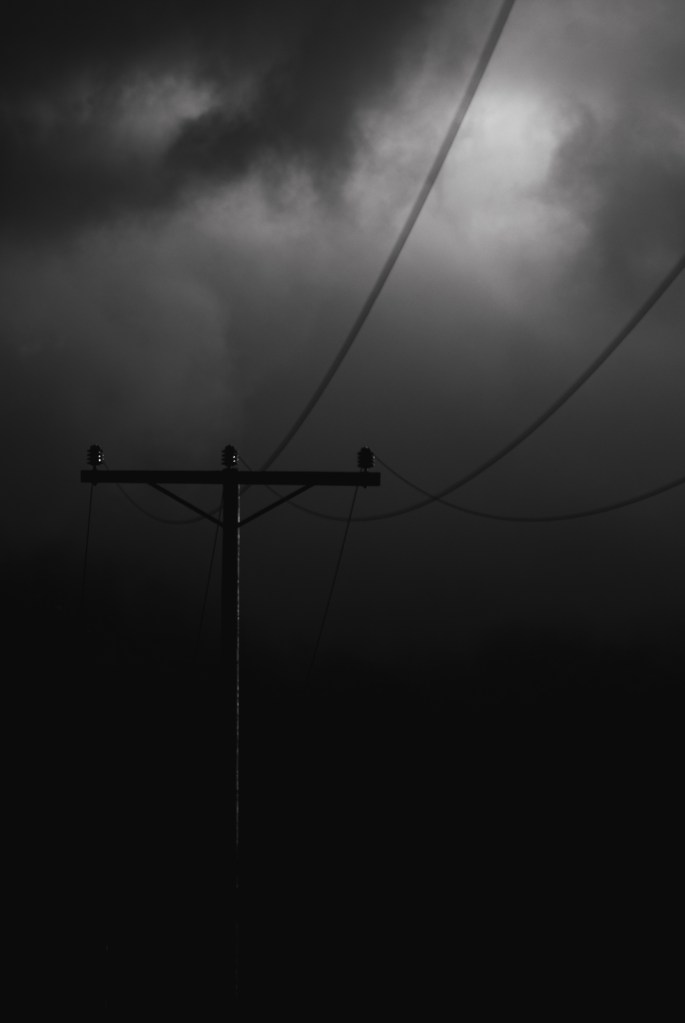
I stand here
carrying what never will be
mine

you

you who I never know
you give me power
but not for me

you don’t even know
and not because it disappears
in the darkness
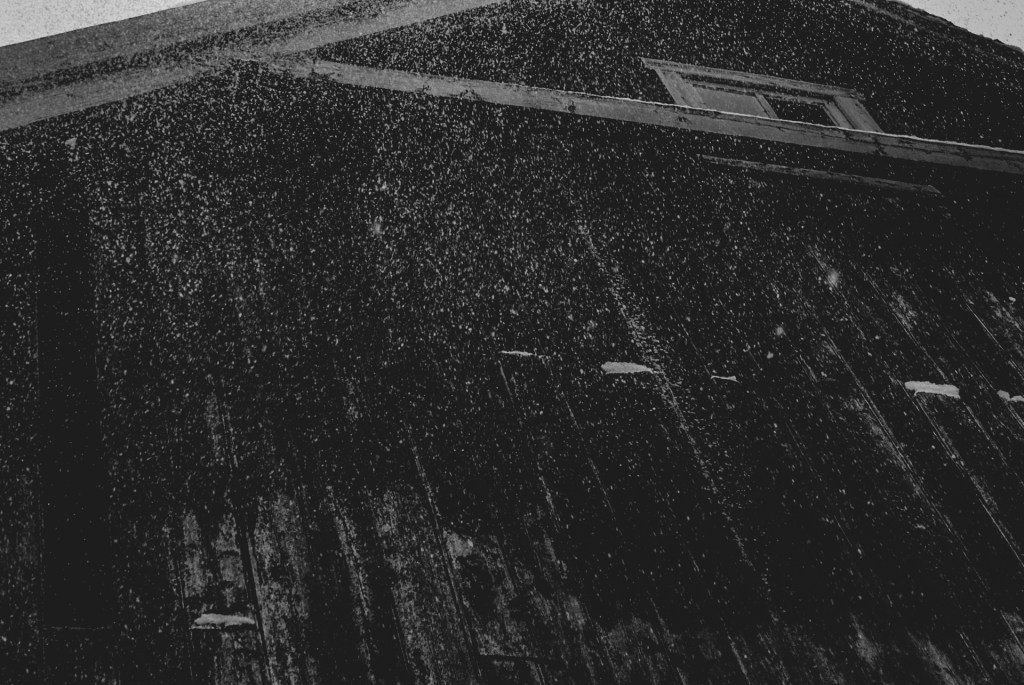
The snow was falling
in front of a dark background
the contrast pronounced

the snow was melting on my skin
now looking up
I enjoyed it even more
like you do
in those few
first seconds

the snow came down alone
but together they fell
landing on a dark soil
were only the first

This house was empty
empty for a long time

the outside leaked through the cracks
the doors never used
stuck

only the dark attic
gave me alone
to be with myself

Do we have the power to lift ourselves up?

I am afraid we can't. Like the crane in this picture: powerful, tall, and mighty but incapable of lifting itself up, it can only lift a crane like itself like we can another.

And the crane is not weak for this failure; sure, it gets its power from somewhere else, but besides that, it can move around, stand strong against nature, and counters the loads it carries with flair.

The crane is a mighty structure for what it's made for.

I feel stronger than my father
succeeding him
on his way down

I met him
in my nightmare
all those years ago

it is not his presence
but his essence
that haunts me
besides me

it is sad
that I never met him
as a child

maybe we could have
been friends

An old painting
worn out
of a memory
not mine
but I have it
197 What binds and divides. -Doesn’t what binds human beings together-an understanding of their shared utility and liability-lie in the head, and in the heart what divides them -their blind selecting and fumbling in love and hate, their tendency to turn toward one at the expense of all others and their resultant contempt for general utility?
236 Two sources of goodness. -To treat all human beings with an equivalent benevolence and to be good to them without differentiating among persons can be just as much the emanation of a deep contempt for humans as of a fundamental love for humans.
281 Doors. -Like the man, the child sees doors in everything that it experiences or learns: but for the former they are entrances, for the latter always only passageways.

Through the early winter
into the long night

I survived by the grace
of the place I ended
hanging by a thread
in just enough light
for my dying
conscious
rotten
corps

the coming spring will never
let me bloom again
but that is just a fact

The Guardian, Today.
Can you imagine that meeting at Exxon’s headquarters in the seventies: “Fuck it, let the world burn down; it will only hurt our grandchildren, so why would we care. Make sure that this gets buried. Next point on the agenda, pay raises for us…”
Nietzsche was worried about the future because he saw the first signs of Nihilism in his time. Nihilism was also described in books written by Dostoyevsky at the end of the nineteen hundreds, around the same time that Nietzsche started writing about it. In short, you could say that Nihilism means the belief that there is no meaning to be found in life, and thus, everything is aloud. The scientific revolution had already eroded the belief in a God with its fatherly control by his time. Nietzsche, an atheist, realized that humanity was not ready to live without parental supervision. World war I and especially 2 have proven this suspicion, but a newspaper article like the one above also shows that we are still not capable of thinking for all of us but mainly for ourselves. Don’t be fooled by the seemingly religiosity of some people these days. They are also under the spell of Nihilism, their religion is tailored to fit their personal needs, and there is no fear in these people of a disagreeing God.
It is not easy to find meaning in a meaningless world. In a few million or billion years, the son will swallow the world, and we will all be forgotten by the universe. We have to give meaning to it ourselves, and as a grownup, we should be capable of finding pleasure in the idea that our children and their children and our neighbors and their neighbors will thank us one day, when we are long gone, for the world we left them.
“Nihilism appears at that point, not that the displeasure at existence has become greater than before but because one has come to mistrust any “meaning” in suffering, indeed in existence. One interpretation has collapsed; but because it was considered the interpretation it now seems as if there were no meaning at all in existence, as if everything were in vain.” Fredrich Nietzsche
“There is no other world. Nor even this one. What, then, is there? The inner smile provoked in us by the patent nonexistence of both.” Emile M. Cioran
“The modern mind is in complete disarray. Knowledge has stretched itself to the point where neither the world nor our intelligence can find any foot-hold. It is a fact that we are suffering from Nihilism.” Albert Camus

If you have to vent
try to do it colorful
 Nochrisis