
I once lifted you up
while I was waiting to be alone
I once lifted you up
while I was waiting to be alone

The sun doesn't set
when you are high enough

In the distance sea
I live

I've seen these mountains a thousand times
from the window where I stand
and only the clouds
change them

What are the mountains waiting for?

A forest moves
while the spirit is not

I drove through the town
one I knew from long ago

and I still do know
but from a distance
And suddenly
I like suddenly
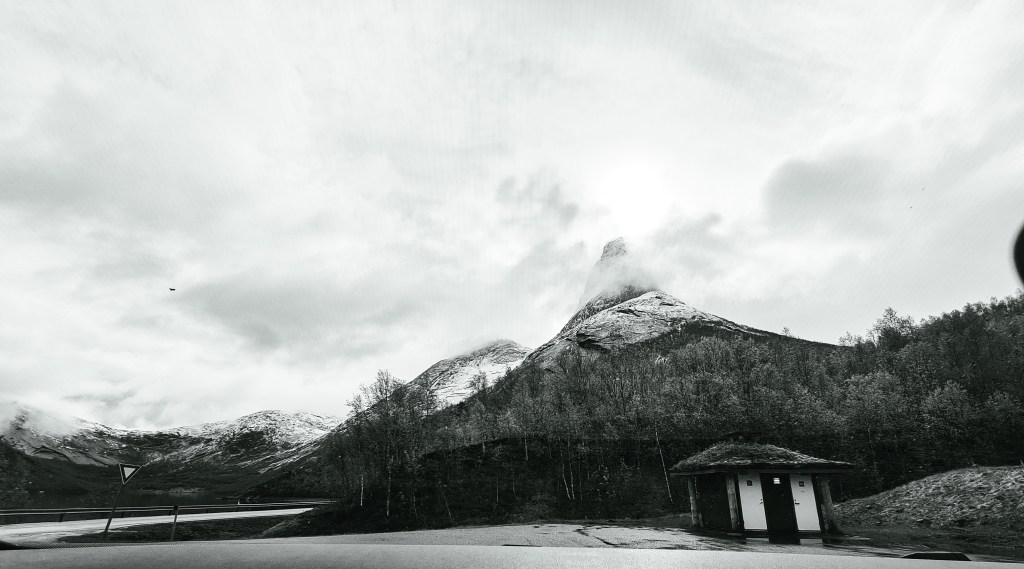
Mountains, a road, and a public toilet
what more do you want
Moving is exciting
even if you don't know you are

On one side I can lean against the earth
on the other against you
the sea
ebb and flow
the salt

I move life like tetris blocks
making it fit
while it's coming down
and going up
It's hard to see
the speed
that changes us

The primitive, uncultivated undeveloped mall finds himself abroad among Lions, Tigers, Hyenas, Orang-Outangs, Gorillas, Reptiles, and insects, all making war — (no — not making war — they have not sunk so low), but from the unregulated instinct of self-preservation, and the pressure of conditions, all preying upon each other.
The same instinct prompts them to herd together, for mutual protection against outside aggression. Having once formed a tribe or clan, Clanship becomes looked upon as the warrant for safety, and all outside of any particular clan or tribe become, by degrees, ranked as enemies, aliens, or foreigners, to be weakened, conquered, or exterminated; and he who proves most expert in the work of murder or of plundering the outsiders, is considered the one most fit to secure and administer peace, justice, and true order within his own tribe, and is at once proclaimed as the great Matiambo, Moene, Chief, King, or President of the tribe or clan.
‘There being, as yet, no constitutions, no legislatures nor Courts to regulate the internal affairs of the Clan, this great Matiambo is, they think, a necessity, and it is equally a necessity, that, having a Matiambo, every one should render unhesitating obedience to his will, or all would be “anarchy and confusion.”
Read the rest here: https://theanarchistlibrary.org/library/josiah-warren-true-civilization
WHAT is patriotism? Is it love of one’s birthplace, the place of childhood’s recollections and hopes, dreams and aspirations? Is it the place where, in childlike naivete, we would watch the fleeting clouds, and wonder why we, too, could not run so swiftly? The place where we would count the milliard glittering stars, terror-stricken lest each one “an eye should be,” piercing the very depths of our little souls? Is it the place where we would listen to the music of the birds, and long to have wings to fly, even as they, to distant lands? Or the place where we would sit at mother’s knee, enraptured by wonderful tales of great deeds and conquests? In short, is it love for the spot, every inch representing dear and precious recollections of a happy, joyous, and playful childhood?
If that were patriotism, few American men of today could be called upon to be patriotic, since the place of play has been turned into factory, mill, and mine, while deafening sounds of machinery have replaced the music of the birds. Nor can we longer hear the tales of great deeds, for the stories our mothers tell today are but those of sorrow, tears, and grief.
What, then, is patriotism? “Patriotism, sir, is the last resort of scoundrels,” said Dr. Johnson. Leo Tolstoy, the greatest anti-patriot of our times, defines patriotism as the principle that will justify the training of wholesale murderers; a trade that requires better equipment for the exercise of man-killing than the making of such necessities of life as shoes, clothing, and houses; a trade that guarantees better returns and greater glory than that of the average workingman.
Gustave Hervé, another great anti-patriot, justly calls patriotism a superstition–one far more injurious, brutal, and inhumane than religion. The superstition of religion originated in man’s inability to explain natural phenomena. That is, when primitive man heard thunder or saw the lightning, he could not account for either, and therefore concluded that back of them must be a force greater than himself. Similarly he saw a supernatural force in the rain, and in the various other changes in nature. Patriotism, on the other hand, is a superstition artificially created and maintained through a network of lies and falsehoods; a superstition that robs man of his self-respect and dignity, and increases his arrogance and conceit.
Indeed, conceit, arrogance, and egotism are the essentials of patriotism. Let me illustrate. Patriotism assumes that our globe is divided into little spots, each one surrounded by an iron gate. Those who have had the fortune of being born on some particular spot, consider themselves better, nobler, grander, more intelligent than the living beings inhabiting any other spot. It is, therefore, the duty of everyone living on that chosen spot to fight, kill, and die in the attempt to impose his superiority upon all the others.
The inhabitants of the other spots reason in like manner, of course, with the result that, from early infancy, the mind of the child is poisoned with bloodcurdling stories about the Germans, the French, the Italians, Russians, etc. When the child has reached manhood, he is thoroughly saturated with the belief that he is chosen by the Lord himself to defend his country against the attack or invasion of any foreigner. It is for that purpose that we are clamoring for a greater army and navy, more battleships and ammunition. It is for that purpose that America has within a short time spent four hundred million dollars. Just think of it–four hundred million dollars taken from the produce of the people. For surely it is not the rich who contribute to patriotism. They are cosmopolitans, perfectly at home in every land. We in America know well the truth of this. Are not our rich Americans Frenchmen in France, Germans in Germany, or Englishmen in England? And do they not squandor with cosmopolitan grace fortunes coined by American factory children and cotton slaves? Yes, theirs is the patriotism that will make it possible to send messages of condolence to a despot like the Russian Tsar, when any mishap befalls him, as President Roosevelt did in the name of his people, when Sergius was punished by the Russian revolutionists.
Read the rest here: https://theanarchistlibrary.org/library/emma-goldman-patriotism-a-menace-to-liberty
Thus the sands of life run out and the best of friends hear and see nothing of each other! Aye, the trick is no easy one-to live and .Yet not to be discontented. How often do I not feel as if I should like to beg a loan from my robust, flourishing and brave old friend Rohde, when I am in sore need of a “transfusion” of strength, not of lamb’s but of lion’s blood. But there he dwells away in Tubingen, immersed in books and married life, and in every respect i accessible to me. Ah, dear friend, to live for ever on my own fat seems to be my lot, or, as every one knows who has tried it, to drink my own blood! Life then becomes a matter of not losing one’s thirst for oneself and also of not drinking oneself dry.
 Nochrisis