
They were all stuck there
trapped in their own history
swearing at mirrors

I like to believe that humans think the same way now as we did 50000 years ago. With thinking, I mean the strength of it, the speed, what we can accomplish with it. If it is possible to develop a good IQ test, we wouldn’t do much better now than someone living all those years ago, someone who’s figuring out how to crack the right stone to get a knife out of it. We have a much larger well of knowledge right now, which can aid us, making it appear that we are much smarter. On the other hand, there are probably not more than a 100 people who are living in modern houses right now who can make a good flint knife, and only because they studied it and not because they figured it out by themselves. All I want to say is that there were also Einsteins living at the beginning of our civilization; the only difference is that they lacked the instruments and wealth of knowledge collected and written down that they could build their theories on, and most of all, they lacked any means to let us modern people know what they knew. We have this wealth of apparent knowledge, and we all know more on average than someone living a hundred years ago, but that doesn’t mean we are smarter, let alone that we make better decisions.
Humans are the product of many millions of years of evolutionary development, and how and why we think the way we do is still not completely clear. It is clear that on an evolutionary timescale, some form of consciousness just happened a second ago, and from the first caveman to me writing this is measured in milliseconds. Thinking in the sense of explaining ourselves also plays a minor role in our daily business, so to speak. We often react and come up with a reason for why we reacted that way after the fact. The words we use function more as bandages in many cases. An example of a trigger we inherited is that most of us jump from sudden movements in our peripheral vision because millions of evolutionary years have “learned” us that jumping is better than not jumping. After all, the jumpers get bitten less by that nasty snake crawling on their path and live to tell the tale. Many of our behaviours exist because they are part of millions of years of evolution. Before we had words, writing, and laws, we already had thoughts in the form of feelings that drove us and made us jump out of fear for crawling creatures, but for thousands of years, we could not talk about these feelings with each other. We moved together in small groups in similar ways, lived together like we do now, but in silence, doing what felt best. The different human species lived like that for a long time, and it is only a relatively short time ago that we started talking about what was driving us and why we are doing the things we do.
In that sense, we are still infants. Look at our society now, in 2025. We have a democracy like the ancient Greeks already had, and people still vote, and like in ancient times, they still vote for the loudest baboon. It doesn’t matter that the baboon speaks; it matters that he touches the right feelings, feelings we react to more than words, let alone logic. The people who know the right words to “enhance” their feelings understand that the baboon only makes noises, but they also know that a modern human is no match for a baboon. There is no denying that a strong figure in a group is something that has helped the human species along. We all felt safe in our mother’s arms, and that strong feeling lingers on in adulthood. When a fire breaks out, we all probably follow the loudest voice.
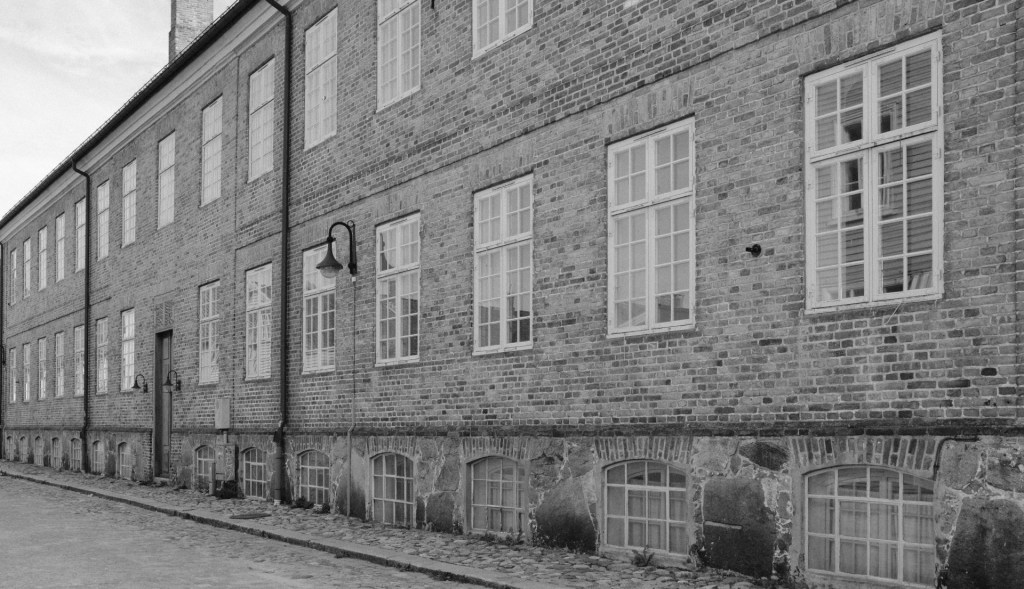
I try to understand what colonialism and imperialism have done to the world. These days, it’s mostly understood as something bad, and politicians condemn it in many polished speeches, speeches that are carefully checked by a room full of lawyers, afraid as they are that their words can be misunderstood as an admittance of guild. The problem is that in the 16th and 17th centuries, the intentions might have been good, trading with the locals on whatever strange coast you found them, but the many differences in customs made it often easy for the Europeans to take advantage and slowly take over their society. The result is, hundreds of years later, that we have taken away the chance of these societies to find their own way into the future.
I thought about this when I heard a story yesterday from someone who heard that same story from his grandfather. It goes about their forefather’s village somewhere in Indonesia, around the time that the first Dutch merchant/war ships arrived. The people on that Island were Muslims, and it was customary to give land to visitors if they wanted to stay, so they gave some land to the Dutch, and they gave more and more… He also describes that there were already vast commercial contacts with Japan, China, India, and the Arabic world. These contacts existed already for hundreds of years, and there were no monopolies; there was, more or less, free trade. This all changed in the next centuries, and part of the Dutch golden age was possible because the Dutch divided and conquered huge parts of Indonesia, and most of the trade was monopolized by the Dutch.
There are many reasons why there are poor and wealthy countries, and the literature about it goes from left to right with no consensus in the middle. The former colonies were not as technically advanced as the European countries, but their moral systems might have been more mature because of longer, uninterrupted growth. We will never know how these former colonies would have developed if the Europeans hadn’t interfered. There was violence in ancient times and through the ages till now. The Indonesian archipelago was littered with small kingdoms that also fought with each other and tried to steal each other’s land, but we have to remember that we think with Western minds, and for centuries, we have learned, we have been told, that the people who don’t live as we do are barbarians and are less than us. We cannot trust our forefather’s stories, we also have to learn the stories from the people that already lived there. It will take a lot of effort to shake off these prejudices and see ancient and unknown civilizations with the same eyes as we do our own, not good or bad but full of people who, for more than 40000 years, already knew what was good and bad, and they often knew that better than we know that now.
Until the lions have their own historians, the history of the hunt will always glorify the hunter.
I hate imperialism. I detest colonialism. And I fear the consequences of their last bitter struggle for life. We are determined, that our nation, and the world as a whole, shall not be the play thing of one small corner of the world
Do you know why people like me are shy about being capitalists? Well, its because we, for as long as we have known you, were capital, like bales of cotton and sacks of sugar, and you were commanding, cruel capitalists, and the memory of this so strong, the experience so recent, that we can’t quite bring ourselves to embrace this idea that you think so much of. As for hat we were like before we met you, I no longer care. No periods of time over which my ancestors held sway, no documentation of complex civilisations, is any comfort to me. Even if I really came from people who were living like monkeys in trees, it was better to be that than what happened to me, what I became after I met you.
A Small Place

The best thing you can do in life is to study history and repair what's left of it. This way, in a thousand years, curious minds can only study what we have repaired and not what we have distroyed.

Let's fix the past and don't think about the future. Let's just stop for a while.

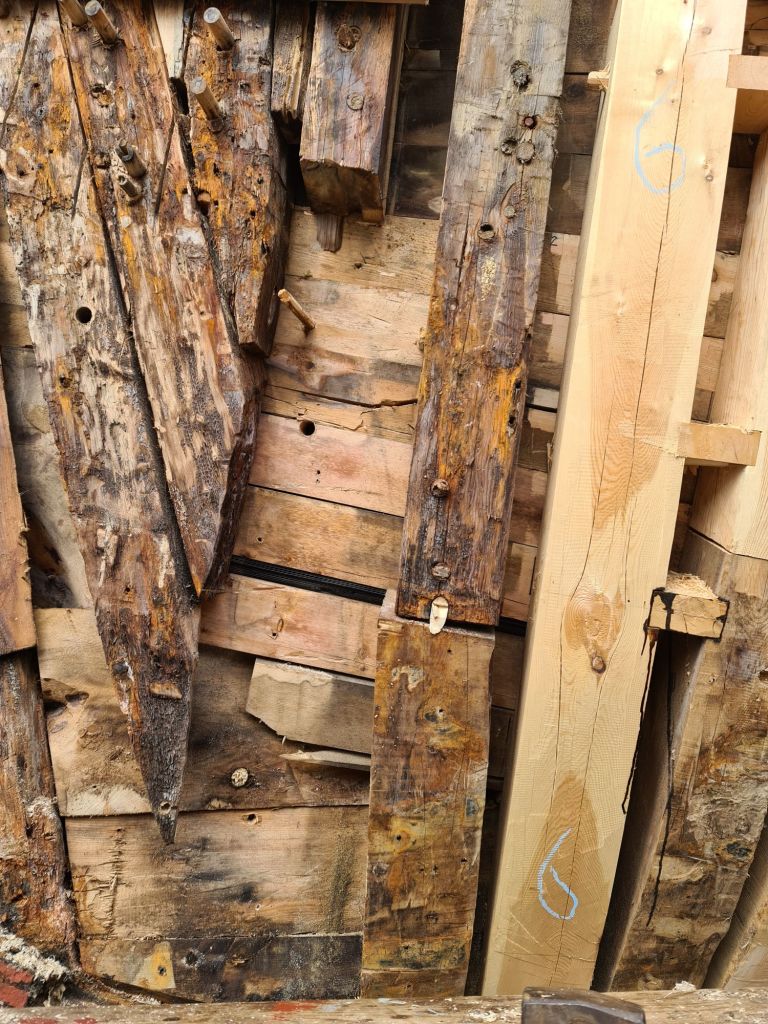
The boat you see here is caled Dyrafjeld. I help with the restauration and hopefully this will extend the life expectancy well over what you can expect. You can read more here:http://www.dyrafjeld.no/index-eng.php




Part of my work is restoring old doors, and today I started with this door. This is an old door that is now in use as an emergency exit that also sometimes gets used for special occasions. It is in the main Library here in Trondheim, and the head historian of Trondheim told me today that she believes it was already part of the building before it got renovated in 1831. The door has been restored before, probably in the seventies, but the original fittings are still there, and only parts of the wooden construction (the lock stile) are relatively new.
The hinges are old, they are fitted in such a way that we would damage the door if we try to remove them, so we leave them. It is pretty incredible that these old hinges are still doing their work after almost 200 years; modern hinges that are screwed to the doors of today will probably never last that long.
Another point that shows the craftsmanship used in making these old doors is that most of my job will be replacing parts of the wood used in the restoration they did 50 years ago. You have to understand that it is not only the carpenter’s work that makes these doors last but also the people that sell the wood. They understood what kind of wood was needed for making a quality door and were in contact with the right people that could deliver the right kind of wood for the job. In short, the whole ecosystem was “made” for quality, not quantity. We, of course, don’t know what happened to all the other old doors that are long gone; we only see the ones that lasted but still.
Doors like these are the reason that I leaned towards restoring “old stuff.” It never felt right making more new things, and I like all the stories attached to all those old boats I helped restore, a door like this also has many stories: who all have opened this door, for instance, and what was their mood going in or getting out?

See also: https://nochrisis.blog/unzeitgemasse-betrachtungen/

Life is interesting, and the problems we meet are too; there are also enough wars and people that want to tell you how to live. To compensate for all of this, we have inventors and the things they make. Here is an article from Nord-Lock where you can read about the history of the bolt: https://www.nord-lock.com/insights/knowledge/2017/the-history-of-the-bolt/
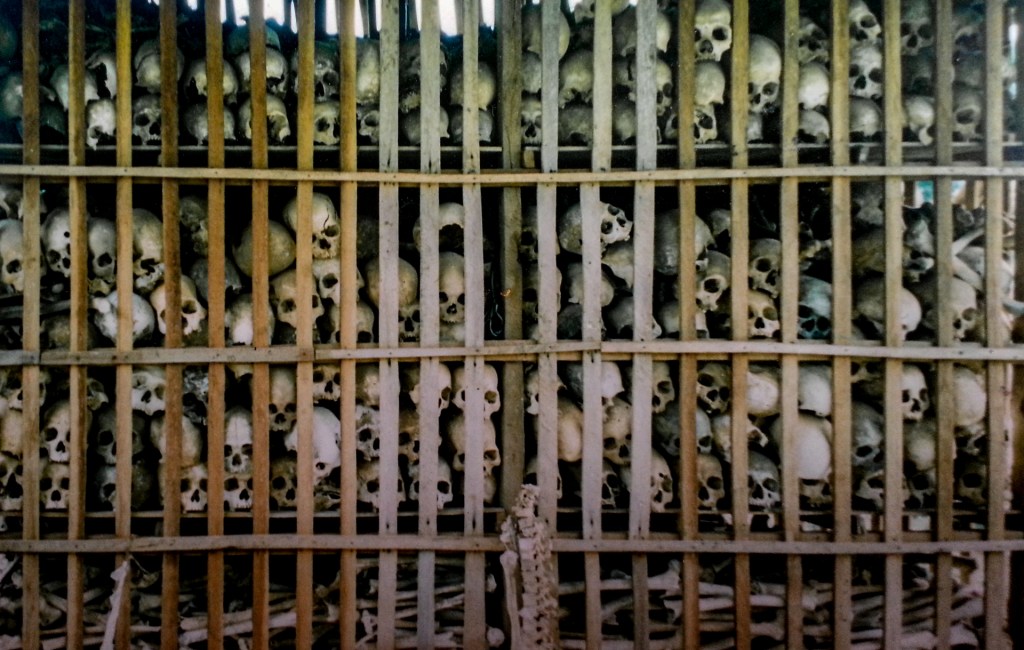
Every skull in this monument somewhere in Cambodia once belonged to a human being with hopes and dreams, a life filled with sunsets and worries. Then one day a group of people decided that their way of living was wrong and they got murdered. This picture was taken in the early nineties when I worked in Cambodia as a UN soldier. Our task was to keep the former murderers, the Khmer Rouge, away from the people who wanted to live again on their ancestors’ land. Today, it is not going so well in Cambodia, and I wondered how much they have learned from their history.
I have written about these skulls before; they fascinate me, and they have also put my life on a trajectory I would probably not have taken If I hadn’t lived in that country for a while, between monuments

On the uses and disadvantages of history for life
Excerpt of part 3
History thus belongs in the second place to him who preserves and reveres – to him who looks back to whence he has come, to where he came into being, with love and loyalty; with this piety he as it were gives thanks for his existence. By tending with care that which has existed from of old, he wants to preserve for those who shall come into existence after him the conditions under which he himself came into existence – and thus he serves life…
…Sometimes this clinging to one’s own environment and companions, one’s own toilsome customs, one’s own bare mountainside, looks like obstinacy and ignorance -yet it is a very salutary ignorance and one most calculated to further the interests of the community: a fact of which anyone must be aware who knows the dreadful consequences of the desire for expeditions and adventures, especially when it seizes whole hordes of nations, and who has seen from close up the condition a nation gets into when it has ceased to be faithful to its own origins and is given over to a restless, cosmopolitan hunting after new and ever newer things. The feeling antithetical to this, the contentment of the tree in its roots, the happiness of knowing that one is not wholly accidental and arbitrary but grown out of a past as its heir, flower and fruit, and that one’s existence is thus excused and, indeed, justified – it is this which is today usually designated as the real sense of history…
…The best we can do is to confront our inherited and hereditary nature with our knowledge, and through a new, stern discipline combat our inborn heritage and inplant in ourselves a new habit, a new instinct, a second nature, so that our first nature withers away. It is an attempt to give oneself, as it were a posteriori, a past in which one would like to originate in opposition to that in which one did originate…

I love to go to museums, but one thing that I do wrong is bringing a camera with me. With the camera in my hands, I look at the sculptures and jewelry but also how to take pictures of these objects and the rest that is exhibited. Doing this, I often forget to read what it is that I take pictures of, or I just glance at the text. I was in Greece 7 years ago, and for some reason, I felt the urge to see where all these objects I have taken pictures of are coming from.
I have found a lot of information on the internet, and you can read endlessly about the objects and where they came from and follow a trail of links. I do not intend to describe these objects in detail here on this blog; I just hope you get interested and start reading and searching yourself.
For this particular sculpture, I searched for the name of the museum in Athens, and after 30 pages of pictures, I finally saw a picture of this particular sculpture. I found the image on a site called hellenicaworld.com, and I found it specifically here and more here.

Artemis is the Greek goddess of the hunt, the wilderness, wild animals, the Moon, and chastity. The goddess Diana is her Roman equivalent.
Artemis is the daughter of Zeus and Leto, and the twin sister of Apollo. She was the patron and protector of young children and women, and was believed to both bring disease upon women and children and relieve them of it. Artemis was worshipped as one of the primary goddesses of childbirth and midwifery along with Eileithyia. Much like Athena and Hestia, Artemis preferred to remain a maiden and was sworn never to marry.
Artemis was one of the most widely venerated of the Ancient Greek deities, and her temple at Ephesus was one of the Seven Wonders of the Ancient World. Artemis’ symbols included a bow and arrow, a quiver, and hunting knives, and the deer and the cypress were sacred to her. Diana, her Roman equivalent, was especially worshipped on the Aventine Hill in Rome, near Lake Nemi in the Alban Hills, and in Campania.
From Wikipedia.
Yesterday I wrote about Covid deniers and how baseless their arguments are specially compared to the research that has been done for many years towards understanding these kinds of deceases. The people that have a hard time believing in what science has to say are often also negative about the progress we have made as humans.
The humans that lived 200.000 years ago where more or less like us in capabilities, if you put modern clothes on them and teach them English for instance you wouldn’t see a difference. Why is it important to know this you might wonder? It is important to know because most modern cultures look at the people that still live as hunter gatherers in remote places as primitive and backwards. But these people are exactly like us, the biggest difference is that they are raised in a totally different environment than ours. But they also have ambitions, fall in love, some like adventure others like to learn like we, people that live in cities. The biggest difference between the hunter gatherers from 200.000 years ago, and in a lesser amount, the “modern” hunter gatherers, is that they live(d) more in fear than we do.


Yesterday I wrote that I wanted to start reading some of the books I have (read). I decided to start with Sapiens, from Yuval Noah Harari. It is a well known book that I read it a couple of years ago, well, I listened to it. I have listened to the first chapter today. I do this listening in the car and at work. Wile listening I sometimes get distracted and forget to pause, this is the reason why I didn’t mind listening to the book again. I took some notes this time, and after the first chapter I listened to it again in a faster speed. It is a good thing that I did that because I missed some parts again… Normally I don’t mind not getting it all in, but now I want to listen to it all I notice that that is not so easy. I am sure this will also happen when you read a book, but I was quite obvious now. I work as a carpenter, it is often impossible to concentrate on a book, but today the work didn’t need much attention, but I guess my mind wondered off at some point.
This is written on his website of Yuval Noah Harrari, a brief history of humankind.
Homo sapiens rules the world because it is the only animal that can believe in things that exist purely in its own imagination, such as gods, states, money and human rights.
Starting from this provocative idea, Sapiens goes on to retell the history of our species from a completely fresh perspective. It explains that money is the most pluralistic system of mutual trust ever devised; that capitalism is the most successful religion ever invented; that the treatment of animals in modern agriculture is probably the worst crime in history; and that even though we are far more powerful than our ancient ancestors, we aren’t much happier.
If you are interested in human history than I recommend starting with prehistory. How did people live before the periods we have some (written)information from. I find it interesting, and this book tells it without nonsense and it is reasonable up to date with the latest findings as far as I can tell. The way he writes tell me that he is a skeptical person, he tries to show different opinions but he doesn’t shy away from telling his own opinion. It is by no means a book that will tell you everything you need to know, it is a book written for a large audience and the ideas it brings are a good starting point for more research.
A few things that I realize better now are the facts that not only Homo Sapiens and the Homo Neandertalensis lived at the same time, but that there were other Homo … living also at the same time. We also pride ourselves of the big brain we have and that this is the reason why we are ahead of other animals, but we had that brain for 2 million years and didn’t do much with it. He writes that those “brains” were as capable as ours, they could in principle learn what we can learn if one would wake up now.
There is also a discussion about how we became Homo Sapiens. Did we replace the other species or did we breed with them. Most scientist prefer the so called replacement theory because this fits better with the idea that all humans are the same. The other idea is known as interbreeding and suggest that some Home Sapiens have DNA of other species that where living in the area they moved into. They now know that a lot of people in the west have some Neanderthaler DNA and people in other parts of the world carry DNA from other local, and extinct species. This is something I like to know more about.
Tomorrow I will write more about chapter one.

We all know that if you want to become better in something, you have to practice and learn. But something strange happens if you learn more and more. There comes a point that you learn so much about a specific task or subject, that you loose control, to many variables make choosing the right direction, to hard.
If you are born before the 1990’s you probably know how to fix one of those old TV’s, you make a fist and bang on it, it is easy. You know only one way of fixing it, banging it. Now you’ve been to TV repair school and know all about TV’s, the next time it is broken, you have to go over a long checklist and rule out 50 possible problems. You gained a lot of knowledge, but it didn’t get easier, the only thing you know for sure is that banging on a TV is not good. This example is of course a little silly, but you can replace the TV with whatever you want, and you will see that this example still work.
Look at history, with little knowledge you can take big steps and proclaim that we are living like this because they did that 50 years ago. When you then start to read and learn more about that period, you will find out that it is more complicated once you take in account all the other facts and circumstances. A lot of historians will tell you that after many years of study they understand less of what happened, because they know to much.
It was still normal before the 18th century that a scholar was not only a philosopher but also a astronomer, chemist, physicist and also a mechanical engineers. All those different fields of knowledge where still so small that one person could understand it all. After the 18th century you will see that more and more people are specializing in one or two fields. These day’s you can be an engineer specialized in a subsection of a subsection of the department that is specialized in the designs of a wheel for an airplane.
If you know little, you will bang your fist on the TV in the hope you will fix it. If you know to mush you spend the rest of your life thinking about why the TV is broken.
I was inspired by Day 1548
 Nochrisis