The fear of God is not the beginning of wisdom. The fear of God is the death of wisdom. Skepticism and doubt lead to study and investigation, and investigation is the beginning of wisdom.
The modern world is the child of doubt and inquiry, as the ancient world was the child of fear and faith. (why I am an Agnostic)
When we fully understand the brevity of life, its fleeting joys and unavoidable pains; when we accept the facts that all men and women are approaching an inevitable doom: the consciousness of it should make us more kindly and considerate of each other. This feeling should make men and women use their best efforts to help their fellow travelers on the road, to make the path brighter and easier as we journey on. It should bring a closer kinship, a better understanding, and a deeper sympathy for the wayfarers who must live a common life and die a common death. (The Myth of the Soul)
Why I am an Agnostic and Other Essays, Clarence Darrow
This entry is intended as a brief and general introduction to the development of category theory from the beginning of the Middle Ages, in the sixth century, to the Silver Age of Scholasticism, in the sixteenth. This development is fascinating but extraordinarily complex. Scholars are just beginning to take note of the major differences in the understanding of categories and of how these differences are related to the discussion of other major philosophical topics in the Middle Ages. Much work remains to be done, even regarding the views of towering figures, so necessarily we have had to restrict our discussion to only a few major figures and topics. Still, we hope that the discussion will serve as a good starting point for anyone interested in category theory and its history.
1. Issues
Philosophers speak about categories in many different ways. There is one initial, and rather substantial, difference between philosophers who allow a very large number of categories and those who allow only a very small number. The first include among categories such different things as human, green, animal, thought, and justice; the second speak only of very general things such as substance, quality, relation, and the like, as categories. Among twentieth-century authors who allow many categories is Gilbert Ryle (b. 1900, d. 1976). Roderick Chisholm (b. 1916, d. 1999) is an example of those who have only very few. Medieval authors follow Aristotle’s narrow understanding.
The disagreement concerning categories in the history of philosophy does not end there. Even if we restrict the discussion to a small number of items of the sort that Aristotle regards as categories, many issues remain to be settled about them, and philosophers frequently disagree about how to settle them. These issues may be gathered into roughly ten groups.
The first group comprises what may be described roughly as extensional issues; they have to do with the number of categories. The extension of a term is comprised by the things of which the term can be truthfully predicated. Thus the extension of ‘cat’ consists of all the animals of which it is true to say that they are cats. Philosophers in general frequently disagree on how many categories there are. For example, Aristotle lists up to ten, but gives the impression that the ultimate number is not settled at all. Plotinus (204/5–270) and Baruch Spinoza (1632–77) reduce the number radically, but their views do not by any means establish themselves as definitive. In the Middle Ages the number of categories is always small (ten or less) but it nonetheless varies.
The capability approach is a theoretical framework that entails two normative claims: first, the claim that the freedom to achieve well-being is of primary moral importance and, second, that well-being should be understood in terms of people’s capabilities and functionings. Capabilities are the doings and beings that people can achieve if they so choose – their opportunity to do or be such things as being well-nourished, getting married, being educated, and travelling; functionings are capabilities that have been realized. Whether someone can convert a set of means – resources and public goods – into a functioning (i.e., whether she has a particular capability) crucially depends on certain personal, sociopolitical, and environmental conditions, which, in the capability literature, are called ‘conversion factors.’ Capabilities have also been referred to as real or substantive freedoms as they denote the freedoms that have been cleared of potential obstacles, in contrast to mere formal rights and primary social goods.
Within philosophy, the capability approach has been employed to the development of several conceptual and normative theories within, most prominently, development ethics, political philosophy, public health ethics, environmental ethics and climate justice, and philosophy of education. This proliferation of capability literature has led to questions concerning what kind of framework it is (section 1); how its core concepts should be defined (section 2); how it can be further specified for particular purposes (section 3); what is needed to develop the capability approach into an account of social and distributive justice (section 4); how it relates to non-Western philosophies (section 5); and how it can be and has been applied in practice (section 6).
Herbert Simon introduced the term ‘bounded rationality’ (Simon 1957b: 198; see also Klaes & Sent 2005) as shorthand for his proposal to replace the perfect rationality assumptions of homo economicus with a concept of rationality better suited to cognitively limited agents:
Broadly stated, the task is to replace the global rationality of economic man with the kind of rational behavior that is compatible with the access to information and the computational capacities that are actually possessed by organisms, including man, in the kinds of environments in which such organisms exist. (Simon 1955a: 99)
Bounded rationality now describes a wide range of descriptive, normative, and prescriptive accounts of effective behavior which depart from the assumptions of perfect rationality. This entry aims to highlight key contributions—from the decision sciences, economics, cognitive- and neuropsychology, biology, physics, computer science, and philosophy—to our current understanding of bounded rationality.
1. Homo Economicus and Expected Utility Theory
Bounded rationality has come to encompass models of effective behavior that weaken, or reject altogether, the idealized conditions of perfect rationality assumed by models of economic man. In this section we state what models of economic man are committed to and their relationship to expected utility theory. In later sections we review proposals for departing from expected utility theory.
The perfect rationality of homo economicus imagines a hypothetical agent who has complete information about the options available for choice, perfect foresight of the consequences from choosing those options, and the wherewithal to solve an optimization problem (typically of considerable complexity) that identifies an option which maximizes the agent’s personal utility.
We think of a boundary whenever we think of an entity demarcated from its surroundings. There is a boundary (a line) separating Maryland and Pennsylvania. There is a boundary (a circle) isolating the interior of a disc from its exterior. There is a boundary (a surface) enclosing the bulk of this apple. Sometimes the exact location of a boundary is unclear or otherwise controversial (as when you try to trace out the borders of a desert, the edges of a mountain, or even the boundary of your own body). Sometimes the boundary lies skew to any physical discontinuity or qualitative differentiation (as with the border of Wyoming, or the boundary between the upper and the lower halves of a homogeneous sphere). But whether sharp or blurry, natural or artificial, for every object there appears to be a boundary that marks it off from the rest of the world. Events, too, have boundaries — at least temporal boundaries. Our lives are bounded by our births and by our deaths; the soccer game began at 3pm sharp and ended with the referee’s final whistle at 4:45pm. It is sometimes suggested that even abstract entities, such as concepts or sets, have boundaries of their own (witness the popular method for representing the latter by means of simple closed curves encompassing their contents, as in Euler circles and Venn diagrams), and Wittgenstein could emphatically proclaim that the boundaries of our language are the boundaries of our world (1921: prop. 5.6). Whether all this boundary talk is coherent, however, and whether it reflects the structure of the world or simply the organizing activity of our mind, or of our collective practices and conventions, are matters of deep philosophical controversy.
1. Issues
Euclid defined a boundary as “that which is an extremity of anything” (Elements, I, def. 13). Aristotle defined the extremity of a thing as “the first thing beyond which it is not possible to find any part [of the given thing], and the first within which every part is” (Metaphysics, V, 1022a4–5). Together, these two definitions deliver the classic account of boundaries, an account that is both intuitive and comprehensive and offers the natural starting point for any further investigation into the boundary concept. Indeed, although Aristotle’s definition concerned primarily the extremities of spatial entities, it applies equally well in the temporal domain. Just as the Mason-Dixon line marks the boundary between Maryland and Pennsylvania insofar as no part of Maryland can be found on the northern side of the line, and no part of Pennsylvania on its southern side, so “the now is an extremity of the past (no part of the future being on this side of it), and again of the future (no part of the past being on that side of it)” (Physics, VI, 233b35–234a2). Similarly for concrete objects and events: just as the surface of an apple marks its spatial boundary insofar as the apple extends only up to it, so the referee’s whistle marks the temporal boundary of the game insofar as the game protracts only up to it. In the case of abstract entities, such as concepts and sets, the account is perhaps adequate only figuratively. Still, it is telling that one of the Greek words for ‘boundary’, ὅρος, is also a word for ‘definition’: as John of Damascus nicely put it, “definition is the term for the setting of land boundaries taken in a metaphorical sense” (The Fount of Knowledge, I, 8). Likewise, it is telling that in point-set topology the standard definition of a set’s boundary (from Hausdorff 1914, §7.2) reflects essentially the same intuition: the boundary, or frontier, of a set A is the set of those points all of whose neighborhoods intersect both A and the complement of A (where a neighborhood of a point p is, intuitively, a set of points that entirely “surround” p). It is not an exaggeration, therefore, to say that the Euclidean-Aristotelian characterization captures a general intuition about boundaries that applies across the board. Nonetheless, precisely this intuitive characterization gives rise to several puzzles that justify philosophical concern.
Blame is a common reaction to something of negative normative significance about someone or their behavior. A paradigm case, perhaps, would be when one person wrongs another, and the latter responds with resentment and a verbal rebuke, but of course we also blame others for their attitudes and characters (Eshleman 2004, Smith 2005, Holroyd 2012). Thus blaming scenarios typically involve a wide range of inward and outward responses to a wrongful or bad action, attitude, or character (such responses include: beliefs, desires, expectations, emotions, sanctions, and so on). In theorizing about blame, then, philosophers have typically asked two questions:
Which reactions and interactions constitute blame?
When is it appropriate to respond in these ways?
It is common to approach these questions with a larger theoretical agenda in mind: for example, in an effort to understand the conditions of moral responsibility and the nature of freedom. But the questions are interesting in their own right, especially since blame is such a common feature of our lives. This entry will critically discuss the answers that have been offered in response to the above questions concerning blame, with the aim of shedding some light on blame’s nature, ethics, and significance. (It is blame, rather than praise, that has received the lion’s share of attention from philosophers in recent years, despite the fact that they are a natural pair. Though that is perhaps beginning to change—see King 2023, Lippert-Rasmussen 2024, and Shoemaker 2024 for book-length treatments of blame that also pay serious attention to praise.)
Research on “implicit bias” suggests that people can act on the basis of prejudice and stereotypes without intending to do so. While psychologists in the field of “implicit social cognition” study consumer products, self-esteem, food, alcohol, political values, and more, the most striking and well-known research has focused on implicit biases toward members of socially stigmatized groups, such as African-Americans, women, and the LGBTQ community. For example, imagine Frank, who explicitly believes that women and men are equally suited for careers outside the home. Despite his explicitly egalitarian belief, Frank might nevertheless behave in any number of biased ways, from distrusting feedback from female co-workers to hiring equally qualified men over women. Part of the reason for Frank’s discriminatory behavior might be an implicit gender bias. Psychological research on implicit bias has grown steadily, raising metaphysical, epistemological, and ethical questions.
2. If you want to know what other people think about somethingthat concerns you, you have only to reflecton what you would think of themunder the same circumstances. you schould regard no one as morally superior to you on this point, and no one as more simple. More often than we think, people notice things we believe we have artfully concealed from them. Of this remark, more than half is true, and that is saying a lot for a maxim composed in one’s thirtieth year.
The Principle of Beneficence in Applied Ethics (SEP)
Beneficent actions and motives have traditionally occupied a central place in morality. Common examples today are found in social welfare programs, scholarships for needy and meritorious students, communal support of health-related research, policies to improve the welfare of animals, philanthropy, disaster relief, programs to benefit children and the incompetent, and preferential hiring and admission policies. What makes these diverse acts beneficent? Are such beneficent acts and policies obligatory or merely the pursuit of optional moral ideals?
These questions have generated a substantial literature on beneficence in both theoretical ethics and applied ethics. In theoretical ethics, the dominant issue in recent years has been how to place limits on the scope of beneficence. In applied and professional ethics, a number of issues have been treated in the fields of biomedical ethics and business ethics.
1. The Concepts of Beneficence and Benevolence
The term beneficence connotes acts or personal qualities of mercy, kindness, generosity, and charity. It is suggestive of altruism, love, humanity, and promoting the good of others. In ordinary language, the notion is broad, but it is understood even more broadly in ethical theory to include effectively all norms, dispositions, and actions with the goal of benefiting or promoting the good of other persons. The language of a principle or rule of beneficence refers to a normative statement of a moral obligation to act for the others’ benefit, helping them to further their important and legitimate interests, often by preventing or removing possible harms. Many dimensions of applied ethics appear to incorporate such appeals to obligatory beneficence, even if only implicitly. For example, when apparel manufacturers are criticized for not having good labor practices in factories, the ultimate goal of the criticisms is usually to obtain better working conditions, wages, and other benefits for workers.
Anglophone philosophers of mind generally use the term “belief” to refer to the attitude we have, roughly, whenever we take something to be the case or regard it as true. To believe something, in this sense, needn’t involve actively reflecting on it: Of the vast number of things ordinary adults believe, only a few can be at the fore of the mind at any single time. Nor does the term “belief”, in standard philosophical usage, imply any uncertainty or any extended reflection about the matter in question (as it sometimes does in ordinary English usage). Many of the things we believe, in the relevant sense, are quite mundane: that we have heads, that it’s the 21st century, that a coffee mug is on the desk. Forming beliefs is thus one of the most basic and important features of the mind, and the concept of belief plays a crucial role in both philosophy of mind and epistemology. The “mind-body problem”, for example, so central to philosophy of mind, is in part the question of whether and how a purely physical organism can have beliefs. Much of epistemology revolves around questions about when and how our beliefs are justified or qualify as knowledge.
Most contemporary philosophers characterize belief as a “propositional attitude”. Propositions are generally taken to be whatever it is that sentences express (see the entry on propositions). For example, if two sentences mean the same thing (e.g., “snow is white” in English, “Schnee ist weiss” in German), they express the same proposition, and if two sentences differ in meaning, they express different propositions. (Here we are setting aside some complications that might arise concerning indexicals; see the entry on indexicals.) A propositional attitude, then, is the mental state of having some attitude, stance, take, or opinion about a proposition or about the potential state of affairs in which that proposition is true—a mental state of the sort canonically expressible in the form “SA that P”, where S picks out the individual possessing the mental state, A picks out the attitude, and P is a sentence expressing a proposition. For example: Ahmed [the subject] hopes [the attitude] that Alpha Centauri hosts intelligent life [the proposition], or Yifeng [the subject] doubts [the attitude] that New York City will exist in four hundred years. What one person doubts or hopes, another might fear, or believe, or desire, or intend—different attitudes, all toward the same proposition. Discussions of belief are often embedded in more general discussions of the propositional attitudes; and treatments of the propositional attitudes often take belief as the first and foremost example.
Shot on Olympus Pen EE-2 (half frame) on Kodak Gold 200 from the late 90s, low-res scans
Behaviorism (SEP)
It has sometimes been said that “behave is what organisms do.” Behaviorism is built on this assumption, and its goal is to promote the scientific study of behavior. The behavior, in particular, of individual organisms. Not of social groups. Not of cultures. But of persons and animals.
This entry considers different types of behaviorism and outlines reasons for and against being a behaviorist. It consider contributions of behaviorism to the study of behavior. Special attention is given to the so-called “radical behaviorism” of B. F. Skinner (1904–90). Skinner is given special (not exclusive) attention because he is the behaviorist who has received the most attention from philosophers, fellow scientists and the public at large. General lessons can also be learned from Skinner about the conduct of behavioral science in general. The entry describes those lessons.
1. What is Behaviorism?
One has to be careful with “ism” words. They often have both loose and strict meanings. And sometimes multiple meanings of each type. ‘Behaviorism’ is no exception. Loosely speaking, behaviorism is an attitude – a way of conceiving of empirical constraints on psychological state attribution. Strictly speaking, behaviorism is a doctrine – a way of doing psychological or behavioral science itself.
Wilfred Sellars (1912–89), the distinguished philosopher, noted that a person may qualify as a behaviorist, loosely or attitudinally speaking, if they insist on confirming “hypotheses about psychological events in terms of behavioral criteria” (1963, p. 22). A behaviorist, so understood, is someone who demands behavioral evidence for any psychological hypothesis. For such a person, there is no knowable difference between two states of mind (beliefs, desires, etc.) unless there is a demonstrable difference in the behavior associated with each state. Consider the current belief of a person that it is raining. If there is no difference in his or her behavior between believing that it is raining and believing that it is not raining, there is no grounds for attributing the one belief rather than the other. The attribution is empirically empty or unconstrained.
Arguably, there is nothing truly exciting about behaviorism loosely understood. It enthrones behavioral evidence, an arguably inescapable premise not just in psychological science but in ordinary discourse about mind and behavior. Just how behavioral evidence should be ‘enthroned’ (especially in science) may be debated. But enthronement itself is not in question.
Bayes’ Theorem is a simple mathematical formula used for calculating conditional probabilities. It figures prominently in subjectivist or Bayesian approaches to epistemology, statistics, and inductive logic. Subjectivists, who maintain that rational belief is governed by the laws of probability, lean heavily on conditional probabilities in their theories of evidence and their models of empirical learning. Bayes’ Theorem is central to these enterprises both because it simplifies the calculation of conditional probabilities and because it clarifies significant features of subjectivist position. Indeed, the Theorem’s central insight — that a hypothesis is confirmed by any body of data that its truth renders probable — is the cornerstone of all subjectivist methodology.
The epistemic basing relation is the relation which holds between a reason and a belief if and only if the reason is a reason for which the belief is held. It is generally thought to be a necessary, but not sufficient, condition for a belief’s being justified that the belief be based on a reason. The basing relation is what distinguishes good reasons which a person possesses that contribute to the personal justification of a given belief from good reasons which the person possesses but that do not contribute to the personal justification of the belief.
Basing relations may be involved in both inferential and non-inferential justification. For example, one may hold that sensory states count as reasons, and thus require that a sensory belief be based on a reason if it is to be justified by that reason. In addition, one might understand at least some self-evident beliefs to be based on the meanings of the various terms of the sentence expressing the proposition believed. For example, one’s belief that all bachelors are unmarried men may be understood to be based on the meanings of ‘all’, ‘bachelors’, ‘are’, etc.
The basing relation is most frequently analyzed in terms of a reason’s causing a belief.[1] In such analyses, the reason and the belief are understood to be mental states of a person. The cause may be a contributing cause or a sufficient cause. However, the basing relation has also been analyzed as an appropriate counterfactual cause of a belief and also as depending on an appropriate meta-belief to the effect that a reason is a good reason to hold the belief.
Analysis of the basing relation is relevant to a variety of fundamental epistemological issues. It is relevant to the nature of epistemic rationalization and to questions regarding the internalism/externalism debate. In addition, it has been argued that reliabilist theories of justification are incompatible with the correct analysis of the basing relation.
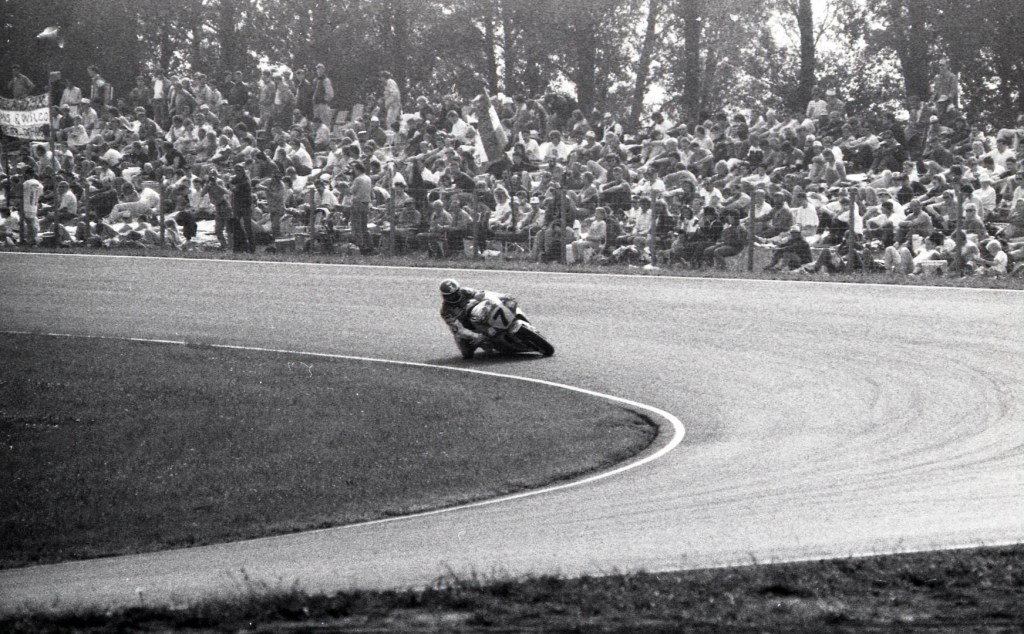
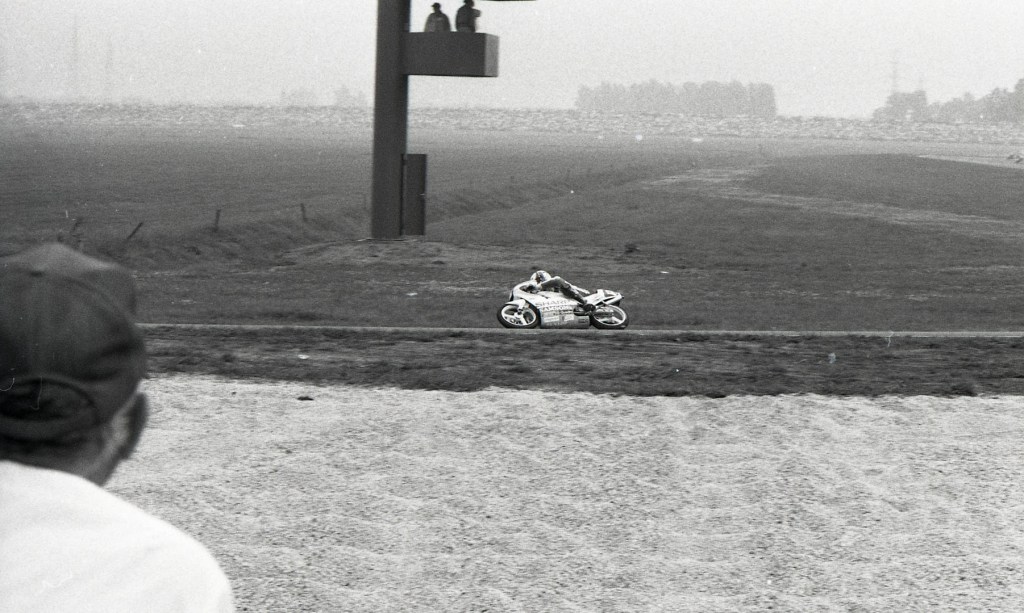
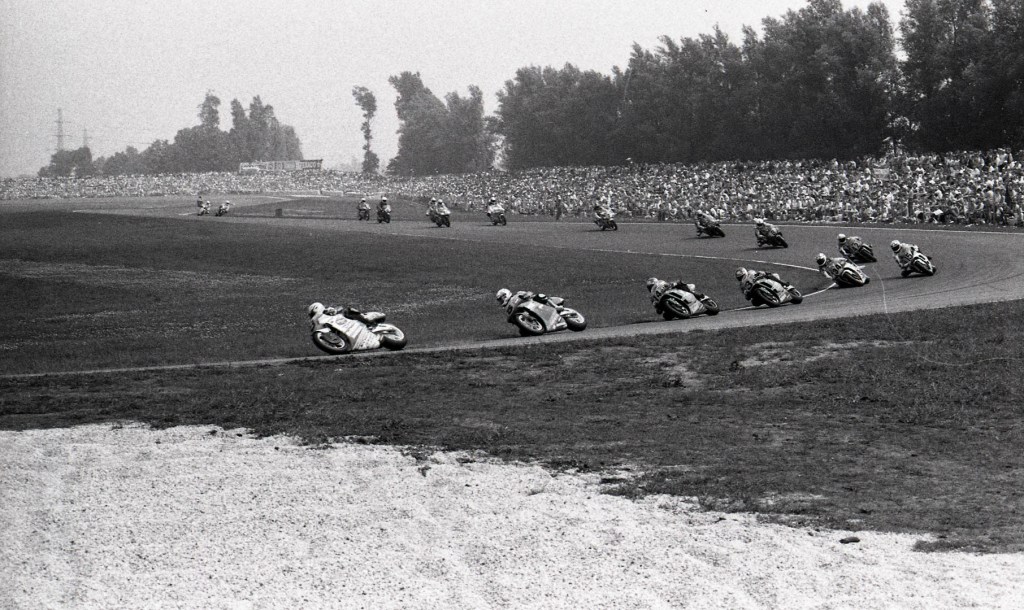
These photos were taken in 1986 or 88, I am not sure, but definitely not 87 because that’s a year without memories, you know, one of those years you forget about. My stepdad and I were visiting the TT of Assen. I still remember the darkroom I had, where I developed the film and probably produced a few prints. I don’t remember the races, but I do remember enjoying the different classes and following them for a couple of years. I also recognize the names when I see them on a chart these days.
32 In the eye of a man of the world any particular man always remains the same, whether he be a wigmaker or a minister of state, just as marble remains what it is: whether the statue represents Apollo or a Capuchin monk it cannot become bronze or sandstone.
At the sensory level we continuously receive a flow of information about our own body through external and internal perceptions. Not only can we see our body and touch it, but we also have several inner receptors that convey information about the position of our limbs, the balance of our body, and its physiological condition. Unlike external perception, the inner sensory flow never stops and cannot be voluntarily controlled. Thus, an important amount of information is constantly available whether we want it or not, whether we pay attention to it or not. In that respect, our body qualifies as the object that we know best. Yet, despite numerous sources of information, the phenomenology of bodily awareness is limited. In painful and learning situations, our body appears at the core of our interest, but when we walk in the street, we are rarely aware of the precise position of our legs and of the contact of the floor on our feet. Schwitzgebel (2007), for instance, asked how frequently participants wearing a device beeping at random intervals had tactile experiences in their left foot just before the beeping sound. He found a high variability in the answers, but one participant reported tactile sensations only 16% of the time. Our conscious field is primarily occupied by our environment, instead of the bodily medium that allows us to perceive it and to move through it. Hence, the most permanent and preponderant object in life may also be the most elusive one (Leder 1990; Merleau-Ponty 1945; O’Shaughnessy 1980).
One may then question whether we are completely unaware of it. Except in rare illusory or pathological cases, we never feel fully disembodied. James (1890: 242), for instance, claims that we are constantly conscious of the presence of our body, although at the margin of the stream of our consciousness:
Our own bodily position, attitude, condition, is one of the things of which some awareness, however inattentive, invariably accompanies the knowledge of whatever else we know.
What is the content of this marginal body consciousness? James (1890: 242) alludes to a “feeling of the same old body always there” or a mere “feeling of warmth and intimacy” but can we go beyond this rough and metaphorical description?




















 Nochrisis