What is the meaning of life?

Poetry

Day 583-1

Since we can look ourselves in the eyes we wonder why.

But, without reflection there is no why.

A rock, a tree, a donkey don’t ask why.

They live their life’s, it’s us who ask why.

But there is no reason for this why.

There is no answer to the why.

We are just here and that’s a why.

The meaning of life, is… to ask why.

The nuclear bomb and its enemies.

Our mind

Day 252-1


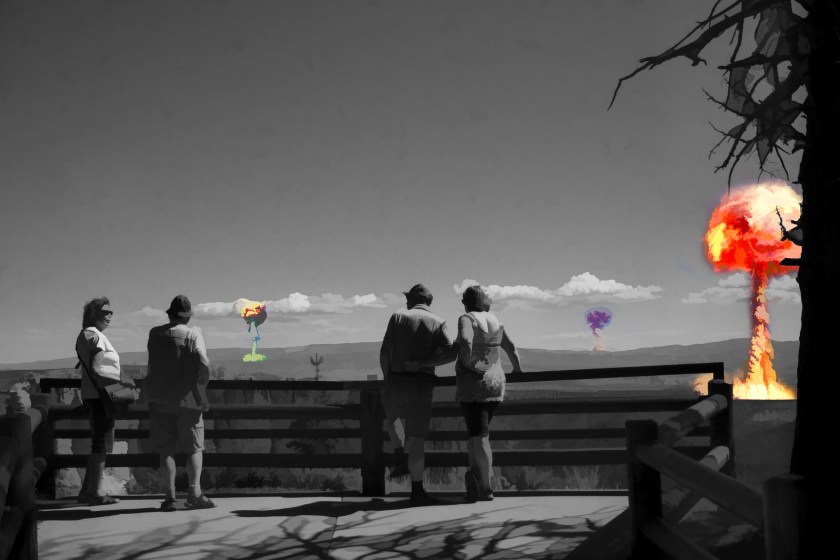
Both the USA and the USSR developed their large arsenals because history teaches them that war is a possibility and probably a necessity. Both were afraid that if either one had the chance of destroying the other, that it could happen. They either made a large arsenal to strike first or hit back hard after an attack. Either way it would be disastrous for both countries with millions of people dead not by a long war, diseases, or famine but by a few phone calls and some presses on 2, – dollar launch buttons.

The USSR was a Communist country, guided by strict rules that guided their past and future. The Russians where convinced that they could win a nuclear war. There would be large destruction, but the conventional war, after the nuclear destruction, could be won. From Napoleon to Hitler their large unwelcome land is there biggest asset that has shaped their history for years and guided their choices in the development and deployment of nuclear weapons.

Auto pilot

Philosophy

Day 263-1

What is life for us, thinking animals? Is it not mainly going on in our head, our brain pointed towards a future? Most animals do the thing they do without contemplation, they don’t wonder why they are naked or roll around in the mud. We human beings are also animals and most of what we do is also done without contemplation, but we can look backwards, forwards, and wonder why, where, what, whom, and how.

When we get up in the morning and perform our rituals: drink coffee, start the car, drive to work. At any moment we can snap out of this automatic behavior. Where we don’t ask ourselves why, it just happens. But we can place ourselves in the driver’s seat and reflect upon our actions. At that moment we are more than just an drone. This is off course all a little dramatic, but a big part of our lives is automated. Try to recall why you agree with a certain kind of person, like that color, prefer that taste, dislike mountains, hate flying, check the door one extra time so on and so forth. Do you really know why you do the things you do or is it like rolling in the mud?

People are good in giving rational reasons for their behavior. We ignore that most of our habits are ingrained in to us by our contact with family, friends, society, (forgotten) experiences, and the random or determined makeup of our physical body the chemistry in our brain.

How many protestant children are there in a Muslim family, Hindu children in a Russian orthodox family, or a catholic child in an atheist family? It hardly ever happens, look at the statistics, but the true believer will still insist that his fate is the only one and this person doesn’t see that he believes this way because he grew up within it, is surrounded by it. Would that person have been adopted at birth by people of another faith, than they would have adopted that faith and proclaimed it to be the only way? With religion it is clear. However, lots of habits you identify yourself with are just that, habits. There is no reason behind it. Just instinct from our genetic makeup and programming from our surroundings.

People that are so certain that their way of living is the only way, and are in the minority. They’re like the pigs that role around in the mud, they have no clue why they’re doing it, they just do what comes automatically, with the least resistance.

If everybody in the world new that their “I”, their “self” is a construct than we would have a lot of uncertain people, questioning their every move but at least we would all be part of the same team.


God is dead

Society

Day 241-1

“Even a small step in the wrong direction could take a country on the path of catastrophe.”
This is a quote from Robert Kempner, a German lawyer who served as assistant U.S. chief council during the Nuremburg trials.
I heard this quote when I was listening to the book The Devil’s Diary and I had to write it down. Ever since a well know president of the most powerful country in the world told us that “there are some fine people amongst these neo-Nazi’s” (I’m paraphrasing) , I had to freshen up on what those “fine people” think.

0421belsencamp01

Bergen Belsen mass grave.

I think there’s nobody that knows what’s going on in this man’s mind, we can only react to that what he says even if it’s something blurred out in the heat of the moment. The Nazi’s killed woman and children in cold blood by the millions, everyone who  denies that or somehow condones it should not be taken serious.
There are no words to describe this, I have no words for it and it will probably take a long time to find some. I don’t understand how people could work with a person like this, who obviously has no clue in what happened in the second world war. We live in depressing times and if this is not a “smal” step I don’t know what is.
But, George Carlin point’s out something in the following quote that has sadly a lot of truth in it:
“Now, there’s one thing you might have noticed I don’t complain about: politicians. Everybody complains about politicians. Everybody says they suck. Well, where do people think these politicians come from? They don’t fall out of the sky. They don’t pass through a membrane from another reality. They come from American parents and American families, American homes, American schools, American churches, American businesses and American universities, and they are elected by American citizens. This is the best we can do folks. This is what we have to offer. It’s what our system produces: Garbage in, garbage out. If you have selfish, ignorant citizens, you’re going to get selfish, ignorant leaders. Term limits ain’t going to do any good; you’re just going to end up with a brand new bunch of selfish, ignorant Americans. So, maybe, maybe, maybe, it’s not the politicians who suck. Maybe something else sucks around here… like, the public. Yeah, the public sucks. There’s a nice campaign slogan for somebody: ‘The Public Sucks. F*ck Hope.'”
Remember that this is not only happening in America but in a lot of different countries . A lot of people are no longer following some basic rules like “Love your neighbor as yourself.’ There is no commandment greater than these» Mark 12:31. These people  literally say that they don’t care about refugees”, they cannot see the bigger picture,  that we all have created this mess in the world we live in. They don’t see that we live on this planet together and must take care of it together. But nationalism, selfishness  and nihilism are obviously going strong.
The christian people that are so often blaming Friedrich Nietzsche for saying that “god is dead” obviously don’t understand that Nietzsche warned for a world without a god despite he himself not being religious. That humanity was not ready to live without the 10 commandments (to put it simple), and he was right. A lot of these so called christians are for closed borders thus they do not “love your neighbor…” or they really hate themselves. There is no so called christian love any more, god is really dead.
“God is dead. God remains dead. And we have killed him. How shall we comfort ourselves, the murderers of all murderers? What was holiest and mightiest of all that the world has yet owned has bled to death under our knives: who will wipe this blood off us? What water is there for us to clean ourselves? What festivals of atonement, what sacred games shall we have to invent? Is not the greatness of this deed too great for us? Must we ourselves not become gods simply to appear worthy of it?”
Friedrich Nietzsche, The Gay Science


Old news

History

brink of war 2

There were times that I read a lot of background stories on the news, long newspaper articles, opinion magazines etc. I really was interested in those stories and opinions but for many years now my only source of the news is an app on my phone that shows me the highlights. The phone has made this easy, before that you had a computer and before that teletext on tv if you wanted just the highlights. But for me the ease of the mobile phone it is not the only reason I am only looking for the highlights, I am tired of the news and all the opinions around it.

Democracy from all sides

Society

belsen4 copy-Edit-2-2

If the truth is a circle and I can only see one part of it, and I realize that, I than cannot proclaim to know the truth. I can proclaim my side of the truth, my part of what I can see but not much more. I think this is self-evident but if I look at myself I know that I have enough opinions without knowing all or at least more of the circle or truth.

If two people both stand on opposite sides of a statue and describe the side they see then they are off course both right as far as describing their side, but if a third person walks around the statue and describes it there is a bigger chance that that description tells you more about the statue as a whole, it’s more truthful despite all three were telling the truth.

Off course you can argue that the two-people standing on one side and not took the effort to walk around where purposely not telling the whole truth. If than again they were bound to their place you could argue that they were telling the(ir) truth.

Can we expect in any form of discourse that all people that take part try to “walk around the statue” so that we at least can collect all description of that statue and democratically come to a consensus as to its form.

Is it ok if one or more stay on one side and thus give more weight to that side, skewing the results Is that democratic?

What about the people that cannot see, or touch the statue and still form an opinion. That is a problem, and it can lead to a miss representation of the statue if the teachers that inform the blind and senseless are given to much power in their description of the different sides.

Dead philosophers

Philosophy

Day 270-1

If you like it or not the internet has brought the news, and most of their accompanying opinions, close, and constantly to us.  I am old enough to know what life was without the internet. When I was 16 and needed to know something specific I went to the library or to that neighbor with a 24-volume encyclopedia. But at sixteen I was still to self-absorbed to notice much of the outside world let alone the opinions that people had on the news. I’m pretty sure that the news and opinions of others were known by my parents but probably in bigger chunks, less diverse and from nearby. I don’t try to find out what is better, but I can say that I think that the receiving end is more important than the input, or in other words, a critical mind is important.

Where am I going with this introduction? It started when I read the following text this morning:

“She has shown herself kindly; life, if you know how to use it, is long. But one man is possessed by an avarice that is insatiable, another by a toilsome devotion to tasks that are useless; one man is besotted with wine, another is paralyzed by sloth; one man is exhausted by an ambition that always hangs upon the decision of others, another, driven on by the greed of the trader, is led over all lands and all seas by the hope of gain; some are tormented by a passion for war and are always either bent upon inflicting danger upon others or concerned about their own” Seneca De brevitate vitae

For some reason I’m always intrigued by 2000-year-old text describing our time. But off course they don’t describe our time, they describe human behavior. And that is what’s so amazing, Seneca lived in another time, place, culture, and society but he looked around, was critical and saw thing that you still can see today, in another totally different time, place, culture, and society.

We are not that different as human beings despite all the nonsense you (can) read on the internet.

That’s another reason I read books from dead philosophers and writers. I want to remind myself that all the noise you hear all day is mostly noise. Most of the modern books you read or opinions you hear are refurbished ideas of the dead philosophers and writers. I like to take away the middleman, the noise and go direct to the source. By going as close as possible to the source you get a free reminder that life was not so different 2000, 500 or a 100 years ago. That we are all human beings with a brain that functions more or less the same fore thousands of years now no matter the host it’s in.

“I have labored carefully, not to mock, lament, or execrate human actions, but to understand them; and, to this end, I have looked upon passions, such as love, hatred, anger, envy, ambition, pity, and the other perturbations of the mind, not in the light of vices of human nature, but as properties, just as pertinent to it, as are heat, cold, storm, thunder, and the like to the nature of the atmosphere, which phenomena, though inconvenient, are yet necessary, and have fixed causes, by means of which we endeavor to understand their nature, and the mind has just as much pleasure in viewing them aright, as in knowing such things as flatter the senses.” Baruch Spinoza Political Treatise (1677)

Man in the mirror

History

Day 253-1

Göring: Why, of course, the people don’t want war. Why would some poor slob on a farm want to risk his life in a war when the best that he can get out of it is to come back to his farm in one piece? Naturally, the common people don’t want war; neither in Russia nor in England nor in America, nor for that matter in Germany. That is understood. But, after all, it is the leaders of the country who determine the policy and it is always a simple matter to drag the people along, whether it is a democracy or a fascist dictatorship or a Parliament or a Communist dictatorship.

Gilbert: There is one difference. In a democracy, the people have some say in the matter through their elected representatives, and in the United States only Congress can declare wars.

The wall

Poetry

muur en nagel-Edit

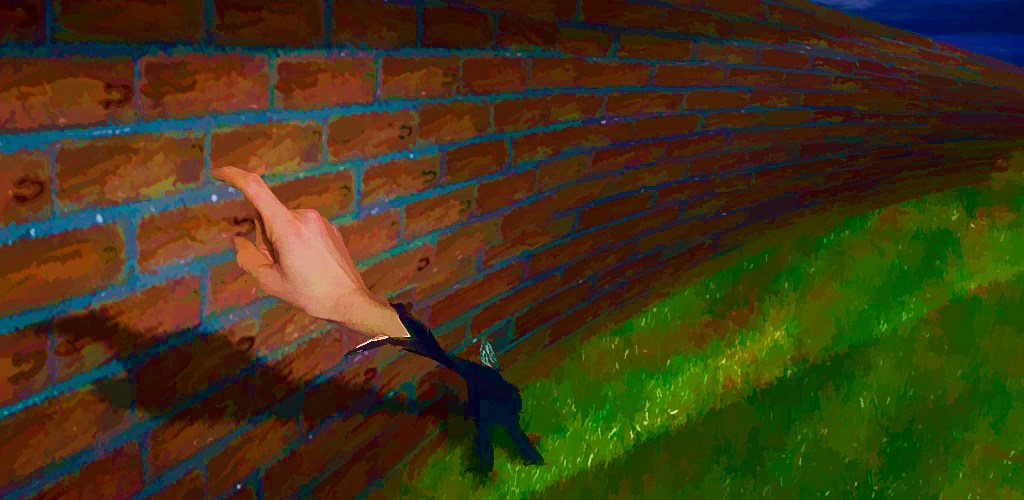
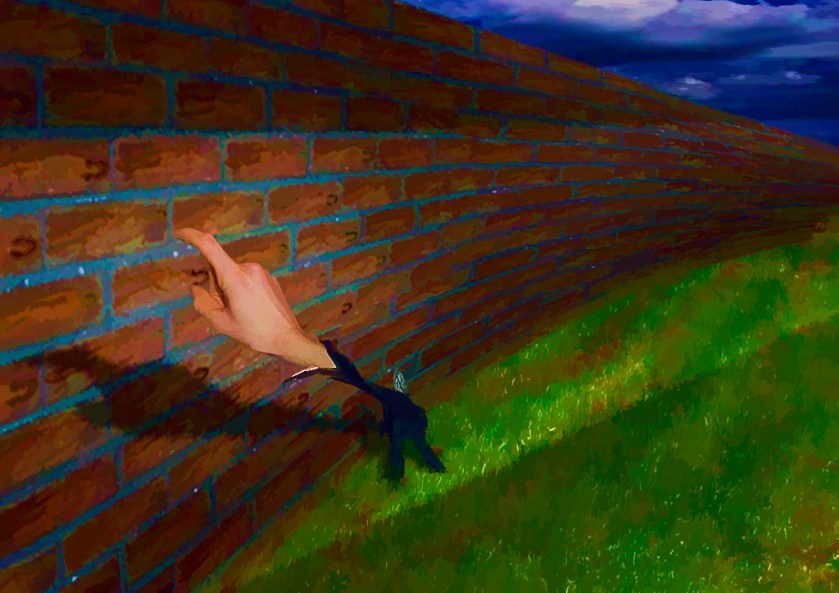
I stand for a wall.
Left and right infinitely long.

I look up, looking for the edge.
Infinite far away, I do not see it, so it seems to be.

I turn around, look back in time.
Infinite deep, it seems to be.

I turn again and stretch my hand.
And touch the wall, it’s warm.

A shiver pulls through my back, my shoulders are shocking.
It pulls on my hand, and then it goes back.

I look better, come closer.
I see eyes, a mouth, these stones seem a live.

My hand retreats and I turn my head.
These stones, are looking at me.

I lean back more, I see hundreds, thousands of eyes.
The wall lives and breathes is warm, alive… it’s cold.

I step back and look left and right; the eyes go again.
Infinite high and long is this wall.

Made of rectangular humans formed out of stone.
I frown and laugh, and walk further again.

Looking for an opening.
Some eyes are scared, and watch, others see me not go.

Satisfied and content they appear to be in their rectangular life.
At least, on the surface, don’t know how deep they will be here.

I stop again, curious in their depth.
Perhaps I can pull one out and determine, the thickness of the wall.

The joints are hard, gray like cement, I look better, this will be hard.
Elected prejudices together with sandy habits appear to separate the bricks.

But these hard joints tie them together, I try to move more than one.
The joint forms them, separates and binds them, it conceals their depth.

I look around, look at the ground but find nothing sharp.
With my finger I touch one of the joints and scratch with my nail.

The eyes are now horrified in the stones all around.
I ignore them for now, and I scratch more, but soon give up.

This will take forever, nails do not grow that fast, life is too short.
I walk further looking for something that can break or bite, a stick, book or a sight.

The grass is green here but I would like to see the depth of this human being and what is,
the color of the grass behind this wall
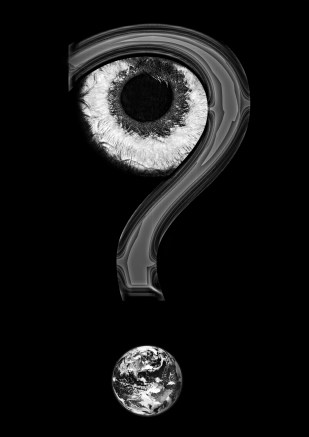
Bystander

Philosophy

Day 276-1

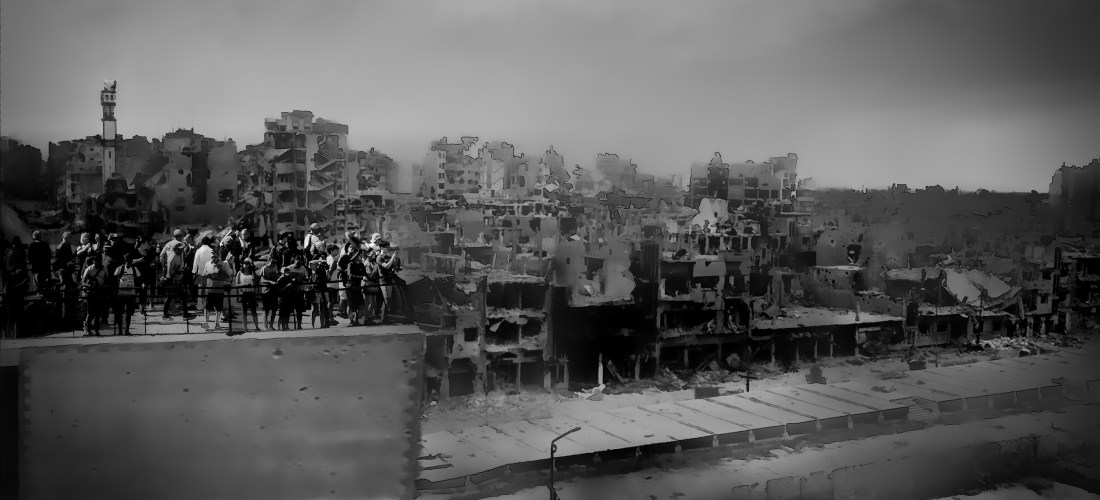
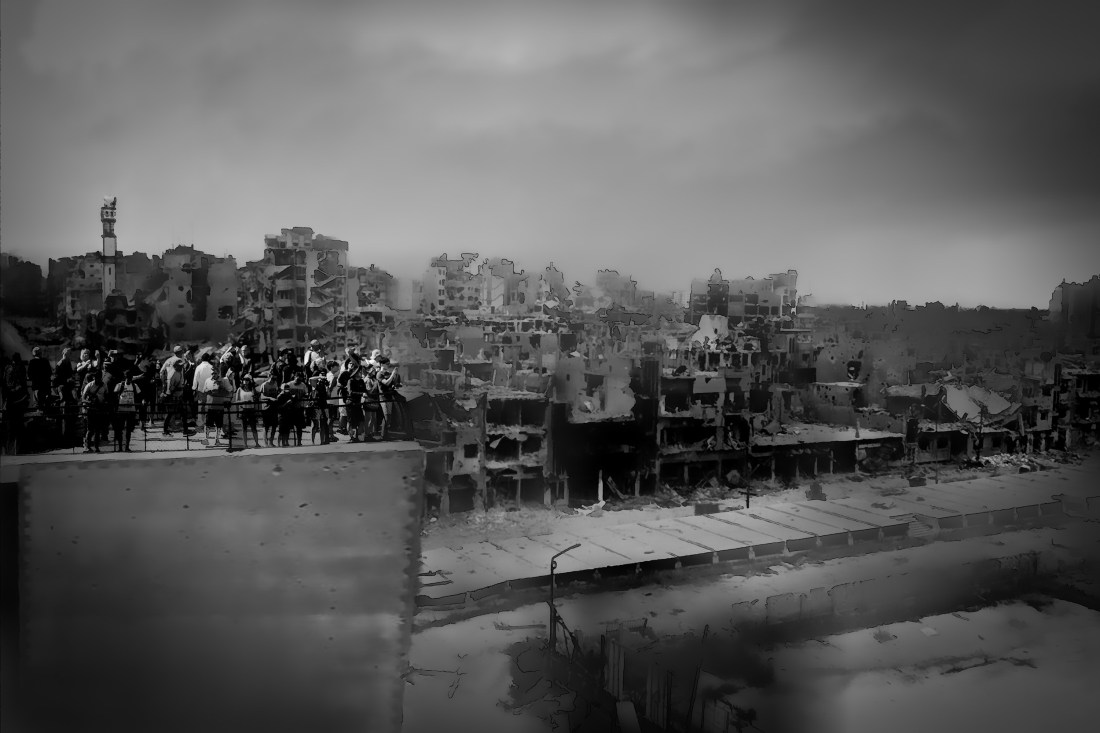
Are we all bystanders when we look at the wars we have created? Have we created them? Or can we narrow it down? Is it the dictator or president that ordered the first shot? Why are these people in charge? Or are groups of humans like vortexes, moving around mindlessly, bumping against each other, swallowing up each other. Are we destined to turn around and around, over and over again facing the same sides again and again of all the other vortexes, swallowing each other, disappear.

It almost must be like that if you see how each generation is destined to start over again with only muted voices pointing out the obvious… for who can listen, we have been here. And the bystanders. They get turned around and around, get nauseous and sick of all the streaks in front of their eyes. They must look down to let the world stand still. And don’t look up.


Blind spot

Our mind

Day 232-1

We have a blind spot in our eyes. We miss part of the picture, but we don’t. Our brain fills in the gaps and like our nervous system or bowel movements it does it without our guidance.

For many years now, research has found out that our brain presents us with questionable answers. One of the articles that is interesting is “Priming and communication: Social determinants of information use in judgments of life satisfaction”. As an example, they will ask a group of students if they are happy and they give a response, after that they ask how many dates they had this year and there was no correlation between the two questions, more or less dates didn’t seem to influence the amount of happiness. But if you first ask how many dates they had and then asked about their happiness they found a correlation. Having a number, your dates this year, gives your brain an easier quantification to work with so it answers more realistic the question if you are happy. You should now that the students denied the correlation.

A primer is something that is a cause of.  Lots of thought’s, meanings and hunches have a primer, a cause. But do we know that, can we see that or is that fact permanently fixated before our blind spot colored in by our brain.


Hard to Imagine.

Our mind

Day 565-1

Around the world we still hear from neo-nazies groups. There thoughts are not mainstream, and most of us know better, but… But are their ways seeping in again through the cracks of our memories?

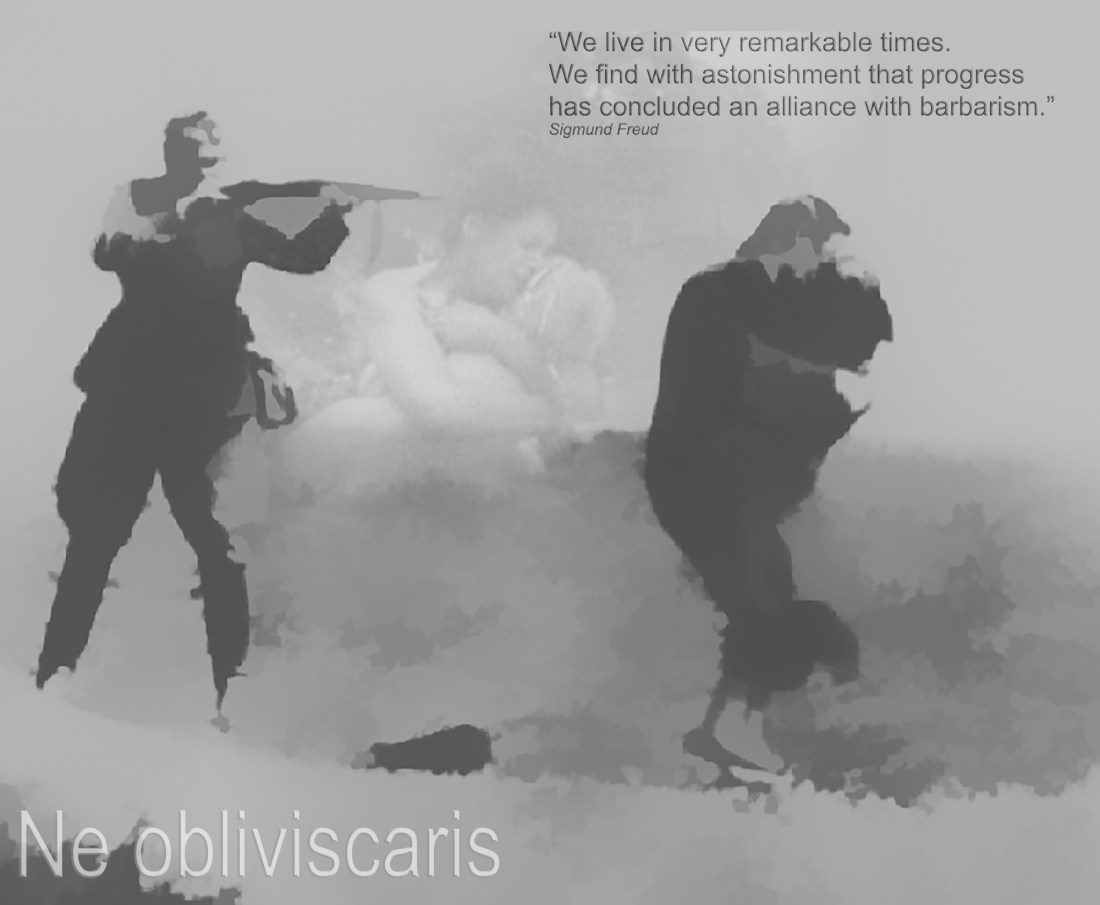
I read books about Nazi trials, I read those books in the hope it helps me to understand. I can’t imagine shooting at babies flying in the air, something that members of the einsatzgruppen did back then.  “The executioners did not have enough time to finish their job. Therefore they began to put two people together, head by head, so that one bullet would kill two people. The wounded people were killed with shovels. The children were thrown into the Yar alive and buried with them.” holocaustresearchproject.org Man with families and kids, no barbarians, not illiterate or mentally ill, your neighbour did these things, and in our connected world they still do these things. Look at what happens in Myanmar.

If you could imagine what it would do to you if that same thing would happen to you. Why would you do it? It’s a question with no clear answer. In our global, connected world we are all one click away from each other, from knowledge. If I waste food or buy something I don’t’ need I realize that if we all worked together then that excess consumption could have gone to those people that are now dying of hunger. But it is not happening. I could not even Imagine what it’s like to lose someone from hunger.

But would I kill a kid, with my own hands, if my country approves of it? You never know what the future brings but I have always been an outsider, and I know my thoughts are not my own. Knowing your not a unique well of thoughts, that you can be at fault will probably make it harder to let you walk in line. Doubt yourself.


Is the world burning up?

History

Day 567-1

If you study our history you will realize that the world was a much harsher place not so long ago.

I was just watching a documentary about Wilhelm the second and how they lived. The luxury and freedom they had while most of the people in Europe where mainly occupied with surviving, working long days, living unhealthy and hardly no chances to get anywhere. You think it’s unfair, you start reading Marx, getting upset… Til i looked around, a carpenter, in a warm house. I can get up now and go wherever i want, I can use my last money and be in Italy tomorrow. I changed careers, been to several schools, I can steer my life in large parts where I want it to go… I live better then royalty in the 19th century. I realize that there are enough people around the world that still live in the 19th century but there is no reason to believe that they will live like royalty to one day.