
The horizon of many people is a circle with a radius of zero. They call this their point of view.
The horizon of many people is a circle with a radius of zero. They call this their point of view.

85 Wickedness is rare. – Most people are much too much occupied with themselves to be wicked.

“The spirit of revenge, my friends, has so far been the subject of man’s best reflection; and where there was suffering, one always wanted punishment too. “For ‘punishment’ is what revenge calls itself; with a hypocritical lie it creates a good conscience for itself. “Because there is suffering in those who will, in as much as they cannot will backwards, willing itself and all life were supposed to be a punishment. And now cloud upon cloud rolled over the spirit, until eventually madness preached, ‘Everything passes away; therefore everything deserves to pass away. And this too is justice, this law of time that it must devour its children.’ Thus preached madness.

I believe I will

for all the wrong reasons
https://epochemagazine.org/43/spinoza-nietzsche-and-the-error-of-free-will/
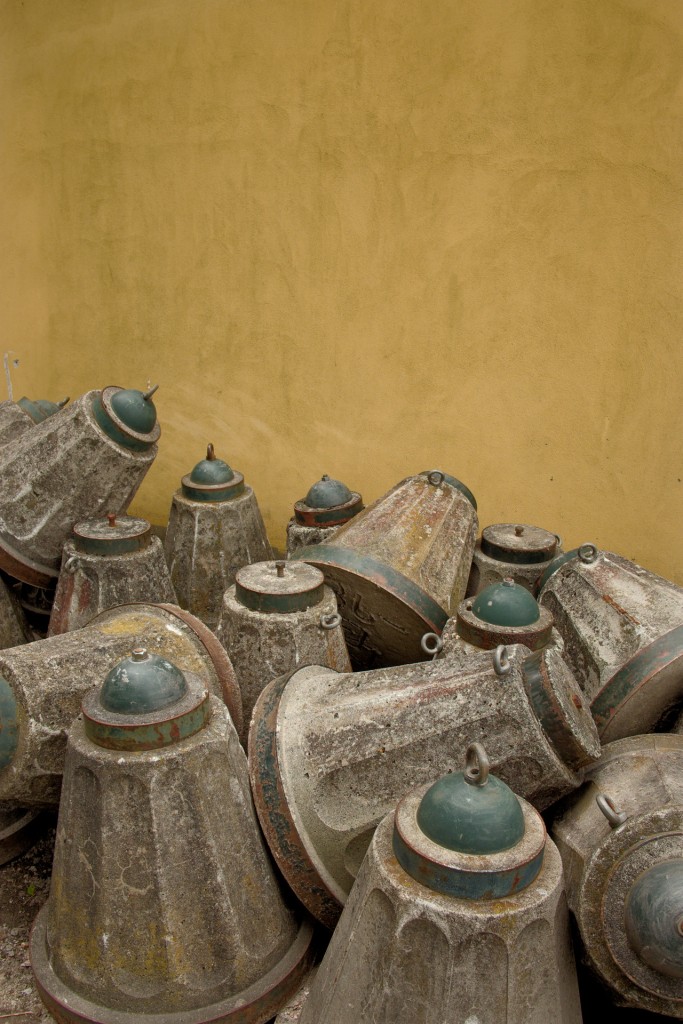
These collected barriers work not only to stop fascism but also to stop anti-fascism.
Martin Niemöller:
First they came for the Communists
And I did not speak out
Because I was not a Communist
Then they came for the Socialists
And I did not speak out
Because I was not a Socialist
Then they came for the trade unionists
And I did not speak out
Because I was not a trade unionist
Then they came for the Jews
And I did not speak out
Because I was not a Jew
Then they came for me
And there was no one left
To speak out for me
Martin Niemöller was a German Lutheran pastor and theologian born in Lippstadt, Germany, in 1892. Niemöller was an anti-Communist and supported Adolf Hitler’s rise to power. But when, after Hitler rose to power and insisted on the supremacy of the state over religion, Niemöller became disillusioned. He became the leader of a group of German clergymen opposed to Hitler. In 1937 he was arrested and eventually confined in Sachsenhausen and Dachau. He was released in 1945 by the Allies. He continued his career in Germany as a cleric and as a leading voice of penance and reconciliation for the German people after World War II. From Wikipedia

I name you three metamorphoses of the spirit: how the spirit shall become a camel, and the camel a lion, and the lion at last a child.
There are many heavy things for the spirit, for the strong, weight-bearing spirit in which dwell respect and awe: its strength longs for the heavy, for the heaviest.
What is heavy? thus asks the weight-bearing spirit, thus it kneels down like the camel and wants to be well laden.
What is the heaviest thing, you heroes? so asks the weight – bearing spirit, that I may take it upon me and rejoice in my strength.
Is it not this: to debase yourself in order to injure your pride? To let your folly shine out in order to mock your wisdom?
Or is it this: to desert our cause when it is celebrating its victory? To climb high mountains in order to tempt the tempter?
Or is it this: to feed upon the acorns and grass of knowledge and for the sake of truth to suffer hunger of the soul?
Or is it this: to be sick and to send away comforters and make friends with the deaf, who never hear what you ask?
Or is it this: to wade into dirty water when it is the water of truth, and not to disdain cold frogs and hot toads?
Or is it this: to love those who despise us and to offer our hand to the ghost when it wants to frighten us?
The weight-bearing spirit takes upon itself all these heaviest things: like a camel hurrying laden into the desert, thus it hurries into its desert.
But in the loneliest desert the second metamorphosis occurs: the spirit here becomes a lion; it wants to capture freedom and be lord in its own desert.
It seeks here its ultimate lord: it will be an enemy to him and to its ultimate God, it will struggle for victory with the great dragon.
What is the great dragon which the spirit no longer wants to call lord and God? The great dragon is called ‘Thou shalt’. But the spirit of the lion says ‘I will!’
‘Thou shalt’ lies in its path, sparkling with gold, a scale-covered beast, and on every scale glitters golden ‘Thou shalt’.
Values of a thousand years glitter on the scales, and thus speaks the mightiest of all dragons: ‘All the values of things – glitter on me.
‘All values have already been created, and all created values – are in me. Truly, there shall be no more “I will”!’ Thus speaks the dragon.
My brothers, why is the lion needed in the spirit? Why does the beast of burden, that renounces and is reverent, not suffice?
To create new values – even the lion is incapable of that: but to create itself freedom for new creation – that the might of the lion can do.
To create freedom for itself and a sacred No even to duty: the lion is needed for that, my brothers.
To seize the right to new values – that is the most terrible proceeding for a weight-bearing and reverential spirit Truly, to this spirit it is a theft and a work for an animal of prey.
Once it loved this ‘Thou shalt’ as its holiest thing: now it has to find illusion and caprice even in the holiest, that it may steal freedom from its love: the lion is needed for this theft.
But tell me, my brothers, what can the child do that even the lion cannot? Why must the preying lion still become a child?
The child is innocence and forgetfulness, a new beginning, a sport, a self-propelling wheel, a first motion, a sacred Yes.
Yes, a sacred Yes is needed, my brothers, for the sport of creation: the spirit now wills its own will, the spirit sundered from the world now wins its own world.
I have named you three metamorphoses of the spirit: how the spirit became a camel, and the camel a lion, and the lion at last a child.
Thus spoke Zarathustra. And at that time he was living in the town called The Pied Cow.

8 What alone can our teaching be? – That no one gives a human being his qualities: not God, not society, not his parents or ancestors, not he himself ( – the nonsensical idea here last rejected was propounded, as ‘intelligible freedom’, by Kant, and perhaps also by Plato before him). No one is accountable for existing at all, or for being constituted as he is, or for living in the circumstances and surroundings in which he lives. The fatality of his nature cannot be disentangled from the fatality of all that which has been and will be. He is not the result of a special design, a will, a purpose; he is not the subject of an attempt to attain to an ‘ideal of man’ or an ‘ideal of happiness’ or an ‘ideal of morality’ – it is absurd to want to hand over his nature to some purpose or other. We invented the concept ‘purpose’: in reality purpose is lacking .… One is necessary, one is a piece of fate, one belongs to the whole, one is in the whole – there exists nothing which could judge, measure, compare, condemn our being, for that would be to judge, measure, compare, condemn the whole.… But nothing exists apart from the whole! – That no one is any longer made accountable, that the kind of being manifested cannot be traced back to a causa prima that the world is a unity neither as sensorium nor as ‘spirit’, this alone is the great liberation – thus alone is the innocence of becoming restored.… The concept ‘God’ has hitherto been the greatest objection to existence.… We deny God; in denying God, we deny accountability: only by doing that do we redeem the world.

I was walking along a path with two friends – the sun was setting – suddenly the sky turned blood red – I paused, feeling exhausted, and leaned on the fence – there was blood and tongues of fire above the blue-black fjord and the city – my friends walked on, and I stood there trembling with anxiety – and I sensed an infinite scream passing through nature.
13 Towards the re-education of the human race. – Men of application and goodwill assist in this one work: to take the concept of punishment which has overrun the whole world and root it out! There exists no more noxious weed! Not only has it been implanted into the consequences of our actions- and how dreadful and repugnant to reason even this is, to conceive cause and effect as cause and punishment! – but they have gone further and, through this infamous mode of interpretation with the aid of the concept of punishment, robbed of its innocence the whole purely chance character of events. Indeed, they have gone so far in their madness as to demand that we feel our very existence to be a punishment- it is as though the education of the human race had hitherto been directed by the fantasies of jailers and hangmen!

There can be no true humanity, no true self-respect, without self- reliance. No one can help you if you do not help yourselves. We do not promise to do anything for you, we do not want anything from you, we only appeal to you to co-operate with us to bring about a state of society which will make freedom, well-being possible for all.
To do this efficiently, we must all be imbued with the spirit of freedom, and this – freedom, and freedom alone – is the fundamental principle of Anarchy.
Freedom is a necessary condition to, and the only guarantee of, the proper development of mankind. Nature is most beautiful when unfettered by the artificial interference of man. Wild animals are stronger and more harmoniously developed than their domesticated kind, which the exploiting mind of man makes mere instruments of profit by developing chiefly those parts of them which are of use to him. The same threatens to be the case with the human victims of exploitation, if an end is not put to the system which allows the rich and crafty exploiters to reduce the greater part of mankind to a position resembling that of domestic animals – working machines, only fit to do mechanically a certain kind of work, but becoming intellectually wrecked and ruined.
All who acknowledge this to be the great danger to human progress should carefully ponder over it, and if they believe that it is necessary to ensure by every means the free development of humanity, and to remove by all means every obstacle placed in its path, they should join us and adopt the principles of Anarchism.
Belief in and submission to authority is the root cause of all our misery. The remedy we recommend: – struggle unto death against all authority, whether it be that of physical force identical with the State or that of doctrine and theories, the product of ages of ignorance and superstition inculcated into the workers minds from their childhood – such as religion, patriotism, obedience to the law, belief in the State, submission to the rich and titled, etc., generally speaking, the absence of any critical spirit in face of all the humbugs who victimise the workers again and again. We can only deal here briefly with all these subjects, and must limit ourselves to touch only on the chief points.
You can read the rest here: https://archive.org/details/anarchy_is_order_2003_nettlau_manifesto/mode/2up
You can read more about Max Nettlau here: https://iisg.amsterdam/en/about/history/max-nettlau

Neither Victims nor Executioners was a series of essays by Albert Camus that were serialized in Combat,[1] the daily newspaper of the French Resistance, in November 1946. In the essays he discusses violence and murder and the impact these have on those who perpetrate, suffer, or observe. Wikipedia
Yes, we must raise our voices. Up to this point, I have refrained from appealing to emotion. We are being torn apart by a logic of history which we have elaborated in every detail–a net which threatens to strangle us.
It is not emotion which can cut through the web of a logic which has gone to irrational lengths, but only reason which can meet logic on its own ground. But I should not want to leave the impression… that any program for the future can get along without our powers of love and indignation. I am well aware that it takes a powerful prime mover to get men into motion and that it is hard to throw one’s self into a struggle whose objectives are so modest and where hope has only a rational basis– and hardly even that. But the problem is not how to carry men away; it is essential, on the contrary, that they not be carried away but rather that they be made to understand clearly what they are doing.
To save what can be saved so as to open up some kind of future–that is the prime mover, the passion and the sacrifice that is required. It demands only that we reflect and then decide, clearly, whether humanity’s lot must be made still more miserable in order to achieve far-off and shadowy ends, whether we should accept a world bristling with arms where brother kills brother; or whether, on the contrary, we should avoid bloodshed and misery as much as possible so that we give a chance for survival to later generations better equipped than we are.

“Do not all theists insist that there can be no morality, no justice, honesty or fidelity without the belief in a Divine Power? Based upon fear and hope, such morality has always been a vile product, imbued partly with self-righteousness, partly with hypocrisy. As to truth, justice, and fidelity, who have been their brave exponents and daring proclaimers? Nearly always the godless ones: the Atheists; they lived, fought, and died for them. They knew that justice, truth, and fidelity are not conditioned in heaven, but that they are related to and interwoven with the tremendous changes going on in the social and material life of the human race; not fixed and eternal, but fluctuating, even as life itself.”
The Portable Atheist: Essential Readings for the Nonbeliever

183 Getting angry and punishing have their time. -Getting angry and punishing are our gifts from the animal world. Humans first come of age when they return this gift from the cradle to the animals. -Herein lies buried one of the greatest thoughts that humans can have, the thought of344 an advance upon all advancements. -Let us go forward a few millennia with one another, my friends! There is a great deal of joy still reserved for humans, the scent of which has not yet blown as far as our contemporaries! And indeed, we might expect to have this joy, even promise it to ourselves and testify to it as something necessary, if only the development of human reason does not stand still! Some day, we will no longer have the heart for the logical sin that lies concealed in anger and punishment, whether practiced individually or socially: some day, when heart and head have learned to dwell as closely to each other as they now still stand apart. That they no longer stand as far apart as they originally did becomes fairly visible by gazing upon the whole path of humanity; and the individual who surveys a life of inward work will become aware with a proud joy of the distance that has been overcome, the approach that has been accomplished and he can, upon this basis, risk having even greater hopes.

88 How we die is a matter of indifference. -The whole way in which a human thinks of death during the fullness of his life and the blossoming of his strength does admittedly provide very telling testimony about what we call his character; but the hour of death itself and his demeanor on the deathbed hardly matter for this at all. The exhaustion of an expiring existence, especially when old people die, the irregular or insufficient nourishment of the rain during this final time, the sometimes very violent pain, the untried and novel nature of the whole situation, and far too often the attack and retreat of superstitious impressions and anxieties, as if dying mattered a great deal and bridges of the most terrifying kind were being crossed- all this does not allow us to use dying as testimony about the living person. Nor is it true that a dying person is generally more honest than a living one: instead, almost everyone is tempted into a sometimes conscious, sometimes unconscious comedy of vanity by the solemn demeanor of the surrounding people and the repressed or flowing streams of tears and feelings. The seriousness with which every dying person is treated is surely the most exquisite pleasure of his entire life for many a poor, despised devil and a sort of compensation and partial payment for many deprivations.

539 (March-June 1888)
Parmenides said, “one cannot think of what is not”;-we are at the other extreme, and say “what can be thought of must certainly be a fiction. “
540 (1885)
There are many kinds of eyes. Even the sphinx has eyes- and consequently there are many kinds of “truths,” and consequently there is no truth.
When I started my journey into the world of what there is to know about us humans, I liked to go to one of the many second-hand bookstores in the town close to where I was living. For little money, you could buy a few books, and often I read the introduction and then decided if it was worth my time. One of these books was written By Erich Fromm, a German social psychologist with some provoking thoughts. The titles of some of his books speak for themselves: The Fear of Freedom, Man for Himself: An Inquiry into the Psychology of Ethics and The art of loving . From this last book, you can find some quotes and links to the pages of the book at archive.org
“Modern man has transformed himself into a commodity; he experiences his life energy as an investment with which he should make the highest profit, considering his position and the situation on the personality market. He is alienated from himself, from his fellow men and from nature. His main aim is profitable exchange of his skills, knowledge, and of himself, his “personality package” with others who are equally intent on a fair and profitable exchange. Life has no goal except the one to move, no principle except the one of fair exchange, no satisfaction except the one to consume.” The Art of Loving
“But actually, people want to conform to a much higher degree than they are forced to conform, at least in the Western democracies. Most people are not even aware of their need to conform. They live under the illusion that they follow their own ideas and inclinations, that they are individualists, that they have arrived at their opinions as the result of their own thinking—and that it just happens that their ideas are the same as those of the majority.” The Art of Loving
“Education is identical with helping the child realize his potentialities. The opposite of education is manipulation, which is based on the absence of faith in the growth of potentialities and the connection that a child will be right only if the adults put into him what is desirable and suppress what seems to be undesirable.” The Art of Loving
 Nochrisis