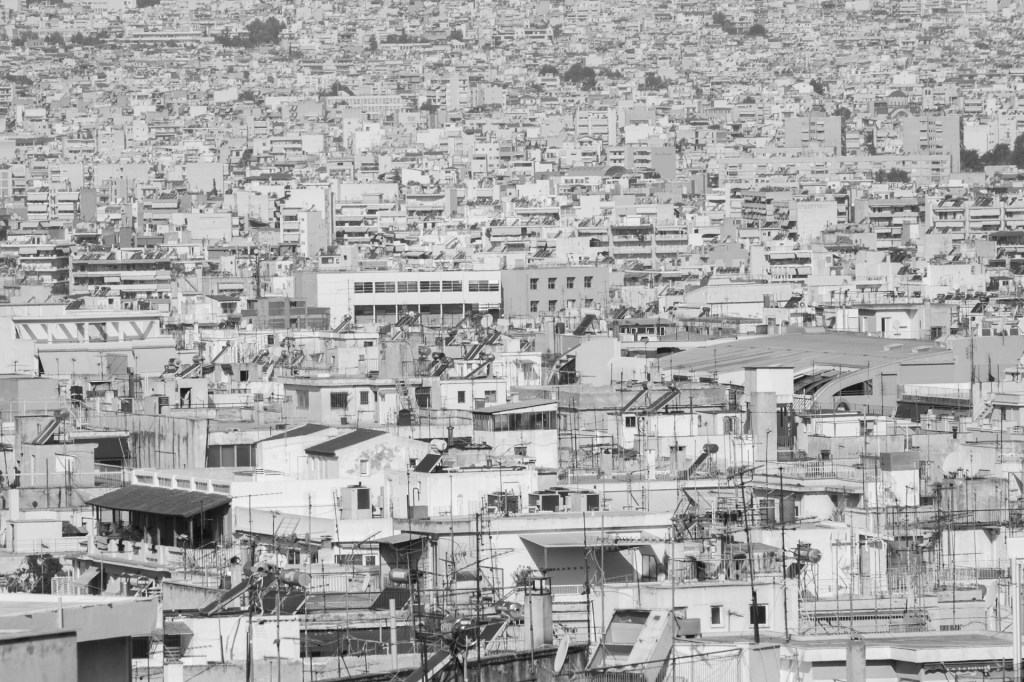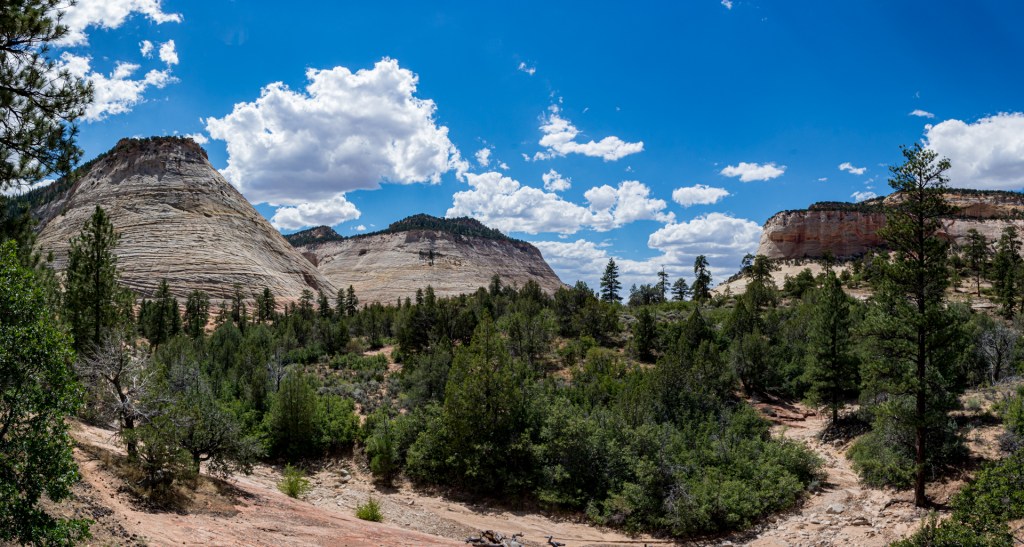
Day 2083, Nature.

Day's pictures

Henry D. Thoreau

Walden

The Pond in Winter

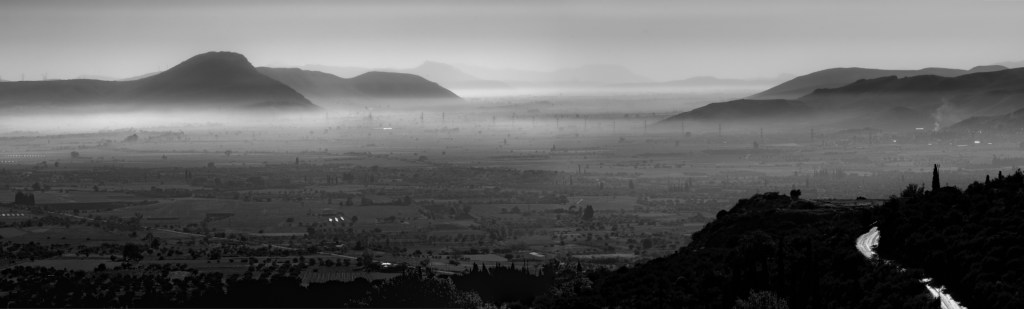
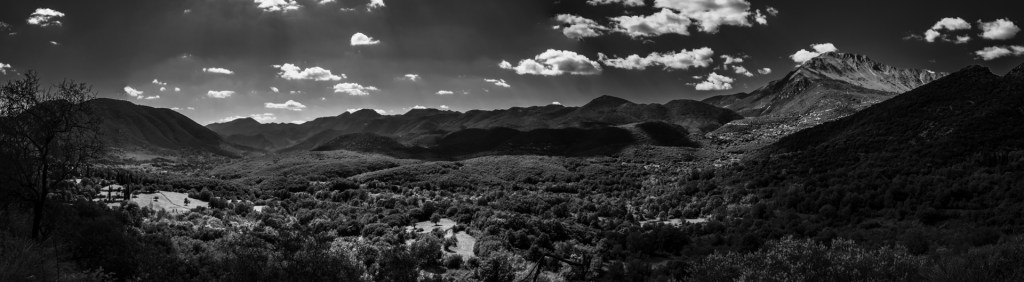
AFTER a still winter night I awoke with the impression that some question had been put to me, which I had been endeavoring in vain to answer in my sleep, as what—how—when—where? But there was dawning Nature, in whom all creatures live, looking in at my broad windows with serene and satisfied face, and no question on her lips. I awoke to an answered question, to Nature and daylight. The snow lying deep on the earth dotted with young pines, and the very slope of the hill on which my house is placed, seemed to say, Forward! Nature puts no question and answers none which we mortals ask. She has long ago taken her resolution. “O Prince, our eyes contemplate with admiration and transmit to the soul the wonderful and varied spectacle of this universe. The night veils without doubt a part of this glorious creation; but day comes to reveal to us this great work, which extends from earth even into the plains of the ether.”

Read the rest on Gutenborg.org
Day 2082, unclear.

Day's pictures
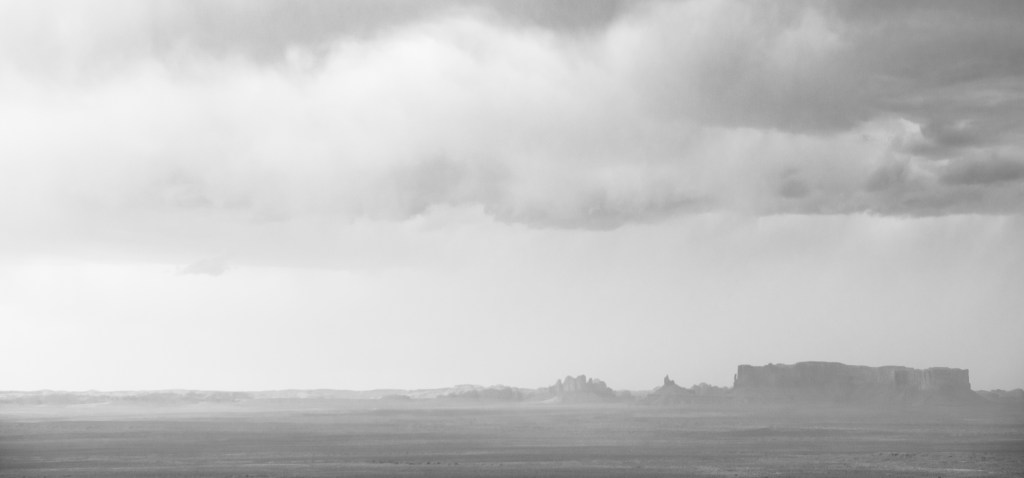
Utah, America, 2016

Friedrich Nietzsche

Daybreak, Book II

115.

The so-called “Ego.”—Language and the prejudices upon which language is based very often act as obstacles in our paths when we proceed to explore internal phenomena and impulses: as one example, we may instance the fact that there are only words to express the superlative degrees of these phenomena and impulses. Now, it is our habit no longer to observe accurately when words fail us, since it is difficult in such cases to think with precision: in former times, even, people involuntarily came to the conclusion that where the domain of words ceased, the domain of existence ceased also. Wrath, hatred, love, pity, desire, recognition, joy, pain: all these are names indicating extreme conditions; the milder and middle stages, and even more particularly the ever active lower stages, escape our attention, and yet it is they which weave the warp and woof of our character and destiny. It often happens that these extreme outbursts—and even the most moderate pleasure or displeasure of which we are actually conscious, whether in partaking of food or listening to a sound, is possibly, if properly estimated, merely an extreme outburst,—destroy the texture and are then violent exceptions, in most cases the consequences of some congestions,—and how easily as such can they mislead the observer! as indeed they mislead the person acting! We are all of us not what we appear to be according to the conditions for which alone we have consciousness and words, and consequently praise and blame. We fail to recognise ourselves after these coarse outbursts which are known to ourselves alone, we draw conclusions from data where the exceptions prove stronger than the rules; we misinterpret ourselves in reading our own ego’s pronouncements, which appeared to be so clear. But our opinion of ourselves, this so-called ego which we have arrived at by this wrong method, contributes henceforth to form our character and destiny.

Day 2080, moments.

Day's pictures

In 2016 we drove from Las Vegas to Salt Lake City to visit family. We could have flown directly to Salt Lake City, but the drive through Arizona and Utah is really beautiful, so we chose to rent a car and drive. The roads are quiet, and you can drive for hours without passing a village, let alone a city. For me, the landscape is very special, the endless deserts with vast views, for some precious moments you can feel…

Day 2079, Calydon.

Day's pictures
National archeological museum Athens – terracotta sphinx from Corinthia, ca.630 BC, Greece, 2014

I love to go to museums, but one thing that I do wrong is bringing a camera with me. With the camera in my hands, I look at the sculptures and jewelry but also how to take pictures of these objects and the rest that is exhibited. Doing this, I often forget to read what it is that I take pictures of, or I just glance at the text. I was in Greece 7 years ago, and for some reason, I felt the urge to see where all these objects I have taken pictures of are coming from.

I have found a lot of information on the internet, and you can read endlessly about the objects and where they came from and follow a trail of links. I do not intend to describe these objects in detail here on this blog; I just hope you get interested and start reading and searching yourself.

For this particular sculpture, I searched for the name of the museum in Athens, and after 30 pages of pictures, I finally saw a picture of this particular sculpture. I found the image on a site called hellenicaworld.com, and I found it specifically here and more here.  

Day 2078, Rhyton.

Day's pictures
National archeological museum Athens – Greece, Rhyton 1600 BC, 2014

According to Wikipedia, a Rhyton is: a roughly conical container from which fluids were intended to be drunk or to be poured in some ceremony such as libation*, or merely at table. They are typically formed in the shape of an animal’s head, and were produced over large areas of ancient Eurasia, especially from Persia to the Balkans. Many have an opening at the bottom through which the liquid fell; others did not, and were merely used as drinking cups, with the characteristic that they could not usually be set down on a surface without spilling their contents.

*a ritual pouring of a liquid, or grains such as rice, as an offering to a deity or spirit, or in memory of the dead.

I also found some good information on this site mywowo.net

Day 2077, amazing.

Day's pictures
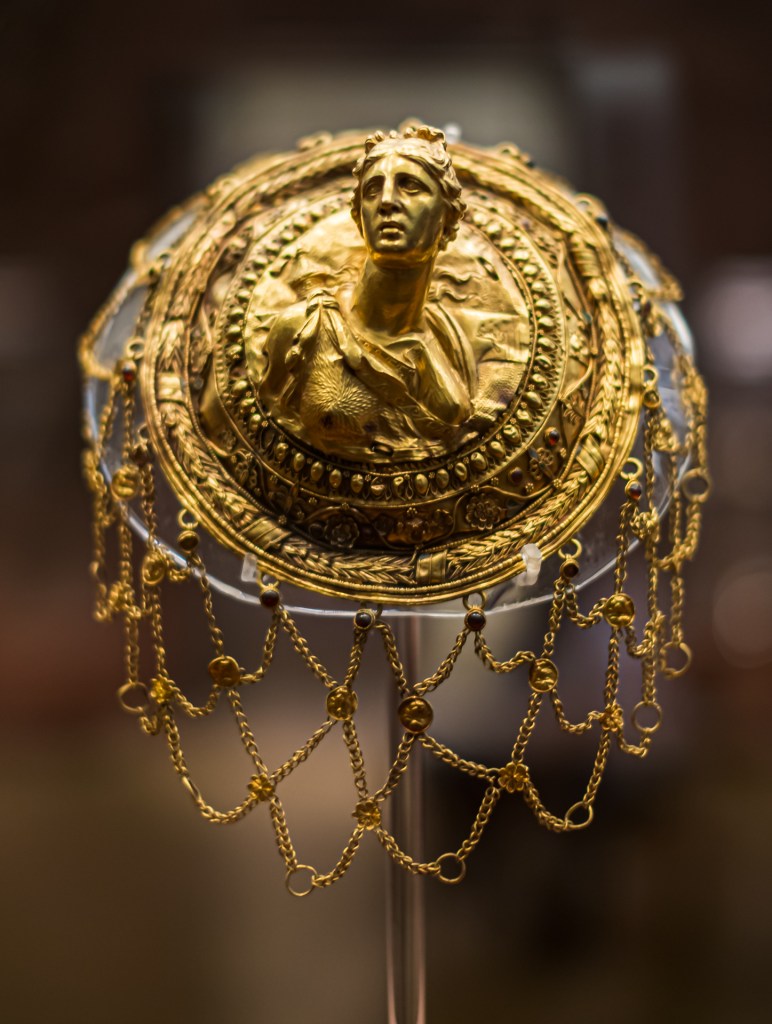
National archeological museum Athens – Greece, Hair jewel 3rd century BC, 2014

When I look at art or a jewel like this, especially made more than 2000 years ago, I always envision the artist or craftsman making this in patience, sitting in some contemporary workshop. I hear the noises outside their workshop and imagine what they think about while going for the groceries after work.

I also see all the little details and wonder how they made it and what kind of tools they used. Can you imagine making the little chains one by one, and what about the figure that protrudes out of the “chield”, if I correctly remember, it is not made out of solid gold but formed out of a thin plate. I think it is amazing, and the unknown artist will never have imagined that their work eventually ends up in a museum more than 2000 years later…and can be seen all over the world on a computer screen or telephone.

Day 2076, Artemis.

Day's pictures
Archaeological Museum of Delphi – Greece, Artemis, ivory and gold, 550 BC, 2014

Artemis is the Greek goddess of the hunt, the wilderness, wild animals, the Moon, and chastity. The goddess Diana is her Roman equivalent.

Artemis is the daughter of Zeus and Leto, and the twin sister of Apollo. She was the patron and protector of young children and women, and was believed to both bring disease upon women and children and relieve them of it. Artemis was worshipped as one of the primary goddesses of childbirth and midwifery along with Eileithyia. Much like Athena and Hestia, Artemis preferred to remain a maiden and was sworn never to marry.

Artemis was one of the most widely venerated of the Ancient Greek deities, and her temple at Ephesus was one of the Seven Wonders of the Ancient World. Artemis’ symbols included a bow and arrow, a quiver, and hunting knives, and the deer and the cypress were sacred to her. Diana, her Roman equivalent, was especially worshipped on the Aventine Hill in Rome, near Lake Nemi in the Alban Hills, and in Campania.

From Wikipedia.

Day 2075, Amphitrite.

Day's pictures
Arkitsa – Greece, 1014

In ancient Greek mythology, Amphitrite was a sea goddess and wife of Poseidon and the queen of the sea.  Under the influence of the Olympian pantheon, she became the consort of Poseidon and was later used as a symbolic representation of the sea.

Amphitrite was a daughter of Nereus and Doris; they called her the personification of the sea itself (saltwater). Amphitrite’s offspring included seals and dolphins. She also bred sea monsters, and her great waves crashed against the rocks, putting sailors at risk. Poseidon and Amphitrite had a son, Triton, who was a merman, and a daughter, Rhodos.

From Wikipedia

Day 2074, Knowledge and Wisdom.

Day's pictures
Greece, 2014

Knowledge and Wisdom

Bertrand Russell

Most people would agree that, although our age far surpasses all previous ages in knowledge, there has been no correlative increase in wisdom. But agreement ceases as soon as we attempt to define `wisdom’ and consider means of promoting it. I want to ask first what wisdom is, and then what can be done to teach it. There are, I think, several factors that contribute to wisdom. Of these I should put first a sense of proportion: the capacity to take account of all the important factors in a problem and to attach to each its due weight. This has become more difficult than it used to be owing to the extent and complexity fo the specialized knowledge required of various kinds of technicians. Suppose, for example, that you are engaged in research in scientific medicine. The work is difficult and is likely to absorb the whole of your intellectual energy. You have not time to consider the effect which your discoveries or inventions may have outside the field of medicine. You succeed (let us say), as modern medicine has succeeded, in enormously lowering the infant death-rate, not only in Europe and America, but also in Asia and Africa. This has the entirely unintended result of making the food supply inadequate and lowering the standard of life in the most populous parts of the world. To take an even more spectacular example, which is in everybody’s mind at the present time: You study the composistion of the atom from a disinterested desire for knowledge, and incidentally place in the hands of powerful lunatics the means of destroying the human race. In such ways the pursuit of knowledge may becorem harmful unless it is combined with wisdom; and wisdom in the sense of comprehensive vision is not necessarily present in specialists in the pursuit of knowledge.

Read the rest here.

Day 2072, The Discourses.

Day's pictures
Nafplion – Greece, 2014

Epictetus was a philosopher born in 50 AD, so more than 400 years later than Plato. There are no writings left written by himself, only work written down by pupils. His main work is called the Discourses. He is a stoic, and his work revolves around self-knowledge, discipline, logic, and reason.

This is a quote that summons up his work, in my opinion: “It’s not what happens to you, but how you react to it that matters.”

Underneath, you can read the first chapter of the Discourses. It is not the nicest read; it is structured and dry, but it forces you to think carefully about what he writes and where he goes.

The Discourses

By Epictetus

Book One, Chapter 1

Of the things which are in our Power, and not in our Power

Of all the faculties, you will find not one which is capable of contemplating itself; and, consequently, not capable either of approving or disapproving. How far does the grammatic art possess the contemplating power? As far as forming a judgement about what is written and spoken. And how far music? As far as judging about melody. Does either of them then contemplate itself? By no means. But when you must write something to your friend, grammar will tell you what words you must write; but whether you should write or not, grammar will not tell you. And so it is with music as to musical sounds; but whether you

Day 2071, where we must travel

Day's pictures

Friedrich Nietzsche

Human all too human

223 Where we must travel. -Immediate self-observation is far from sufficient for getting to know ourselves: we need history, for the past flows on, through us, in a hundred waves; indeed, we are ourselves nothing except what we experience at every moment of this onward flow. And even here, if we want to descend into the river of what seems to be our most individual and personal nature, the saying of Heraclitus holds true: we do not step into the same river twice. This is a truth that has gradually become stale, to be sure, but that has nonetheless remained as powerful and nourishing as it ever was: just like the other one that says, in order to understand history, we must seek out the living remains of historical epochs-that we must travel, as the patriarch Herodotus traveled, to other nations-these are, in fact, only the solidified earlier stages of cultures, on which we can place ourselves-to so-called savage and half-savage peoples, especially, where human beings have removed or not yet put on the garments of Europe.

Day 2070, stoicism.

Day's pictures

Meteora – Greece, 2014

One of the advantages of living in a foreign country is that I am no longer tempted to buy all kinds of old books. I lived close to a place called Deventer, and Deventer is known for the biggest outdoor book market in Europe. Because of this market that is open for a long weekend at the end of the summer, Deventer has a lot of stores where you can buy used books. I love going to these stores and buying old books like the one you see underneath. Modern books like this often have better translations and interpretations, but I just like that feeling that lasts for a second of me being there in 1911 and buying that book and opening the pages sitting in one of those old-fashioned café’s. Touching an old book is the closest I can get to that fleeting feeling.

This particular book goes about Roman stoicism, but because I want to keep it to Greek Philosophers, I chose a chapter about Heraclitus. Heraclitus is not as well known as the big three (Socrates, Plato, and Aristoteles), but there are enough more modern philosophers that have him in high regard, and through these philosophers, I came in contact with his work. There is not much over from his writings, and he is best known because others talked and wrote about him. I will leave you now with one chapter of this book from 1911 written by Edward Vernon Arnold.

Day 2069, On sleep and sleeplessness.

Day's pictures
Towards Olympia – Greece, 2014

The pictures you see were from a trip we made in 2014 to Greece. Most people go to the islands, but we decided to rent a car and drive through the main country and visit the ancient sites. It is a beautiful country with relatively few tourists, so all the sites are not overcrowded, and you can really enjoy it. We hadn’t planned to go to Greece that year; we wanted to visit my girlfriend’s family in America, so we prepared everything, and then I wanted to check-in at the airport, and the lady behind the counter told me that my passport was not valid anymore, it was just out of date. So that was some stress; we saved just enough money for the trip to America, but it was luckily enough to buy some new tickets to Greece and rent a car for three weeks and stay in the many reasonably priced hotels. It was a little bit stressful to travel without a passport, but it was still in Europe, so it should go alright, and it did. Greece popped in my head when I had to make a quick decision; we had already traveled through Norway for half a day, and my mind was set to go on holiday that day. Greece still had nice weather; it was at the end of September, so that was a plus, and I was always interested in seeing where all these philosophers lived that I know and sometimes read. It was an excellent choice; it was a shame that we couldn’t see her family, but we also learned that we could be flexible together when confronted with bad luck.

Day 2068, The Athenian constitutuion.

Day's pictures
Athens – Greece, 2014

Underneath, you can read part of a text by Aristotle. It is not sure if Aristotle wrote it or one of his students; you can read more on Wikipedia. You can read the whole text on Classic Archive. I find these old texts interesting; we still live in a society with a short attention span. We might know that there were wars and pandemics before but let us not learn from those events. I am a little cynical in this regard; is it possible to learn from history? I think you can if you put in the effort, but in the real world, it is almost impossible. It is much easier for people to react to a “new” situation head-on without studying the problem and seeing if there is something to learn from the past. I can’t speak for Aristotle, but I assume that he wrote this as some kind of education for future rulers, he probably still had hope, or maybe he was just like me and liked to write about it without any expectations, just writing for an imaginary world where people read history books to see how (not) to react at current situations.   

Aristotle

The Athenian constitutuion

16

Such was the origin and such the vicissitudes of the tyranny of Pisistratus. His administration was temperate, as has been said before, and more like constitutional government than a tyranny. Not only was he in every respect humane and mild and ready to forgive those who offended, but, in addition, he advanced money to the poorer people to help them in their labours, so that they might make their living by agriculture. In this he had two objects, first that they might not spend their time in the city but might be scattered over all the face of the country, and secondly that, being moderately well off and occupied with their own business, they might have neither the wish nor the time to attend to public affairs.