As long as I remember
I get tired of myself

so I must have
endless energy
As long as I remember
I get tired of myself
so I must have
endless energy
The latest chance
she watches you go
I watch her go
will I take her
or will she take me later
when I miss her
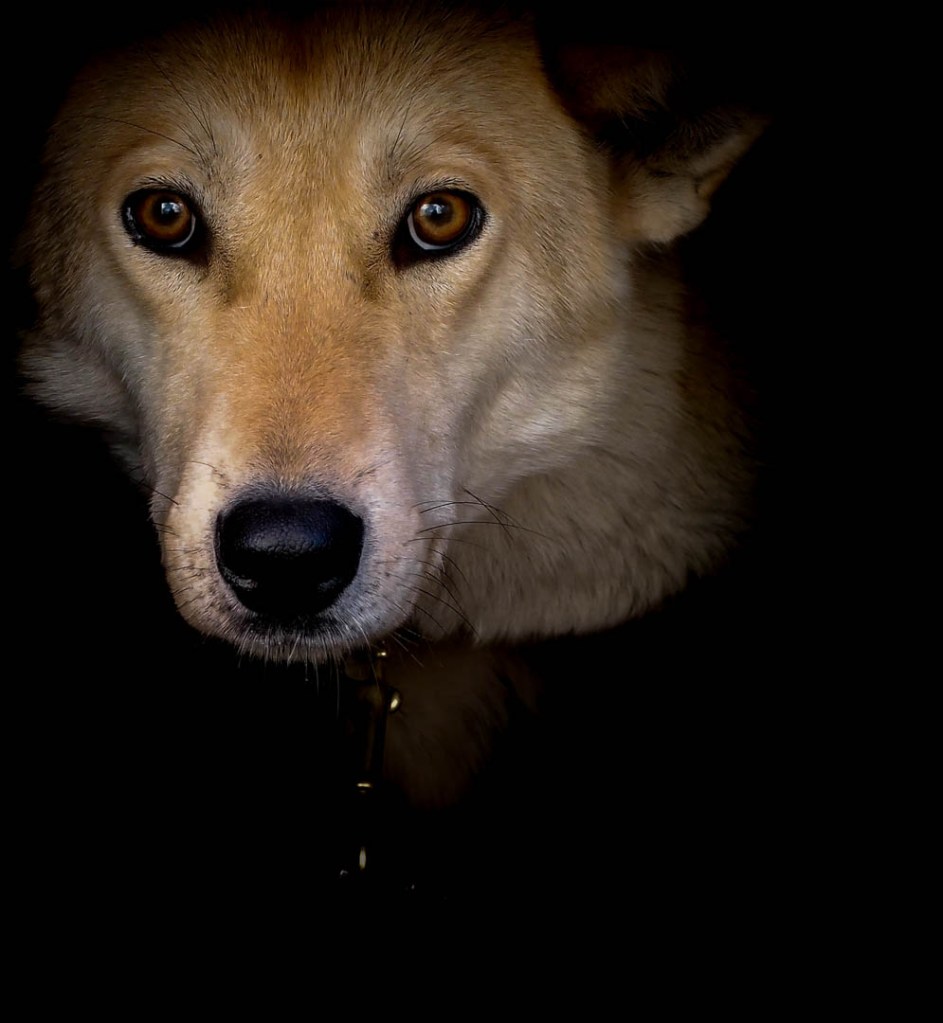
Your eyes tell so much
But mine nothing to you

You have no words
Only endless feelings
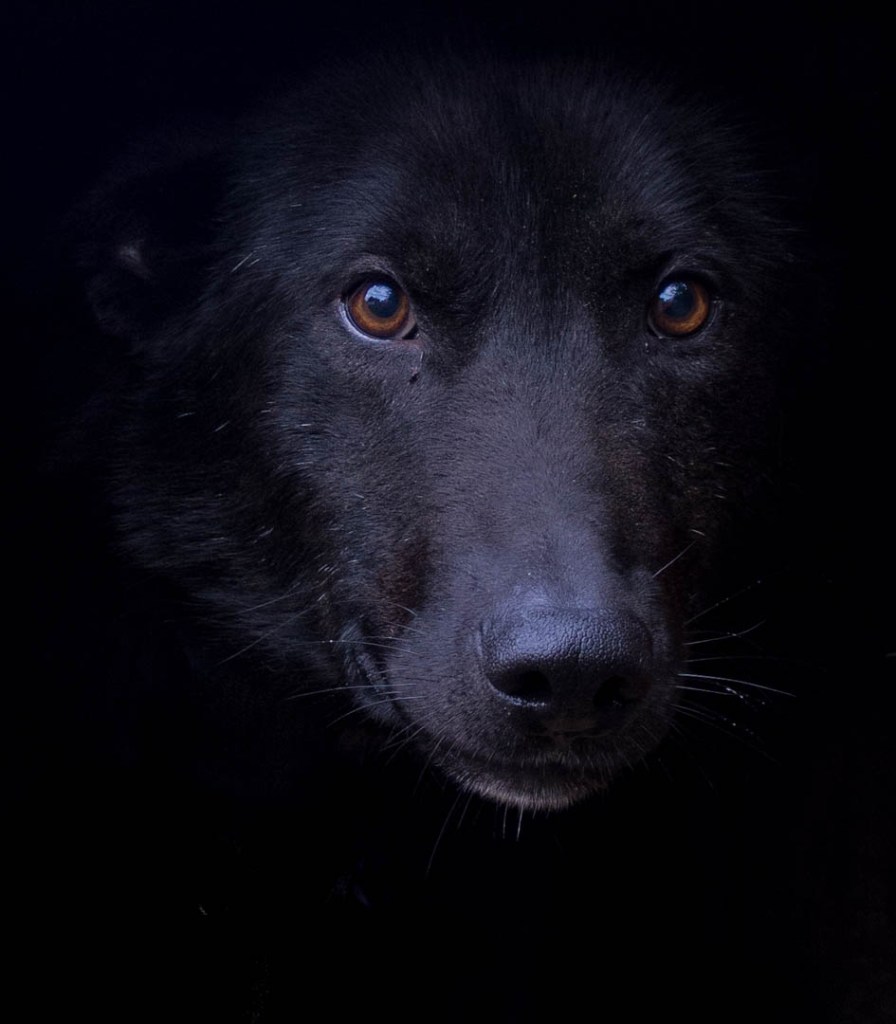
You can read a lot
in whoever's eyes

but look closer
and you only see
your own

Comunication is.
Am I the only one who knows what I am saying?
I am the only one who knows what I am saying?
Do I know what I am saying?
Can you tell what I am saying?
Can you tell what you think that I am saying?
Can you tell what you think I want to say?
Do you care what I say?
Do you just pretend?
Do I just pretend?
To know what I am saying.
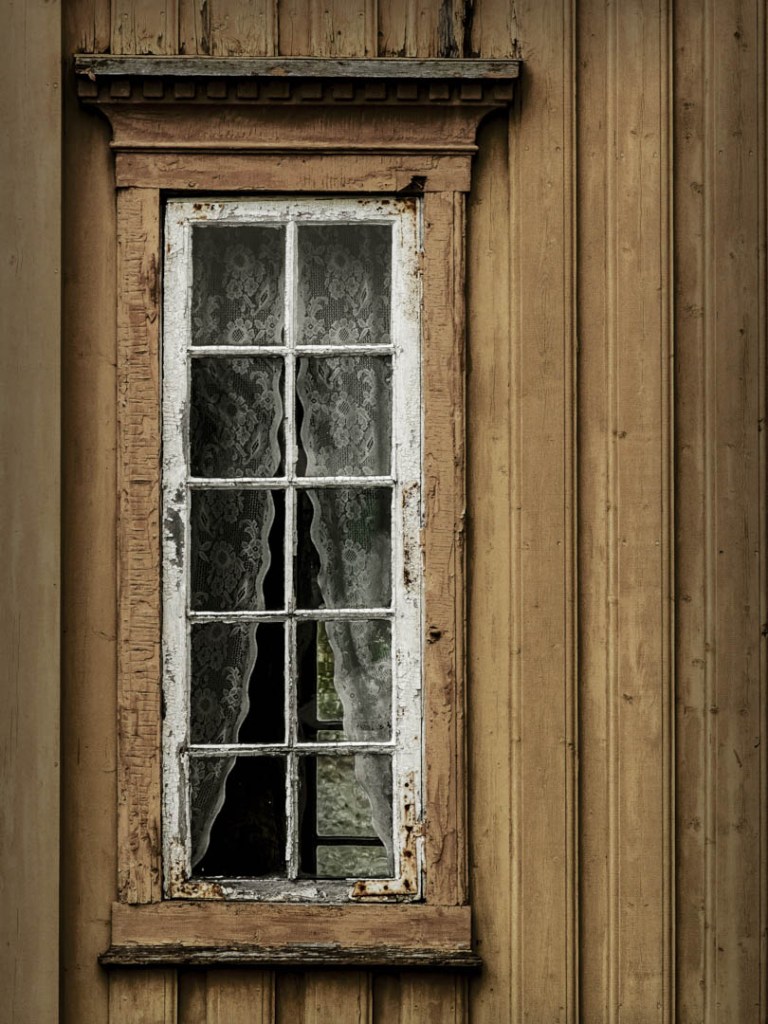
I look throught the old window
from outside
and it feels
like I am doing it from the inside
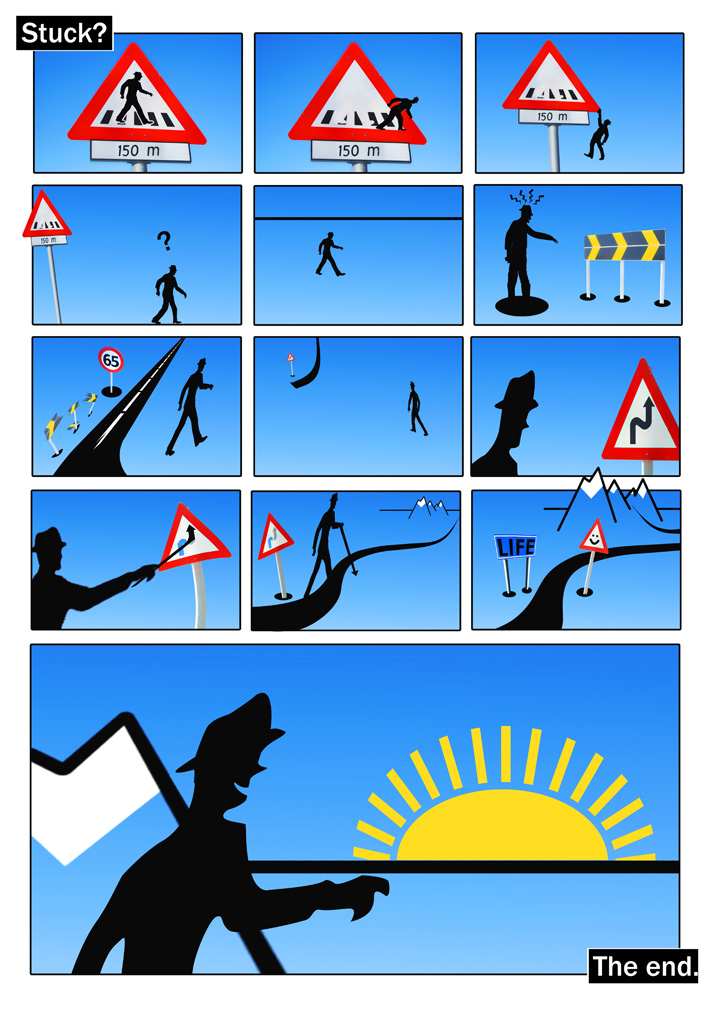
Gekooide dieren

Caged animals
Caged animals
From cage to cage
From institution to institution

From one cage to another I move,
the setting changes, but I do not,
not yet outside where I want to be, outside that cage.

But that world outside might
exist only here inside my head,
as hope without bars.

All those people out there, outside my cage,
I do not despise for their freedom,
but for their carelessness, their lack.

A lack of appreciation for their
cage without bars, their naivety,
their not knowing their own reality.

As a caged being I can say nothing,
I can pace back and forth like an animal,
but I am not able to speak.

As an animal I think in images,
feelings and reactions without words
that teach me, teach me nothing.

People talk and talk and convince
each other, confuse each other that this is so
and that is so, but only with words.

Only with words, hearsay,
from once, from the past, from him or her,
but without feeling.

Feeling that originates from the deepest
of what we all are,
caged animals.

Sunday 25 march 2007
In October 2006, I moved to Norway. It’s been 20 years, so I can be forgiven for not remembering everything so clearly, but aside from that excuse, I had a clear story in my mind about those first few years. This weekend, I read my blog from the first three years in Norway. Well, I didn’t actually read it all; I skimmed over it while I copied the text into a document (103 pages, 80.000 words) and fed it to a chatbot. I asked it all kinds of questions and requested it to show me all the quotes, and I was quite surprised. For the last 10 years, I’ve been writing a lot, and I feel like I know myself pretty well now. Because I think I know myself now, the time before the ten-year mark seems like the dark ages to me. It’s a period where I obviously thought about things. I left many relics behind in the form of books I’ve bought in those dark ages, but in my mind, it all felt pretty trivial.
The blog post was meant for family to read, and for the most part, it’s lighthearted. I talk about the weather, my work, and what I do in my free time. But I was also not afraid to share my feelings about life, myself, and the people around me.
One of my go-to stories when people ask why I moved to Norway is about the book “Nooit Meer Slapen” (Never Sleep Again) by the famous Dutch novelist W.F. Hermans. I read that book around age 16, and I can’t quite explain why it resonated with me, but what it represented stayed with me. I realize more and more how it reflects a part of me, the 16-year-old me, wearing a “Great Pretender” T-shirt, was already more aware than his intellect could put into words. The novel shows that human attempts to find certainty, meaning, and success often fail in an indifferent world where knowledge is unreliable and people are fundamentally alone.
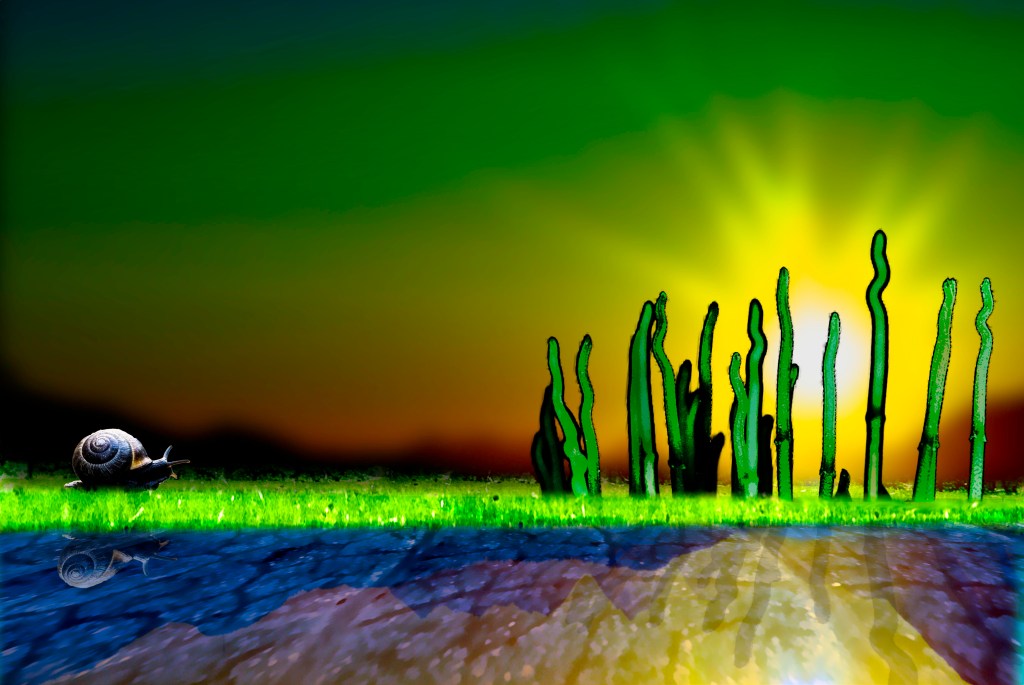
One step after another I walk toward that distant place among the peaks, where tonight the sun will cast its red glow for the millionth time in thousands of fading hues as the earth spins on its path of madness and joy, and I ponder it all the still, crisp air, the next step up and then down, my hand pressed to the earth to feel its reality, not as a dream here, where space widens my happiness and my gaze grows solitary, unburdened by memories of what once was, now both on my way and already arrived, enjoying the company of my past and present, the view of ice shattered into thousands of shards by the tides and the turning of the world, the moon that has watched me for millennia as I seek her before sleep, today’s cold stillness giving me rest before morning’s startled birds and another day in repetition, walking toward the horizon that at dusk bathes my soul in red and steals my breath, resigned to the days ahead and a world that continues without us until the sun reclaims what she gave, and we, as the dust, drift on, perhaps to live again, or next time as a red glow lighting the path of another traveler who does not yet know that the most important thing in life is simply to breathe.

I am build strong
shaping whatever was fed to me

still

I am standing outside now
in clear daylight
for everybody to see
weathering away

When butterflies don’t fly.
Fading away, overwhelmed in lies.
Wings eager, restricted by weeds.
Cracked mud of the soil grades the time.
When butterflies couldn’t fly.
Day 864
Definition by Chatbot: The concept of the individual is not as simple as it appears. It is often presented as a single, distinct human being, defined by unique biological, psychological, and social traits. But this definition is superficial. The idea of the individual as an autonomous, self-determining agent is largely an illusion. The mind does not generate ideas in isolation; it is shaped by language, culture, and education. Thoughts are constructed from what we absorb from others, from the environment, from history. The individual is not a self-contained entity but a reflection of inherited ideas and external forces.
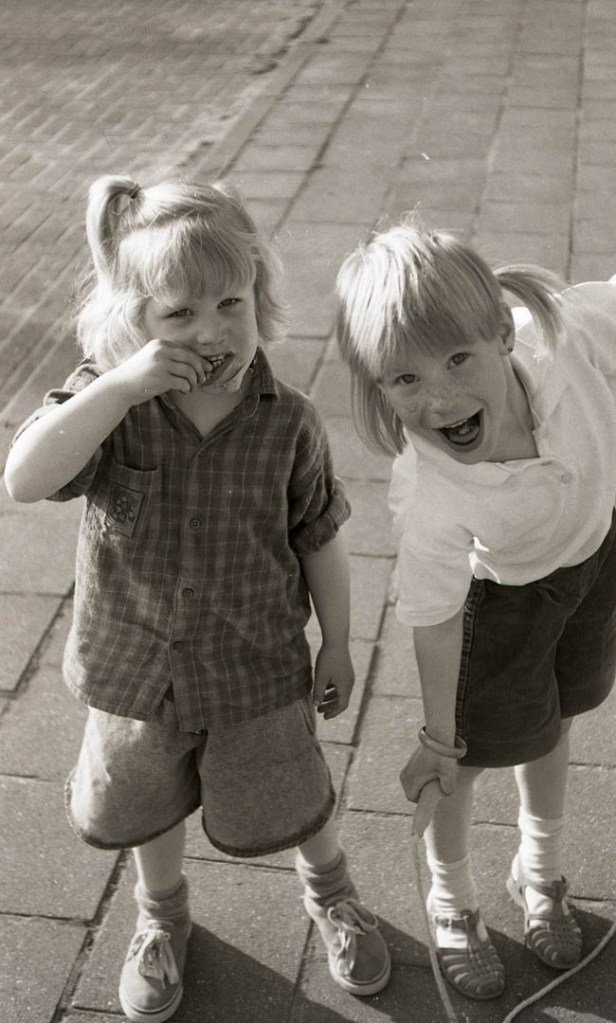
A youngling opens up,

to a world in riddles.
I admire Tolstoy, not because of his work, which I have never read, but because of what he stood for. I believe that when people say it is a fantastic read, I can see it after a few pages; I don’t have the time to read the rest. Too many books lie around that I have started reading or are waiting patiently for my attention. I have the idle hope that one day I will take the time. I found this quote online, well, not this quote, but something similar. The quotes you find online are not always correct, but after some digging, I found the source and read the chapter till I found it. Russians are a mysterious folk; I wish they still were, now they are as predictable as the rest.
“I have met him. But he’s a queer fish, and quite without breeding. You know, one of those uncouth new people one’s so often coming across nowadays, one of those free-thinkers you know, who are reared d’emblée in theories of atheism, scepticism, and materialism. In former days,” said Golenishtchev, not observing, or not willing to observe, that both Anna and Vronsky wanted to speak, “in former days the free – thinker was a man who had been brought up in ideas of religion, law, and morality, and only through conflict and struggle came to free – thought; but now there has sprung up a new type of born free – thinkers who grow up without even having heard of principles of morality or of religion, of the existence of authorities, who grow up directly in ideas of negation in everything, that is to say, savages.
Leo Tolstoy, Anna Karenina (Part 5, Chapter 9)
You can read the book here: https://www.gutenberg.org/ebooks/1399

The Core Themes of My Philosophical Journey
Summary of 10 years of writing by Chat.Mistral and curated by me.
As I reflect on my writings and the recurring ideas that have shaped my philosophical exploration, I see a tapestry of interconnected themes. These themes are not just abstract concepts but deeply personal reflections on what it means to be human, to search for meaning, and to navigate the complexities of existence. Here are the ten most common themes that have emerged in my work, expressed in my own voice and with the depth they deserve:
One of the central themes in my philosophy is the exploration of the nature of reality. I often find myself questioning how we perceive and understand the world around us. This theme involves delving into the complexities of human existence and the influence of our environment on our personal identity. As I’ve written, “The world is complex, much of our thinking is inherited, and certainty is rare.” This idea captures the essence of my inquiry into reality—acknowledging that our understanding is often shaped by factors beyond our immediate perception.
My writings frequently reflect on the essence of being human—the struggles, emotions, and experiences that define our existence. I delve into topics such as the role of visionaries, the impact of environment on mood, and the struggle with depression. These reflections are deeply personal, drawing on my own experiences and observations. In one of my entries, I wrote:
“Humanity learns to walk like a baby does, and what can you teach a baby? You can only encourage it with gestures and sounds because the rest has no meaning to them.”
This passage highlights my belief that our understanding of the human condition is a gradual process, shaped by our experiences and interactions with the world.
The search for meaning is a recurring theme in my work. I investigate the purpose and meaning of life, and how individuals can find meaning in their existence. This theme is central to my philosophical musings and reflections. As I’ve expressed:
“Philosophy gave me a manual for life, and maybe I’m still figuring it out, but one thing it has taught me so far is how to stand without ground beneath my feet, which is very useful if you’ve ever been depressed.”
This idea underscores the importance of finding meaning even in the face of uncertainty and instability. It’s about embracing the journey of self-discovery and understanding that meaning is not always readily apparent but must be sought through introspection and reflection.
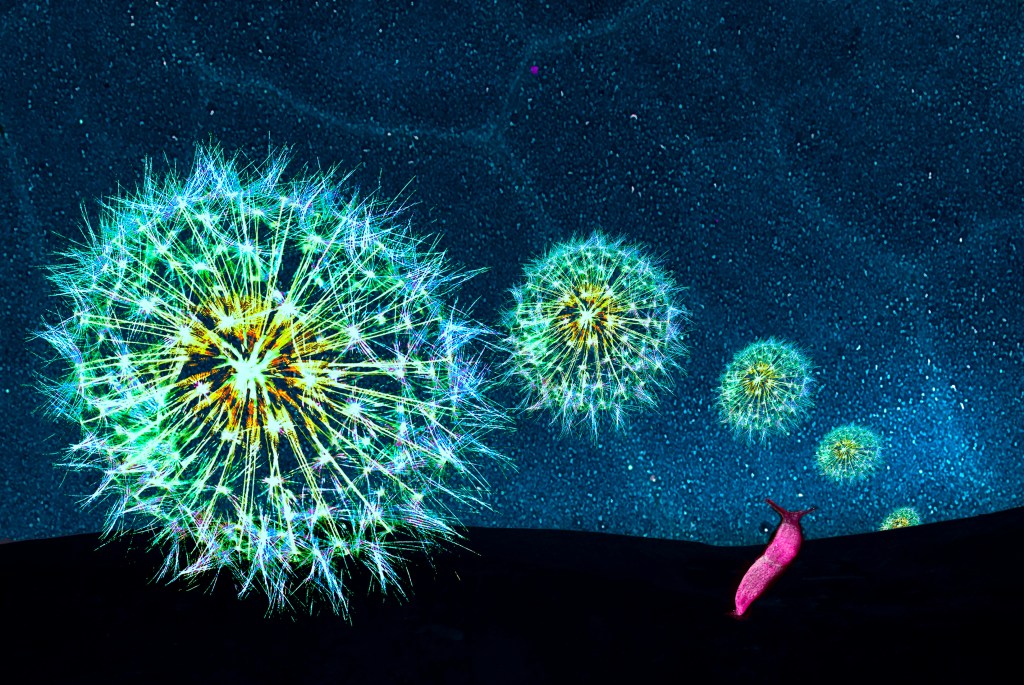
I tried out a new AI Chatbot (https://chat.mistral.ai/chat), one that is not US-based and respects your privacy more. I tested it out today, fed it 10 years of short poems, and asked for the 10 best ones. I guess it knows what it’s doing, so here they are. I didn’t specify what the format of the documents was, so it didn’t include the titles, no AI is that smart.
Preparing the day
for another trail of sweets
and bringing it home.
Decomposing leave
returning inhalation
autumn disquiet.
The wind is moving
bending wheat where it settles
in rough ground and sun.
The sun is too late
shrouded in drawn out shadows
it will never bloom.
Waiting for the ground
absorbing time, decisions
and giving it back.
Mother in nature
shining for posterities
yellow panama.
When butterflies don’t fly.
Fading away, overwhelmed in lies.
Wings eager, restricted by weeds.
Cracked mud of the soil grades the time.
When butterflies couldn’t fly.
Red berries in the sun.
The air smells from afternoon rain.
Let me forget and stand still.
And leave me here.
Delicate nature
in a midsummer’s warm wave
elegant white dress.
Alluring symbols
assessed by many facets
in virgin colors.
Some shadows
from memories
are colorized

maybe by the time
past
or the moment
Causal models are mathematical models representing causal relationships within an individual system or population. They facilitate inferences about causal relationships from statistical data. They can teach us a good deal about the epistemology of causation, and about the relationship between causation and probability. They have also been applied to topics of interest to philosophers, such as the logic of counterfactuals, decision theory, and the analysis of actual causation.
Causal modeling is an interdisciplinary field that has its origin in the statistical revolution of the 1920s, especially in the work of the American biologist and statistician Sewall Wright (1921). Important contributions have come from computer science, econometrics, epidemiology, philosophy, statistics, and other disciplines. Given the importance of causation to many areas of philosophy, there has been growing philosophical interest in the use of mathematical causal models. Two major works—Spirtes, Glymour, and Scheines 2000 (abbreviated SGS), and Pearl 2009—have been particularly influential.
A causal model makes predictions about the behavior of a system. In particular, a causal model entails the truth value, or the probability, of counterfactual claims about the system; it predicts the effects of interventions; and it entails the probabilistic dependence or independence of variables included in the model. Causal models also facilitate the inverse of these inferences: if we have observed probabilistic correlations among variables, or the outcomes of experimental interventions, we can determine which causal models are consistent with these observations. The discussion will focus on what it is possible to do in “in principle”. For example, we will consider the extent to which we can infer the correct causal structure of a system, given perfect information about the probability distribution over the variables in the system. This ignores the very real problem of inferring the true probabilities from finite sample data. In addition, the entry will discuss the application of causal models to the logic of counterfactuals, the analysis of causation, and decision theory.
Read the rest here: https://plato.stanford.edu/entries/causal-models/

The term ‘authentic’ is used either in the strong sense of being “of undisputed origin or authorship”, or in a weaker sense of being “faithful to an original” or a “reliable, accurate representation”. To say that something is authentic is to say that it is what it professes to be, or what it is reputed to be, in origin or authorship. But the distinction between authentic and derivative is more complicated when discussing authenticity as a characteristic attributed to human beings. For in this case, the question arises: What is it to be oneself, at one with oneself, or truly representing one’s self? The multiplicity of puzzles that arise in conjunction with the conception of authenticity connects with metaphysical, epistemological, and moral issues (for recent discussion, see Newman and Smith 2016; Heldke and Thomsen 2014). On the one hand, being oneself is inescapable, since whenever one makes a choice or acts, it is oneself who is doing these things. But on the other hand, we are sometimes inclined to say that some of the thoughts, decisions and actions that we undertake are not really one’s own and are therefore not genuinely expressive of who one is. Here, the issue is no longer of metaphysical nature, but rather about moral-psychology, identity and responsibility.
When used in this latter sense, the characterization describes a person who acts in accordance with desires, motives, ideals or beliefs that are not only hers (as opposed to someone else’s), but that also express who she really is. Bernard Williams captures this when he specifies authenticity as “the idea that some things are in some sense really you, or express what you are, and others aren’t” (quoted in Guignon 2004: viii).
Besides being a topic in philosophical debates, authenticity is also a pervasive ideal that impacts social and political thinking. In fact, one distinctive feature of recent Western intellectual developments has been a shift to what is called the “age of authenticity” (Taylor 2007; Ferrarra 1998). Therefore, understanding the concept also involves investigating its historical and philosophical sources and on the way it impacts the socio-political outlook of contemporary societies.
Read the rest here: https://plato.stanford.edu/entries/authenticity/

Kenneth Arrow’s “impossibility” theorem—the “general possibility” theorem, as he called it—answers a very basic question in the theory of collective decision-making. Say there are some alternatives to choose among. They could be policies, public projects, candidates in an election, distributions of income and labour requirements or just about anything else. There are some people whose preferences among these alternatives will inform this choice, and the question is: which procedures are there for deriving, from what is known or can be found out about their preferences, a collective or “social” ordering of the alternatives from better to worse? The answer is startling. Arrow’s theorem says there are no such procedures at all—none, anyway, that meet certain conditions concerning the autonomy of the people and the rationality of their preferences. The technical framework in which Arrow gave the question of social orderings a precise sense and its rigorous answer is now widely used for studying problems in welfare economics. The impossibility theorem itself set the agenda for contemporary social choice theory. Arrow accomplished this while still a graduate student. In 1972, he received the Nobel Prize in economics for his contributions.
Read the rest here: https://plato.stanford.edu/entries/arrows-theorem/
 Nochrisis