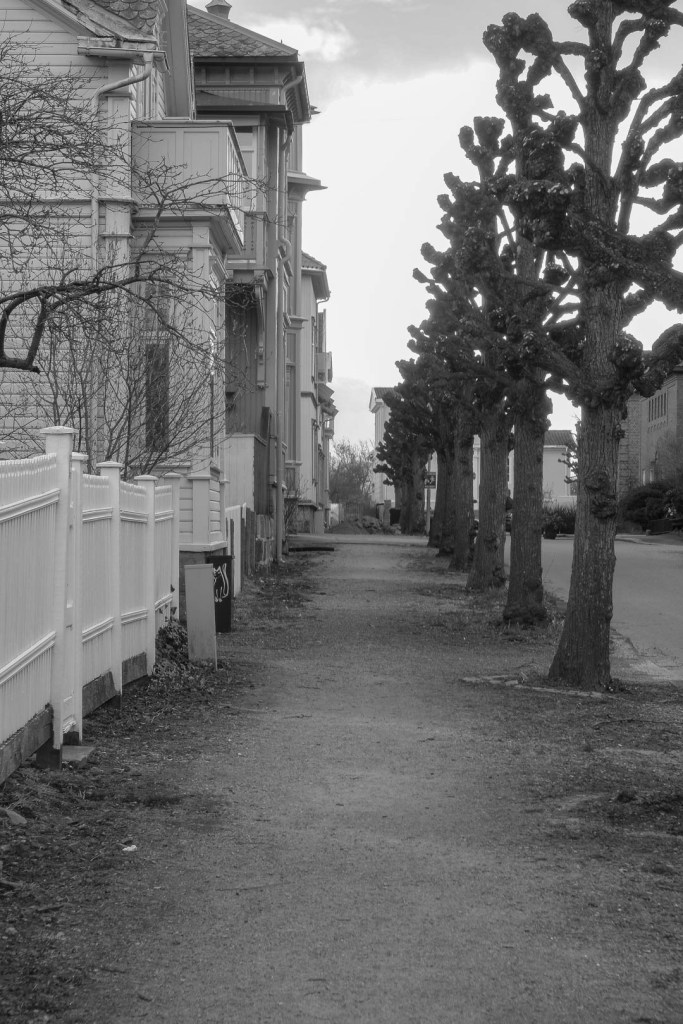
Day 2965, standing in the light.

Daily picture, My thoughts, Quotes

I enjoy thinking about all these abstract ideas about our minds, free will, and the limits of what we can know. I think about these things when I write in the evening and sometimes during the day, but I also have a normal job and have to interact with people who have no interest and probably have no clue about these thoughts I have. It is like having some obscure hobby; people like you to tell about it but not too much, and you probably have to use a lot of words to explain a detail while discussing with someone with the same hobby, a name and a nod will often be enough.

I can only write in the evenings, and often, a long day of work has taken most of my energy. I have tried to organize my work, and I have many lists with ideas and attempts. One philosopher I like is Benedict de Spinoza. I bought his book Ethics many years ago, not to read it but just to have it and maybe look up some quotes. He probably had the same problem that I have with organizing his thoughts. The difference is that he started systematically and didn’t quit. You can read on Wikipedia in more detail about his process, but, in short, he writes down propositions comes up with proofs, and connects all of these with each other. I wish I had the time to study it; maybe one day, I will.

The way I study philosophy, the way I got into it, was by reading general books about philosophy and, over time, books about philosophers. I later mixed this with books written by philosophers, but the main thing I learned from this approach is who is who and who is read by whom. Spinoza is one of those philosophers who is read by most philosophers after him, maybe not as much as the three famous Greek philosophers, but his thoughts were, and still are, important. Together with his contemporary philosophers like Rene Descartes and Gottfried Leibniz, he paved the way from ancient Greek thought to our modern, more rationalistic society. I cannot tell you in detail why he is important, but because he is highly regarded by his peers, I will also regard him highly. It is like admiring Einstein while only understanding 5% of why he should be admired. 

Another challenge with studying philosophy this way is that I might have strong disagreements with, for example, Spinoza, but if many accomplished philosophers agree with him then I have to figure out why my criticism seems to be wrong. For me, this is a good lesson in humility but it is important to get a good overview of who is who in philosophy or whatever new field of knowledge you enter. That’s why I never recommend reading books written by philosophers at the beginning of your journey; you might not know that the first book you read is from a charlatan, or you might disagree with an expert in its field because you don’t recognize them as such.  

You can read part of Spinoza’s book underneath and the rest at Gutenberg.org. I highlighted one part that I quoted in an earlier post. This is why I bought his book years ago: so I can place quotes I read in their contexts. These days, you can do all of this on the internet.


From Ethics (1677)

PROP. XXXV. Falsity consists in the privation of knowledge, which inadequate, fragmentary, or confused ideas involve.

Proof. — There is nothing positive in ideas, which causes them to be called false (II. xxxiii.); but falsity cannot consist in simple privation (for minds, not bodies, are said to err and to be mistaken), neither can it consist in absolute ignorance, for ignorance and error are not identical; wherefore it consists in the privation of knowledge, which inadequate, fragmentary, or confused ideas involve. Q.E.D.

Note. — In the note to II. xvii. I explained how error consists in the privation of knowledge, but in order to throw more light on the subject I will give an example. For instance, men are mistaken in thinking themselves free; their opinion is made up of consciousness of their own actions, and ignorance of the causes by which they are conditioned. Their idea of freedom, therefore, is simply their ignorance of any cause for their actions. As for their saying that human actions depend on the will, this is a mere phrase without any idea to correspond thereto. What the will is, and how it moves the body, they none of them know; those who boast of such knowledge, and feign dwellings and habitations for the soul, are wont to provoke either laughter or disgust. So, again, when we look at the sun, we imagine that it is distant from us about two hundred feet; this error does not lie solely in this fancy, but in the fact that, while we thus imagine, we do not know the sun’s true distance or the cause of the fancy. For although we afterwards learn, that the sun is distant from us more than six hundred of the earth’s diameters, we none the less shall fancy it to be near; for we do not imagine the sun as near us, because we are ignorant of its true distance, but because the modification of our body involves the essence of the sun, in so far as our said body is affected thereby.


 

Day 2964, Individual.

Daily picture, My thoughts, Quotes

Individualism. I was raised in the West, and as such, I believed, till I was around 21, that the goal in life was to make a good life for myself. I didn’t know what I wanted, but I wanted to make money and use this to buy my way to a future that mostly revolved around me. I had no idea what kind of negative effect this individualistic and capitalistic mindset had on the world, it didn’t cross my mind, till it did. I am still guilty of this inbred behavior, but at least I feel guilty now, and I try to steer away from what comes easy. But it has steered my choices in profound ways,  I have worked for nonprofit organizations for most of my career, a more or less conscious decision. 

However, this individualism or egoism is not unique to only our culture; we are all different in the way we look and the experiences we have, and the culture we grew up in is not more than a layer this experience has to go through. We also have a slightly unique way of dealing with the world around us and within us, but all these individual characteristics are, for the most part, exclusively yours, only when you look really close. Our uniqueness fades away the more distance you have from it. You can describe unique characteristics to a group of a thousand people and forget that it’s made up of a thousand individuals and you. 

You are also made up of a thousand individual parts and experiences, and you and the outside world see that combination as your characteristics, your individuality. But just as a group of a thousand people can only be judged on a superficial level and thus labeled, so is your individuality a loose… estimation of who you are.  Maybe there isn’t even a real you besides this view from a distance of the parts that seem to form you.

Does this all matter? You are so used to yourself and how you behave that it might as well be seen as being a part of who you are. So-called reality will probably agree with you, and in our daily life, it is easier to say about yourself or someone else who and what we or they seem to be. However, the downside of putting each other in boxes is that there are a lot of problems with this. Look at history and the news and see how often labels around people’s necks are part of the problem and even worse when whole groups get labeled and are put in boxes.

It is something typically human, I think. Imagine the first humans learning how to speak and how the most influential person in that first group decided what to name the things around them, the one with the loudest voice you could say. We are all conditioned to accept authority in our lives and the naming they do, even the flawed authority in ourselves.

Who are you? I think the best way of finding yourself is not to look for it but just be and take what you seem to be not too seriously, especially the labels attached to certain behaviors because labels come with expectations, and expectations are not timeless, let alone real. 

“The surest way to corrupt a youth is to instruct him to hold in higher esteem those who think alike than those who think differently.” Friedrich Nietzsche

“I won’t tell you that the world matters nothing, or the world’s voice, or the voice of society. They matter a good deal. They matter far too much. But there are moments when one has to choose between living one’s own life, fully, entirely, completely—or dragging out some false, shallow, degrading existence that the world in its hypocrisy demands. You have that moment now. Choose!” Oscar Wilde

“You can’t, if you can’t feel it, if it never
Rises from the soul, and sways
The heart of every single hearer,
With deepest power, in simple ways.
You’ll sit forever, gluing things together,
Cooking up a stew from other’s scraps,
Blowing on a miserable fire,
Made from your heap of dying ash.
Let apes and children praise your art,
If their admiration’s to your taste,
But you’ll never speak from heart to heart,
Unless it rises up from your heart’s space.”
Johann Wolfgang von Goethe

Day 2962, control.

Daily picture, Quotes

J. Krishnamurti

The Krishnamurti reader
15 Life without a Shadow of Control

…So the question arises, can thought be aware of itself? You are thinking now, aren’t you? When I ask you a question, the whole movement of thinking arises. Right? Obviously. Now I am asking  whether that thinking itself sees itself thinking? No, it is not possible. You see, I am asking whether one can live a life without having a single conflict, a single effort, without any form of control. We live with effort, we struggle; there is always achieving, moving, and so our life is lived in constant struggle, constant battle, constant contradiction-“I must do this, I must not do that, I must control myself, why should I control myself, that is oldfashioned, I will do what I want to do.” All that is a movement of violence. We are asking if it is possible to live without any shadow of control. Which does not mean doing everything you want to do. That is too childish, because you cannot. Where there is control there is conflict, there is a battle going on, which expresses  itself in many, many different ways-violence, suppression, neuroticism, and permissiveness. So I am asking myself and you whether we can live a daily life without a shadow of control. To live that way, I have to find out who the controller is. Is the controller different from the controlled? If they are both the same, there is no need for control. If I am jealous because you have everything and I have nothing, from that jealousy arises anger, hatred, envy, a sense of violence. I want to have all that you have, and if I can’t get it I get bitter, angry, and all the rest follows. So can I live without jealousy, which means without comparison? Test it out. Can you live your daily life without comparing at all? Of course there is comparing when I choose something to wear. I am not talking about that. I am talking about not having any sense of measurement psychologically, which is comparison. If you have no measurement at all, will you decay, will you become a vegetable, do nothing, stagnate? Because you are comparing, because you are struggling, you think you are living, but if you don’t struggle, it may be a totally different form of living.

Day 2958, we don’t.

Daily picture, My thoughts, Poetry
Words are symbols we can disagree on

but not the meaning behind them

I have lived among people who don’t speak my language for a long time. I understand them well enough, but not when they speak their own dialects. But still… I learn who they are by the abundance of other signals. Language is overrated as one of the tools that helps us communicate with each other.

We might speak to ourselves every now and then, but most of the time, these words are afterthoughts thrown at our actions and feelings, a clumsy way to rationalize or order our inner world. In some sense, we also do this when we communicate with others outside ourselves. We don’t need to talk to the people we really know. 


Day 2957, when we play.

Daily picture, My thoughts

The strange thing about us humans is that we sometimes learn to see something we hold as truth in a new light. We learned something new, and looking back, we find it hard to understand how we could ever have been so foolish. But then, we keep on living and believing many of our other and sometimes older beliefs. Are we so hardwired to believe what is in us despite the knowledge that we have been wrong many times? Intelligence might be just a trick we dumb animals are only good at when we play. 

Day 2955, wondering.

Daily picture, Quotes

Friedrich Nietzsche

Untimely Meditations
On the uses and disadvantages of history for life

1. Consider the cattle, grazing as they pass you by: they do not know what is meant by yesterday or today, they leap about, eat, rest, digest, leap about again, and so from morn till night and from day to day, fettered to the moment and its pleasure or displeasure, and thus neither melancholy nor bored. This is a hard sight for man to see; for, though he thinks himself better than the animals because he is human, he cannot help envying them their happiness – what they have, a life neither bored nor painful, is precisely what he wants, yet he cannot have it because he refuses to be like an animal. A human being may well ask an animal: ‘Why do you not speak to me of your happiness but only stand and gaze at me?’ The animal would like to answer, and say: ‘The reason is I always forget what I was going to say’ -but then he forgot this answer too, and stayed silent: so that the human being was left wondering.

Day 2848, new keel.

Boat building, Daily picture

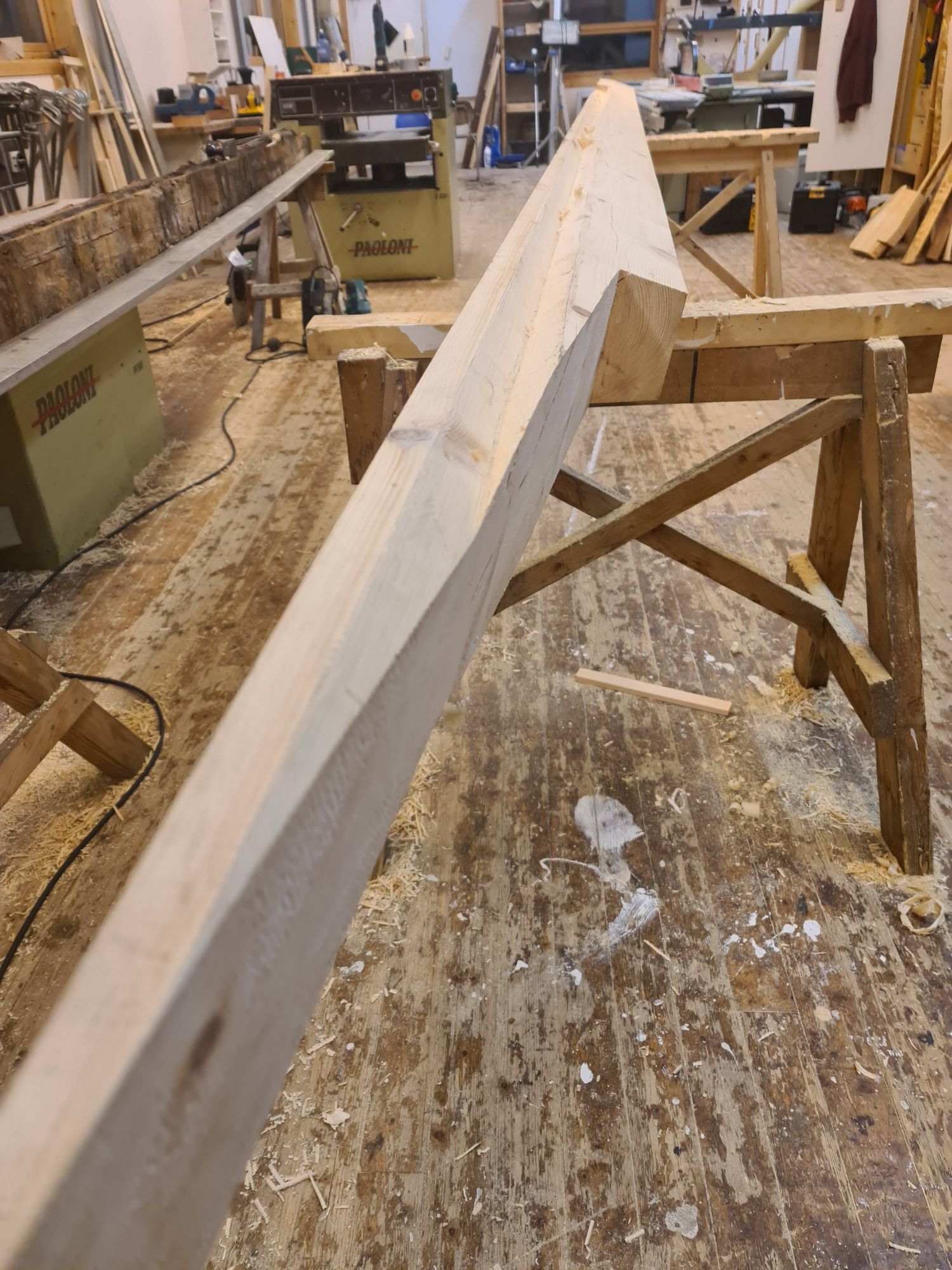
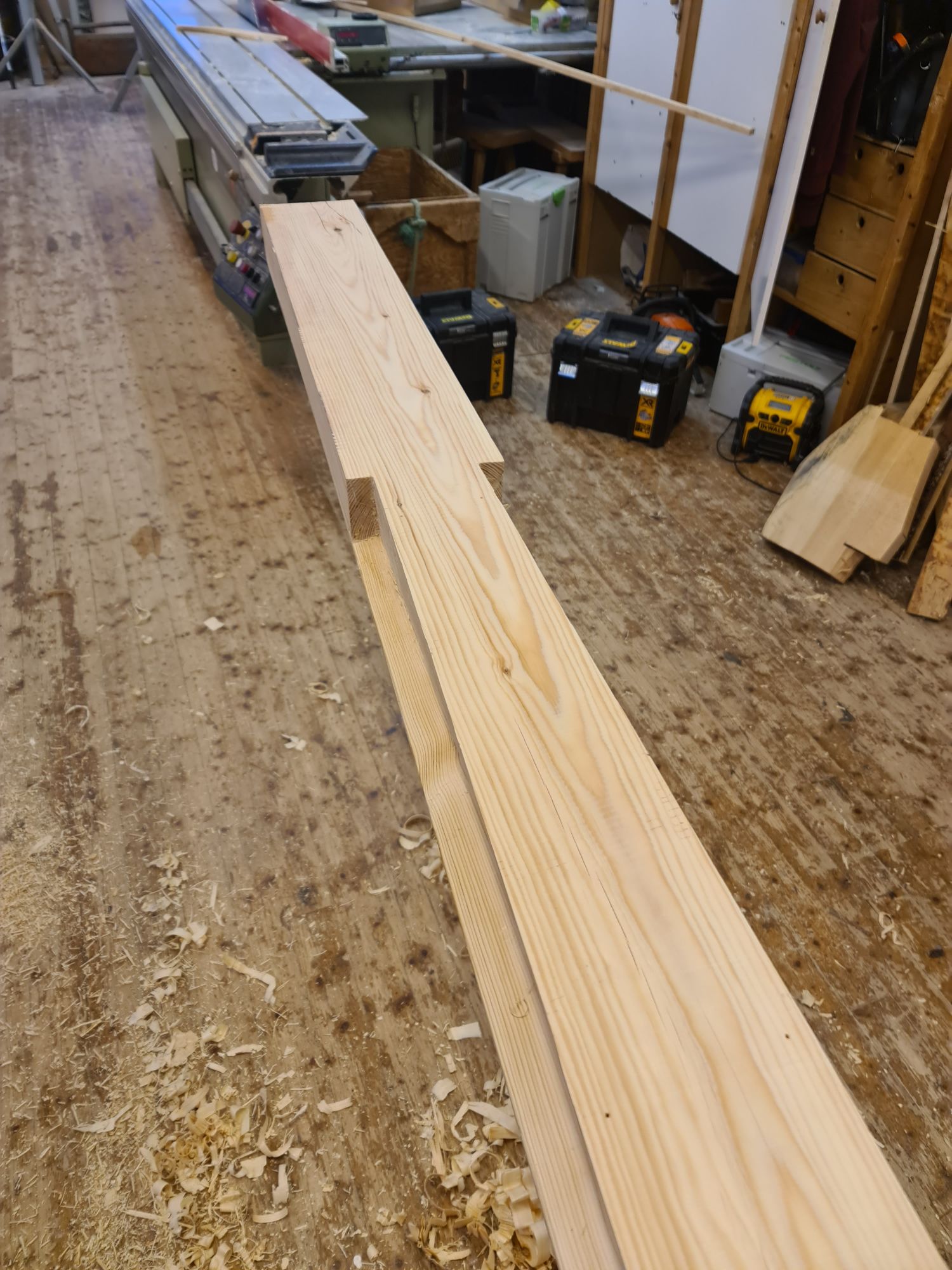
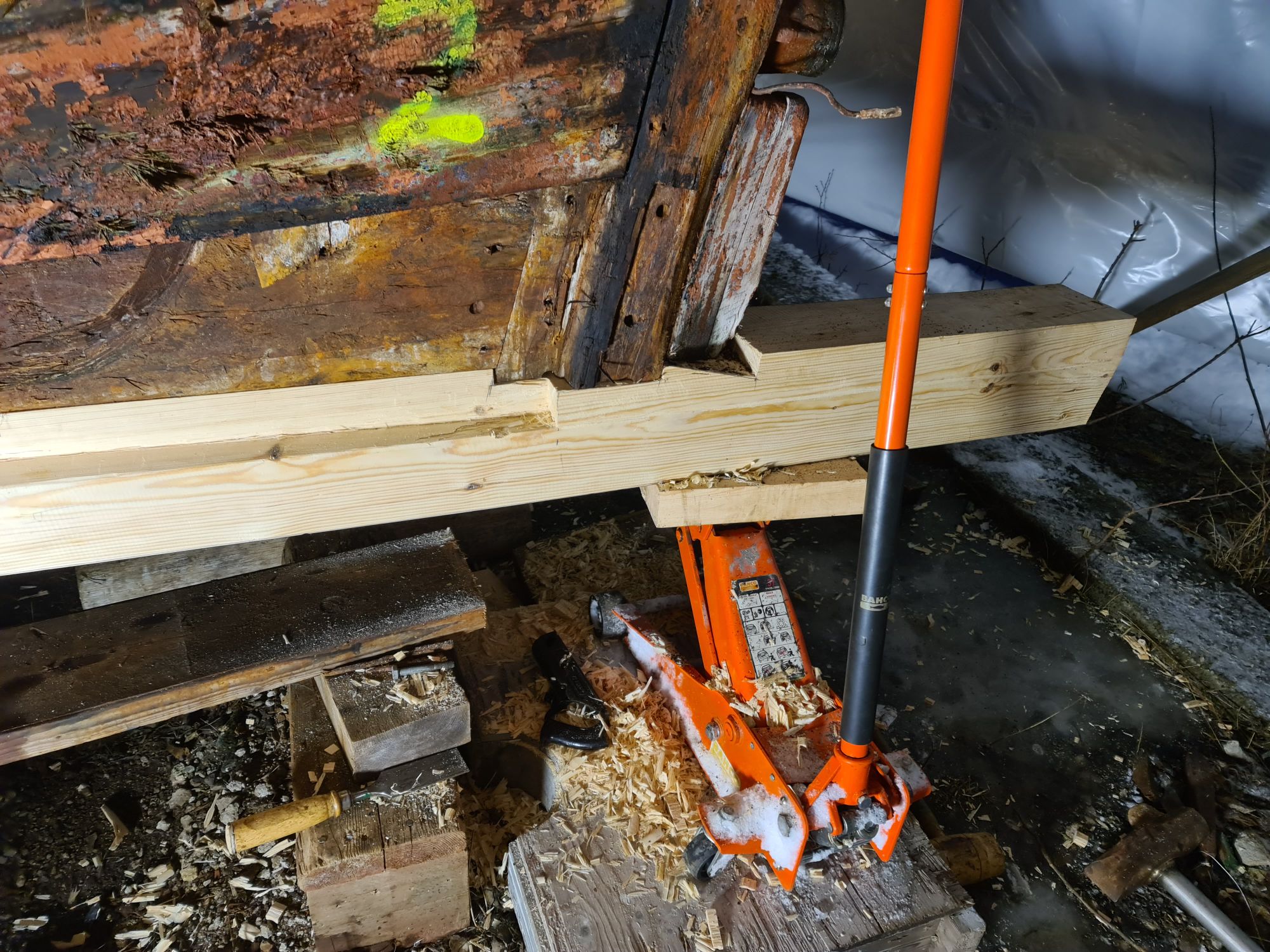
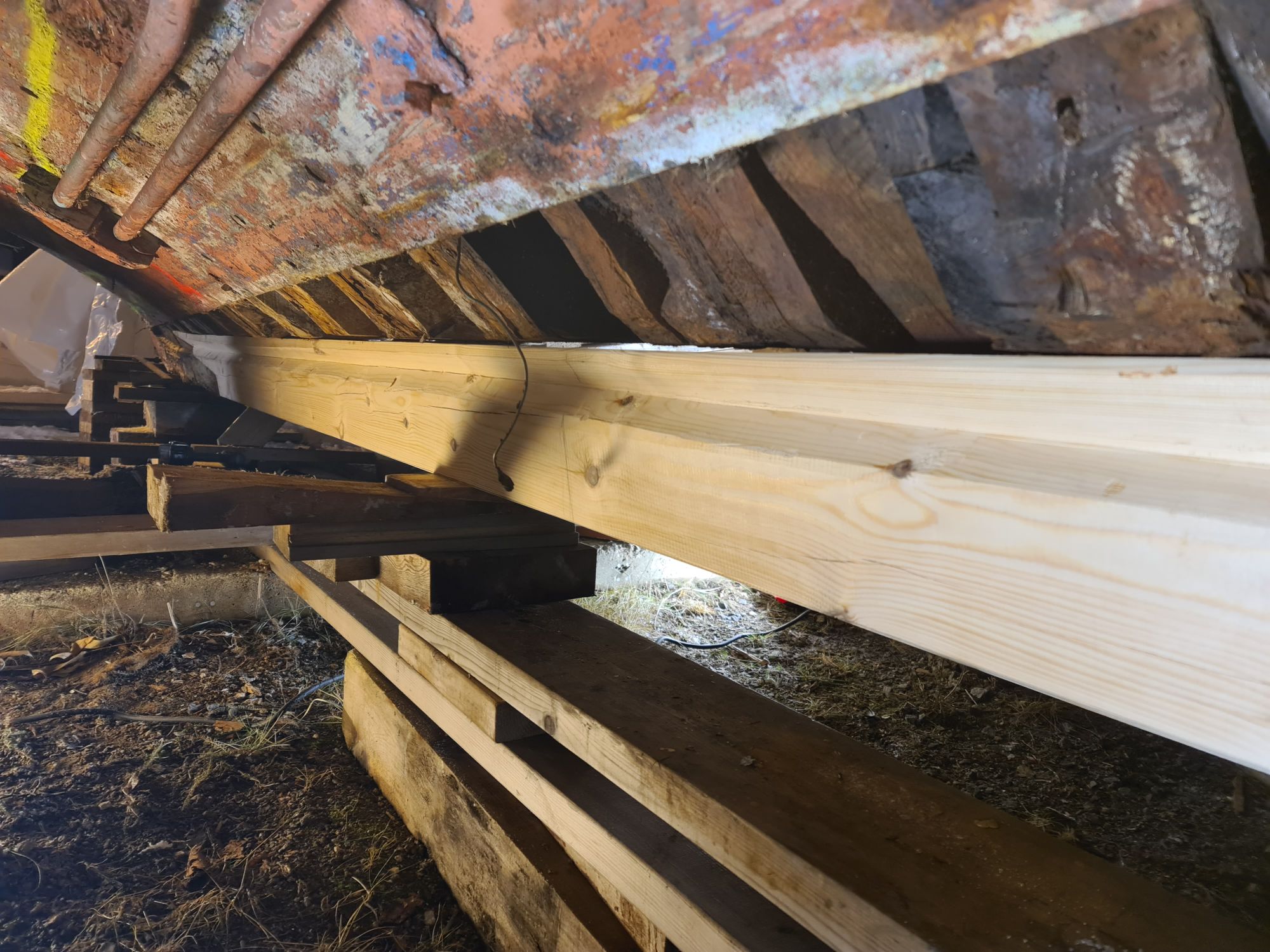
If you ever restored a wooden boat, you probably know what you see in these pictures and what it entails to change a heavily damage keel for a new one. If you don’t know what is going on, I would like to tell you, but not now; it will take a couple of hours because I don’t want to take shortcuts. You can, of course, become an apprentice boatbuilder for a couple of years and find it out yourself because reading about it or doing an internet search will not help you much. It’s like a metaphor for life and the many questions within; there are no shortcuts…