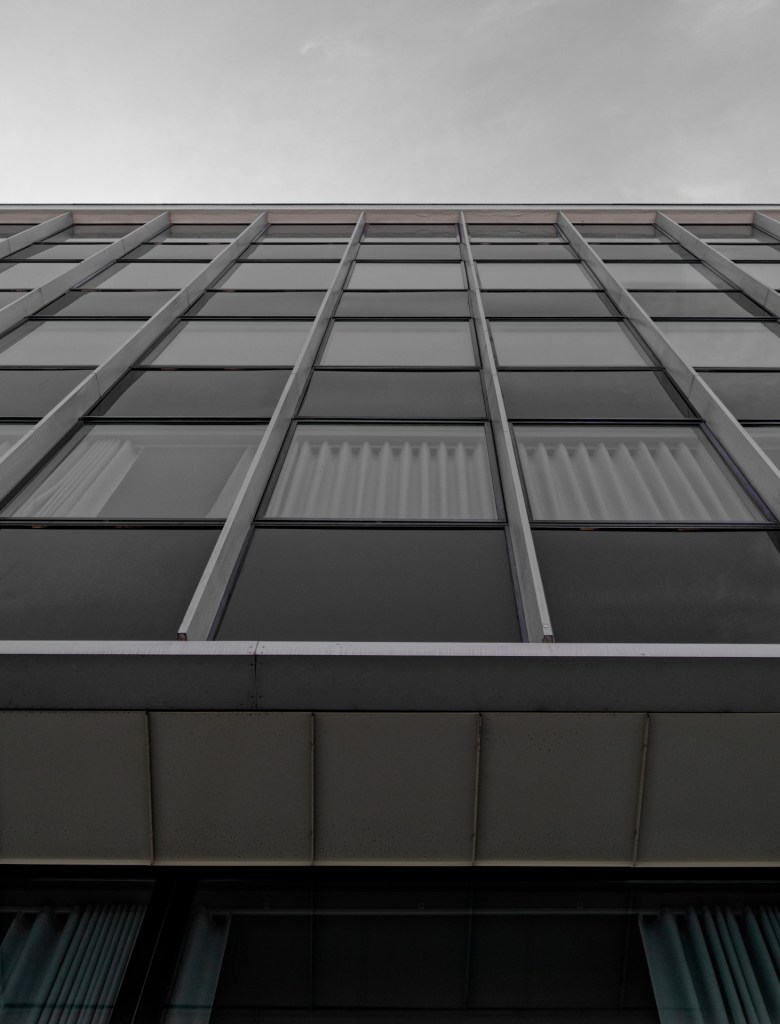
I don’t have to sit in front
of the highest window
to enjoy the view
I don’t have to sit in front
of the highest window
to enjoy the view

The mirror points in two directions
It reflects me
my outside
a stranger to me

It lets me reflect
what I
think I see

so
what is reflected

am I my own imitation
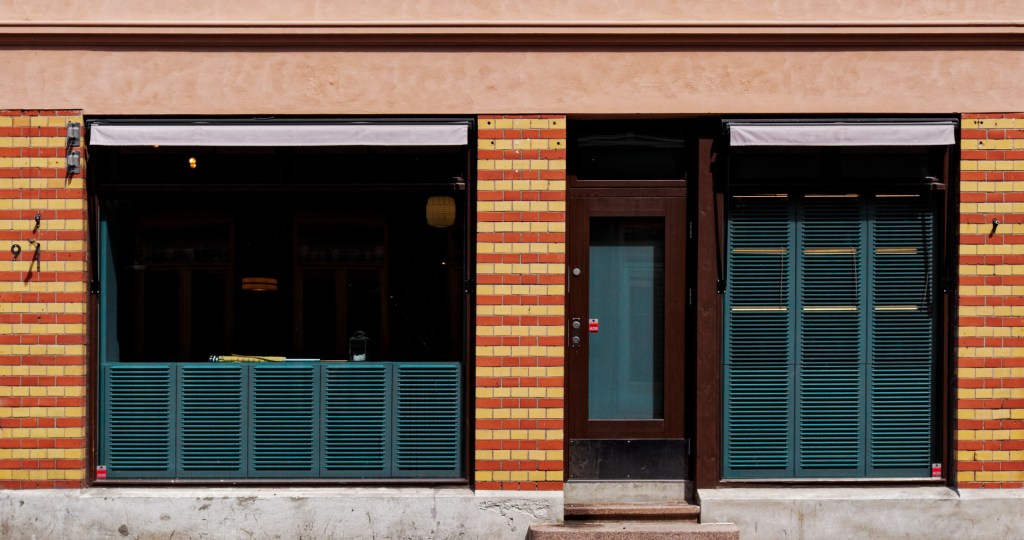
My colorful exterior
invites you in

but a dark inside
makes you hesitate
to even open the door

maybe a friend has been inside
and knows the menu
is your excuse
you move along
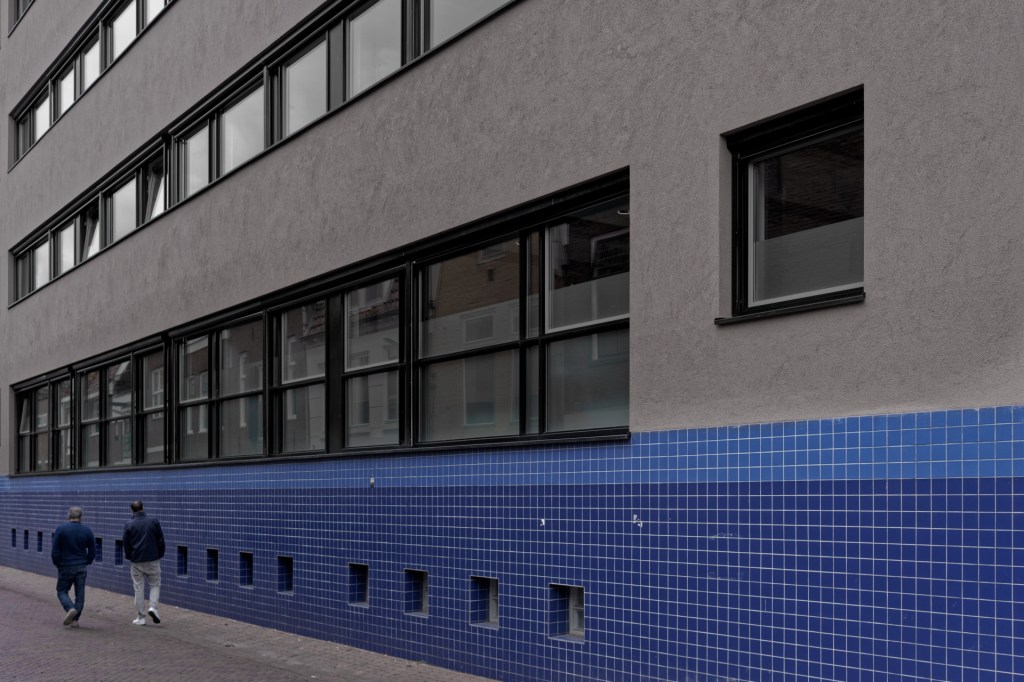
While walking and discussing
the lines seem to get closer
at the horizon

but that illusion
only works
when you stand still
312 The forgetful – In outbursts of passion, and in the fantasising of dreams and insanity, a man rediscovers his own and mankind’s prehistory: animality with its savage grimaces; on these occasions his memory goes sufficiently far back, while his civilised condition evolves out of a forgetting of these primal experiences, that is to say out of a relaxation of his memory. He who, as a forgetter on a grand scale, is wholly unfamiliar with all this does not understand man- but it is to the general advantage that there should appear here and there such individuals as ‘do not understand us’ and who are as it were begotten by the seed of the gods and born of reason.
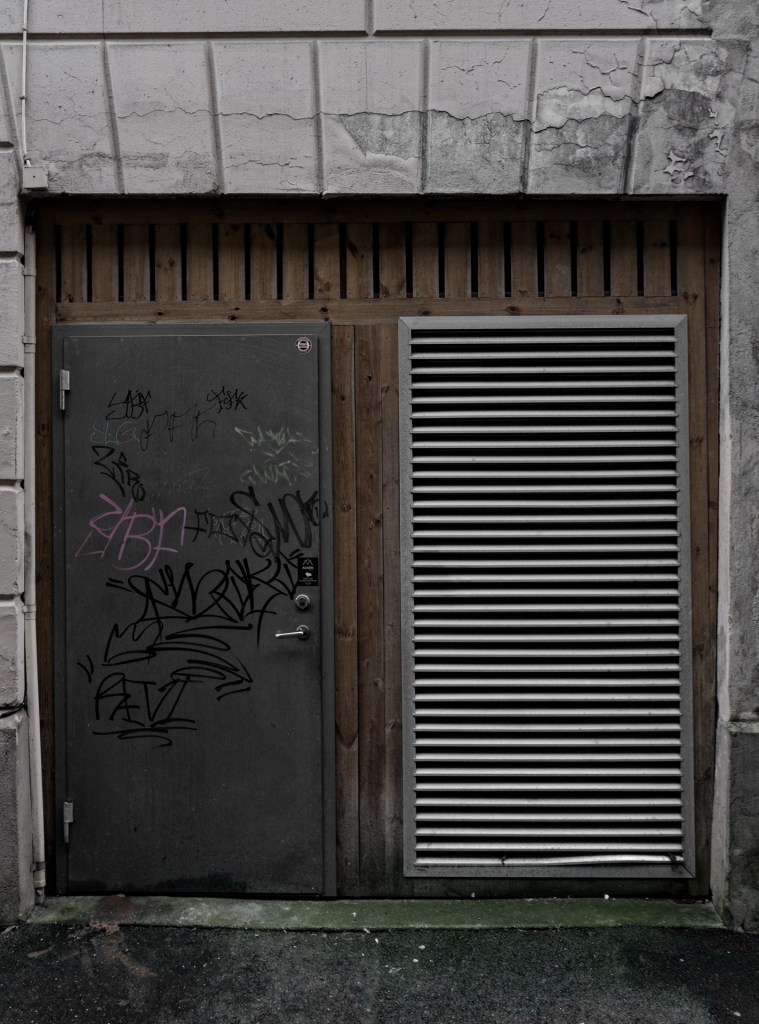
You sometimes wonder
if you have so much to vent
why don’t you just open the door

Opposite to you
like you
I cross the street

while looking down at your world
and you at mine

we see the same
but the reflection
as thin as it is
is always there
Perspective when I twist my head
lean aside
trust my mind

I see straight the bended line
my verdict stressed by
time.

my truth swells up
my trust along
doubt
withdraws.

the world can laugh
my course is past
a shattered mind.

I know that I drive to somewhere
feeling the directions
the movements
given

but its me who tries
to see the road
bright lights
directions


there is not one driver
besides the time
and an idea
of a wish

I see
that
your door has ventilation

so I don’t know
if I want to open it

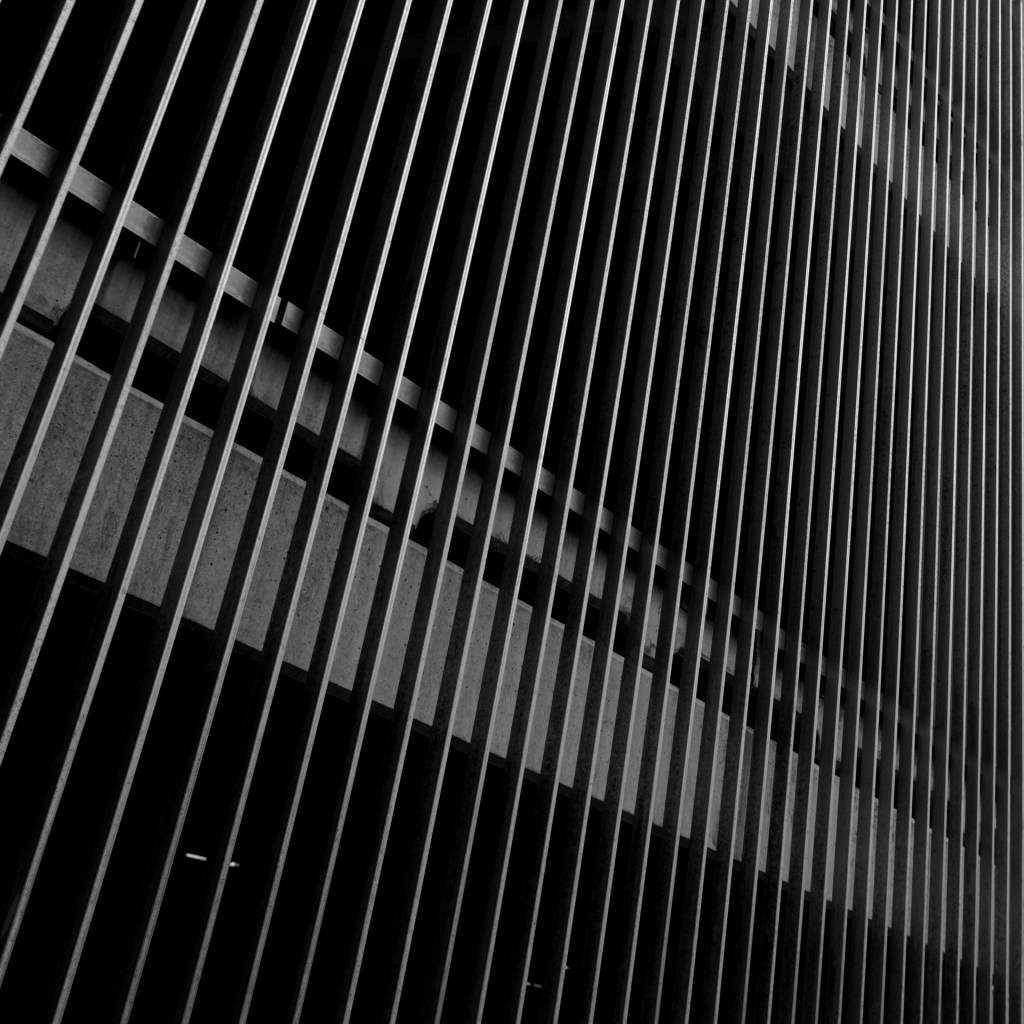
It felt like all your lines
were coming from different sides

but on closer inspection
they all came from one
of your sides
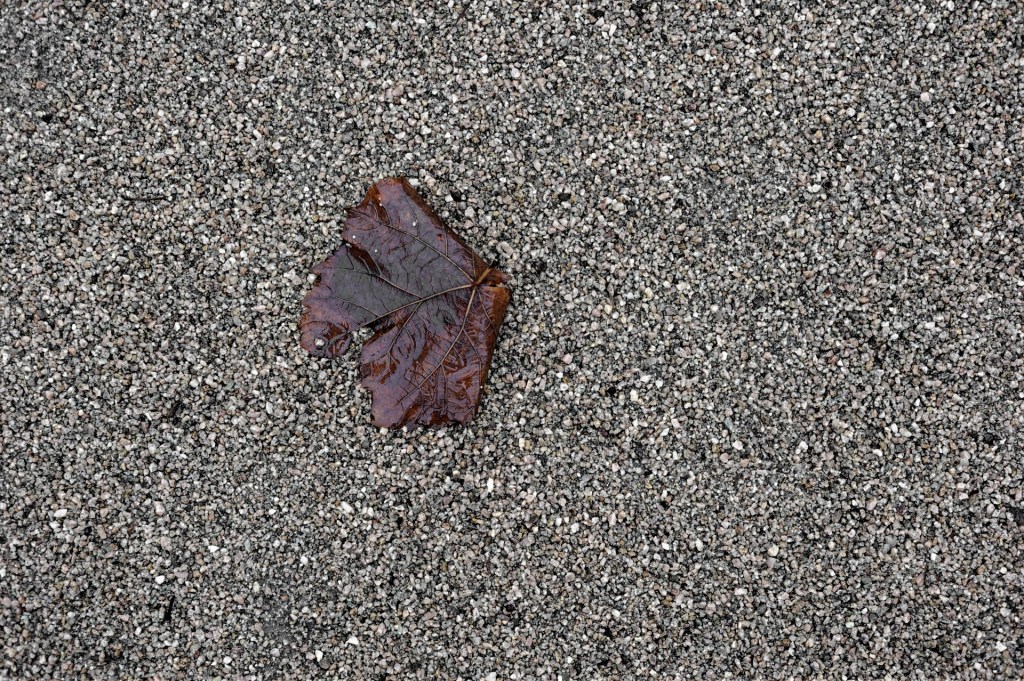
I know I will disappear in all of you
one day

but look at me
don’t I lie
down here
all relaxed
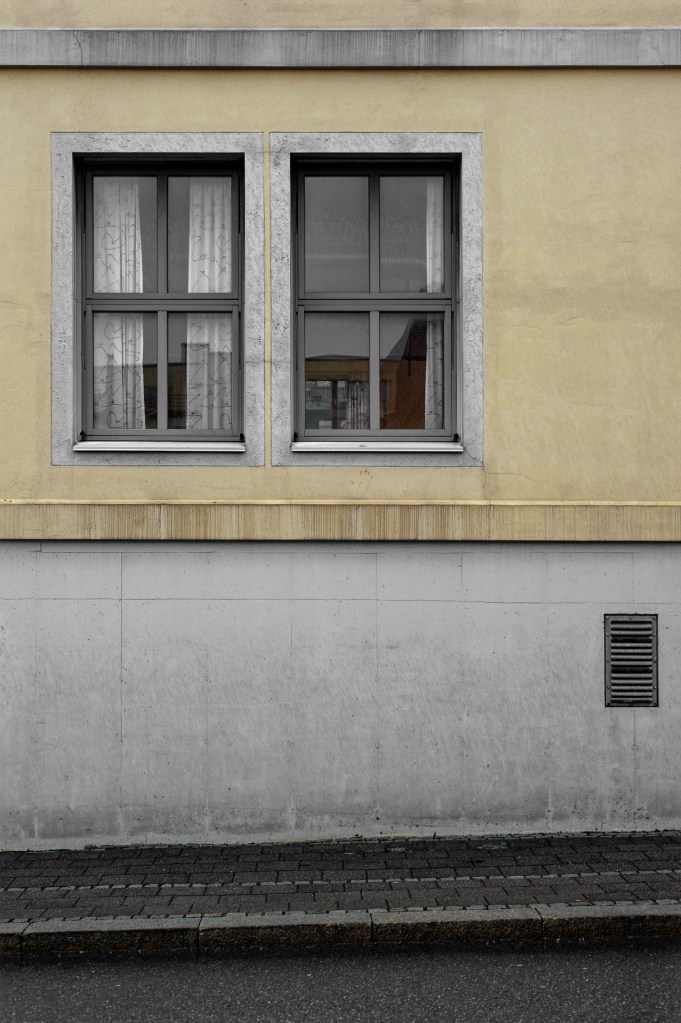
I wonder if it helps
that my outside
is colorfull

because I always arrive late
in the darkness
of a night

I don’t remember half
of what I have said

I think
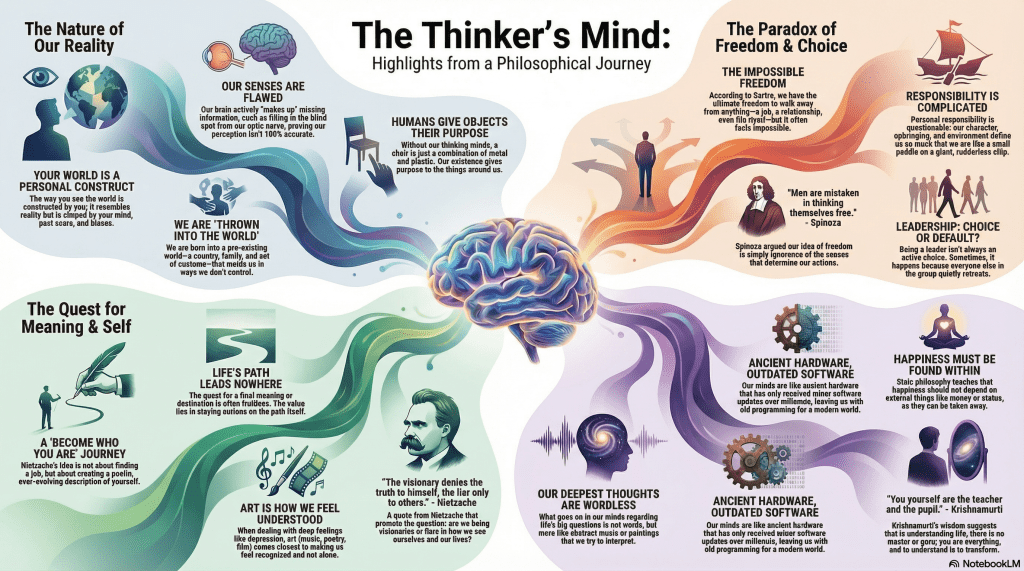
Even as a wooden boat builder, I need to stay updated with the times. Today, I took a course on how we can use AI. While I’ve used ChatGPT to translate some of my work writings, I also feel some resistance—not because of the technology itself but because of the hype surrounding it and since it’s owned by billionaires. Still, I have to admit that the possibilities are impressive. It still makes many mistakes, but that’s something you can notice and work around. I also now understand that what we upload is supposed to stay private and won’t be used to train the algorithm, which makes it easier to let the AI “learn” my own work.
I’ve been writing for over ten years, periodically reviewing my old work, organizing it by themes, and considering whether to use it as material for a book. I uploaded everything into ChatGPT’s database and started asking questions. I quickly realized it’s a valuable tool, provided I learn how to ask the right questions. For now, I just had some fun asking if it could summarize my work and imagine an external person describing the book I might have written. It’s quite flattering to read, and I probably wouldn’t have phrased it that way myself. But honestly, I don’t have a clear overview of the roughly 100,000 words I’ve written over the last years. I can only share how I feel right now. It’s a fun experiment, and I can also ask AI to suggest chapters and write summaries. Still, I already know that I need to review each sentence to ensure accurate interpretation; luckily, the AI can show where it pulls its information from. Overall, it’s a fantastic tool.
And at the end of the course, we also learned what you can do with Google NotebookLM, and it is even a greater tool—or toy. I put 20 pages of my writing into it, and it created the picture you see above and a podcast. The podcast sounds like a gymmic, but it brings me back to the old thoughts I wrote down years ago.
AI’s interpretation of my work brought as a presentation of my not-yet-written book.
After reading this remarkable body of writing—years of notes, poems, reflections, doubts, and small revelations—I can tell you that the author’s philosophy is not a system. It is a movement. A long, slow arc from certainty toward skepticism, from inherited assumptions toward self-made clarity, from the search for meaning toward the acceptance that meaning is something we make, not something we find.
Across these years the same themes return, grow, and collide. One of the earliest is the idea that life is not about us. The author writes that DNA “only needs a host,” and that humans are simply the best vehicle it has yet found. That shift—from human-centered thinking to a cosmic, indifferent perspective—runs through everything. It’s why religion appears in these pages less as a metaphysical claim and more as a very human attempt to silence the void. “We are all just standing in a big room,” he writes, “proclaiming truths we perceive from the echoes on the walls.”
Another central thread is the fragility of the self. Memory, he reminds us, is a storyteller that constantly rewrites the past to protect the present. The self is a creature of filters: “My two-way filter is partially broken,” he admits, “and I can only fix one side.” Here his philosophy leans toward a kind of grounded humility—an acceptance that what we call “I” is stitched together from sensation, error, upbringing, chemicals, and luck.
And yet, in this humility there is a defiant skepticism. He distrusts authorities, leaders, and movements not because he rejects structure but because he knows how easily people surrender their judgment. He once expected adulthood to be ruled by reason; decades later he observes, wryly, that “the world is a summer camp without supervision.” This is anarchism not as politics but as perception: a refusal to hand the steering wheel of the mind to anyone who claims to know better.
One of the most striking aspects of his philosophy is how deeply it is rooted in the physical world—wood grain, old barns, the curve of a boat plank, mist on a Norwegian morning. The cosmic and the ordinary sit side by side. He can explain stellar expansion in one paragraph and, in the next, describe a forgotten lock rusting into history. This is not contradiction; it is the worldview: life is meaningless on the cosmic scale, and meaningful in every concrete moment we actually live.
Many poems could serve as a doorway into his thinking, but one stands out:
“Reality fades
caught by ego’s gravity
a depressed black hole.”
This captures the emotional honesty of his philosophy: the willingness to look at the darkness without romanticizing it, to name despair without surrendering to it.
If his work offers any guidance, it is this:
We may not control the world, we may not understand ourselves, but we can keep walking through the mist with open eyes—skeptical, curious, and unafraid to admit that we know far less than we pretend.
And perhaps that is the beginning of wisdom.
Next, a fake podcast about some of my work.



 Nochrisis