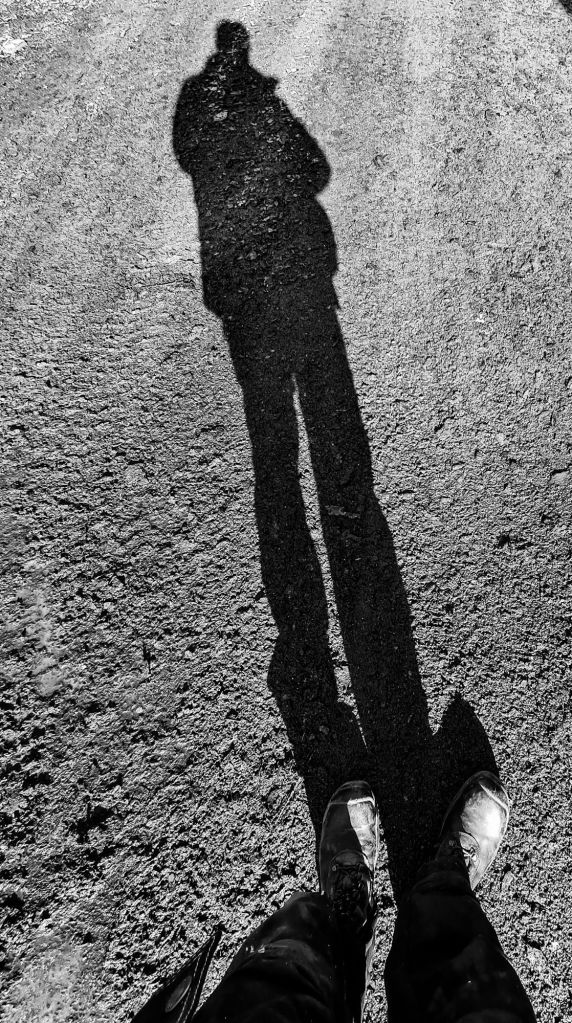
I don’t recognize my shadow
when it sneaks up from behind
or stares me in the face

I just now it’s always there
in a different form
but me
I don’t recognize my shadow
when it sneaks up from behind
or stares me in the face
I just now it’s always there
in a different form
but me

View from the couch
where else do you have the best view?

I live in an abandoned building
I think
the echo speaks to me

I don’t know what they say about me
and what would I do
if I knew

they are right about their first impression
and you don’t even have one
you only have
at most
a few words
a description
about parts of you
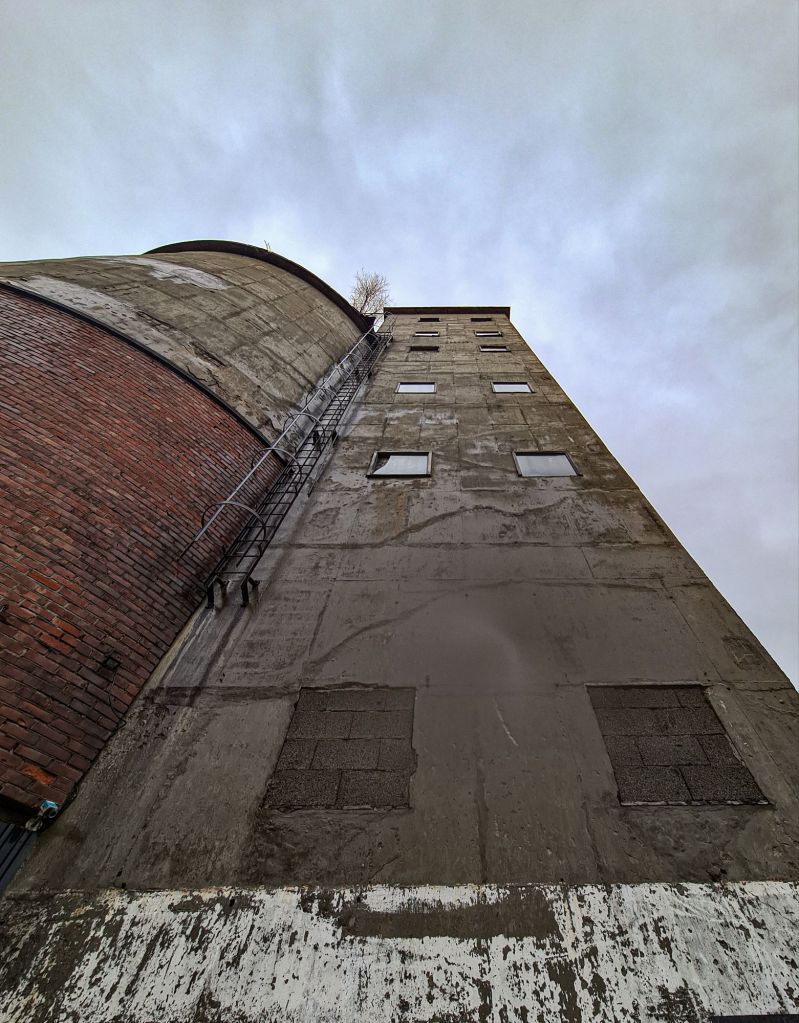
I can’t reach the fire escape
because there is no fire
163 After a great victory.– What is best about a great victory is that it liberates the victor from the fear of defeat. “Why not be defeated some time, too?., he says to himself; “Now I am rich enough for that..
166 Always in our company.- Whatever in nature and in history is of my own kind, speaks to me, spurs me on, and cormforts me; the rest I do not hear or forget right away. We are always only in our own company.
179 Thoughts.– Thoughts are the shadows of our feelings-always darker, emptier. and simpler.
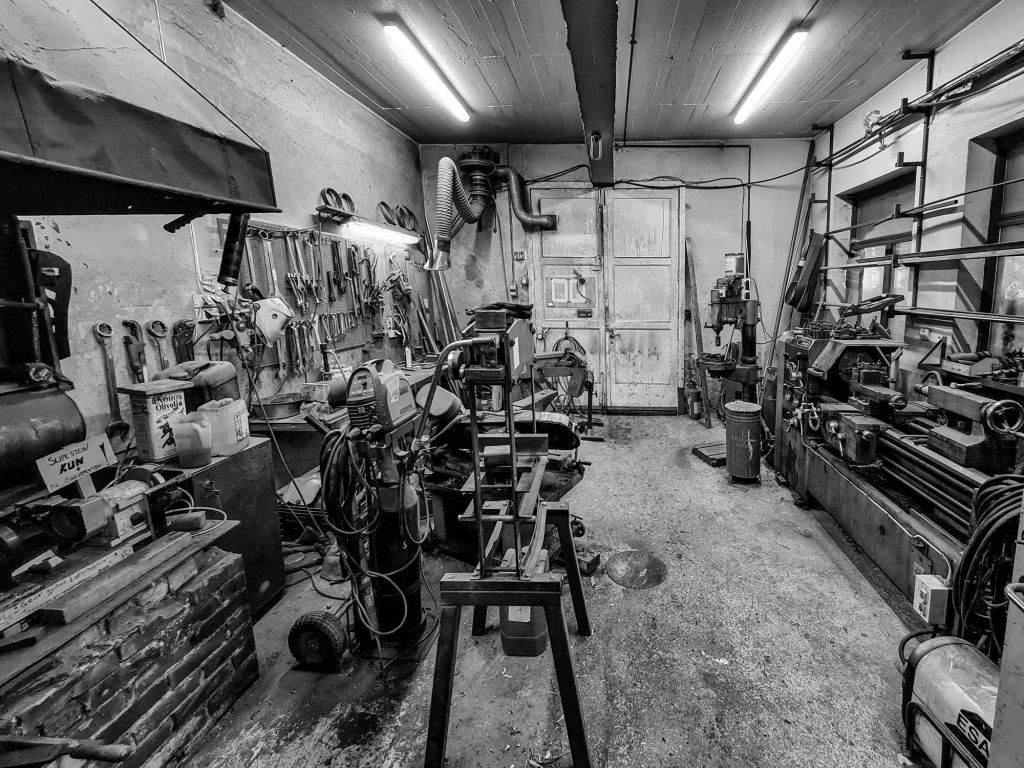
An unknown workplace
where you know every tool
just not why it is there
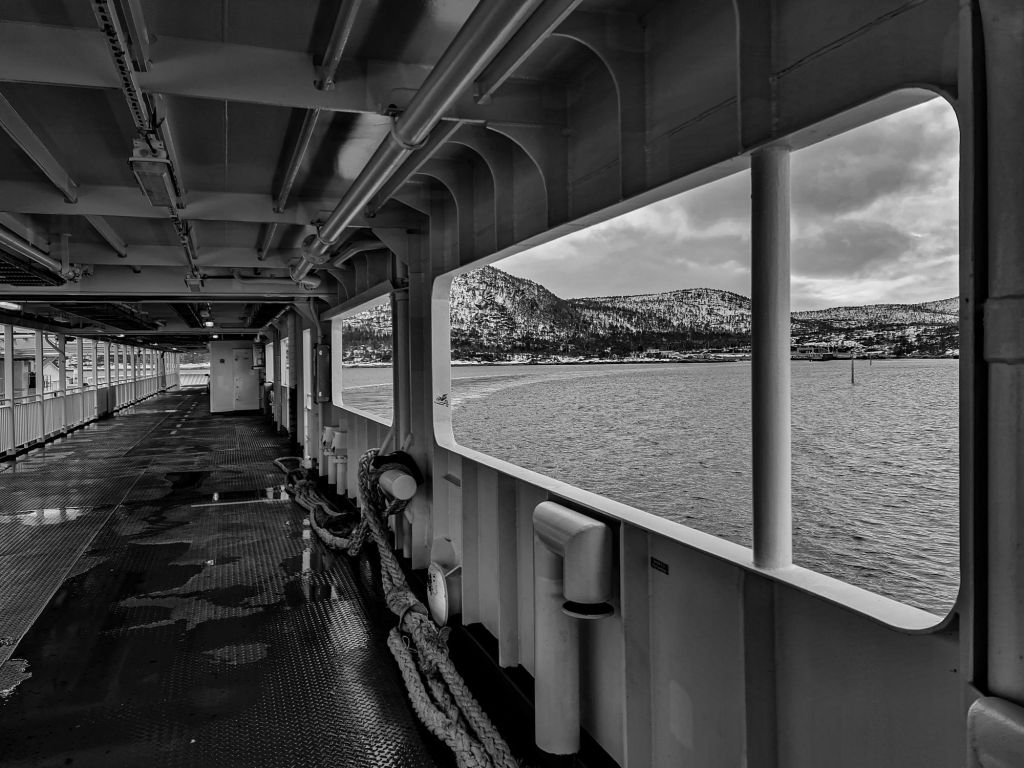
The worlds you look at
through your windows
are as much a part of your life
as the inside
where you live

I arrived in this city
the black tarmac was in front of me
this whole time
but only arrived
did I notice it

I have to recharge after a short while
over and over again
if I want to reach you
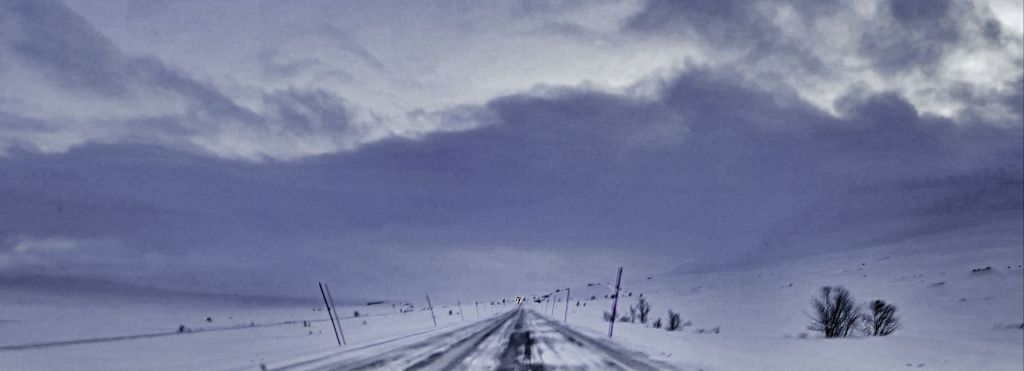
There seems to be a straight road
in your direction
where you have a good grip on

as long as you don’t know
its reality

I will be driven again
towards a point in the future
that I don’t know and have been

I see the time in between passing by
and I get out at the end of the ride
setting foot in a new beginning
with the same end

life can only be seen from one point
from in between the past you see
and the future you expect
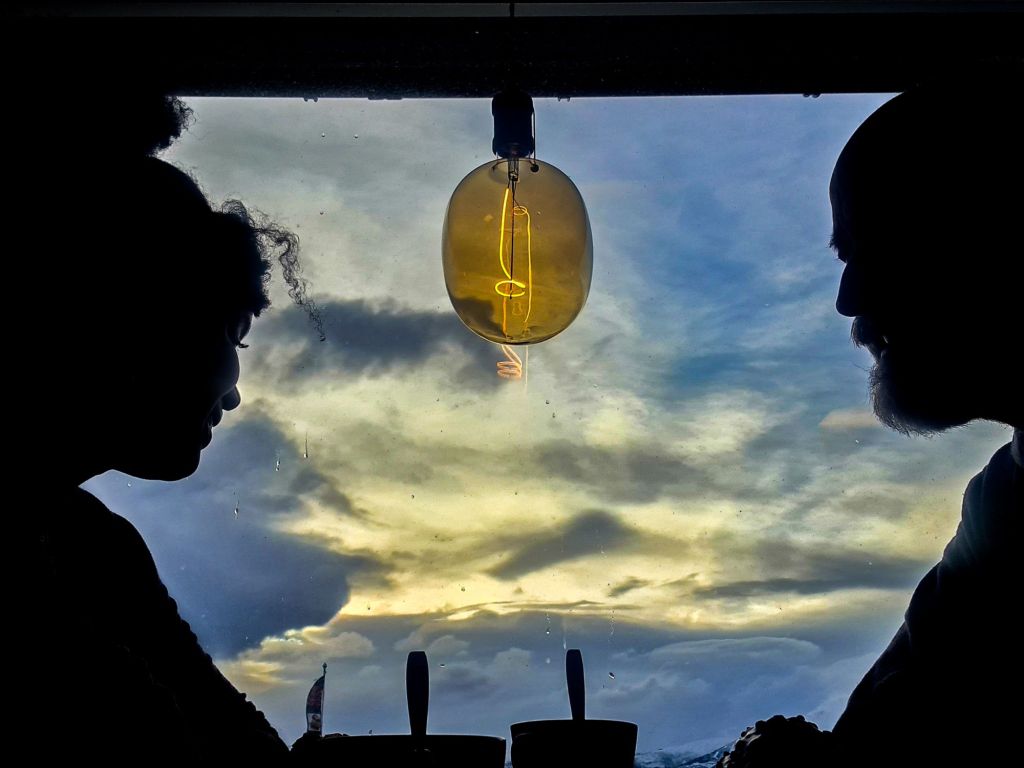
Together
drinking coffee
under artificial sun

Fear of death often seems
to be
veiled in security

fear of loss
of time
of the other

fear of nothing
at the end
The following short aphorism from the book Human All Too Human has no hidden traps or meanings I just like the way it flows. You can read the original at the bottom, but the nice thing about the English language combined with the characters of the translators is that you can enjoy it in several forms and choose the one you like. Let me know which one you like the most. I personally prefer Hollingdale translations.
-488 Composure in action. – Just as a waterfall grows slower and more lightly suspended as it plunges down, so the great man of action usually acts with greater composure than the fierceness of his desires before he acted had led us to expect. (Translated by R. J. Hollingdale, 1986)
-488 Calm in action. As a waterfall becomes slower and more floating as it plunges, so the great man of action will act with greater calm than could be expected from his violent desire before the deed. (Translated by Marion Faber, 1984)
-488 Equanimity in action. -As a waterfall moves more slowly and floats more leisurely as it plunges downward, so a great man of action tends to act with more equanimity than his tempestuous desire prior to acting would have led us to expect. (Translated by Gary Handwerk, 1995)
488. Calmness in action.—As a cascade in its descent becomes more deliberate and suspended, so the great man of action usually acts with more calmness than his strong passions previous to action would lead one to expect. (Translated by Helen Zimmern, 1909)
-488 The calm indeed. — Just as a waterfall becomes slower and more floating as it falls, so the great man of deeds tends to act with more calmness, which is what his stormy desire before the deed led to expect. (Google translate, 2024)
-488 The calm indeed. Just as a waterfall becomes slower and more flowing as it falls, so the great man of deeds tends to act with more calmness, which is not what his stormy desire before the deed led to expect. (Translated by Chat GPT 3.5, 2024)
I told ChatGPT that it was the same translation as Googles translation, it apologized and gave me a new translation:
The tranquility, indeed. Just as a waterfall slows and becomes more graceful in its descent, similarly, the person of great deeds tends to act with more calmness, contrary to what his turbulent desire before the deed might have suggested. (Translated by Chat GPT 3.5, 2024)
Die Ruhe in der That. — Wie ein Wasserfall im Sturz langsamer und schwebender wird, so pflegt der grosse Mensch der That mit mehr Ruhe zu handeln, also seine stürmische Begierde vor der That es erwarten liess.

444 War. – Against war it can be said: it makes the victor stupid, the defeated malicious. In favour of war: through producing these two effects it barbarizes and therefore makes more natural; it is the winter or hibernation time of culture, mankind emerges from it stronger for good and evil. From Human All Too Human
This aphorism is more self-explanatory. I don’t know if Nietzsche celebrates the act of war; he was a medic in the Franco-Prussian war of 1870, but I don’t know if he was confronted by the violence of war or only by the result of exploding bombshells. Most people who knew Nietzsche say that he was a friendly man, kind and polite. Not the typical war monger or brut you might think of when reading some of his works. I think that war was, for Nietzsche, more of an abstraction than the gruesome reality it is. There have always been periods through history where society suddenly takes a few steps forward, and this might often seem to happen after a war, but it is hard to unravel what happens in a society, especially when something as gruesome as a war is going on. I know that for many people, war is still something to celebrate, probably for other reasons than Nietzsche does, but for me, raised at the end of the Cold War by a passivist mother, war is something you want to avoid.
I think that Nietzsche is more right when he says: it makes the victor stupid, the defeated malicious, but that is also more of an open door. He also says that war barbarizes and therefore makes more natural. I am not sure what he wants to say, but nature is, of course, barbarous, with no morals or thoughts of the future and past to guide it. He goes on to say: it is the winter or hibernation time of culture, mankind emerges from it stronger for good and evil. Again, I don’t think that during a war, progression stops or hibernates, as he implies*. He ends with the idea that we get stronger out of it, as I discussed earlier, but the last words are for good and evil, so maybe he balances it out again, and has he merely put us on the wrong foot when we read this aphorism. As if we reacted with our own “barbarous” mind. With Nietzsche, you never know
*I just started reading Victor Frankl’s book Man’s Search for Meaning, A book that originates in the Nazzi death camps, and it has helped society to move forward in several ways. No hibernation in the epicenter of that war.
 Nochrisis