
Friedrich Nietzsche
The Gay Science
Book Three
194 The “openhearted.“- That person probably always acts in accordance with secret reasons. for he always has communicable reasons on his lips and practically in his open hand.
194 The “openhearted.“- That person probably always acts in accordance with secret reasons. for he always has communicable reasons on his lips and practically in his open hand.

I just want to sit down.

I love that we have trees besides the road
standing in a park all alone
or in a corner
looking at it all

because in the forest they are in their city
never alone but forgotten by all

It is possible that, through horizontal and vertical lines constructed with awareness, but not with calculation, led by high intuition, and brought to harmony and rhythm, these basic forms of beauty, supplemented if necessary by other direct lines or curves, can become a work of art, as strong as it is true.
Piet Mondrian

That what once spilled over order
leaks down crossing all the lines
and dries
imagination

Radicalizing Democracy
Kick it Over magazine interview question in 1985: You’ve said in your writings that we are undergoing a change as far-reaching as the transition from hunting and gathering to agriculture or from agriculture to industry. Could you elaborate on this and talk a bit about why this is occurring now?
Murray Bookchin: The transformation I have in mind is cybernation, genetic engineering, nucleonics, and the sophistication of electronic technology in vast numbers of fields and the development of means of surveillance of a highly sophisticated form. The extent of the transformation is absolutely astonishing. What we find today is a totally immoral economy and society which has managed to unearth the secrets of matter and the secrets of life at the most fundamental level. This is a society that, in no sense, is capable of utilizing this knowledge in any way that will produce a social good. Obviously there are leavings from a banquet that fall from the table but my knowledge and my whole experience with capitalism and with hierarchical society generally is that almost every advance is as best a promise and at worst utterly devastating for the world.
Read the rest here: http://dwardmac.pitzer.edu/Anarchist_Archives/bookchin/raddemocracy.html
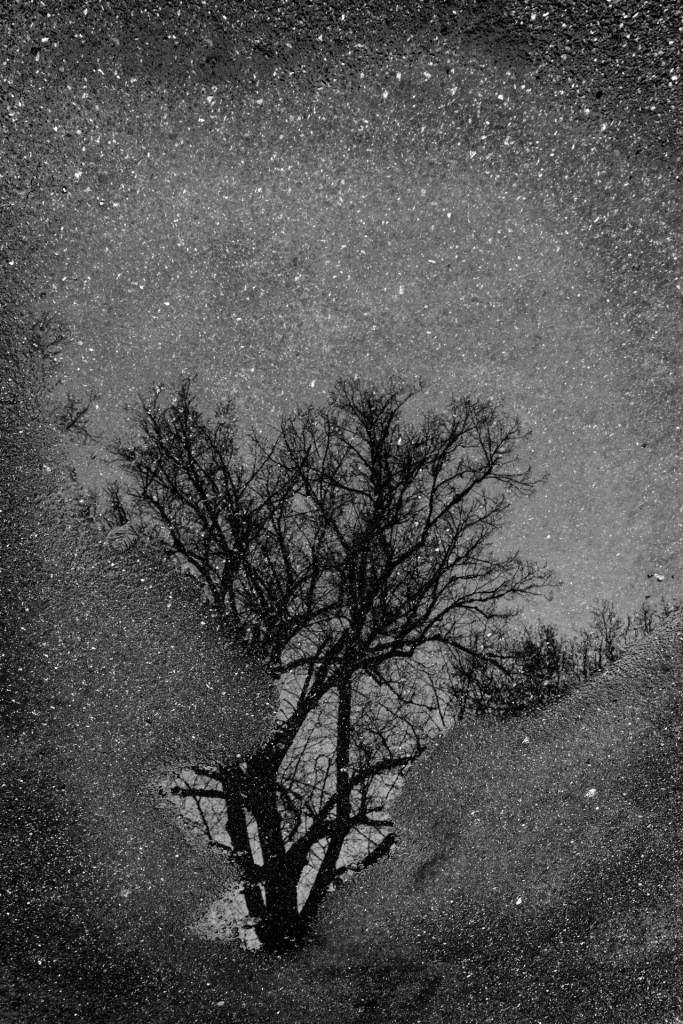
The night streets were dark
where I looked down
before crossing the empty street
and saw nature reflected
left undisturbed
16 All drives are connected with pleasure and displeasure there can be no drive for truth, i.e. for a pure truth entirely without any consequences or affects, because at that point pleasure and displeasure would cease, and there is no drive that has no premonition of pleasure in its own satisfaction. The pleasure of thinking does not indicate a desire for truth. The pleasure of all sensory perceptions derives from the fact that they are brought into being through inferences. To that extent man is always swimming in a sea of pleasure. But to what extent can inference, a logical operation, give pleasure?
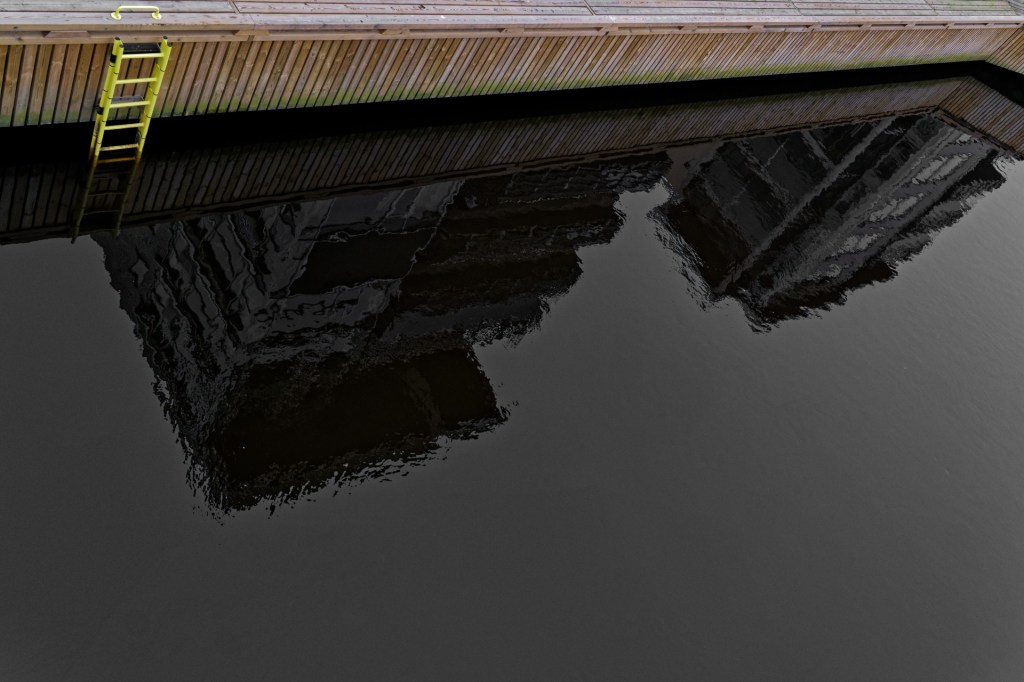
We live in darkness
a modern cave
we believe

not the messenger
who speaks differently
another way
not from heaven
but from earth
When one travels around the world, one notices to what an extraordinary degree human nature is the same, whether in India or America, in Europe or Australia. This is especially true in colleges and universities. We are turning out, as if through a mold, a type of human being whose chief interest is to find security, to become somebody important, or to have a good time with as little thought as possible.
Conventional education makes independent thinking extremely difficult. Conformity leads to mediocrity. To be different from the group or to resist environment is not easy and is often risky as long as we worship success. The urge to be successful, which is the pursuit of reward whether in the material or in the so-called spiritual sphere, the search for inward or outward security, the desire for comfort—this whole process smothers discontent, puts an end to spontaneity and breeds fear; and fear blocks the intelligent understanding of life. With increasing age, dullness of mind and heart sets in.

You can find the text here: https://ia802307.us.archive.org/33/items/zinelibrary-torrent/associat.pdf, and also here and more: https://theanarchistlibrary.org/special/index
Free Association is the idea that we cannot be free as individuals without having free relationships with others, that no one person can be free unless we are all free and that for each of us to be free we must work together to insure that everyone else is free. In an Anarchist society people would cooperate with each other to achieve the following:
Complete Social Freedom Including Sexual Freedom and Reproductive Freedom: People associate because all participants want to.
Freedom of Speech, Press and Information to include all forms of communication and education.
Complete Cultural Freedom including the freedom of individual tastes, lifestyle, entertainment and other preferences.
Freedom of Movement: All people must be allowed to live where they chose, travel where they chose, shop where they chose (e.g. do business where you chose), recreate where you chose, etc.. This includes the freedom to migrate and immigrate without being restricted or discriminated upon because of your place of birth or the place of birth of your ancestors.

All you have to do is to tell them they are being attacked, and denounce the pacifists for lack of patriotism and exposing the country to danger. It works the same in any country.
It would not be impossible to prove with sufficient repetition and a psychological understanding of the people concerned that a square is in fact a circle. They are mere words, and words can be molded until they clothe ideas and disguise.
Joseph Goebbels
Every educated person is a future enemy. Martin Bormann
There’s an old German proverb to the effect that “fear makes the wolf bigger than he is,” and that is true.
Donald Trump,
Now that I look back, I realize that a life predicated on being obedient and taking orders is a very comfortable life indeed. Living in such a way reduces to a minimum one’s need to think. Adolf Eichmann

One advantage of getting older is that you (can) realize that age doesn’t make you smarter. I have been carrying many of my self-proclaimed best ideas with me for 30 years now, and I have fine-tuned them a little here and there, and maybe see them clearer in a wider context, but they are basically the same ideas.
I am older now, but I have learned over the years that I know very little about many things and a little more about a few things. This knowledge that we don’t get smarter or have better ideas when we get older is something I also use when I look at people that I have admired, like Richard Dawkins, for instance. When I read his books and learned about what was written in them, I was still young, naive, and impressed. Naivety is something that slowly erodes, and though I am still impressed by most of his work, I am also disappointed. Over the years, I have learned that these writers are just like you and me, and the internet gave me the tools to easily find out what lives they live behind the façade I erected in front of them. They can have their opinions, of course, but it’s just a shame that with all the effort they put into their professional work, they say utter nonsense while the answers are easily accessible from their phones.
But now I know about his political views, which makes me sad. I long for the days that I could naively believe that a scholar who has produced such enlightened work could never simultaneously produce so much nonsense when they speak about things they know little about. It’s the Dunning-Kruger effect in full force. It’s what they say: never meet your idols, just keep reading their good books.
It’s just disappointment, and I fear I will unknowingly do the same…and that’s my first lie, it’s not fear, I know it.

It looked like they were drawn
scratch into the glass posing
as reflections

and though I could turn around
I was afraid to lose this view
too afraid of reality
of what was presented in
my fears

I had no choice
I had to choose

It's my dreams that make me feel
small
and I don’t talk about the ones that I wake up from
but the ones that feel real
while I am awake

and what’s my part
when I dream
do I want them

I just know
that sometimes
they tower over me

My dear friend:
I still cannot help thinking several times a day of the delightful pampering I had in Venice and of the still more delightful pamperer, and all I can say is that one cannot have such good times for long and that it is only right I should once more be an ancho rite and as such go walking for ten hours a day, drink fateful doses of water and await their effect. Mean while I burrow eagerly inside my moral mines and at times feel quite subterranean in the process — at pres ent I seem to feel as if I had now discovered the principal artery and outlet. But this is the sort of belief that may return a hundred times only to be rejected. Now and again an echo of Chopin’s music rings in my ears, and this much you have achieved, that at such moments I always think of you and lose myself in meditating about possibilities. My trust in you has grown very great; you are built much more soundly than I suspected, and apart from the evil influence that Herr Nietzsche has exercised over you from time to time, you are in every respect well conditioned. Ceterum censeo mountains and woods are better than towns and Paris is better than Vienna.

The alarm bell is often clearly visible
I wonder why
it is important to know where the sound comes from
precisely
 Nochrisis