Day 2074, Knowledge and Wisdom.

Day's pictures
Greece, 2014

Knowledge and Wisdom

Bertrand Russell

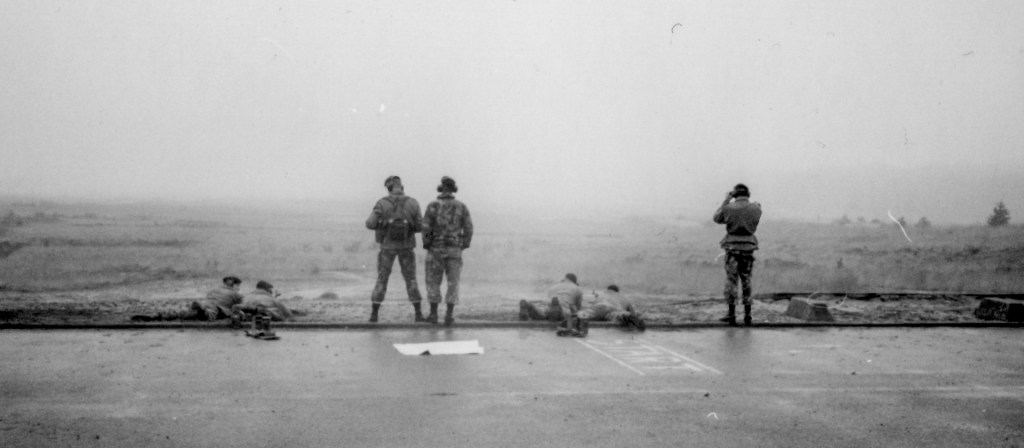
Most people would agree that, although our age far surpasses all previous ages in knowledge, there has been no correlative increase in wisdom. But agreement ceases as soon as we attempt to define `wisdom’ and consider means of promoting it. I want to ask first what wisdom is, and then what can be done to teach it. There are, I think, several factors that contribute to wisdom. Of these I should put first a sense of proportion: the capacity to take account of all the important factors in a problem and to attach to each its due weight. This has become more difficult than it used to be owing to the extent and complexity fo the specialized knowledge required of various kinds of technicians. Suppose, for example, that you are engaged in research in scientific medicine. The work is difficult and is likely to absorb the whole of your intellectual energy. You have not time to consider the effect which your discoveries or inventions may have outside the field of medicine. You succeed (let us say), as modern medicine has succeeded, in enormously lowering the infant death-rate, not only in Europe and America, but also in Asia and Africa. This has the entirely unintended result of making the food supply inadequate and lowering the standard of life in the most populous parts of the world. To take an even more spectacular example, which is in everybody’s mind at the present time: You study the composistion of the atom from a disinterested desire for knowledge, and incidentally place in the hands of powerful lunatics the means of destroying the human race. In such ways the pursuit of knowledge may becorem harmful unless it is combined with wisdom; and wisdom in the sense of comprehensive vision is not necessarily present in specialists in the pursuit of knowledge.

Read the rest here.

Day 2072, The Discourses.

Day's pictures
Nafplion – Greece, 2014

Epictetus was a philosopher born in 50 AD, so more than 400 years later than Plato. There are no writings left written by himself, only work written down by pupils. His main work is called the Discourses. He is a stoic, and his work revolves around self-knowledge, discipline, logic, and reason.

This is a quote that summons up his work, in my opinion: “It’s not what happens to you, but how you react to it that matters.”

Underneath, you can read the first chapter of the Discourses. It is not the nicest read; it is structured and dry, but it forces you to think carefully about what he writes and where he goes.

The Discourses

By Epictetus

Book One, Chapter 1

Of the things which are in our Power, and not in our Power

Of all the faculties, you will find not one which is capable of contemplating itself; and, consequently, not capable either of approving or disapproving. How far does the grammatic art possess the contemplating power? As far as forming a judgement about what is written and spoken. And how far music? As far as judging about melody. Does either of them then contemplate itself? By no means. But when you must write something to your friend, grammar will tell you what words you must write; but whether you should write or not, grammar will not tell you. And so it is with music as to musical sounds; but whether you

Day 2066, Meno.

Day's pictures

Athens – Greece, 2014

I always find it fascinating that these conversations were going on in Greece more than 2300 years ago. This is one of Socrates’s conversations written by Plato. The name of the person Socratis is talking to is Meno, and it is a discussion about virtue and if you can learn it or if it comes by nature. This is a link to the Wikipedia article: Meno, and this is a link to the book on Gutenberg.org where you can read the rest of the dialog.

[Meno] Can you tell me, Socrates, whether virtue is acquired by teaching or by practice; or if neither by teaching nor practice, then whether it comes to man by nature, or in what other way?

[Socrates] O Meno, there was a time when the Thessalians were famous among the other Hellenes only for their riches and their riding; but now, if I am not mistaken, they are equally famous for their wisdom, especially at Larisa, which is the native city of your friend Aristippus. And this is Gorgias’ doing; for when he came there, the flower of the Aleuadae, among them your admirer Aristippus, and the other chiefs of the Thessalians, fell in love with his wisdom. And he has taught you the habit of answering questions in a grand and bold style, which becomes those who know, and is the style in which he himself answers all comers; and

Day 2059, Despair.

Day's pictures

Slide film, 1996, Arnhem – the Netherlands

In many lectures about 20th-century philosophy, you will hear about Albert Camus. I have always been interested in his work, and through these lectures, I know quite a lot about him, but I have never read his books. I started reading Myth of Sisyphus, and today at work, I also started listening to a good audiobook of that book on YouTube.

You might have heard of Sisyphus; he is the Greek God that had to push a giant boulder up the hill over and over. This feeling of an endless drag, of pushing that boulder up the hill over and over again, or in our case: of getting up, eating, working, eating, sleeping, and getting up again, is demoralizing. Many people feel the despair of this and seek relief from that feeling. According to Camus, we have three options: 1 believe in an improbable God not for relief now but a better life after death, 2 suicide and 3, except the futility of life and live with it.

Day 2058, small

Day's pictures
Slide film, 1992, Rotterdam – the Netherlands

7 Learning to feel differently about space. – Is it the real things or the imaginary things which have contributed most to human happiness? What is certain is that the extent of the space between the highest happiness and the deepest unhappiness has been produced only with the aid of the imaginary things. This kind of feeling of space is, consequently, being continually reduced under the influence of science: just as science has taught us, and continues to teach us, to feel that the eanh is small and the solar-system itself no more than a point.

Friedrich Nietzsche, Daybreak – book 1

Day 2057, outside.

Day's pictures, Poetry
Slide film, 1996, Utrecht – the Netherlands

Are we not all sitting in a cage

a cage made of used to’s and I cant’s

~

I open my bird’s cage every day

most of the time they choose to fly

for a little while

~

I think my cage has been opened

I sure have felt like I could fly forever

maybe it’s been open all the time

but to be honest

I never really dared to look for that little door

to my outside

Day 2051, economy?

Day's pictures
Slide film, 1996, Olst – the Netherlands

For the last few weeks, I’ve been studying the different economic systems, reading some general books, and learning about the various big names in the western economy. There were a few things that caught my attention and one thing in particular.

The books I read and browsed through are primarily written in America and are for the most focussed on that country. But the other two large economic powers (Europe and China) are not ignored.

Europe as a whole has a lot of economic power, but every country has there own economic system, though they mix socialistic and more capitalistic ideas. Europe seems to have learned from their long history that there is not such a thing as one direction; there needs to be a compromise between all the different ideologies; Europe is a little wiser than Young America and China.

Day 2050, grandfather.

Day's pictures, Poetry
Slide film, 199?, the Netherlands

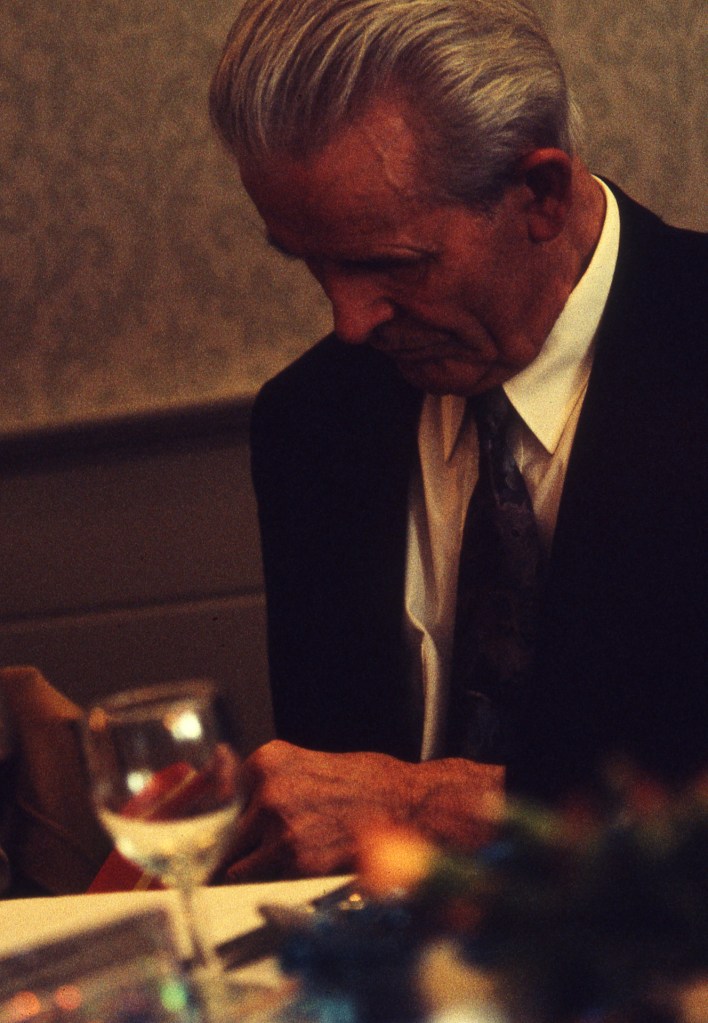
I only know my grandfather

through myself

he himself

never understood

his own

demons

only his silence

~

this silence was draped in front of me

on the table where I grew up

~

I only know my daemons

looking through this draped

veil

~

I see his silent shadow

behind it

it never left

it is where he lived

he is still there  

sometimes looking

at me

like me

~

he never spoke

he never will

he never lived

his silence killed

before he died

Day 2049, my river.

Day's pictures
Slide film, 1996, Olst – the Netherlands

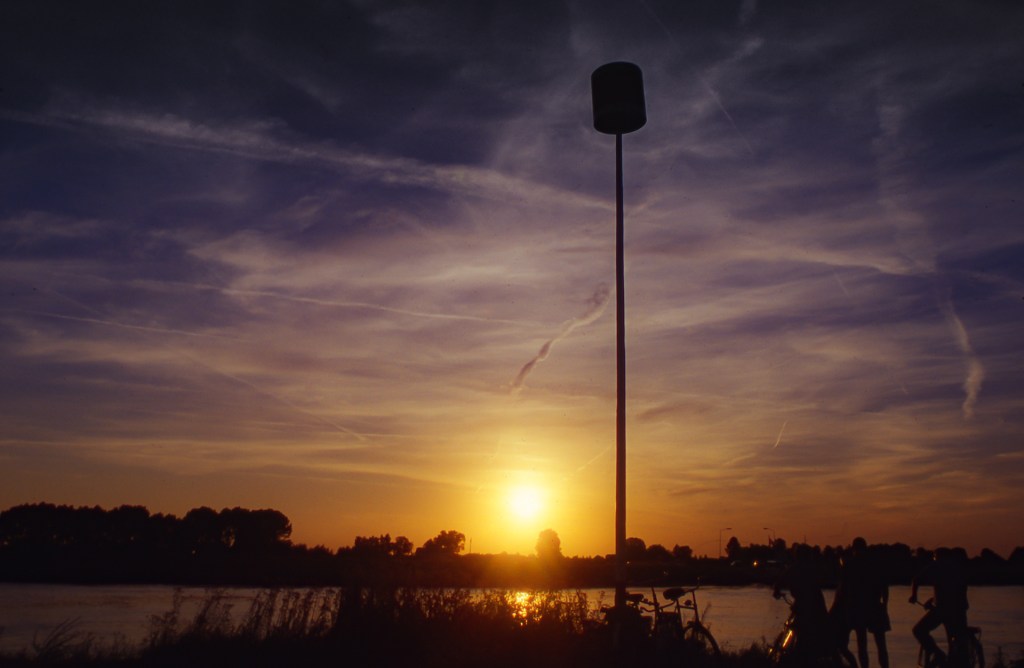
What has happened to me, my animals? said Zarathustra. Have I not changed? Has not bliss come to me as a storm? My happiness is foolish and will say foolish things: it is still young, so be patient with it. I am wounded by my happiness: let all who suffer be my physicians. I may go down again to my friends, and to my enemies too. Zarathustra may speak again and give and do what is dearest to those dear to him. My impatient love overflows in rivers, downward, toward sunrise and sunset. From silent mountains and thunderstorms of suffering my soul rushes into the valleys. Too long have I longed and looked into the distance. Too long have I belonged to loneliness; thus I have forgotten how to be silent. Mouth have I become through and through, and the roaring of a stream from towering cliffs: I want to plunge my speech down into the valleys. Let the river of my love plunge where there is no wayl How could a river fail to find its way to the sea? Indeed, a lake is within me, solitary and self-sufficient; but the river of my love carries it along, down to the sea.

Friedrich Nietzsche, Thus Spoke Zarathustra:The child with the mirror