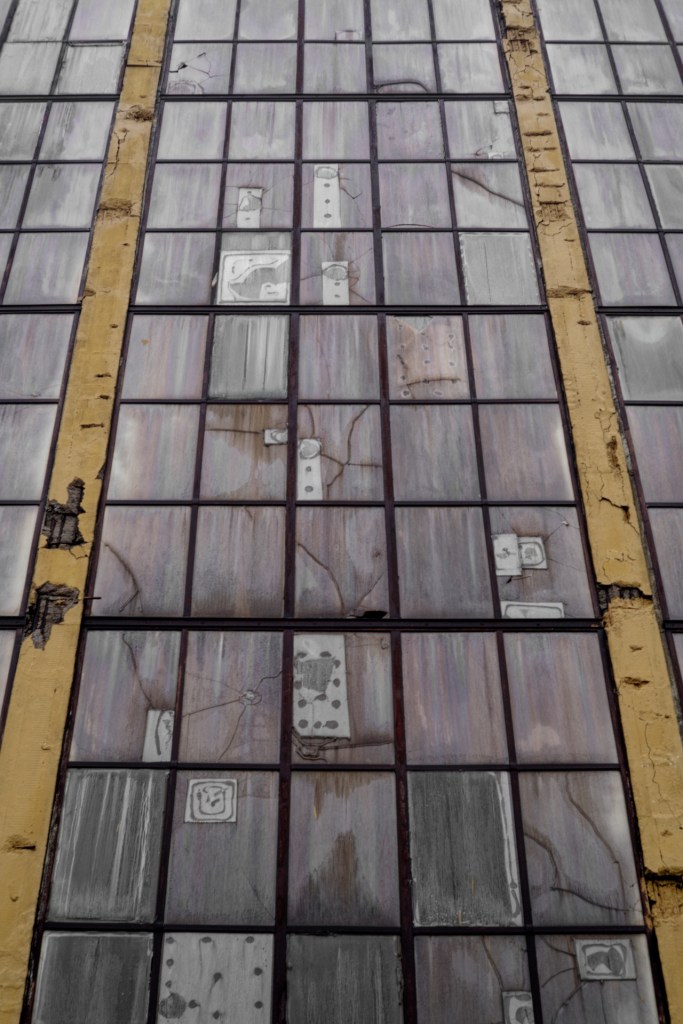
Day 3277, a road.

Daily picture, Quotes

Friedrich Nietzsche

Daybreak
Book I

26 Animals and morality. – The practices demanded in polite society: careful avoidance of the ridiculous, the offensive, the presumptuous, the suppression of one’s virtues as well as of one’s strongest inclinations, self-adaptation, self-deprecation, submission to orders of rank – all this is to be found as social morality in a crude form everywhere, even in the depths of the animal world – and only at this depth do we see the purpose of all these amiable precautions: one wishes to elude one’s pursuers and be favoured in the pursuit of one’ s prey. For this reason the animals learn to master themselves and alter their form, so that many, for example, adapt their colouring to the colouring of their surroundings (by virtue of the socalled ‘chromatic function’), pretend to be dead or assume the forms and colours of another animal or of sand, leaves, lichen, fungus (what English researchers designate ‘mimicry’). Thus the individual hides himself in the general concept ‘man’, or in society, or adapts himself to princes, classes, parties, opinions of his time and place:


Day 3273, politics.

Daily picture, Poetry
We all have to come together, they say sometimes.
To stand up against forces going backward or forward too fast or that go nowhere.

But when are there too many together, holding hands, intertwining into a fence?
Do we want to become a fence that, at time, someone else has to cut?

Can you stop when time is unavoidably against you?
Or is there no time in politics?

Day 3270, condemnation.

Daily picture, Quotes

Friedrich Nietzsche

The Antichrist

20.
In my condemnation of Christianity I surely hope I do no injustice to a related religion with an even larger number of believers: I allude to Buddhism . Both are to be reckoned among the nihilistic religions — they are both décadence religions — but they are separated from each other in a very remarkable way. For the fact that he is able to compare them at all the critic of Christianity is indebted to the scholars of India. — Buddhism is a hundred times as realistic as Christianity — it is part of its living heritage that it is able to face problems objectively and coolly; it is the product of long centuries of philosophical speculation.

Day 3263, True World.

Daily picture, Quotes

Friedrich Nietzsche

Twilight of the Idols
How the “True World” Finally Became a Fiction
History of an Error


1. The true world, attainable for the wise, the devout, the virtuous—they live in it, they are it.

(Oldest form of the idea, relatively clever, simple, convincing. Paraphrase of the assertion, “I, Plato, am the truth.”)

2. The true world, unattainable for now, but promised to the wise, the devout, the virtuous (“to the sinner who does penance”).

(Progress of the idea: it becomes more refined, more devious, more mystifying—it becomes woman, it becomes Christian . . .)

3. The true world, unattainable, unprovable, unpromisable, but a consolation, an obligation, an imperative, merely by virtue of being thought.

(The old sun basically, but glimpsed through fog and skepticism; the idea become sublime, pallid, Nordic, Königsbergian.)

4. The true world—unattainable? In any case, unattained. And if it is unattained, it is also unknown. And hence it is not consoling, redeeming, or obligating either; to what could something unknown obligate us? . . .

(Gray dawn. First yawnings of reason. Rooster’s crow of positivism.)

5. The “true world”—an idea with no use anymore, no longer even obligating—an idea become useless, superfluous, hence a refuted idea: let’s do away with it!

(Bright day; breakfast; return of bon sens [good sense] and cheerfulness; Plato blushes; pandemonium of all free spirits.)

6. We have done away with the true world: what world is left over? The apparent one, maybe? . . . But no! Along with the true world, we have also done away with the apparent!