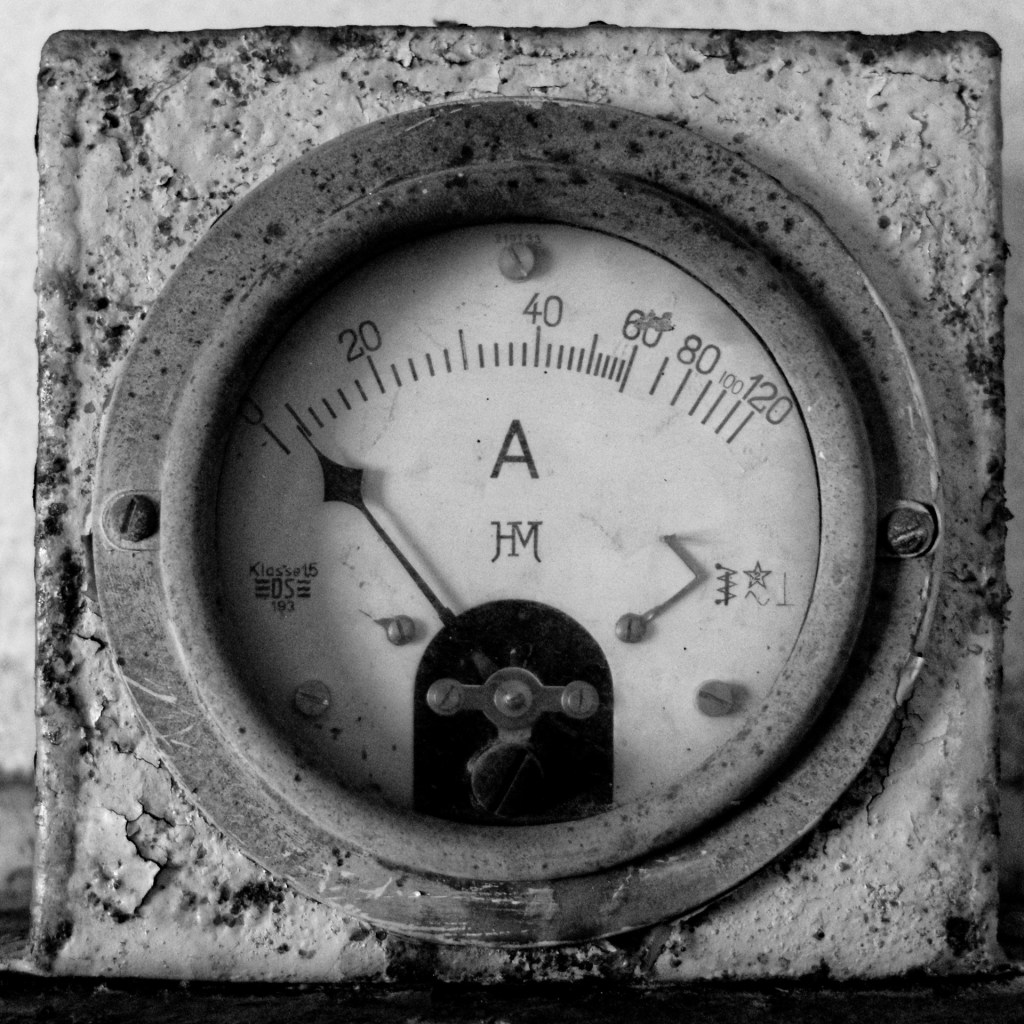
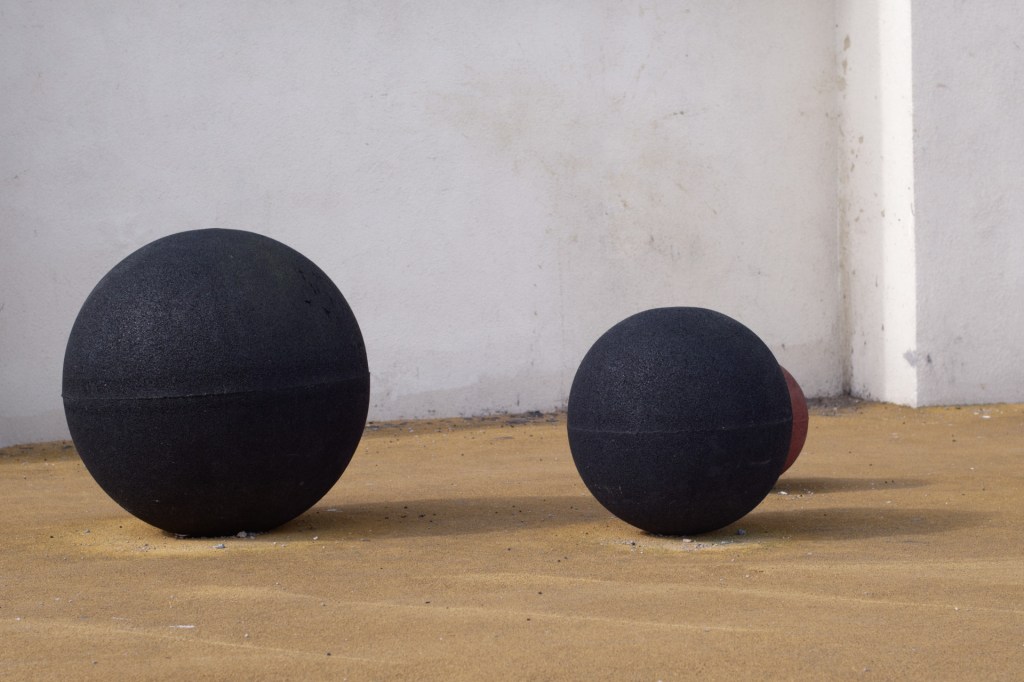
Day 3412, what it looks like.

Daily picture, Day's pictures, My thoughts

I know that there are more people who question life. I read books by people who try to answer at least some of the questions. I watch people on television and the internet who clearly try to do the same, but in real life, it is different. People generally don’t have a title hovering above their heads that cleverly promotes the questions they have and tries to answer. The people you are closest to might give you more insight into what is going on inside, but from my experience, I still have to speculate a lot. I have to admit that I will not open up to a random person, but if they want, they can learn a lot about me from what I have written over the last 20 years. I know that it would be strange if everybody poured their hearts out and started telling you their darkest secrets, but would it not be nice if we could at least admit that we all have questions and insecurities and that shame should not be a brake on going to the next level in your conversations, the level above chitchat. It’s like our naked bodies; we all hide them, though we all know what they look like.

Day 3411, Cogito, ergo sum.

Daily picture, My thoughts

I understand Descartes’ journey to find the things that he, or maybe better said, we can know. I also strive not to speculate, but to stick to what we can know, such as Descartes’ “I think, therefore I am.” And it is obvious that we think, regardless of what we believe.   

I thought about this because of what even he, in a different way, will have noticed. I like YouTube, but I don’t care too much for the model or the company that owns it. However, there are a lot of interesting videos to find.  There is, of course, this famous algorithm that serves you what might be interesting for you. This makes it difficult to be critical of what you find on YouTube because we all have a different experience, no feed is the same.  But as long as you know that there is an algorithm and how it roughly works, you can make use of it to find interesting stuff and what hangs around the borders of what you find interesting.

I enjoy watching documentaries, interviews, and video essays about philosophy, psychology, society, and related topics. But most of what I watch is from creators who are sceptical, and they tend to steer away from speculation. Last week, I watched some videos about consciousness, and in some of them, they interviewed individuals who seemed to be experts in a specific subject and stuck to that topic throughout the video.  If I find someone interesting, I will conduct some research to gain an impression of their stance on other subjects. Sometimes, they stray from the norm and come up with the most fantastic ideas on how all of this, in this case, consciousness, works when you watch them being interviewed or portrayed by creators who have a more specific agenda and are less critical. It is, of course, no crime to speculate, but when I then see them in these pseudo-scientific videos about third dimensions and alternate states, I will reach for the ignore button.

These uncritical thinkers are no Descartes, so that’s why I ignore them. Even though Descartes will also venture into areas where he cannot prove that what he says is true, he still has a great mind. With thinkers from his time, it is also harder to blame them for not being too outspoken because blasphemy could literally cost you your head, and they did not have the luxury of all the knowledge we now have about our physical bodies. Descartes is, of course, known for his dualism, which posits that the physical body somehow interacts with the spiritual world, specifically the soul. Scientists have examined the brain and other parts of the body where this connection is formed, but most serious thinkers recognize that there is no soul and such a connection. One of the clues is damage to parts of the brain, which then affects how we think (think also of alcohol, caffeine, and drugs). If there is a soul separated from our physical body, how can this soul then be affected? Damage to the brain is something that can be measured, and its effects are visible in how someone behaves. In this, you also need to theorize on why this is, but there are at least effects to be measured that can give some proof. Theorizing what happens with the soul and how that connects with the world is much harder to ground in reality, a reality we can all understand, and not just the imaginative mind of a few individuals.

Day 3406, Do you know that they say? 2

Daily picture, Do you know that they say?

Do you know that they say?

They say that it is hard to find the place in yourself where the decisions you make come from, why did you choose this over the other? If you want to scratch the back of your head, you might feel that you just decided that, but do you have control of all the movements that your arm makes to reach that itchy spot? You can say yes and insist that you have the control to move your hand to another place at any moment. And that might be true, but do you consciously control all the muscles in your arm to guide it to its place? No, of course not, just like you don’t control your heartbeat or your bowel movements. What I try to say is that we feel some control over what we want to do with our bodies, but for the most part, we have no control over it. We walk everywhere without ever thinking about how we do it; it all happens unconsciously. But is it not possible that even this last bit of control, the decision you feel you make, is also an automated process that includes this feeling of control? Benjamin Libet is famous for the research he conducted in the 1980s, which showed that our brain begins making decisions up to 10 seconds before we are conscious of it.  So if you answer a question with yes or no, the research can show you that your decision was already made before you got the chance to answer a certain way, and you get the answer presented to you just before you are conscious of it  We are like the child with a fake steering wheel sitting on the passenger side of a car, steering in the direction the car goes just a second after the car changes direction, and we felt the power of control. This research has been repeated ever since, and it is clear that this happens. The debate these days is more about the consequences of it.

Just think about it, but realize that any opinions you have about it are formed before you are conscious of it. If your first reaction is no, impossible, then you have to realize that you have to compete with scientists who have studied our brains for years, and that “you” can only make decisions with the knowledge you have available. If you are not up for that task but still can’t believe it, then I suggest you get some new information in your system so your unconsciousness can form a better opinion for the you, you feel you are*.

*It is hard to wrap your mind around it, but try to think of yourself as your self, as a feature like the skin you have. The skin also changes over time, and you have little control over this feature besides some moisturizer you can use. You definitely have a self and a personality (it separates you from the others around you, just as your skin does), but this seems not to be a static entity. You might perceive it as a constant, but it is more like the sea where you swim in, and your self is the sea, constantly changing but seemingly not, and with no chores in sight, you don’t feel you are drifting.

Day 3405, Do you know that they say? 1

Daily picture, Do you know that they say?

Do you know that they say?

They say that we, well… with ‘we’ I mean our brain, are good at spinning our experiences, and especially our past experiences, in such a way that we feel we are the same person now as we were years ago. There is, of course, no independent source that records all our experiences, but if you know how our brain works, you more or less have to conclude that the past we remember is, for the most part, an invention of your brain to keep you from feeling lost in the overabundance of reality.

We get bombarded with millions of inputs every second through all our senses, but some scientists say that we process only 20 inputs per second. Can you imagine that if you heard everything that your ears hear, you would not be able to listen to the sound you want to listen to? Our Brains are evolved to ignore most of the noise around us and “guess” what is interesting. You will also feel a touch on your arm when it is unexpected, but ignore all the times your clothes are touching you in the same places. The we in us, the so-called conscious part, is only aware of a select part of all the millions of inputs.

If you accept this as something that sounds right or at least logical, then you can take it a step further and view all our experiences as just another input for our brains. Our brain not only filters out unwanted noises but also unwanted experiences that disturb our present state of mind. This doesn’t mean that you only feel happy thoughts; it means that if you are a racist at this moment, your brain “rewrites” your past in such a way that you forget that you really liked your teacher, who was a foreigner, when you were young. This is, of course, a possibly flawed example, but the point is that we often lack a clear understanding of what happened in our past because our brain gradually rewrites memories over time to align with who we are now. There is simply no way to remember who you were in a distant past; even stories from friends and family contradicting your version of events will have to go through this filter, so you preserve them as correct, and otherwise you will dispute them.

If you believe that you have a soul that is independent of your body and that your soul is the you, you feel then this idea might not work for you. There is no proof that we have a soul, only that we feel that we have something like a soul, and the soul you feel correlates with the one prevalent in your culture. As far as we know, our brain, along with all the hormones and other factors that influence it, is responsible for shaping our emotions and identity, which in turn create our feelings, including those of the soul. This can be tested, has been tested, and a conclusion can be drawn. Just as most of the cells in your body are not the same as they were 30 years ago, there is no reason to believe that very little of you is the same as the you from 30 years ago, though you would never feel it; you can only understand that it is so if you’re lucky and except it.

My soul is a hidden orchestra; I know not what instruments, what fiddlestrings and harps, drums and tamboura I sound and clash inside myself. All I hear is the symphony.
Fernando Pessoa,

  • I don’t say that your brain does a good job of protecting you from feeling lost; it is possibly the default or primal state it tries to tone down. I suppose a cow that does little thinking requires less protection from somber thoughts in an evolutionary context. I guess our first words and thoughts were questions, wondering why we need shelter every day and why some people stop being there, and the endless chore this is. This was probably the reason why religion was a successful tool in taking away the sharp edges of this empty feeling. We need our illusions, pretty lights, and sounds so we can forget. I just wonder when “we” decided the noise was ugly because is not your symphony, my nightmare?


Day 3403, free will

Daily picture, Quotes

“In order to prove there’s free will, you have to show that some behavior just happened out of thin air in the sense of considering all these biological precursors. It may be possible to sidestep that with some subtle philosophical arguments, but you can’t with anything known to science.”

Robert M. Sapolsky, Determined: A Science of Life without Free Will

Day 3398, follow.

Daily picture, Quotes

Friedrich Nietzsche

Human, All Too Human
By Oneself Alone

5 2 1 Greatness means: giving direction.-No river is made great and fertile by itself alone: but rather it is made so by absorbing and bearing onward so many tributaries. So it is, too, with all who are great in spirit. All that matters is that a single one provides the direction that the many tributaries then must follow; not whether he is at the beginning poorly or abundantly endowed.