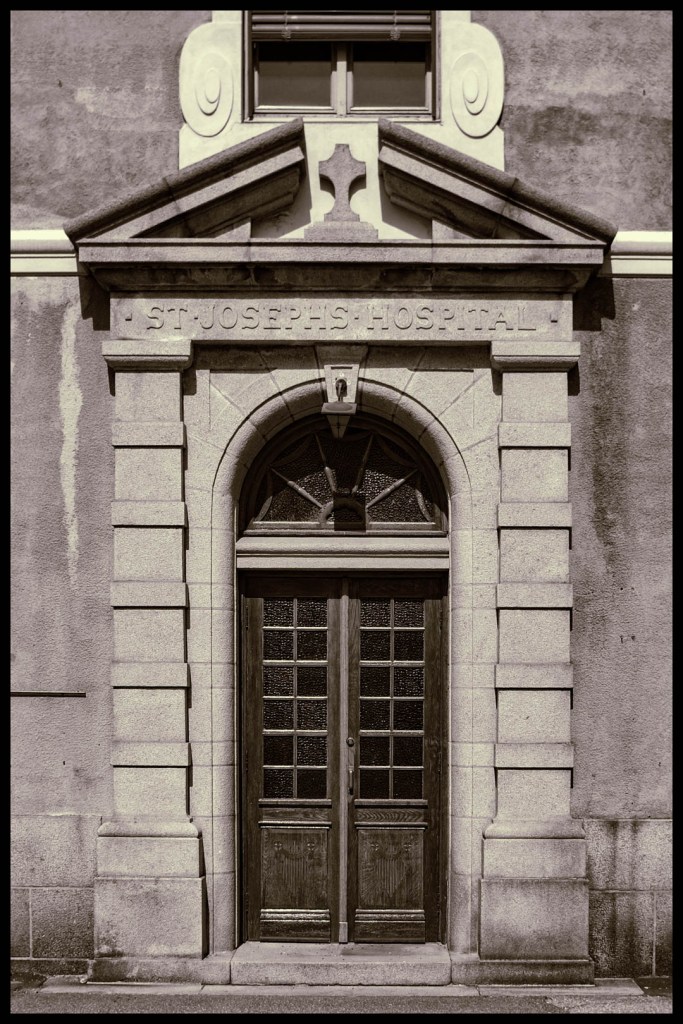
Day 3001, your old room.

Daily picture, Quotes

Friedrich Nietzsche

Also Sprach Zarathustra
Of the Three Metamorphoses

I name you three metamorphoses of the spirit: how the spirit shall become a camel, and the camel a lion, and the lion at last a child.
There are many heavy things for the spirit, for the strong, weight-bearing spirit in which dwell respect and awe: its strength longs for the heavy, for the heaviest.
What is heavy? thus asks the weight-bearing spirit, thus it kneels down like the camel and wants to be well laden.
What is the heaviest thing, you heroes? so asks the weight – bearing spirit, that I may take it upon me and rejoice in my strength.
Is it not this: to debase yourself in order to injure your pride? To let your folly shine out in order to mock your wisdom?
Or is it this: to desert our cause when it is celebrating its victory? To climb high mountains in order to tempt the tempter?
Or is it this: to feed upon the acorns and grass of knowledge and for the sake of truth to suffer hunger of the soul?
Or is it this: to be sick and to send away comforters and make friends with the deaf, who never hear what you ask?
Or is it this: to wade into dirty water when it is the water of truth, and not to disdain cold frogs and hot toads?
Or is it this: to love those who despise us and to offer our hand to the ghost when it wants to frighten us?
The weight-bearing spirit takes upon itself all these heaviest things: like a camel hurrying laden into the desert, thus it hurries into its desert.
But in the loneliest desert the second metamorphosis occurs: the spirit here becomes a lion; it wants to capture freedom and be lord in its own desert.
It seeks here its ultimate lord: it will be an enemy to him and to its ultimate God, it will struggle for victory with the great dragon.
What is the great dragon which the spirit no longer wants to call lord and God? The great dragon is called ‘Thou shalt’. But the spirit of the lion says ‘I will!’
‘Thou shalt’ lies in its path, sparkling with gold, a scale-covered beast, and on every scale glitters golden ‘Thou shalt’.
Values of a thousand years glitter on the scales, and thus speaks the mightiest of all dragons: ‘All the values of things – glitter on me.
‘All values have already been created, and all created values – are in me. Truly, there shall be no more “I will”!’ Thus speaks the dragon.
My brothers, why is the lion needed in the spirit? Why does the beast of burden, that renounces and is reverent, not suffice?
To create new values – even the lion is incapable of that: but to create itself freedom for new creation – that the might of the lion can do.
To create freedom for itself and a sacred No even to duty: the lion is needed for that, my brothers.
To seize the right to new values – that is the most terrible proceeding for a weight-bearing and reverential spirit Truly, to this spirit it is a theft and a work for an animal of prey.
Once it loved this ‘Thou shalt’ as its holiest thing: now it has to find illusion and caprice even in the holiest, that it may steal freedom from its love: the lion is needed for this theft.
But tell me, my brothers, what can the child do that even the lion cannot? Why must the preying lion still become a child?
The child is innocence and forgetfulness, a new beginning, a sport, a self-propelling wheel, a first motion, a sacred Yes.
Yes, a sacred Yes is needed, my brothers, for the sport of creation: the spirit now wills its own will, the spirit sundered from the world now wins its own world.
I have named you three metamorphoses of the spirit: how the spirit became a camel, and the camel a lion, and the lion at last a child.
Thus spoke Zarathustra. And at that time he was living in the town called The Pied Cow.

Day 2995, what alone.

Daily picture, Quotes

Friedrich Nietzsche

Twilight of the Idols
The Four Great Errors

8 What alone can our teaching be? – That no one gives a human being his qualities: not God, not society, not his parents or ancestors, not he himself ( – the nonsensical idea here last rejected was propounded, as ‘intelligible freedom’, by Kant, and perhaps also by Plato before him). No one is accountable for existing at all, or for being constituted as he is, or for living in the circumstances and surroundings in which he lives. The fatality of his nature cannot be disentangled from the fatality of all that which has been and will be. He is not the result of a special design, a will, a purpose; he is not the subject of an attempt to attain to an ‘ideal of man’ or an ‘ideal of happiness’ or an ‘ideal of morality’ – it is absurd to want to hand over his nature to some purpose or other. We invented the concept ‘purpose’: in reality purpose is lacking .… One is necessary, one is a piece of fate, one belongs to the whole, one is in the whole – there exists nothing which could judge, measure, compare, condemn our being, for that would be to judge, measure, compare, condemn the whole.… But nothing exists apart from the whole! – That no one is any longer made accountable, that the kind of being manifested cannot be traced back to a causa prima that the world is a unity neither as sensorium nor as ‘spirit’, this alone is the great liberation – thus alone is the innocence of becoming restored.… The concept ‘God’ has hitherto been the greatest objection to existence.… We deny God; in denying God, we deny accountability: only by doing that do we redeem the world.

Day 2988, and goodwill.

Daily picture, Quotes

Friedrich Nietzsche

Daybreak
Book I

13 Towards the re-education of the human race. – Men of application and goodwill assist in this one work: to take the concept of punishment which has overrun the whole world and root it out! There exists no more noxious weed! Not only has it been implanted into the consequences of our actions- and how dreadful and repugnant to reason even this is, to conceive cause and effect as cause and punishment! – but they have gone further and, through this infamous mode of interpretation with the aid of the concept of punishment, robbed of its innocence the whole purely chance character of events. Indeed, they have gone so far in their madness as to demand that we feel our very existence to be a punishment- it is as though the education of the human race had hitherto been directed by the fantasies of jailers and hangmen!

Day 2975, gifts.

Daily picture, Quotes

Friedrich Nietzsche

Human, All Too Human II
The Wanderer and His Shadow

183 Getting angry and punishing have their time. -Getting angry and punishing are our gifts from the animal world. Humans first come of age when they return this gift from the cradle to the animals. -Herein lies buried one of the greatest thoughts that humans can have, the thought of344 an advance upon all advancements. -Let us go forward a few millennia with one another, my friends! There is a great deal of joy still reserved for humans, the scent of which has not yet blown as far as our contemporaries! And indeed, we might expect to have this joy, even promise it to ourselves and testify to it as something necessary, if only the development of human reason does not stand still! Some day, we will no longer have the heart for the logical sin that lies concealed in anger and punishment, whether practiced individually or socially: some day, when heart and head have learned to dwell as closely to each other as they now still stand apart. That they no longer stand as far apart as they originally did becomes fairly visible by gazing upon the whole path of humanity; and the individual who surveys a life of inward work will become aware with a proud joy of the distance that has been overcome, the approach that has been accomplished and he can, upon this basis, risk having even greater hopes.

Day 2972, a matter.

Daily picture, Quotes

Friedrich Nietzsche

Human, All Too Human II
Mixed Opinions and Maxims

88 How we die is a matter of indifference. -The whole way in which a human thinks of death during the fullness of his life and the blossoming of his strength does admittedly provide very telling testimony about what we call his character; but the hour of death itself and his demeanor on the deathbed hardly matter for this at all. The exhaustion of an expiring existence, especially when old people die, the irregular or insufficient nourishment of the rain during this final time, the sometimes very violent pain, the untried and novel nature of the whole situation, and far too often the attack and retreat of superstitious impressions and  anxieties, as if dying mattered a great deal and bridges of the most terrifying kind were being crossed- all this does not allow us to use dying as testimony about the living person. Nor is it true that a dying person is generally more honest than a living one: instead, almost everyone is tempted into a sometimes conscious, sometimes unconscious comedy of vanity by the solemn demeanor of the surrounding people and the repressed or flowing streams of tears and feelings. The seriousness with which every dying person is treated is surely the most exquisite pleasure of his entire life for many a poor, despised devil and a sort of compensation and partial payment for many deprivations.

Day 2969, more of Nietzsches notes.

Daily picture, Quotes

Friedrich Nietzsche

The Will to Power
Book Three: Principles of A New Evaluation 

539 (March-June 1888)
Parmenides said, “one cannot think of what is not”;-we are at the other extreme, and say “what can be thought of must certainly be a fiction. “

540 (1885)
There are many kinds of eyes. Even the sphinx has eyes-­ and consequently there are many kinds of “truths,” and consequently there is no truth.

Day 2964, Individual.

Daily picture, My thoughts, Quotes

Individualism. I was raised in the West, and as such, I believed, till I was around 21, that the goal in life was to make a good life for myself. I didn’t know what I wanted, but I wanted to make money and use this to buy my way to a future that mostly revolved around me. I had no idea what kind of negative effect this individualistic and capitalistic mindset had on the world, it didn’t cross my mind, till it did. I am still guilty of this inbred behavior, but at least I feel guilty now, and I try to steer away from what comes easy. But it has steered my choices in profound ways,  I have worked for nonprofit organizations for most of my career, a more or less conscious decision. 

However, this individualism or egoism is not unique to only our culture; we are all different in the way we look and the experiences we have, and the culture we grew up in is not more than a layer this experience has to go through. We also have a slightly unique way of dealing with the world around us and within us, but all these individual characteristics are, for the most part, exclusively yours, only when you look really close. Our uniqueness fades away the more distance you have from it. You can describe unique characteristics to a group of a thousand people and forget that it’s made up of a thousand individuals and you. 

You are also made up of a thousand individual parts and experiences, and you and the outside world see that combination as your characteristics, your individuality. But just as a group of a thousand people can only be judged on a superficial level and thus labeled, so is your individuality a loose… estimation of who you are.  Maybe there isn’t even a real you besides this view from a distance of the parts that seem to form you.

Does this all matter? You are so used to yourself and how you behave that it might as well be seen as being a part of who you are. So-called reality will probably agree with you, and in our daily life, it is easier to say about yourself or someone else who and what we or they seem to be. However, the downside of putting each other in boxes is that there are a lot of problems with this. Look at history and the news and see how often labels around people’s necks are part of the problem and even worse when whole groups get labeled and are put in boxes.

It is something typically human, I think. Imagine the first humans learning how to speak and how the most influential person in that first group decided what to name the things around them, the one with the loudest voice you could say. We are all conditioned to accept authority in our lives and the naming they do, even the flawed authority in ourselves.

Who are you? I think the best way of finding yourself is not to look for it but just be and take what you seem to be not too seriously, especially the labels attached to certain behaviors because labels come with expectations, and expectations are not timeless, let alone real. 

“The surest way to corrupt a youth is to instruct him to hold in higher esteem those who think alike than those who think differently.” Friedrich Nietzsche

“I won’t tell you that the world matters nothing, or the world’s voice, or the voice of society. They matter a good deal. They matter far too much. But there are moments when one has to choose between living one’s own life, fully, entirely, completely—or dragging out some false, shallow, degrading existence that the world in its hypocrisy demands. You have that moment now. Choose!” Oscar Wilde

“You can’t, if you can’t feel it, if it never
Rises from the soul, and sways
The heart of every single hearer,
With deepest power, in simple ways.
You’ll sit forever, gluing things together,
Cooking up a stew from other’s scraps,
Blowing on a miserable fire,
Made from your heap of dying ash.
Let apes and children praise your art,
If their admiration’s to your taste,
But you’ll never speak from heart to heart,
Unless it rises up from your heart’s space.”
Johann Wolfgang von Goethe

Day 2959, who are well.

Daily picture, Quotes

Friedrich Nietzsche 

The Will to Power
Book One: European Nihilism

75 An able craftsman or scholar cuts a fine figure when he takes pride in his art and looks on life content and satisfied. But nothing looks more wretched than when a shoemaker or schoolmaster gives us to understand with a suffering mind that he was really born for something better. There is nothing better than what is good, and good is having some ability and using that to create Tuchtigkeit or virtu in the Italian Renaissance sense. Today, in our time when the state has an absurdly fat stomach, there are in all fields and departments, in addition to the real workers, also “representatives”; e.g., besides the scholars also scribblers, besides the suffering classes also garrulous, boastful ne’er-do-wells who “represent” this suffering, not to speak of the professional politicians who are well off while “representing” distress with powerful lungs before a parliament. Our modern life is extremely expensive owing to the large number of intermediaries; in an ancient city, on the other hand, and, echoing that, also in many cities in Spain and Italy, one appeared oneself and would have given a hoot to such modern representatives and intermediaries-or a kick!

Day 2955, wondering.

Daily picture, Quotes

Friedrich Nietzsche

Untimely Meditations
On the uses and disadvantages of history for life

1. Consider the cattle, grazing as they pass you by: they do not know what is meant by yesterday or today, they leap about, eat, rest, digest, leap about again, and so from morn till night and from day to day, fettered to the moment and its pleasure or displeasure, and thus neither melancholy nor bored. This is a hard sight for man to see; for, though he thinks himself better than the animals because he is human, he cannot help envying them their happiness – what they have, a life neither bored nor painful, is precisely what he wants, yet he cannot have it because he refuses to be like an animal. A human being may well ask an animal: ‘Why do you not speak to me of your happiness but only stand and gaze at me?’ The animal would like to answer, and say: ‘The reason is I always forget what I was going to say’ -but then he forgot this answer too, and stayed silent: so that the human being was left wondering.

Day 2952, because.

Daily picture, Quotes

Friedrich Nietzsche

On the Genealogy of Morals
Prologue

3 Because of a doubt peculiar to my own nature, which I am reluctant to confess—for it concerns itself with morality, with everything which up to the present has been celebrated on earth as morality—a doubt which came into my life so early, so uninvited, so irresistibly, in such contradiction to my surroundings, my age, the examples around me, and my origin, that I would almost have the right to call it my “a priori” [before experience]—because of this, my curiosity as  well as my suspicions had to pause early on at the question about where our good and evil really originated. In fact, as a thirteen-yearold lad, my mind was already occupying itself with the problem of the origin of evil. At an age when one has “half childish play, half God in one’s heart,” I devoted my first childish literary trifle, my first written philosophical exercise, to this problem—and so far as my “solution” to it at that time is

Day 2948, I.

Daily picture, Quotes

Friedrich Nietzsche

Beyond Good and Evil
On the prejudices of philosophers

16 There are still harmless self-observers who believe in the existence of “immediate certainties,” such as “I think,” or the “I will” that was Schopenhauer’s superstition: just as if knowledge had been given an object here to seize, stark naked, as a “thing-in-itself,” and no falsification took place from either the side of the subject or the side of the object. But I will say this a hundred times: “immediate certainty,” like “absolute knowledge” and the “thing in itself ” contains a contradictio in adjecto. For once and for all, we should free ourselves from the seduction of words! Let the people believe that knowing means knowing to the very end; the philosopher has to say: “When I dissect the process expressed in the proposition ‘I think,’ I get a whole set of bold claims that are difficult, perhaps impossible, to establish, – for instance, that I am the one who is thinking, that there must be something that is thinking in the first place, that thinking is an activity and the effect of a being who is considered the cause, that there is an ‘I,’ and finally, that it has already been determined what is meant by thinking, – that I know what thinking is. Because if I had not already made up my mind what thinking is, how could I tell whether what had just happened was not perhaps ‘willing’ or ‘feeling’? Enough: this ‘I think’ presupposes that I compare my present state with other states that I have seen in myself, in order to determine what it is: and because of this retrospective comparison with other types of ‘knowing,’ this present state has absolutely no ‘immediate certainty’ for me.” – In place of that “immediate certainty” which may, in this case, win the faith of the people, the philosopher gets handed a whole assortment of metaphysical questions, genuinely probing intellectual questions of conscience, such as: “Where do I get the concept of thinking from? Why do I believe in causes and effects? What gives me the right to speak about an I, and, for that matter, about an I as cause, and, finally, about an I as the cause of thoughts?” Whoever dares to answer these metaphysical questions right away with an appeal to a sort of intuitive knowledge, like the person who says: “I think and know that at least this is true, real, certain” – he will find the philosopher of today ready with a smile and two question-marks. “My dear sir,” the philosopher will perhaps give him to understand, “it is improbable that you are not mistaken: but why insist on the truth?” 

Day 2945,

Daily picture, Poetry, Quotes
Sometimes
you have to start at the beginning
somewhere
halfway

Friedrich Nietzsche

On the Genealogy of Morals
Preface

1 We are unknown to ourselves, we men of knowledge and with good reason. We have never sought ourselves, how could it happen that we should ever find ourselves? It has rightly been said: “Where your treasure is, there will your heart be also”; our treasure is where the beehives of our knowledge are. We are constantly making for them, being by nature winged creatures and honeygatherers of the spirit; there is one thing alone we really care about from the heart “bringing something home.” Whatever else there is in life, so-called experiences”-which of us has sufficient earnestness for them? Or sufficient time? Present experience has, I am afraid, always found us “absent-minded”: we cannot give our hearts to it-not even our ears! Rather, as one divinely preoccupied and immersed in himself into hose ear the bell has just boomed with all its strength the twelve beats of noon suddenly starts up  and asks himself: “what really was that which just struck?” so we sometimes rub our ears afterward and ask, utterly surprised and disconcerted, “what really was that which we have just experienced?” and moreover: “who are we really?” and, afterward as aforesaid, count the twelve trembling bell-strokes of our experience, our life, our being-and alas! miscount them. So we are necessarily strangers to ourselves, we do not comprehend ourselves, we have to misunderstand ourselves, for us the law “Each is furthest from himself · applies to aur eternity-we are not “men of knowledge” with respect to ourselves.

Day 2940, pseudosciences.

Daily picture, Quotes

Friedrich Nietzsche

Daybreak
Book 1

11 Popular morality and popular medicine. – The morality which prevails in a community is constantly being worked at by everybody: most people produce example after example of the alleged relationship between cause and effect, between guilt and punishment, confirm it as well founded and strengthen their faith: some observe actions and their consequences afresh and draw conclusions and laws from their observations: a very few take exception here and there and thus diminish faith on these points. – All, however, are at one in the wholly crude, unscientific character of their activity; whether it is a matter of producing examples, making observations or taking exception, whether it is a matter of proving, confirming, expressing or refuting a law – both material and form are worthless, as are the material and form of all popular medicine. Popular medicine and popular morality belong together and ought not to be evaluated so differently as they still are: both are the most dangerous pseudosciences.

Day 2927, On the genesis.

Daily picture, Quotes

Friedrich Nietzsche

The Will To Power
Book One: European Nihilism

25 (Spring-Fall 1887) On the genesis of the nihilist.- It is only late that one musters the courage for what one really knows.14 That I have hitherto been a thorough-going nihilist, I have admitted to myself only recently: the energy and radicalism with which I advanced as a nihilist deceived me about this basic fact. When one moves toward a goal it seems impossible that “goal-lessness as such” is the principle of our faith.

Day 2919, prematurely.

Daily picture, Quotes


Friedrich Nietzsche

Human, All Too Human II
The Wanderer and His Shadow

297 Do not wish to see prematurely. -As long as we are experiencing something, we must give ourselves over to the experience and close our eyes, and thus, while still in it, not make ourselves already the observer of it. That would, of course, disturb our good digestion of the experience; instead of a bit of wisdom, we would take away a bit of indigestion.

Day 2913, next two.

Daily picture, Quotes

Friedrich Nietzsche

The Will To Power
Preface (Nov. 1887-March 1888)

2 What I relate is the history of the next two centuries. I describe what is coming, what can no longer come differently: the advent of nihilism. This history can be related even now; for necessity itself is at work here. This future speaks even now in a hundred signs, this destiny announces itself everywhere; for this music of the future all ears are cocked even now. For some time now, our whole European culture has been moving as toward a catastrophe, with a tortured tension that is growing from decade to decade: restlessly, violently, headlong, like a river that wants to reach the end, that no longer reflects, that is afraid to reflect.