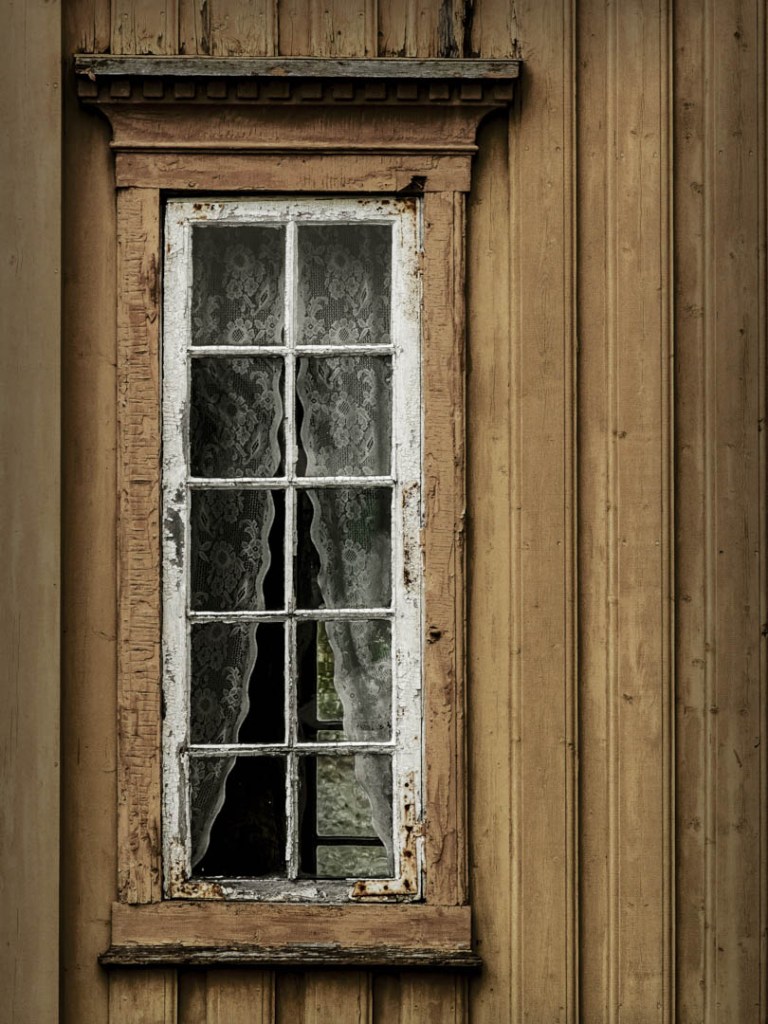
I look throught the old window
from outside
and it feels
like I am doing it from the inside
I look throught the old window
from outside
and it feels
like I am doing it from the inside
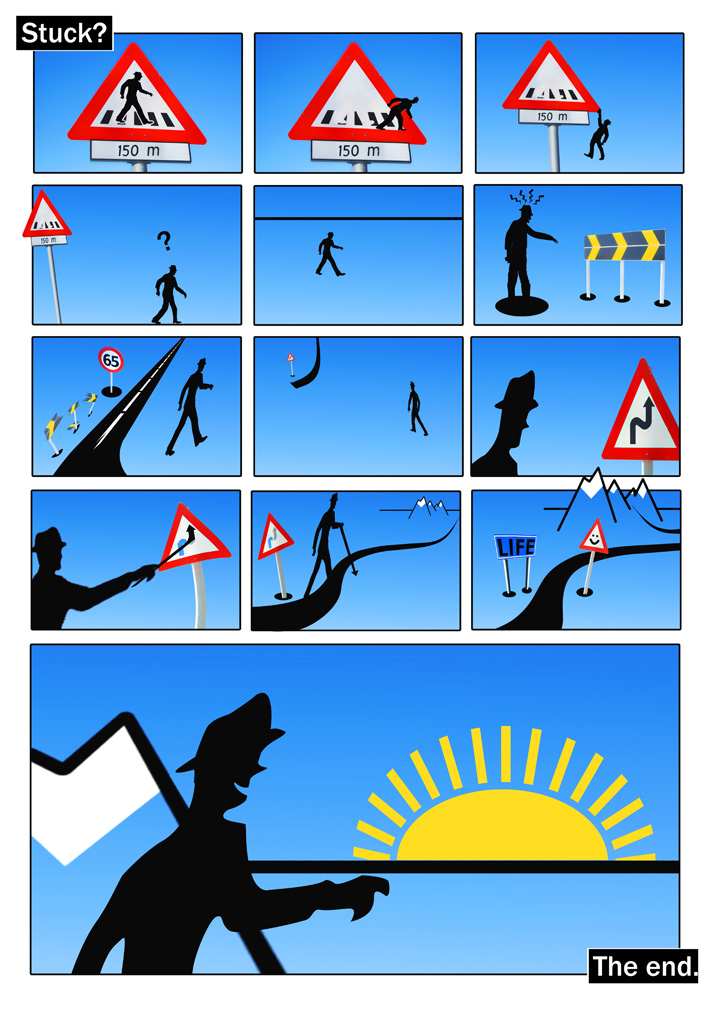
Gekooide dieren

Caged animals
Caged animals
From cage to cage
From institution to institution

From one cage to another I move,
the setting changes, but I do not,
not yet outside where I want to be, outside that cage.

But that world outside might
exist only here inside my head,
as hope without bars.

All those people out there, outside my cage,
I do not despise for their freedom,
but for their carelessness, their lack.

A lack of appreciation for their
cage without bars, their naivety,
their not knowing their own reality.

As a caged being I can say nothing,
I can pace back and forth like an animal,
but I am not able to speak.

As an animal I think in images,
feelings and reactions without words
that teach me, teach me nothing.

People talk and talk and convince
each other, confuse each other that this is so
and that is so, but only with words.

Only with words, hearsay,
from once, from the past, from him or her,
but without feeling.

Feeling that originates from the deepest
of what we all are,
caged animals.

Sunday 25 march 2007
In October 2006, I moved to Norway. It’s been 20 years, so I can be forgiven for not remembering everything so clearly, but aside from that excuse, I had a clear story in my mind about those first few years. This weekend, I read my blog from the first three years in Norway. Well, I didn’t actually read it all; I skimmed over it while I copied the text into a document (103 pages, 80.000 words) and fed it to a chatbot. I asked it all kinds of questions and requested it to show me all the quotes, and I was quite surprised. For the last 10 years, I’ve been writing a lot, and I feel like I know myself pretty well now. Because I think I know myself now, the time before the ten-year mark seems like the dark ages to me. It’s a period where I obviously thought about things. I left many relics behind in the form of books I’ve bought in those dark ages, but in my mind, it all felt pretty trivial.
The blog post was meant for family to read, and for the most part, it’s lighthearted. I talk about the weather, my work, and what I do in my free time. But I was also not afraid to share my feelings about life, myself, and the people around me.
One of my go-to stories when people ask why I moved to Norway is about the book “Nooit Meer Slapen” (Never Sleep Again) by the famous Dutch novelist W.F. Hermans. I read that book around age 16, and I can’t quite explain why it resonated with me, but what it represented stayed with me. I realize more and more how it reflects a part of me, the 16-year-old me, wearing a “Great Pretender” T-shirt, was already more aware than his intellect could put into words. The novel shows that human attempts to find certainty, meaning, and success often fail in an indifferent world where knowledge is unreliable and people are fundamentally alone.

One step after another I walk toward that distant place among the peaks, where tonight the sun will cast its red glow for the millionth time in thousands of fading hues as the earth spins on its path of madness and joy, and I ponder it all the still, crisp air, the next step up and then down, my hand pressed to the earth to feel its reality, not as a dream here, where space widens my happiness and my gaze grows solitary, unburdened by memories of what once was, now both on my way and already arrived, enjoying the company of my past and present, the view of ice shattered into thousands of shards by the tides and the turning of the world, the moon that has watched me for millennia as I seek her before sleep, today’s cold stillness giving me rest before morning’s startled birds and another day in repetition, walking toward the horizon that at dusk bathes my soul in red and steals my breath, resigned to the days ahead and a world that continues without us until the sun reclaims what she gave, and we, as the dust, drift on, perhaps to live again, or next time as a red glow lighting the path of another traveler who does not yet know that the most important thing in life is simply to breathe.

The argument and thought-experiment now generally known as the Chinese Room Argument was first published in a 1980 article by American philosopher John Searle (1932– ). It has become one of the best-known arguments in recent philosophy. Searle imagines himself alone in a room following a computer program for responding to Chinese characters slipped under the door. Searle understands nothing of Chinese, and yet, by following the program for manipulating symbols and numerals just as a computer does, he sends appropriate strings of Chinese characters back out under the door, and this leads those outside to mistakenly suppose there is a Chinese speaker in the room.
The narrow conclusion Searle draws from the argument is that programming a digital computer may make it appear to understand language but could not produce real understanding. Hence the “Turing Test” is inadequate. Searle argues that the thought experiment underscores the fact that computers merely use syntactic rules to manipulate symbol strings, but have no understanding of meaning or semantics. The broader conclusion of the argument is that the theory that human minds are computer-like computational or information processing systems is refuted. Instead minds must result from biological processes; computers can at best simulate these biological processes. Thus the argument has large implications for semantics, philosophy of language and mind, theories of consciousness, computer science, and cognitive science generally. As a result, there have been many critical replies to the argument.
Read the rest here: https://plato.stanford.edu/entries/chinese-room/

Questions about moral character have recently come to occupy a central place in philosophical discussion. Part of the explanation for this development can be traced to the publication in 1958 of G. E. M. Anscombe’s seminal article “Modern Moral Philosophy.” In that paper Anscombe argued that Kantianism and utilitarianism, the two major traditions in western moral philosophy, mistakenly placed the foundation for morality in legalistic notions such as duty and obligation. To do ethics properly, Anscombe argued, one must start with what it is for a human being to flourish or live well. That meant returning to some questions that mattered deeply to the ancient Greek moralists. These questions focussed on the nature of “virtue” (or what we might think of as admirable moral character), of how one becomes virtuous (is it taught? does it arise naturally? are we responsible for its development?), and of what relationships and institutions may be necessary to make becoming virtuous possible. Answers to these ancient questions emerge today in various areas of philosophy, including ethics (especially virtue ethics), feminist ethics, political philosophy, philosophy of education, and philosophy of literature. Interest in virtue and character was also indirectly the result of a more practical turn in political philosophy, inspired by the publication of John Rawls’s A Theory of Justice in 1971. Especially in Part III of A Theory of Justice, Rawls provided a picture of how individuals might be brought up in a just state to develop the virtues expected of good citizens. Although his interest was not in moral education per se, his discussion of how individuals acquire a sense of justice and of how they develop what he called self-respect stimulated other philosophers to explore the psychological foundations of virtue and the contributions made by friendship, family, community, and meaningful work to good moral character.
This entry provides a brief historical account of some important developments in philosophical approaches to good moral character. Approximately half the entry is on the Greek moralists Socrates, Plato, Aristotle, and the Stoics. Of these, most attention is given to Aristotle’s views, since most other philosophical discussions of character are indebted to his analysis. The latter half of the entry explores how other philosophers have responded to the concerns first raised by the Greeks. Some philosophers, such as Hugo Grotius and Immanuel Kant, represent a “modern” approach to character that subordinates it to other moral notions such as duty and obedience to law. Other philosophers, such as David Hume, Karl Marx, John Stuart Mill, and T. H. Green take an interest in the psychology of moral character that is more reminiscent of the Greeks. Finally, this entry indicates the directions taken by some contemporary philosophers in recent work on or related to moral character.
Read the rest here: https://plato.stanford.edu/entries/moral-character/

I am build strong
shaping whatever was fed to me

still

I am standing outside now
in clear daylight
for everybody to see
weathering away

When butterflies don’t fly.
Fading away, overwhelmed in lies.
Wings eager, restricted by weeds.
Cracked mud of the soil grades the time.
When butterflies couldn’t fly.
Day 864
Definition by Chatbot: The concept of the individual is not as simple as it appears. It is often presented as a single, distinct human being, defined by unique biological, psychological, and social traits. But this definition is superficial. The idea of the individual as an autonomous, self-determining agent is largely an illusion. The mind does not generate ideas in isolation; it is shaped by language, culture, and education. Thoughts are constructed from what we absorb from others, from the environment, from history. The individual is not a self-contained entity but a reflection of inherited ideas and external forces.
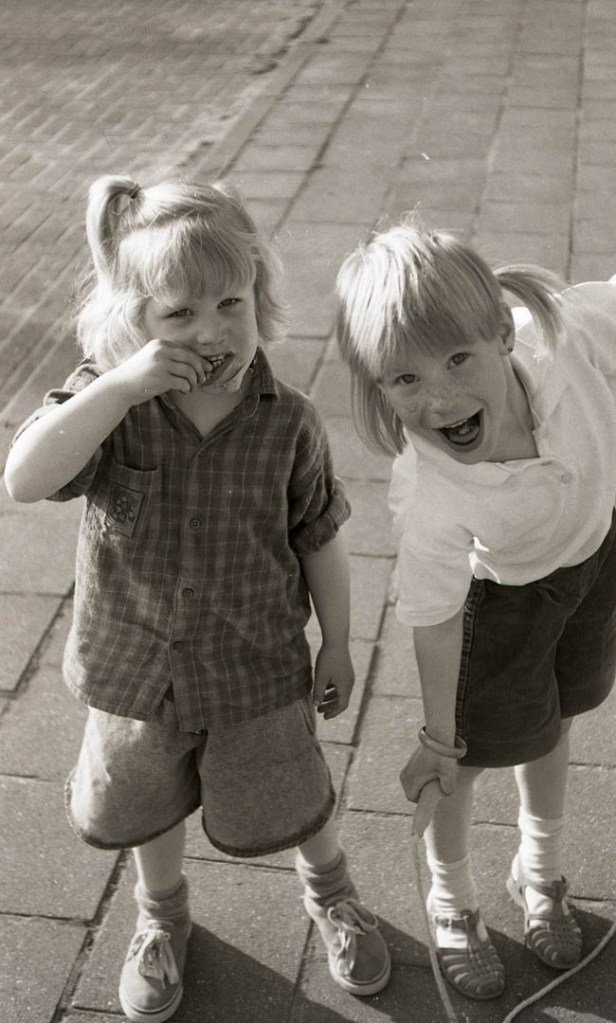
A youngling opens up,

to a world in riddles.
I admire Tolstoy, not because of his work, which I have never read, but because of what he stood for. I believe that when people say it is a fantastic read, I can see it after a few pages; I don’t have the time to read the rest. Too many books lie around that I have started reading or are waiting patiently for my attention. I have the idle hope that one day I will take the time. I found this quote online, well, not this quote, but something similar. The quotes you find online are not always correct, but after some digging, I found the source and read the chapter till I found it. Russians are a mysterious folk; I wish they still were, now they are as predictable as the rest.
“I have met him. But he’s a queer fish, and quite without breeding. You know, one of those uncouth new people one’s so often coming across nowadays, one of those free-thinkers you know, who are reared d’emblée in theories of atheism, scepticism, and materialism. In former days,” said Golenishtchev, not observing, or not willing to observe, that both Anna and Vronsky wanted to speak, “in former days the free – thinker was a man who had been brought up in ideas of religion, law, and morality, and only through conflict and struggle came to free – thought; but now there has sprung up a new type of born free – thinkers who grow up without even having heard of principles of morality or of religion, of the existence of authorities, who grow up directly in ideas of negation in everything, that is to say, savages.
Leo Tolstoy, Anna Karenina (Part 5, Chapter 9)
You can read the book here: https://www.gutenberg.org/ebooks/1399

The Core Themes of My Philosophical Journey
Summary of 10 years of writing by Chat.Mistral and curated by me.
As I reflect on my writings and the recurring ideas that have shaped my philosophical exploration, I see a tapestry of interconnected themes. These themes are not just abstract concepts but deeply personal reflections on what it means to be human, to search for meaning, and to navigate the complexities of existence. Here are the ten most common themes that have emerged in my work, expressed in my own voice and with the depth they deserve:
One of the central themes in my philosophy is the exploration of the nature of reality. I often find myself questioning how we perceive and understand the world around us. This theme involves delving into the complexities of human existence and the influence of our environment on our personal identity. As I’ve written, “The world is complex, much of our thinking is inherited, and certainty is rare.” This idea captures the essence of my inquiry into reality—acknowledging that our understanding is often shaped by factors beyond our immediate perception.
My writings frequently reflect on the essence of being human—the struggles, emotions, and experiences that define our existence. I delve into topics such as the role of visionaries, the impact of environment on mood, and the struggle with depression. These reflections are deeply personal, drawing on my own experiences and observations. In one of my entries, I wrote:
“Humanity learns to walk like a baby does, and what can you teach a baby? You can only encourage it with gestures and sounds because the rest has no meaning to them.”
This passage highlights my belief that our understanding of the human condition is a gradual process, shaped by our experiences and interactions with the world.
The search for meaning is a recurring theme in my work. I investigate the purpose and meaning of life, and how individuals can find meaning in their existence. This theme is central to my philosophical musings and reflections. As I’ve expressed:
“Philosophy gave me a manual for life, and maybe I’m still figuring it out, but one thing it has taught me so far is how to stand without ground beneath my feet, which is very useful if you’ve ever been depressed.”
This idea underscores the importance of finding meaning even in the face of uncertainty and instability. It’s about embracing the journey of self-discovery and understanding that meaning is not always readily apparent but must be sought through introspection and reflection.

I tried out a new AI Chatbot (https://chat.mistral.ai/chat), one that is not US-based and respects your privacy more. I tested it out today, fed it 10 years of short poems, and asked for the 10 best ones. I guess it knows what it’s doing, so here they are. I didn’t specify what the format of the documents was, so it didn’t include the titles, no AI is that smart.
Preparing the day
for another trail of sweets
and bringing it home.
Decomposing leave
returning inhalation
autumn disquiet.
The wind is moving
bending wheat where it settles
in rough ground and sun.
The sun is too late
shrouded in drawn out shadows
it will never bloom.
Waiting for the ground
absorbing time, decisions
and giving it back.
Mother in nature
shining for posterities
yellow panama.
When butterflies don’t fly.
Fading away, overwhelmed in lies.
Wings eager, restricted by weeds.
Cracked mud of the soil grades the time.
When butterflies couldn’t fly.
Red berries in the sun.
The air smells from afternoon rain.
Let me forget and stand still.
And leave me here.
Delicate nature
in a midsummer’s warm wave
elegant white dress.
Alluring symbols
assessed by many facets
in virgin colors.

The big news about chaos is supposed to be that the smallest of changes in a system can result in very large differences in that system’s behavior. The so-called butterfly effect has become one of the most popular images of chaos. The idea is that the flapping of a butterfly’s wings in Argentina could cause a tornado in Texas three weeks later. By contrast, in an identical copy of the world sans the Argentinian butterfly, no such tornado would have occurred in Texas. The mathematical version of this property is known as sensitive dependence and such sensitivity has implications for predictability of future behavior. Clarifying sensitive dependence’s significance is important given there have always been limits on prediction. Chaos studies have highlighted these implications in fresh ways, enabled forms of mitigation as well as control of chaos, and have led to other implications for how we think about our world.
In addition to exhibiting sensitive dependence, chaotic systems are deterministic and nonlinear and exhibit aperiodic behavior (Lorenz 1963). This entry discusses systems exhibiting these properties and their philosophical implications. For those not familiar with the basic phenomenology of chaos, reading nontechnical treatments such as Smith (2007) or Bishop (2023) is highly recommended. Because of the distinctive nature of quantum chaos, it is treated separately in the Supplement: Quantum Chaos, needed for discussions of broader implications in §6.
Read the rest here: https://plato.stanford.edu/entries/chaos/

Randomness, as we ordinarily think of it, exists when some outcomes occur haphazardly, unpredictably, or by chance. These latter three notions are all distinct, but all have some kind of close connection to probability. Notoriously, there are many kinds of probability: subjective probabilities (‘degrees of belief’), evidential probabilities, and objective chances, to name a few (Hájek 2012), and we might enquire into the connections between randomness and any of these species of probability. In this entry, we focus on the potential connections between randomness and chance, or physical probability. The ordinary way that the word ‘random’ gets used is more or less interchangeable with ‘chancy’, which suggests this Commonplace Thesis—a useful claim to target in our discussion:
The Commonplace Thesis, and the close connection between randomness and chance it proposes, appears also to be endorsed in the scientific literature, as in this example from a popular textbook on evolution (which also throws in the notion of unpredictability for good measure):
scientists use chance, or randomness, to mean that when physical causes can result in any of several outcomes, we cannot predict what the outcome will be in any particular case. (Futuyma 2005: 225)
Some philosophers are, no doubt, equally subject to this unthinking elision, but others connect chance and randomness deliberately. Suppes approvingly introduces
the view that the universe is essentially probabilistic in character, or, to put it in more colloquial language, that the world is full of random happenings. (Suppes 1984: 27)
However a number of technical and philosophical advances in our understanding of both chance and randomness open up the possibility that the easy slide between chance and randomness in ordinary and scientific usage—a slide that would be vindicated by the truth of the Commonplace Thesis—is quite misleading. This entry will attempt to spell out these developments and clarify the differences between chance and randomness, as well as the areas in which they overlap in application. It will also aim to clarify the relationship of chance and randomness to other important notions in the vicinity, particularly determinism and predictability (themselves often subject to confusion).
There will be philosophically significant consequences if the Commonplace Thesis is incorrect, and if ordinary usage is misleading. For example, it is intuitively plausible that if an event is truly random it cannot be explained (if it happens for a reason, it isn’t truly random). It might seem then that the possibility of probabilistic explanation is undermined when the probabilities involved are genuine chances. Yet this pessimistic conclusion only follows under the assumption, derived from the Commonplace Thesis, that all chancy outcomes are random. Another interesting case is the role of random sampling in statistical inference. If randomness requires chance, then no statistical inferences on the basis of ‘randomly’ sampling a large population will be valid unless the experimental design involves genuine chance in the selection of subjects. But the rationale for random sampling may not require chance sampling—as long as our sample is representative, those statistical inferences may be reliable. But in that case, we’d be in a curious situation where random sampling wouldn’t have much to do with randomness, and whatever justification for beliefs based on random sampling that randomness is currently thought to provide would need to be replaced by something else.
A final case of considerable philosophical interest is the frequentist approach to objective probability, which claims (roughly) that the chance of an outcome is its frequency in an appropriate series of outcomes (Hájek 2012 §3.4). To avoid classifying perfectly regular recurring outcomes as chancy, frequentists like von Mises (1957) proposed to require that the series of outcomes should be random, without pattern or order. Frequentism may fall with the Commonplace Thesis: if there can be chancy outcomes without randomness, both will fail.
The Commonplace Thesis is central to all three examples. As it is widely accepted that probabilistic explanation is legimitate, that random sampling doesn’t need genuine chance (though it can help), and that frequentism is in serious trouble (Hájek 1997), there is already some some pressure on the Commonplace Thesis. But we must subject it to closer examination to clarify whether these arguments do succeed, and what exactly it means to say of some event or process that it is random or chancy. Though developing further consequences of this kind is not the primary aim of this entry, it is hoped that what is said here may help to untangle these and other vexed issues surrounding chance and randomness.

Certainty, or the attempt to obtain certainty, has played a central role in the history of philosophy. Some philosophers have taken the kind of certainty characteristic of mathematical knowledge to be the goal at which philosophy should aim. In the Republic, Plato says that geometry “draws the soul towards truth and produces philosophic thought by directing upwards what we now wrongly direct downwards” (527b). Descartes also thought that a philosophical method that proceeds in a mathematical way, enumerating and ordering everything exactly, “contains everything that gives certainty to the rules of mathematics” (Discourse on the Method, PW 1, p. 121). Other philosophers have adopted different models for how to best understand certainty. For example, Aristotle and Aquinas take scientific explanation to be essential to certainty (see Pasnau 2017, pp. 5–7), while Al-Ghazālī thought that certainty arose out of religious practice (see Albertini 2005). For many empiricists, certainty with respect to empirical matters is to be found in basic beliefs that are grounded in some fundamental aspect of perceptual experience (see, e.g., Lewis 1952).
Like knowledge, certainty is an epistemic property of beliefs. (In a derivative way, certainty is also an epistemic property of subjects: S is certain that p just in case S’s belief that p is certain.) Although some philosophers have thought that there is no difference between knowledge and certainty, it has become increasingly common to distinguish them. On this conception, then, certainty is either the highest form of knowledge or is the only epistemic property superior to knowledge. One of the primary motivations for allowing kinds of knowledge less than certainty is the widespread sense that skeptical arguments are successful in showing that we rarely or never have beliefs that are certain (see Unger 1975 for this kind of skeptical argument) but do not succeed in showing that our beliefs are altogether without epistemic worth (see, for example, Lehrer 1974, Williams 1999, and Feldman 2003; see Fumerton 1995 for an argument that skepticism undermines every epistemic status a belief might have; and see Klein 1981 for the argument that knowledge requires certainty, which we are capable of having).
As with knowledge, it is difficult to provide an uncontentious analysis of certainty. There are several reasons for this. One is that there are different kinds of certainty, which are easy to conflate. Another is that the full value of certainty is surprisingly hard to capture. A third reason is that there are two dimensions to certainty: a belief can be individually certain at a particular moment, or it can be certain over some greater length of time in a system of beliefs.
Read the rest here: https://plato.stanford.edu/entries/certainty/

Our narrow minds make us believe that we live in strange days. And we are, but not particularly stranger than ever before. With every step we take, we forget the third or praise the ground it had just stepped on. Our world might be destroyed by climate change or nuclear war, but people have lived for thousands of years in worlds no larger than the six houses around them or the small city they inhabited in fear of instant destruction. The theatre we live in now might be as large as the whole world and the angst real, but don’t pretend it’s new.
I don’t have many good reasons for my aversion to this kind of doom-and-gloom. We will always live among nay-sayers and deniers, and the idea of progress is a challenge for many, but don’t forget that these people are also happy to have clean water to drink and to visit a dentist when they have a toothache. Progress does not care what we think; it will move forward, and no one is innocent in this game of who is to blame.
Don’t forget that behind all the nonsense we believe in and are willing to die for are people who bleed when they get cut, mourn their loved ones, and even fall in love for the first time, just like we do, even when these feelings are hidden behind shame and fear. You know for yourself what is hidden inside, we are all afraid to look in the mirror, to look deep in the reflections of our own eyes.
Some shadows
from memories
are colorized

maybe by the time
past
or the moment
Causal models are mathematical models representing causal relationships within an individual system or population. They facilitate inferences about causal relationships from statistical data. They can teach us a good deal about the epistemology of causation, and about the relationship between causation and probability. They have also been applied to topics of interest to philosophers, such as the logic of counterfactuals, decision theory, and the analysis of actual causation.
Causal modeling is an interdisciplinary field that has its origin in the statistical revolution of the 1920s, especially in the work of the American biologist and statistician Sewall Wright (1921). Important contributions have come from computer science, econometrics, epidemiology, philosophy, statistics, and other disciplines. Given the importance of causation to many areas of philosophy, there has been growing philosophical interest in the use of mathematical causal models. Two major works—Spirtes, Glymour, and Scheines 2000 (abbreviated SGS), and Pearl 2009—have been particularly influential.
A causal model makes predictions about the behavior of a system. In particular, a causal model entails the truth value, or the probability, of counterfactual claims about the system; it predicts the effects of interventions; and it entails the probabilistic dependence or independence of variables included in the model. Causal models also facilitate the inverse of these inferences: if we have observed probabilistic correlations among variables, or the outcomes of experimental interventions, we can determine which causal models are consistent with these observations. The discussion will focus on what it is possible to do in “in principle”. For example, we will consider the extent to which we can infer the correct causal structure of a system, given perfect information about the probability distribution over the variables in the system. This ignores the very real problem of inferring the true probabilities from finite sample data. In addition, the entry will discuss the application of causal models to the logic of counterfactuals, the analysis of causation, and decision theory.
Read the rest here: https://plato.stanford.edu/entries/causal-models/

Category mistakes are sentences such as ‘The number two is blue’, ‘The theory of relativity is eating breakfast’, or ‘Green ideas sleep furiously’. Such sentences are striking in that they are highly odd or infelicitous, and moreover infelicitous in a distinctive sort of way. For example, they seem to be infelicitous in a different way to merely trivially false sentences such as ‘2+2=5
’ or obviously ungrammatical strings such as ‘The ran this’.
The majority of contemporary discussions of the topic are devoted to explaining what makes category mistakes infelicitous, and a wide variety of accounts have been proposed including syntactic, semantic, and pragmatic explanations. Indeed, this is part of what makes category mistakes a particularly important topic: a theory of what makes category mistakes unacceptable can potentially shape our theories of syntax, semantics, or pragmatics and the boundaries between them. As Camp (2016, 611–612) explains: “Category mistakes … are theoretically interesting precisely because they are marginal: as by-products of our linguistic and conceptual systems lacking any obvious function, they reveal the limits of, and interactions among, those systems. Do syntactic or semantic restrictions block ‘is green’ from taking ‘Two’ as a subject? Does the compositional machinery proceed smoothly, but fail to generate a coherent proposition or delimit a coherent possibility? Or is the proposition it produces simply one that our paltry minds cannot grasp, or that fails to arouse our interest? One’s answers to these questions depend on, and constrain, one’s conceptions of syntax, semantics, and pragmatics, of language and thought, and of the relations among them and between them and the world.”
Moreover, the question of how to account for the infelicity of category mistakes has implications for a variety of other philosophical questions. For example, in metaphysics, it is often argued that a statue must be distinct from the lump of clay from which it is made because ‘The statue is Romanesque’ is true, while ‘The lump of clay is Romanesque’ is not—indeed, the latter ascription arguably constitutes a category mistake. Correspondingly, an assessment of this argument depends on one’s account of category mistakes (see §4.3 below).
Read the rest here: https://plato.stanford.edu/entries/category-mistakes/
 Nochrisis