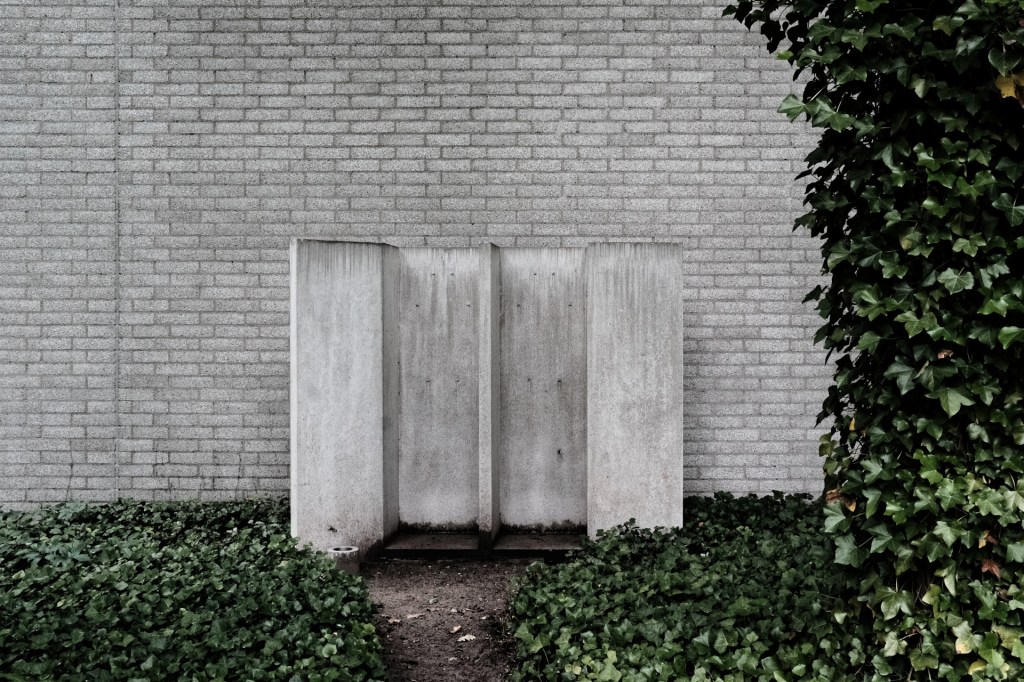
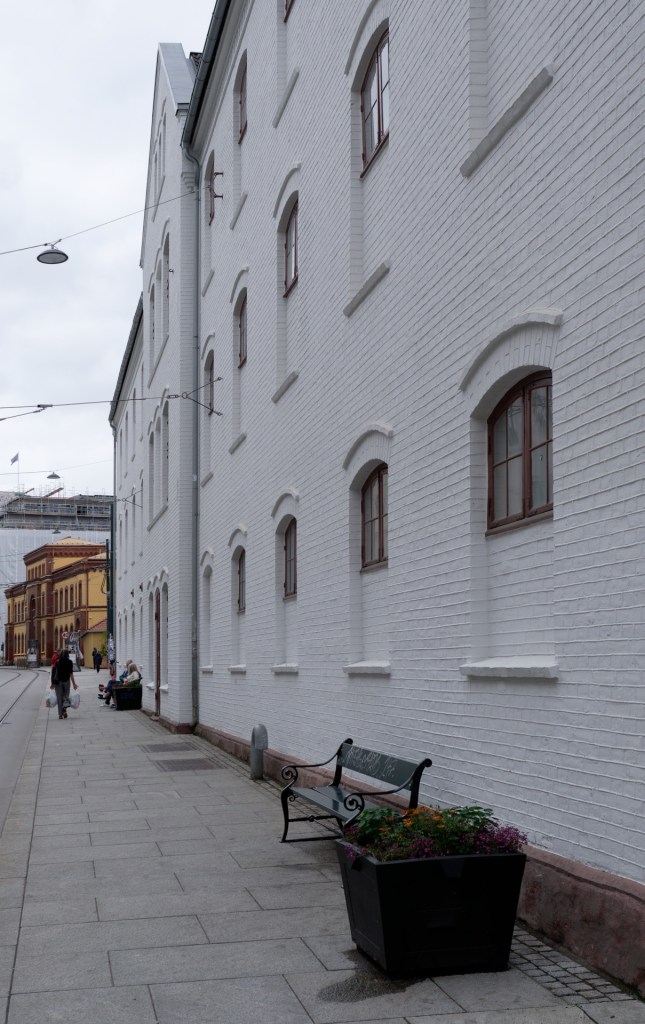
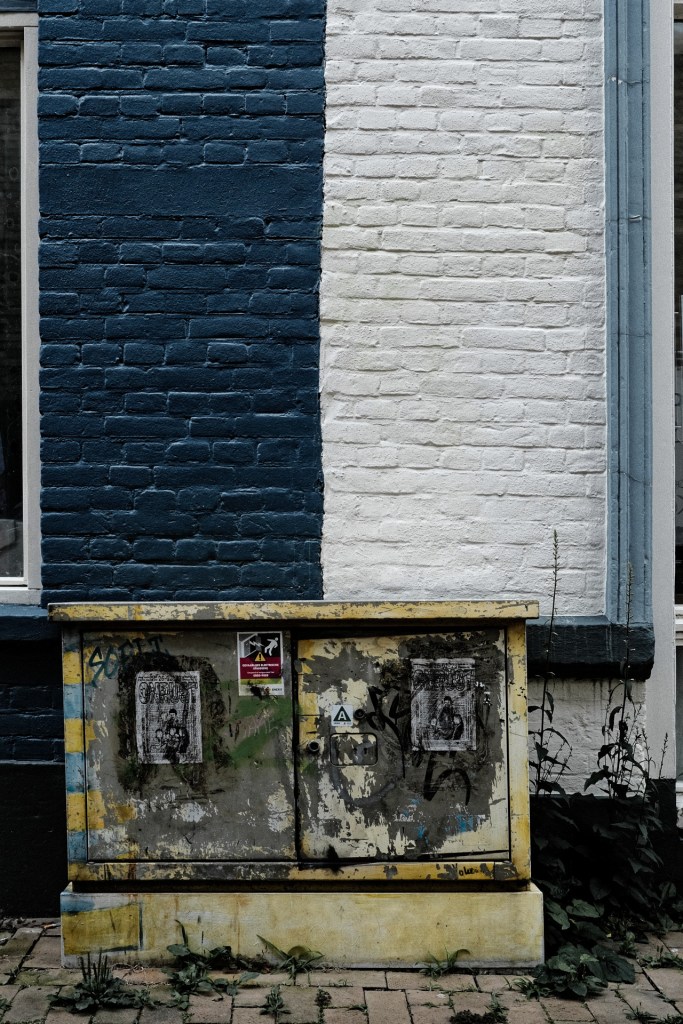
Day 3089, a morning in the city.

Day's pictures, Quotes

And except on a certain kind of winter evening—six-thirty in the Seventies, say, already dark and bitter with a wind off the river, when I would be walking very fast toward a bus and would look in the bright windows of brownstones and see cooks working in clean kitchens and and imagine women lighting candles on the floor above and beautiful children being bathed on the floor above that—except on nights like those, I never felt poor; I had the feeling that if I needed money I could always get it.
Joan Didion, Slouching Towards Bethlehem

Day 3088, reading notes.

Daily picture, Quotes

Friedrich Nietzsche

The Will Too Power
Book One: European Nihilism

118 If anything at all has been achieved, it is a more innocuous relation to the senses, a more joyous, benevolent, Goethean attitude toward sensuality; also a prouder feeling regarding the search for knowledge, so that the “pure fool” is not given much credit.

123 The unfinished problems I pose anew: the problem of civilization, the fight between Rousseau and Voltaire around 1760. Man becomes more profound, mistrustful, “immoral,” stronger, more confident of himself -and to this extent “more natural”: this is “progress.”- At the same time, in accordance with a kind of division of labor, the strata that have become more evil are separated from those that have become milder and tamer-so that the overall
fact is not noticed immediately.- It is characteristic of strength, of the self-control and fascination of strength, that these stronger strata possess the art of making others experience their progress in evil as something higher. It is characteristic of every “progress” that the strengthened elements are reinterpreted as “good.” 

Translation: Kaufmann

Day 3081, honesty.

Daily picture, Quotes

Friedrich Nietzsche

Human, all Too Human 
On the History of the Moral Sensations

65 Whither honesty can lead. – Someone had the bad habit of occasionally examining the motives of his actions, which were as good and bad as the motives of everyone else, and honestly saying what they were. He excited at first revulsion, then suspicion, gradually became altogether proscribed and declared an outlaw in society, until finally the law took notice of this infamous being on occasions when usually it closed its eyes. Lack of ability to keep silent about the universal secret, and the irresponsible tendency to see what no one wants to see – himself – brought him to prison and a premature death.

Day 3074, the whole.

Daily picture, Quotes

A human being is a part of the whole called by us universe, a part limited in time and space. He experiences himself, his thoughts and feeling as something separated from the rest, a kind of optical delusion of his consciousness. This delusion is a kind of prison for us, restricting us to our personal desires and to affection for a few persons nearest to us. Our task must be to free ourselves from this prison by widening our circle of compassion to embrace all living creatures and the whole of nature in its beauty.
Albert Einstein

Day 3071, vague walls.

Daily picture, Quotes

Friedrich Nietzsche

Human, all too Human
Man Alone With Himself

491 Self-observation. – Man is very well defended against himself, against being reconnoitred and besieged by himself, he is usually able to perceive of himself only his outer walls. The actual fortress is inaccessible, even invisible to him, unless his friends and enemies play the traitor and conduct him in by a secret path.

Day 3061, divinely distracted.

Daily picture, Quotes

Friedrich Nietzsche

On the Genealogy of Morality
Preface

1. We are unknown to ourselves, we knowers: and for a good reason. We have never sought ourselves—how then should it happen that we find ourselves one day? It has rightly been said: “where your treasure is, there will your heart be also”; our treasure is where the beehives of our knowledge stand. We are forever underway toward them, as born winged animals and honey-gatherers of the spirit, concerned with all our heart about only one thing “bringing home” something. As for the rest of life, the so-called “experiences”—who of us even has enough seriousness for them? Or enough time? In such matters I’m afraid we were never really “with it”: we just don’t have our heart there—or even our ear! Rather,  much as a divinely distracted, self-absorbed person into whose ear the bell has just boomed its twelve strokes of noon suddenly awakens and wonders, “what did it actually toll just now?” so we rub our ears afterwards and ask, completely amazed, completely disconcerted, “what did we actually experience just now?” still more: “who are we actually?” and count up, afterwards, as stated, all twelve quavering bellstrokes of our experience, of our life, of our being—alas! and miscount in the process … We remain of necessity strangers to ourselves, we do not understand ourselves, we must mistake ourselves, for us the maxim reads to all eternity: “each is furthest from himself,”—with respect to ourselves we are not “knowers” …

Day 3059, exaggerated.

Daily picture, Quotes

Friedrich Nietzsche

Human, all too Human
In Relations With Others

349 In a dispute. -If we simultaneously contradict an opinion and lay out our own, our continual consideration of that other opinion generally disturbs the natural delivery of our own: it appears more purposeful, more severe, perhaps somewhat exaggerated.

Day 3044, intelect.

Daily picture, Quotes

Friedrich Nietzsche

The Will Too Power
Book Three

473 The intellect cannot criticize itself, simply because it cannot be compared with other species of intellect and because its capacity to know would be revealed only in the presence of “true reality,” i.e., because in order to criticize the intellect we should have to be a higher being with “absolute knowledge.” This presupposes that, distinct from every perspective kind of outlook or sensual-spiritual appropriation, something exists, an “in-itself.”- But the psychological derivation of the belief in things forbids us to speak of ”things-in-themselves.”

Day 3025, building.

Daily picture, Quotes

Friedrich Nietzsche

On the Genealogy of Morals
Seventy-Five Aphorisms

201 Philosophers’ error.-The philosopher supposes that the value of his philosophy lies in the whole, in the structure; but posterity finds its value in the stone which he used for building, and which is used many more times after that for building-better. Thus it finds the value in the fact that the structure can be destroyed and nevertheless retains value as building material.