
If you step away ever so slightly
you may turn around
to see what’s left
of what the others already
can’t see
the imprint you lose

if you want it to stay
you have to stay
If you step away ever so slightly you may turn around to see what’s left of what the others already can’t see the imprint you lose if you want it to stay you have to stay

Is a memory of a long-forgotten trip to a faraway side
better than a fantasy of a journey to where you want to go
even if you never go
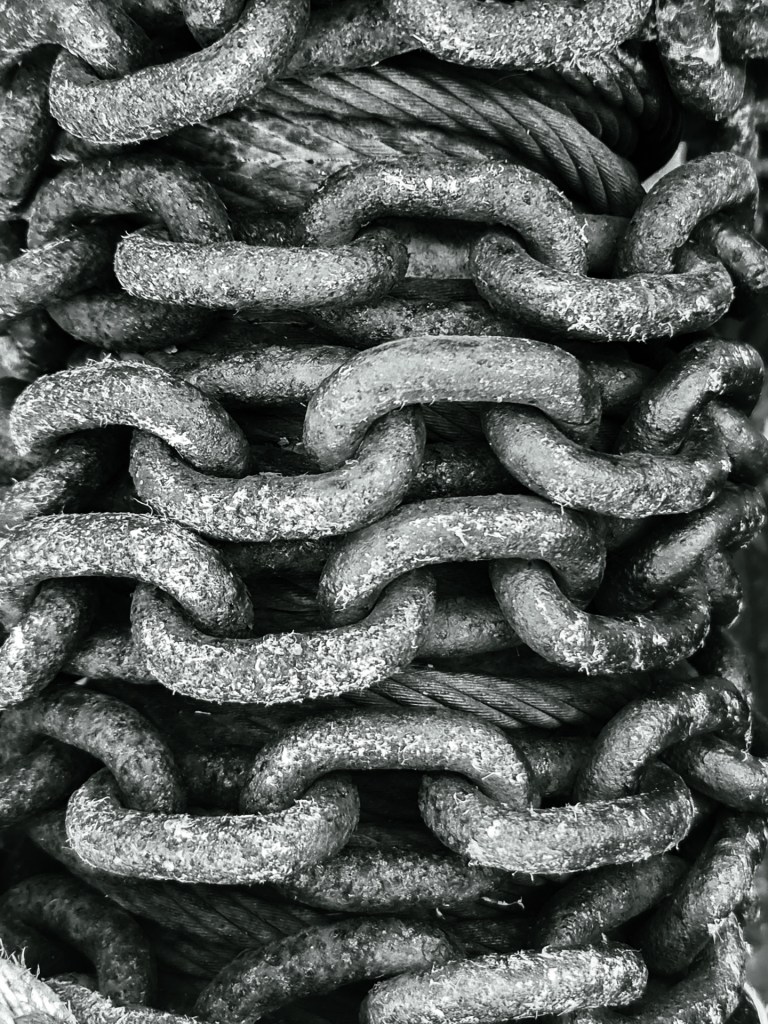
Does it matter which part of the chain you break?
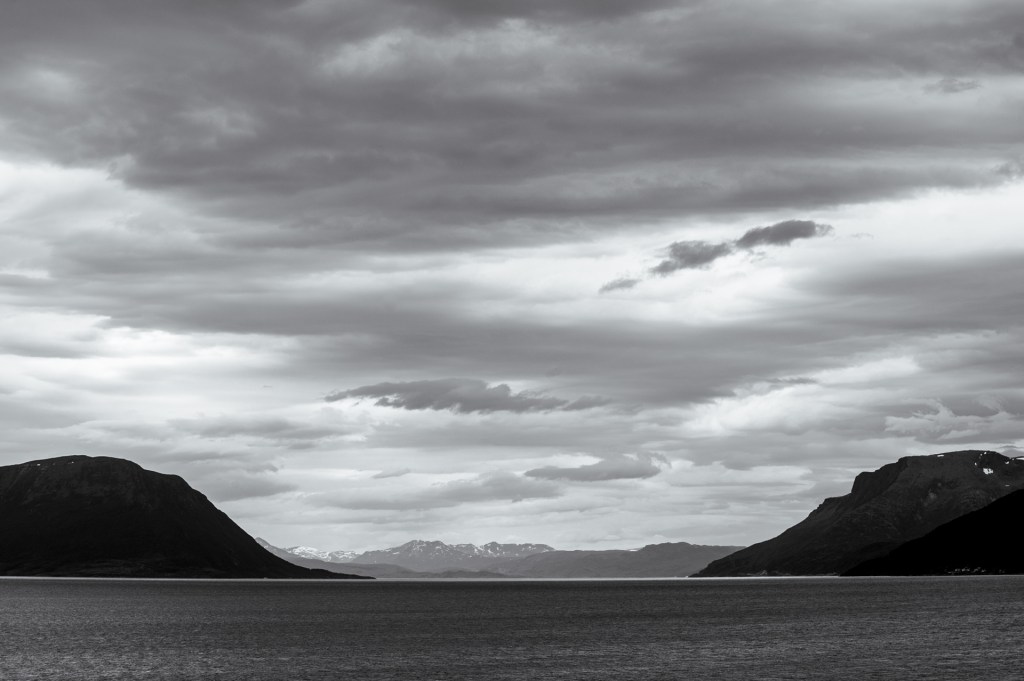
I know that the clouds change more
then the mountains that move underneath.

But what has more permanence?
Change?
Or a slowly eroding mountain?

The mountains in the distance
is still
catching some evening sun
when your day in the valley
gets darker
I listened silently
to what the stranger in me
tries to say

I only know
that it moves me

For some reason
it is often unclear what buttons to press
for to get started
but obviously easy what button to press
to stop it at all

You cannot get ashore alone
even though
you were raised there
“Moral certainty is always a sign of cultural inferiority. The more uncivilized the man, the surer he is that he knows precisely what is right and what is wrong. All human progress, even in morals, has been the work of men who have doubted the current moral values, not of men who have whooped them up and tried to enforce them. The truly civilized man is always skeptical and tolerant, in this field as in all others. His culture is based on “I am not too sure.”
H.L. Mencken
“Faith is the surrender of the mind, it’s the surrender of reason, it’s the surrender of the only thing that makes us different from other animals. It’s our need to believe and to surrender our skepticism and our reason, our yearning to discard that and put all our trust or faith in someone or something, that is the sinister thing to me. … Out of all the virtues, all the supposed virtues, faith must be the most overrated”
Christopher Hitchens

We might all be stardust, but what we make of it is still incredible.
“The amazing thing is that every atom in your body came from a star that exploded. And, the atoms in your left hand probably came from a different star than your right hand. It really is the most poetic thing I know about physics: You are all stardust. You couldn’t be here if stars hadn’t exploded, because the elements – the carbon, nitrogen, oxygen, iron, all the things that matter for evolution – weren’t created at the beginning of time. They were created in the nuclear furnaces of stars, and the only way they could get into your body is if those stars were kind enough to explode. So, forget Jesus. The stars died so that you could be here today.”
Lawrence M. Krauss,

“Skepticism relieved two terrible diseases that afflicted mankind: anxiety and dogmatism.”
Sextus Empiricus
If life as we know It and the earth, sun, and planets evolved out of stardust, we might conclude that there are no rules besides the ones that nature follows. Is e=mc2 the same as “thou shalt no steel”? Both are expressions of groups of humans about their truth, but one corresponds with a reality, and the other does not; the other is a mere opinion or dogma.
Being a skeptic forces you to ask these kinds of questions all the time, and if you do this, consequently, you will soon realize that there is not much in life that is a force of nature but coined by humans. But even the most thorough skeptic will soon realize that it makes sense to call a table a table and wood, wood. Just because we named these objects arbitrarily doesn’t mean we can’t do like the Romans when we are in Rome. But eating a pizza in Rome of the 1920s like they do is something else than approving the fascist regimes just because you moved to Rome.
The reason why we have a democracy is partly because of this fact; truth in politics is not much more than an opinion. No party or political direction can claim to be the truth, though they often like to do so. No law guided by nature tells us to be a communist or a capitalist; non of these directions can be correct as a law forever, at most for a short time, in a group of like-minded people.
For a true skeptic, politics is not much more than a deadly game played by immature children. The realist might say that you must play within the rules of the time you live and choose your side, but I don’t understand why you must play this game to the bitter end. I am pretty sure that the people we have chosen to be in charge play world politics as a game that is real and not like a game of Risk or Monopoly; for them, it is so real they will take a life, many lives to prove it.
We all make up the reasons why we do what we do, and it is hard to imagine a world where politicians, for instance, sit around the table and start the meeting by saying that they don’t know and that their customs are just that, customs. But for me, it is just as easy to think of a world like this as the world we live in; both are not grounded in reality, so why do we choose the ugly route and not the one where we all wonder?
“The skeptic, being a lover of his kind, desires to cure by speech, as best he can, the self-conceit and rashness of the dogmatists.”
“It is probable that those who seek after anything whatever, will either find it as they continue the search, will deny that it can be found and confess it to be out of reach, or will go on seeking it. Some have said, accordingly, in regard to the things sought in philosophy, that they have found the truth, while others have declared it impossible to find, and still others continue to seek it. Those who think that they have found it are those who are especially called Dogmatics, as for example, the Schools of Aristotle and Epicurus, the Stoics and some others. Those who have declared it impossible to find are Clitomachus, Carneades, with their respective followers, and other Academicians. Those who still seek it are the Sceptics. It appears therefore, reasonable to conclude that the three principal kinds of philosophy are the Dogmatic, the Academic, and the Sceptic.”
Sextus Empiricus
Did you know that many people believe themselves when they think and talk?

I try to just
cross the line between
random and order
If you are just
focused on the steps
one foot after another
going up or down

you don’t trust your self
that wants to give you
the time
to look around

“Men are mistaken in thinking themselves free; their opinion is made up of consciousness of their own actions, and ignorance of the causes by which they are determined.”
Spinoza
Can we imagine a world where we first become conscious of what determines our actions and form our opinions accordingly?
I read Spinoza’s quote in the following way: we are conscious of shouting at another person and the anger we feel; consequently, our opinion is that we are angry at that person. What might have happened and caused your anger was the realization (at the crossroad of your conscious and unconscious mind) that you were caught in a lie, and you don’t want to admit it and protest loudly and angrily. And if the person was, in fact, insulting you, how does an insult actually hurt you? Most of the time, the feeling of anger has little to do with the person you are angry at but more with a complex history.
Another example is sports. If you catch a ball in mid-air, you might proclaim that you caught it, as in you guided your hand consciously to the ball by “telling” it where to go. The reality is that your hand can’t wait for your brain to make these decisions but has a shortcut to your eyes and other senses; we catch balls unconsciously, you might say. It’s the same with walking; we are not active in it, but it sure feels like we control every move. In reality, we merely point to a general direction and let our legs and the rest of our body do the rest.
Thinking about free will is hard. Try to think why you decided to get up and get some coffee. You might say you want some coffee, and that’s why, but where came that urge from? Why now coffee and not 5 minutes ago? Who and what in you “decided” that you want it now? You can say that the “I” that wants coffee we talk about here is (the whole of) you, including all your unconscious behaviors and needs. But most people feel some sort of central place within that is their “I”, the place where our thoughts come from. But then we must return to the quote above and use it to analyze this place we call “I”. Try it.
“The less the mind understands and the more things it perceives, the greater its power of feigning is; and the more things it understands, the more that power is diminished.”
“The more you struggle to live, the less you live. Give up the notion that you must be sure of what you are doing. Instead, surrender to what is real within you, for that alone is sure.”
“I realised that all the things which were the source and object of my anxiety held nothing of good or evil in themselves save in so far as the mind was influenced by them,”
Baruch Spinoza

I am a mountain surrounded
not by others
but the white mist
hiding what I merely
wish
 Nochrisis