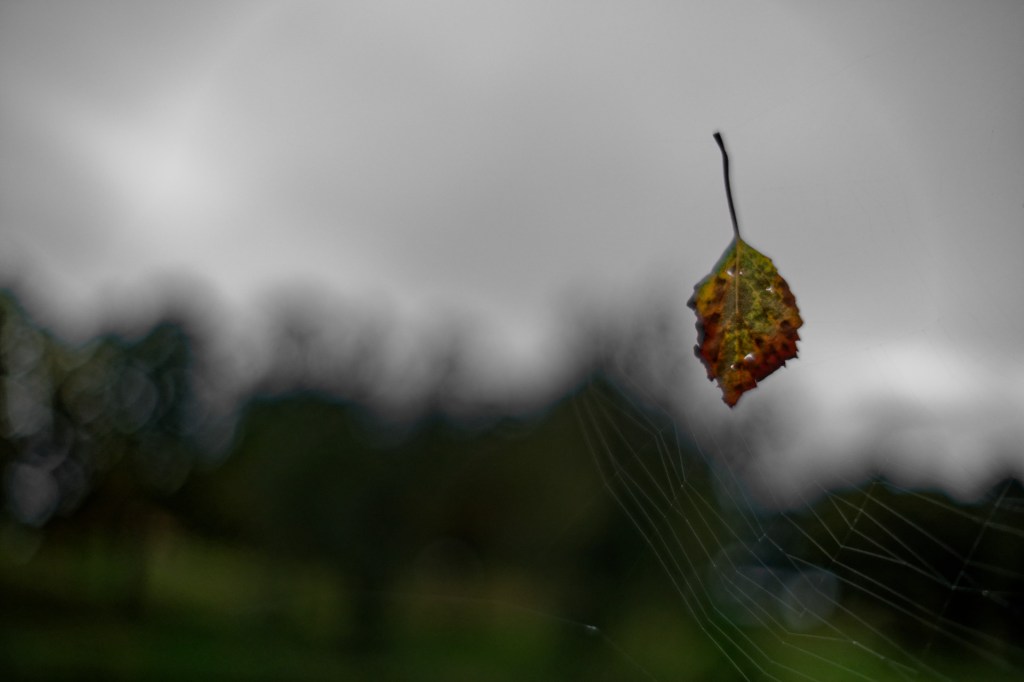
The world is grey
but what we see is colorful
that’s what we are conscious of
looking through our window
Listening to: annakaharris.com/lights-on/

The world is grey
but what we see is colorful
that’s what we are conscious of
looking through our window
Listening to: annakaharris.com/lights-on/

586 Of the hour hand of life. – Life consists of rare individual moments of the highest significance and countless intervals of time in which at best the shadowy images of those moments hover around us. Love, spring, every beautiful melody, mountains, the moon, the sea- only once do all those things speak fully to the heart: if in fact they ever do find their way completely into words. For many people do not have any such moments and are themselves intervals and pauses in the symphony of real life.

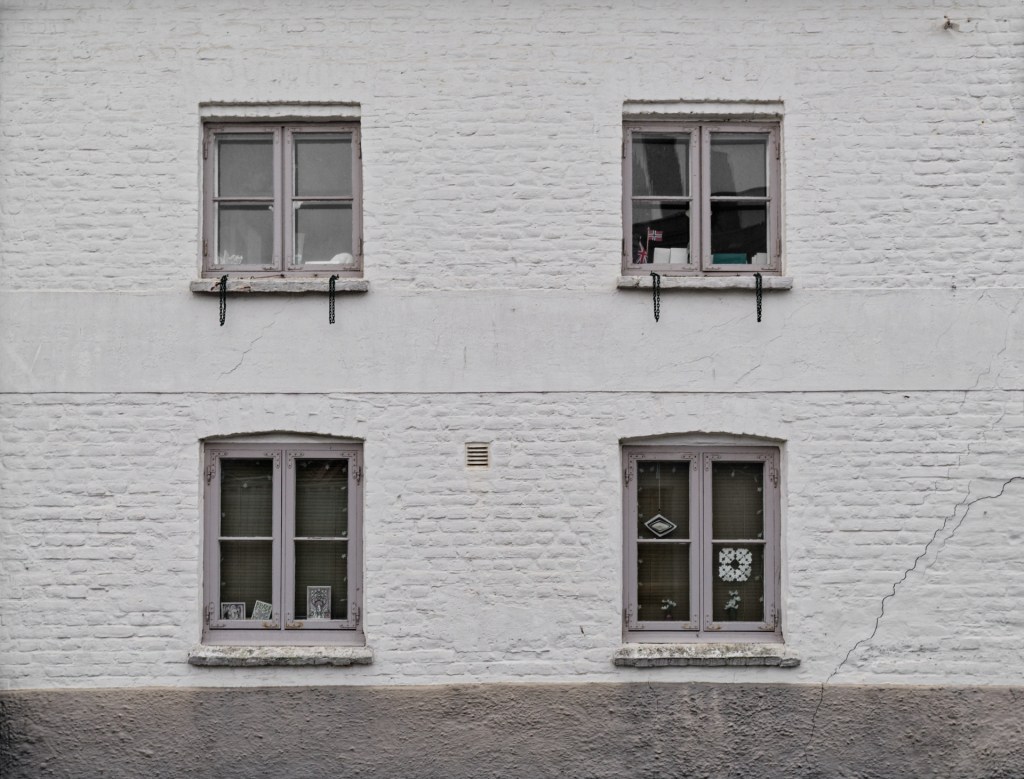
I was not allowed to park in front of your window
but I did
and still you didn’t notice me
because you don’t know me

Some people are obsessed with order
they see the world in order
not to see the mess

Some doors are unattractive
but still lure you in
and not because what’s behind it

Why don’t we hide the lock to our inside
is it to tempt

I am conscious of my consciousness
I can see with one eye my nose
but with both
I can’t
I am aware
how I understand
consciousness

One part of my reflections I recognize
the other part only in my dreams

I heard so many stories
that I forgot mine

My memory is like an empty street
but it's a lovely street

574 Miraculous vanity. -Anyone who boldly prophesies the weather three times and does so successfully believes a little bit, deep down in his soul, in his prophetic gift. We give credit to miraculous and irrational things when it flatters our self-esteem.

If you want, you can read books or talk to people about the meaning of life… for the rest of your life. There are probably thousands of different answers that people have imagined, and even more people who repeat the answers they grew accustomed to. Before I had the idea that we all stand in a big circle and stare at the answer, that was hovering somewhere in the middle, we all looked at the answer from a different angle, and the truth was the part we see, like saying the elephant is a tail because that’s the only part you see of it. But now I am not so sure if there is this Platonic truth that we all see from a different angle. I think we are all just standing in a big room proclaiming truths we perceive from the myriad of echoes bouncing off the walls. And we don’t even know who made the sound that started the echoes.
I also wonder what percentage of people think about the meaning of life on a daily basis or have it as a hobby, like I have. I feel that most people are preoccupied with everyday tasks that are more crucial because they provide the body with essential needs, and this is the most vital aspect of maintaining life. Without a job, we have no food, and without food, we die eventually. Thinking about why we live is, in this sense, meaningless, and its sustenance makes you only hungrier.
What I make “of the echoes that I hear” at this moment is that our DNA wants to make sure we are the best host to protect it. And the DNA in us is fortunate because many other paths will eventually die as our sun consumes us, but our human host might be capable of leaving this planet in time, allowing it to survive a little longer. I don’t think there was or is any purpose in this. DNA was formed by accident, and now it lives in a host that likes to think of reasons why the host is so important. Our DNA is not intentionally plotting a course; rather, it’s the most probable outcome as we see it, which is often mistaken for purpose.
I am not a scientist, and the idea that we are just a host is not one I thought of, but many scientists have thought about it. You have, for instance, Richard Dawkins’s “selfish gene,” which I still remember, without many details, from when I read the book years ago (this is one of the “echoes” that is with me for many years now). These ideas align with my perspective that life has no inherent purpose. The universe began with a big bang, and it will eventually disintegrate, slowly thinning out until it disappears. It will go something like this: Our sun will eat our solar system, and it will collapse or explode, and the debris might form a new solar system a couple more times, but eventually everything drifts so far apart that gravity gives up, and all the individual rocks and other debris will float endlessly and aimlessly in a universe that is ten times bigger than the biggest size we can imagine it is now. (This last bit is just my fantasy)

I know that there are more people who question life. I read books by people who try to answer at least some of the questions. I watch people on television and the internet who clearly try to do the same, but in real life, it is different. People generally don’t have a title hovering above their heads that cleverly promotes the questions they have and tries to answer. The people you are closest to might give you more insight into what is going on inside, but from my experience, I still have to speculate a lot. I have to admit that I will not open up to a random person, but if they want, they can learn a lot about me from what I have written over the last 20 years. I know that it would be strange if everybody poured their hearts out and started telling you their darkest secrets, but would it not be nice if we could at least admit that we all have questions and insecurities and that shame should not be a brake on going to the next level in your conversations, the level above chitchat. It’s like our naked bodies; we all hide them, though we all know what they look like.

I understand Descartes’ journey to find the things that he, or maybe better said, we can know. I also strive not to speculate, but to stick to what we can know, such as Descartes’ “I think, therefore I am.” And it is obvious that we think, regardless of what we believe.
I thought about this because of what even he, in a different way, will have noticed. I like YouTube, but I don’t care too much for the model or the company that owns it. However, there are a lot of interesting videos to find. There is, of course, this famous algorithm that serves you what might be interesting for you. This makes it difficult to be critical of what you find on YouTube because we all have a different experience, no feed is the same. But as long as you know that there is an algorithm and how it roughly works, you can make use of it to find interesting stuff and what hangs around the borders of what you find interesting.
I enjoy watching documentaries, interviews, and video essays about philosophy, psychology, society, and related topics. But most of what I watch is from creators who are sceptical, and they tend to steer away from speculation. Last week, I watched some videos about consciousness, and in some of them, they interviewed individuals who seemed to be experts in a specific subject and stuck to that topic throughout the video. If I find someone interesting, I will conduct some research to gain an impression of their stance on other subjects. Sometimes, they stray from the norm and come up with the most fantastic ideas on how all of this, in this case, consciousness, works when you watch them being interviewed or portrayed by creators who have a more specific agenda and are less critical. It is, of course, no crime to speculate, but when I then see them in these pseudo-scientific videos about third dimensions and alternate states, I will reach for the ignore button.
These uncritical thinkers are no Descartes, so that’s why I ignore them. Even though Descartes will also venture into areas where he cannot prove that what he says is true, he still has a great mind. With thinkers from his time, it is also harder to blame them for not being too outspoken because blasphemy could literally cost you your head, and they did not have the luxury of all the knowledge we now have about our physical bodies. Descartes is, of course, known for his dualism, which posits that the physical body somehow interacts with the spiritual world, specifically the soul. Scientists have examined the brain and other parts of the body where this connection is formed, but most serious thinkers recognize that there is no soul and such a connection. One of the clues is damage to parts of the brain, which then affects how we think (think also of alcohol, caffeine, and drugs). If there is a soul separated from our physical body, how can this soul then be affected? Damage to the brain is something that can be measured, and its effects are visible in how someone behaves. In this, you also need to theorize on why this is, but there are at least effects to be measured that can give some proof. Theorizing what happens with the soul and how that connects with the world is much harder to ground in reality, a reality we can all understand, and not just the imaginative mind of a few individuals.

Little reference
when I reached for your closed door
it was not pronounced

Do you know that we all read a book
where you know and believe the coming pages
beforehand
all the time
through all the changing endings