197 What binds and divides. -Doesn’t what binds human beings together-an understanding of their shared utility and liability-lie in the head, and in the heart what divides them -their blind selecting and fumbling in love and hate, their tendency to turn toward one at the expense of all others and their resultant contempt for general utility?
236 Two sources of goodness. -To treat all human beings with an equivalent benevolence and to be good to them without differentiating among persons can be just as much the emanation of a deep contempt for humans as of a fundamental love for humans.
281 Doors. -Like the man, the child sees doors in everything that it experiences or learns: but for the former they are entrances, for the latter always only passageways.
Revealed: Exxon made ‘breathtakingly’ accurate climate predictions in 1970s and 80s
The oil giant Exxon privately “predicted global warming correctly and skilfully” only to then spend decades publicly rubbishing such science in order to protect its core business, new research has found.
The Guardian, Today.
Can you imagine that meeting at Exxon’s headquarters in the seventies: “Fuck it, let the world burn down; it will only hurt our grandchildren, so why would we care. Make sure that this gets buried. Next point on the agenda, pay raises for us…”
Nietzsche was worried about the future because he saw the first signs of Nihilism in his time. Nihilism was also described in books written by Dostoyevsky at the end of the nineteen hundreds, around the same time that Nietzsche started writing about it. In short, you could say that Nihilism means the belief that there is no meaning to be found in life, and thus, everything is aloud. The scientific revolution had already eroded the belief in a God with its fatherly control by his time. Nietzsche, an atheist, realized that humanity was not ready to live without parental supervision. World war I and especially 2 have proven this suspicion, but a newspaper article like the one above also shows that we are still not capable of thinking for all of us but mainly for ourselves. Don’t be fooled by the seemingly religiosity of some people these days. They are also under the spell of Nihilism, their religion is tailored to fit their personal needs, and there is no fear in these people of a disagreeing God.
It is not easy to find meaning in a meaningless world. In a few million or billion years, the son will swallow the world, and we will all be forgotten by the universe. We have to give meaning to it ourselves, and as a grownup, we should be capable of finding pleasure in the idea that our children and their children and our neighbors and their neighbors will thank us one day, when we are long gone, for the world we left them.
“Nihilism appears at that point, not that the displeasure at existence has become greater than before but because one has come to mistrust any “meaning” in suffering, indeed in existence. One interpretation has collapsed; but because it was considered the interpretation it now seems as if there were no meaning at all in existence, as if everything were in vain.” Fredrich Nietzsche
“There is no other world. Nor even this one. What, then, is there? The inner smile provoked in us by the patent nonexistence of both.” Emile M. Cioran
“The modern mind is in complete disarray. Knowledge has stretched itself to the point where neither the world nor our intelligence can find any foot-hold. It is a fact that we are suffering from Nihilism.” Albert Camus
173 Laughing and smiling. -The more joyous and self-assured his spirit becomes, the more a person forgets how to laugh loudly; by contrast, a spiritual smile continually wells up from within him, a sign of his astonishment at the countless concealed charms of a good existence.
297 Do not wish to see prematurely. -As long as we are experiencing something, we must give ourselves over to the experience and close our eyes, and thus, while still in it, not make ourselves already the observer of it. That would, of course, disturb our good digestion of the experience; instead of a bit of wisdom, we would take away a bit of indigestion.
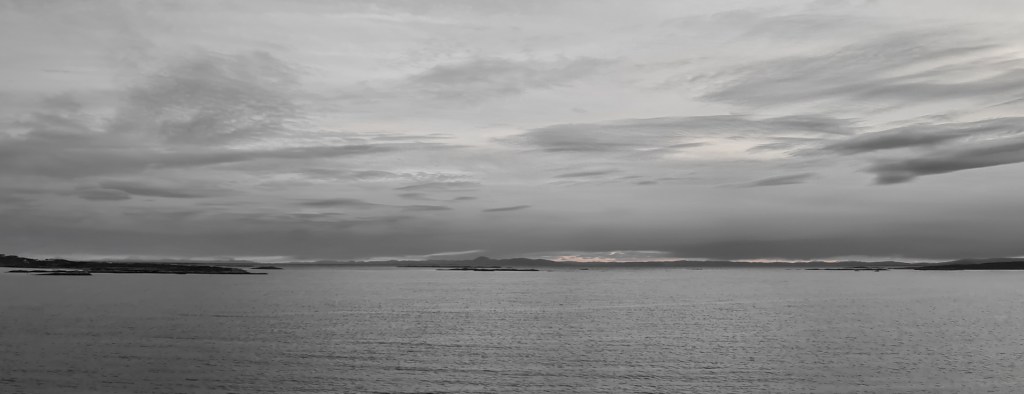
45 Epicurus. Yes, I am proud to experience Epicurus’ character in a way unlike perhaps anyone else and to enjoy, in everything I hear and read of him, the happiness of the afternoon of antiquity: I see his eye gaze at a wide whitish sea, across shoreline rocks bathed in the sun, as large and small creatures play in its light, secure and calm like the light and his eye itself. Only someone who is continually suffering could invent such happiness – the happiness of an eye before which the sea of existence has grown still and which now cannot get enough of seeing the surface and this colourful, tender, quivering skin of the sea: never before has voluptuousness been so modest.
213. It is difficult to learn what a philosopher is, because it cannot be taught: you have to “know” by experience, – or you should be proud that you do not know it at all. But nowadays everyone talks about things that they cannot experience, and most especially (and most terribly) when it comes to philosophers and philosophical matters. Hardly anyone knows about them or is allowed to know, and all popular opinions about them are false. So, for instance, the genuinely philosophical compatibility between a bold and lively spirituality that runs along at a presto, and a dialectical rigor and necessity that does not take a single false step – this is an experience most thinkers and scholars would find unfamiliar and, if someone were to mention it, unbelievable. They think of every necessity as a need, a painstaking having-to-follow and being-forced; and they consider thinking itself as something slow and sluggish, almost a toil and often enough “worth the sweat of the noble.” Not in their wildest dreams would they think of it as light, divine, and closely related to dance and high spirits! “Thinking” and “treating an issue seriously,” “with gravity” – these belong together, according to most thinkers and scholars: that is the only way they have “experienced” it –…
1. All passions have a phase when they are merely disastrous, when they drag down their victim with the weight of stupidity–and a later, very much later phase when they wed the spirit, when they “spiritualize” themselves. Formerly, in view of the element of stupidity in passion, war was declared on passion itself, its destruction was plotted; all the old moral monsters are agreed on this: il faut tuer les passions. The most famous formula for this is to be found in the New Testament, in that Sermon on the Mount, where, incidentally, things are by no means looked at from a height. There it is said, for example, with particular reference to sexuality: “If thy eye offend thee, pluck it out.” Fortunately, no Christian acts in accordance with this precept. Destroying the passions and cravings, merely as a preventive measure against their stupidity and the unpleasant consequences of this stupidity–today this itself strikes us as merely another acute form of stupidity. We no longer admire dentists who “pluck out” teeth so that they will not hurt any more.
To be fair, it should be admitted, however, that on the ground out of which Christianity grew, the concept of the “spiritualization of passion” could never have been formed. After all, the first church, as is well known, fought against the “intelligent” in favor of the “poor in spirit.” How could one expect from it an intelligent war against passion? The church fights passion with excision in every sense: its practice, its “cure,” is castratism. It never asks: “How can one spiritualize, beautify, deify a craving?” It has at all times laid the stress of discipline on extirpation (of sensuality, of pride, of the lust to rule, of avarice, of vengefulness). But an attack on the roots of passion means an attack on the roots of life: the practice of the church is hostile to life.
Consider the cattle, grazing as they pass you by: they do not know what is meant by yesterday or today, they leap about, eat, rest, digest, leap about again, and so from morn till night and from day to day, fettered to the moment and its pleasure or displeasure, and thus neither melancholy nor bored. This is a hard sight for man to see; for, though he thinks himself better than the animals because he is human, he cannot help envying them their happiness – what they have, a life neither bored nor painful, is precisely what he wants, yet he cannot have it because he refuses to be like an animal. A human being may well ask an animal: ‘Why do you not speak to me of your happiness but only stand and gaze at me?’ The animal would like to answer, and say: ‘The reason is I always forget what I was going to say’ -but then he forgot this answer too, and stayed silent: so that the human being was left wondering.
118 What is our neighbor! – What do we understand to be the boundaries of our neighbor: I mean that with which he as it were engraves and impresses himself into and upon us? We understand nothing of him except the change in us of which he is the cause – our knowledge of him is like hollow space which has been shaped. We attribute to him the sensations his actions evoke in us, and thus bestow upon him a false, inverted positivity. According to our knowledge of ourselves we make of him a satellite of our own system: and when he shines for us or grows dark and we are the ultimate cause in both cases – we nonetheless believe the opposite! World of phantoms in which we live! Inverted, upside-down, empty world, yet dreamed of as full and upright!
Even the most beautiful scenery is no longer assured of our love after we have lived in it for three months, and some distant coast attracts our avarice: possessions are generally diminished by possession…
I attended a lecture about how we, as humans and groups, make choices. Part of the discussion afterward was about the different ways we make decisions.
Because I didn’t want to spend too much time on my post, I looked for a fitting quote by my favorite philosopher. The funny thing is that I found two versions of the quote that I wanted to use, and they translated the German word empfindungen into sensations and feelings. Feelings are sensations, but a sensation is not always a feeling… I don’t know if that makes sense.
For me, as a non-English speaker, they seemed to be slightly different. You can decide for yourself, but the quote’s meaning changes quite a bit for me, depending on what translation I use. I guess that the translators used their knowledge of what Nietzsche might mean because you can use both words to translate it according to the dictionary. It depends on the sentence which one you use. In the Dutch translation, they used the word ervaringen, which is usually translated to English as experiences, I guess that covers both the other translations.
I just wanted to share this experience of finding a quote about how we come to our thoughts and stumble on different thoughts about translating the text.
The quote is from:
The Gay Science by Friedrich Nietzsche
Gedanken. − Gedanken sind die Schatten unserer Empfindungen, − immer dunkler, leerer, einfacher, als diese.
-Thoughts are the shadows of our sensations – always darker, emptier, simpler. Translated by Jesefine Nauckhoff, 1974
-Thoughts are the shadows of our feelings always darker, emptier and simpler. Translated by Walter Kaufman, 2001
177 Learning solitude. – 0 you poor devils in the great cities of world politics, you gifted young men tormented by ambition who consider it your duty to pass some comment on everything that happens- and there is always something happening! Who when they raise the dust in this way think they are the chariot of history! Who, because they are always on the alert, always on the lookout for the moment when they can put their word in, lose all genuine productivity! However much they may desire to do great work, the profound speechlessness of pregnancy never comes to them! The event of the day drives them before it like chaff, while they think they are driving the event – poor devils! – If one wants to represent a hero on the stage one must not think of making one of the chorus, indeed one must not even know how to make one of the chorus.
90 Lights and shadows. – Books and drafts mean different things to different thinkers: one has collected in a book the lights that he was able swiftly to steal and carry home from the rays of some insight that dawned on him; another is able to convey only the shadows, the after-images in grey and black, of that which built itself up in his soul the day before.
6 Loss of dignity. – Reflection has lost all its dignity of form: we have made a laughing-stock of the ceremony and solemn gestures of reflection, and couldn’t stand an old-style wise man. We think too fast, while on our way somewhere, while walking or in the midst of all sorts of business, even when thinking of the most serious things; we need little preparation, not even much silence: it is as if we carried around in our heads an unstoppable machine that keeps working even under the most unfavourable circumstances. Formerly, one could tell just by looking at a person that he wanted to think – it was probably a rare occurrence – . that he now wanted to become wiser and was preparing himself for a thought: one would set one’s face as for prayer and stop walking: yes. one stood still for hours on the street once the thought ‘arrived’ – on one or two legs. The dignity of the matter required it!
I have lived secluded for many years now. Not that I have no contact with the world, but I keep my distance. I look at it and analyze what I see through a filter of philosophy and poetry. I also get older, and the advantage of youth is slipping away, wherein you see all the grownups as living in a different world. Authority impresses when you’re young, but now that I am 50, I have little illusion left that someone knows what they are doing. Sure, most people think they know what they are doing, but self-reflection is a sparsely dealt out gift.
I see all these world leaders and bosses being confident and proclaiming what has to happen. Some rally the sheep, and others threaten nuclear destruction out of a delusional belief in themselves. Thousands of leaders have a direction formed in their minds that they follow, and none of these thousands of direction point in the same direction. For me, an outsider, this seems strange. Don’t they see that you can’t defend your direction in the light of all those other ones? They can not all be true, and why would yours be?
I understand that living with some kind of “truth” in yourself makes life easier. Doubting is nerve-wracking and keeps you on your toes, but one of my adopted truths is that the period between birth and death is not to be used to feel calm and at ease or pick a side. I don’t have the obsession to find and keep some kind of peace in myself and a side… sides are for people who need company. For me, living still means growing or shrinking but, in any way, moving.
Consider the cattle, grazing as they pass you by: they do not know what is meant by yesterday or today, they leap about, eat, rest, digest, leap about again, and so from morn till night and from day to day, fettered to the moment and its pleasure or displeasure, and thus neither melancholy nor bored. This is a hard sight for man to see; for, though he thinks himself better than the animals because he is human, he cannot help envying them their happiness – what they have, a life neither bored nor painful, is precisely what he wants, yet he cannot have it because he refuses to be like an animal. A human being may well ask an animal: ‘Why do you not speak to me of your happiness but only stand and gaze at me?’ The animal would like to answer, and say: ‘The reason is I always forget what I was going to say’ -but then he forgot this answer too, and stayed silent: so that the human being was left wondering. But he also wonders at himself, that he cannot learn to forget but clings relentlessly to the past: however far and fast he may run, this chain runs with him. And it is a matter for wonder: a moment, now here and then gone, nothing before it came, again nothing after it has gone, nonetheless returns as a ghost and disturbs the peace of a later moment. A leaf flutters from the scroll of time, floats away- and suddenly floats back again and falls into the man’s lap. Then the man says ‘I remember’ and envies the animal, who at once forgets and for whom every moment really dies, sinks back into night and fog and is extinguished for ever…













 Nochrisis