Losing a belief in free will has not made me fatalistic, in fact, it has increased my feelings of freedom. My hopes, fears, and neuroses seem less personal and indelible. There is no telling how much I might change in the future. Just as one wouldn’t draw a lasting conclusion about oneself on the basis of a brief experience of indigestion, one needn’t do so on the basis of how one has thought or behaved for vast stretches of time in the past. A creative change of inputs to the system—learning new skills, forming new relationships, adopting new habits of attention—may radically transform one’s life.Sam Harris
I wonder the doors
where they are in me
if I could open
if I am already been
in the other room

Do I even have a key
or a choice
If I hadn’t spent so much time studying Earthlings,” said the Tralfamadorian, “I wouldn’t have any idea what was meant by ‘free will.’ I’ve visited thirty-one inhabited planets in the universe, and I have studied reports on one hundred more. Only on Earth is there any talk of free will.Kurt Vonnegut, Slaughterhouse-Five
Every singular thing, or anything which is finite and has a determinate existence, can neither exist nor be determined to produce an effect unless it is determined to exist and produce an effect by another cause, which is also finite and has a determinate existence; and again, this cause can neither exist nor be determined to produce an effect unless it is determined to exist and produce an effect by another, which is also finite and has a determinate existence, and so on, to infinity. Spinoza
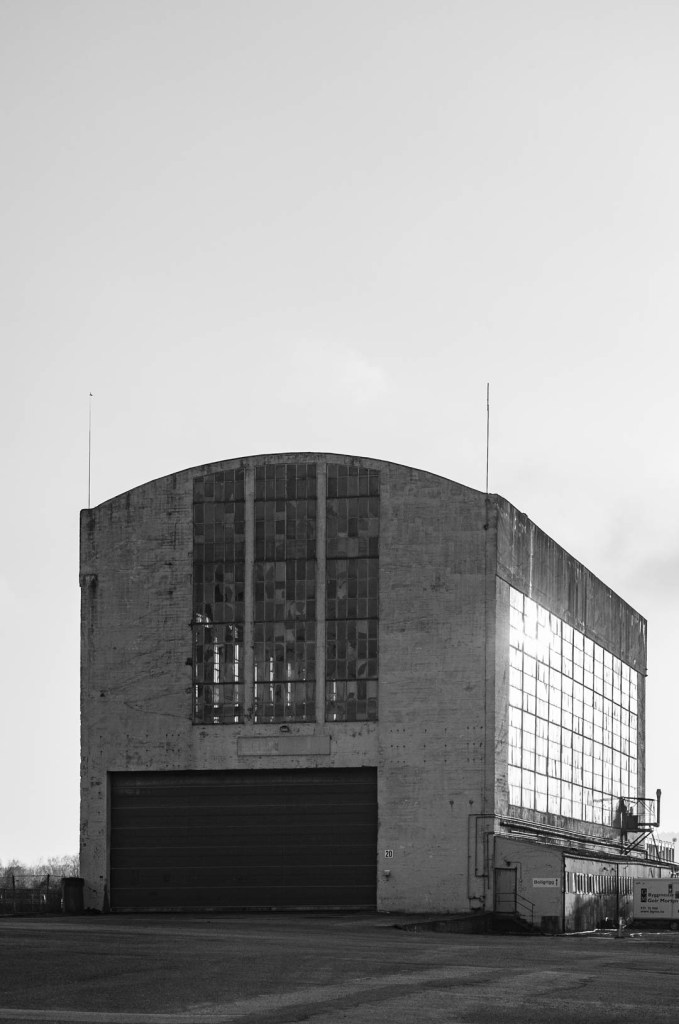
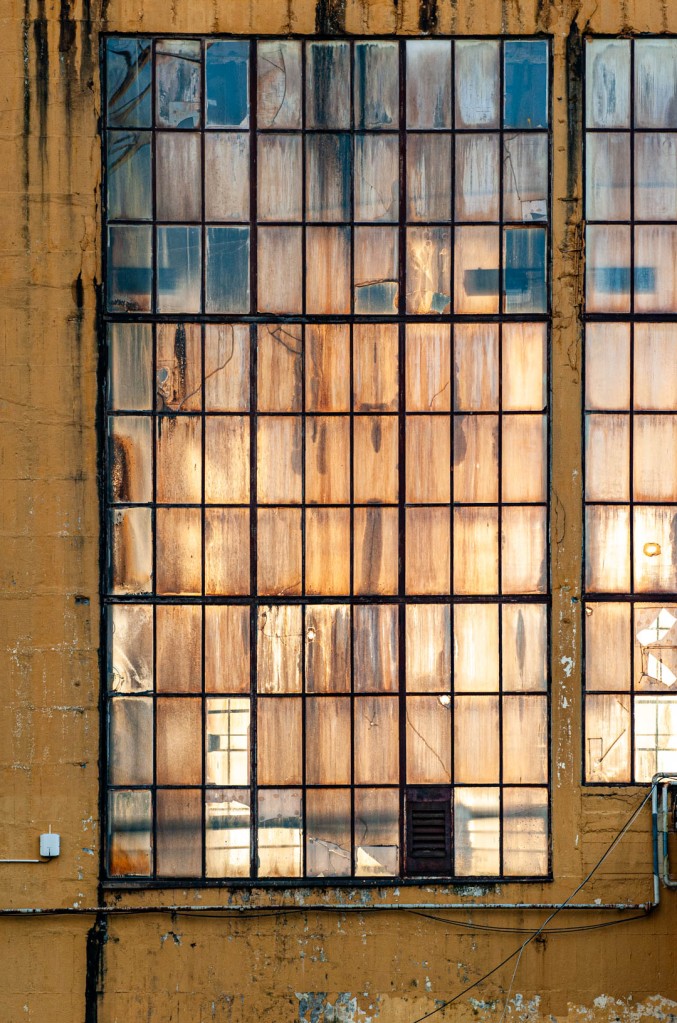
I am determined
to throw this rock
through those windows
The great paradox of determinism and free will, which has held the attention of the wisest of philosophers and psychologists for generations, can be phrased in more biological terms as follows: If our genes are inherited, and our environment is a train of physical events set in motion before we were born, how can there be a truly independent agent within the brain? The agent itself is created by the interaction of the genes and the environment. It would appear that our freedom is only a self delusion. E.O. Wilson
Science is opposed to theological dogmas because science is founded on fact. To me, the universe is simply a great machine which never came into being and never will end. The human being is no exception to the natural order. Man, like the universe, is a machine. Nothing enters our minds or determines our actions which is not directly or indirectly a response to stimuli beating upon our sense organs from without. Owing to the similarity of our construction and the sameness of our environment, we respond in like manner to similar stimuli, and from the concordance of our reactions, understanding is born. In the course of ages, mechanisms of infinite complexity are developed, but what we call ‘soul’ or ‘spirit,’ is nothing more than the sum of the functionings of the body. When this functioning ceases, the ‘soul’ or the ‘spirit’ ceases likewise.
I expressed these ideas long before the behaviorists, led by Pavlov in Russia and by Watson in the United States, proclaimed their new psychology. This apparently mechanistic conception is not antagonistic to an ethical conception of life.Nikola Tesla
I am a determinist. As such, I do not believe in free will. The Jews believe in free will. They believe that man shapes his own life. I reject that doctrine philosophically. In that respect I am not a Jew… I believe with Schopenhauer: We can do what we wish, but we can only wish what we must*. Practically, I am, nevertheless, compelled to act as if freedom of the will existed. If I wish to live in a civilized community, I must act as if man is a responsible being. Albert Einstein
*Der Mensch kann wohl tun was er will, aber er kann nicht wollen, was er will. (Man can do what he wants, but he cannot want what he wants.)
We like to believe that all history is a halting and imperfect preparation for the magnificent era of which we are the salt and summit; but this notion of progress is mere conceit and folly. “In general, the wise in all ages have always said the same things, and the fools, who at all times form the immense majority, have in their way too acted alike, and done the opposite; and so it will continue. For, as Voltaire says, we shall leave the world as foolish and wicked as we found it.” In the light of all this we get a new and grimmer sense of the inescapable reality of determinism. “Spinoza says (Epistle 62) that if a stone which has been projected through the air had consciousness, it would believe that it was moving of its own free will. I add to this only that the stone would be right. The impulse given it is for the stone what the motive is for me; and what in the stone appears as cohesion, gravitation, rigidity, is in its inner nature the same as that which I recognize in myself as will, and what the stone also, if knowledge were given to it, would recognize as will.” But in neither the stone nor the philosopher is the will “free.” Will as a whole is free, for there is no other will beside it that could limit it; but each part of the universal Will—each species, each organism, each organ—is irrevocably determined by the whole.
Everyone believes himself a priori to be perfectly free, even in his individual actions, and thinks that at every moment he can commence another manner of life, which just means that he can become another person. But a posterior, through experience, he finds to his astonishment that he is not free, but subjected to necessity; that in spite of all his resolutions and reflections he does not change his conduct, and that from the beginning of his life to the end of it, he must carry out the very character which he himself condemns, and as it were, play the part which he had; undertaken, to the very end. Arthur Schopenhauer, from Wille Durants The Story of Philosophy
You can freely choose the latest fashion from the choices offered. The fact that most people in old pictures are easily recognized as coming from a specific time shows that there were only a few styles to choose from. We freely choose to all look the same, even if we don’t want to. We still look out of order in a recognizable style. Going against the grain has also its style. We choose between what is on offer, though you might question the freedom in such a forced choice.
The distinguishing feature of advanced industrial society is its effective suffocation of those needs which demand liberation—liberation also from that which is tolerable and rewarding and comfortable—while it sustains and absolves the destructive power and repressive function of the affluent society. Here, the social controls exact the overwhelming need for the production and consumption of waste; the need for stupefying work where it is no longer a real necessity; the need for modes of relaxation which soothe and prolong this stupefication; the need for maintaining such deceptive liberties as free competition at administered prices, a free press which censors itself, free choice between brands and gadgets.Herbert Marcuse, One-Dimensional Man
The problem of free will. We had no say in who we are, what our character is, and where our upbringing has pushed us. We glide on a slide down to our end, and only the wiggle room between the sides of the slide gives us the impression that we have free will.
We will no longer condemn each other for having red hair, being gay, or being a woman. One day, we will no longer condemn each other for our other traits. There will no longer be a right way to live, and the only boundary will be the freedom of others to live their lives fitting the way they are. Society will no longer blame the drunken driver; it will only take away their driver’s license in the same way that someone with a contagious disease gets quarantined. Life will still not be fair, but our political way of living is no longer up for debate; it will have no value and should be contested in the same way we contest our choice of clothing.
People who don’t believe in free will will see a future like this. And where is the choice to make this change in you and society, you might ask? It has to be similar to the process of emancipating women. It will go slowly, but people will accept it over time, and no one person or idea will tip the scale.
To be free of all authority, your own and that of another, is to die to everything of yesterday, so that your mind is fresh, young, innocent, full of vigour and passion. Krishnamurti
25 (Spring-Fall 1887) On the genesis of the nihilist.- It is only late that one musters the courage for what one really knows.14 That I have hitherto been a thorough-going nihilist, I have admitted to myself only recently: the energy and radicalism with which I advanced as a nihilist deceived me about this basic fact. When one moves toward a goal it seems impossible that “goal-lessness as such” is the principle of our faith.









 Nochrisis